Artwork
Lunar Law
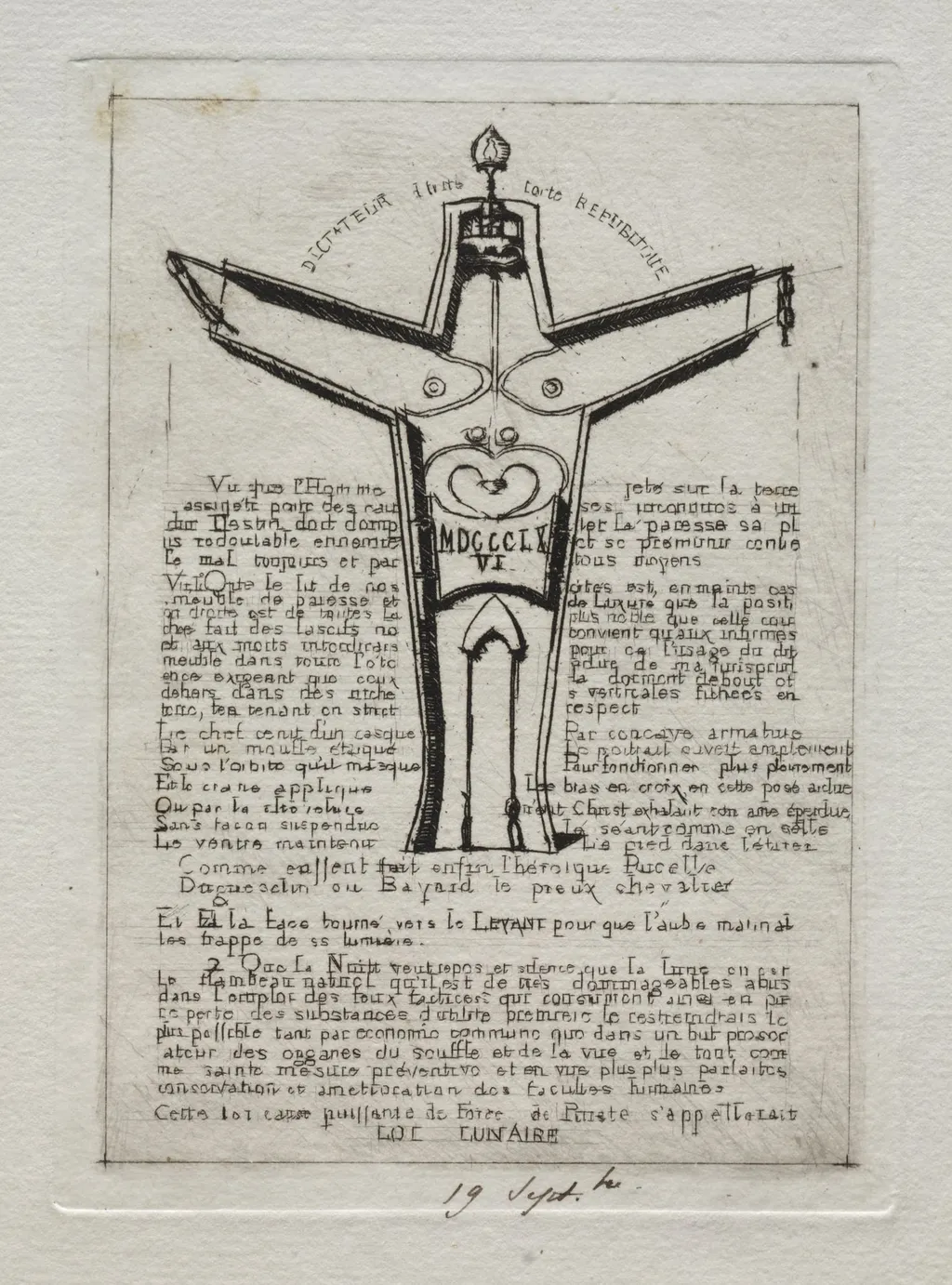
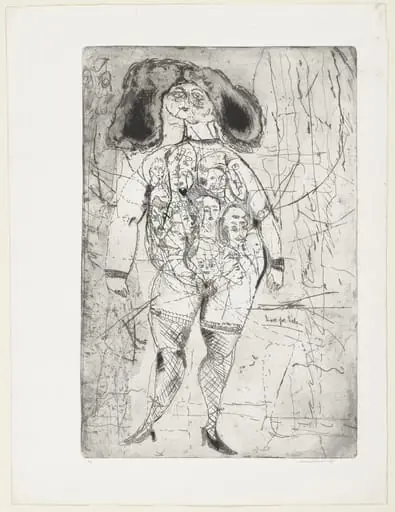
Lunar Law is a print by the Impressionist artist Charles Meryon. It dates from 1866 and is held in the collection of the Cleveland Museum of Art.
About this work
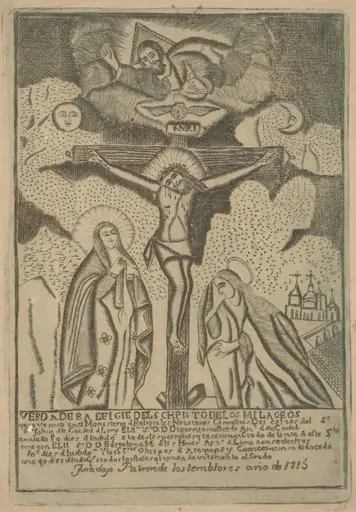
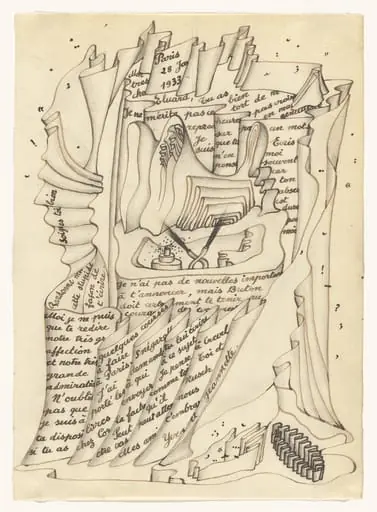
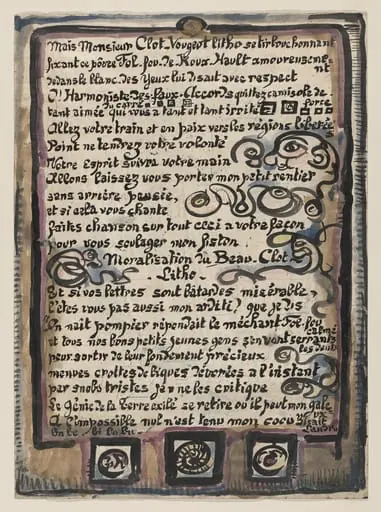
Around the cross, there’s a lot of handwritten text in French, some of it crossed out or smudged.
This sketch shows a simple black-and-white drawing of a cross. The cross has a crown at the top and a small figure hanging from it. Around the cross, there’s a lot of handwritten text in French, some of it crossed out or smudged. The lines are uneven, like a quick sketch rather than a polished drawing.
The text includes the year 1866 and the letters "MCCCLXVI" near the cross. The drawing looks rough, with thick, uneven lines and no shading. It feels more like a study or note than a finished piece.
If you like this style, check out Realism next.
Overview
Created in 1866, *Lunar Law* is a handwritten and drawn sheet by Charles Meryon, executed in etching ink on paper. Unlike his polished urban etchings, this work appears as a spontaneous, unrefined sketch—its lines uneven, its composition unpolished. It bears no resemblance to his published prints, suggesting it was a private exercise rather than a finished artwork. The presence of dated inscriptions and crossed-out text implies it was a working note or personal meditation.
Subject & Meaning
At the center of the sheet is a crude cross crowned with a small figure, possibly representing Christ. Surrounding it are fragmented French phrases, some erased, others smudged, hinting at internal struggle or theological contemplation. The inclusion of the Roman numeral MCCCLXVI reinforces the date, but the text’s chaotic arrangement resists clear interpretation. The image and script together suggest a private, possibly tormented reflection, distinct from Meryon’s public depictions of Paris.
Technique & Style
Meryon employed a drypoint-like hand, pressing ink directly onto paper with minimal refinement. Lines are thick, irregular, and unshaded, lacking the controlled burin work of his etchings. The absence of tonal gradation and the roughness of execution contrast sharply with his published prints. The work reads as a direct, unmediated gesture—more akin to a journal entry than a composed image, revealing a raw, immediate mode of expression.
History & Provenance
This sheet was not intended for public display and was likely retained by Meryon or a close associate. It surfaced later among his personal papers, recognized for its emotional intensity rather than its formal qualities. Its survival is unusual, as Meryon destroyed many private works during periods of mental instability. Its current location traces back to posthumous collections of his drawings, preserved for their insight into his inner world.
Context
In 1866, Meryon was increasingly isolated, grappling with psychiatric decline and a growing preoccupation with religious symbolism. While his published etchings depicted Paris as a gothic labyrinth, this sheet turns inward—away from the city’s architecture to a solitary, symbolic form. The handwritten text reflects a mind wrestling with faith and mortality, mirroring broader 19th-century anxieties about reason, madness, and spiritual crisis.
Legacy
Though never exhibited in Meryon’s lifetime, *Lunar Law* has become a key document for understanding his psychological state in his final years. Scholars value it not for aesthetic achievement but for its unfiltered emotional honesty. It stands as a quiet counterpoint to his celebrated urban scenes, revealing the private anguish beneath the public persona of a master printmaker.
Artist & collection
Artist
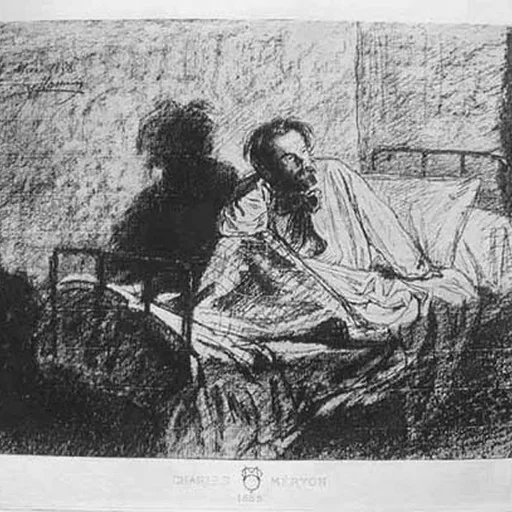
Charles Meryon (sometimes Méryon, 23 November 1821 – 14 February 1868) was a French artist who worked almost entirely in etching, as he had colour blindness.