Artwork
Sheep at the Watering Place (Abreuvoir aux moutons)
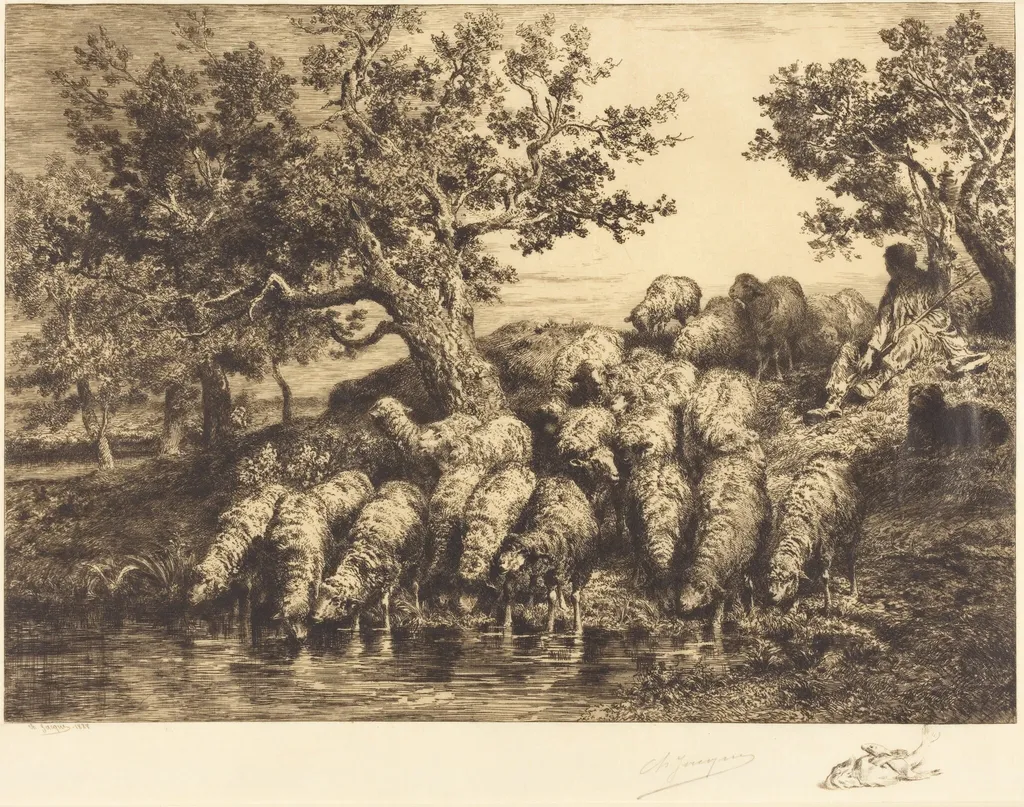
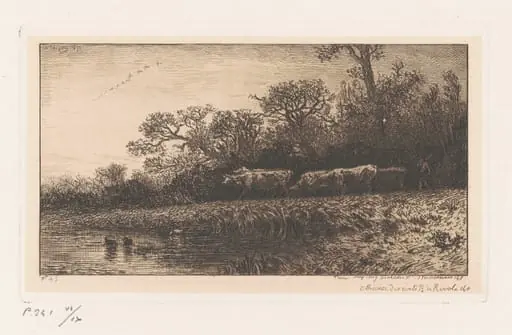
Sheep at the Watering Place (Abreuvoir aux moutons) is an ink print by the Impressionist artist Charles Émile Jacque. It dates from 1888 and is held in the collection of the National Gallery of Art.
About this work
Overview
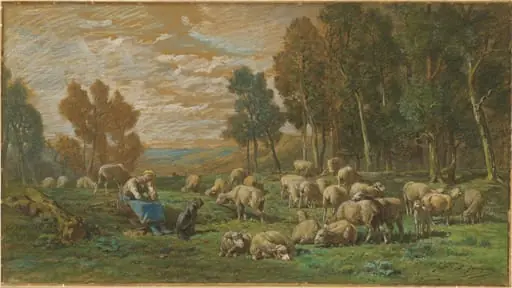
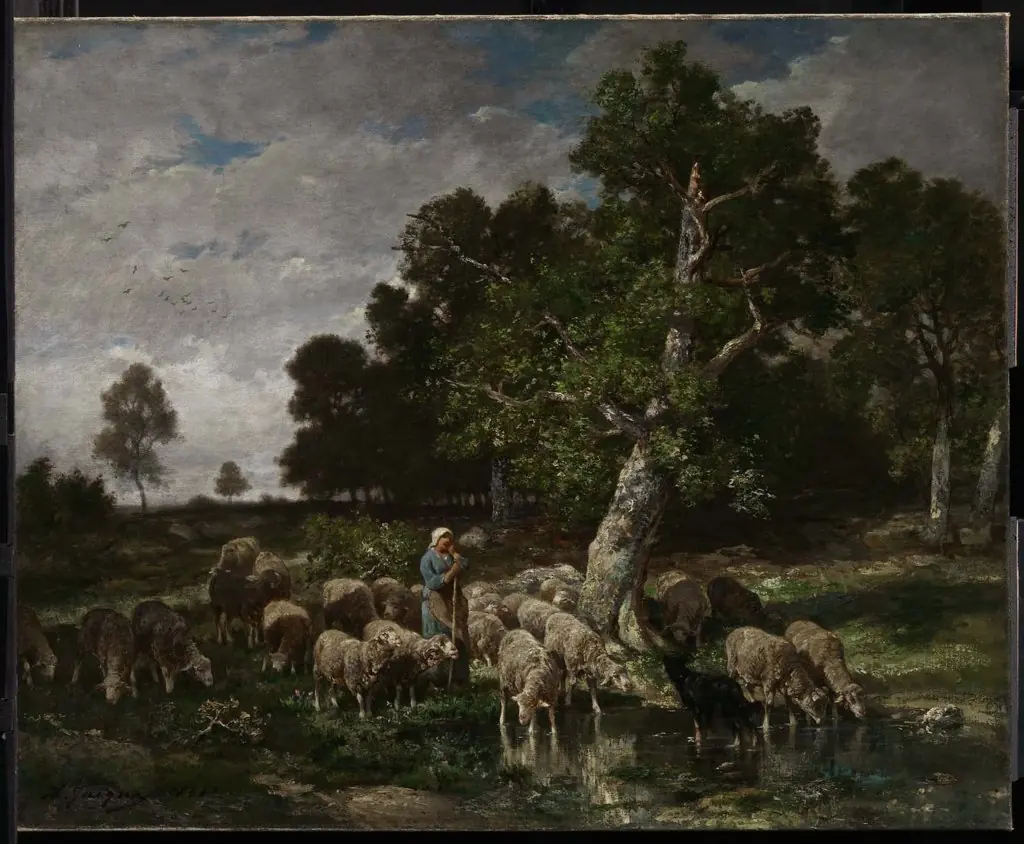
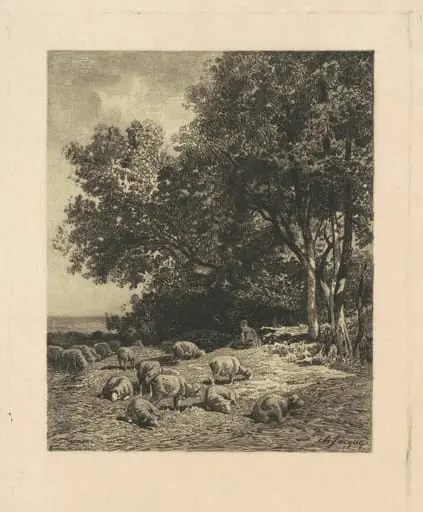
Charles Émile Jacque’s print titled “Sheep at the Watering Place” (French: Abreuvoir aux moutons) was produced in 1888. Executed as an etching on imitation vellum paper, the work presents a tranquil rural tableau where a flock of sheep gathers at a shallow pond, framed by trees and low vegetation.
Subject & Meaning
The composition captures a moment of pastoral routine: the animals lower their heads to drink, while the surrounding foliage and bare‑branched trees suggest a quiet, perhaps early‑morning atmosphere. The still water mirrors both the flock and the landscape, emphasizing a harmonious relationship between the livestock and their environment.
Technique & Style
Jacque employed the etching process, incising fine lines into a metal plate that were then transferred onto paper. The delicate rendering of woolly textures, subtle water ripples, and the nuanced foliage demonstrates his command of line work, a hallmark of 19th‑century French printmaking that prioritizes detailed observation over broad tonal washes.
History & Provenance
Created in the late 1880s, the print reflects Jacque’s sustained interest in agrarian subjects during a period when industrialization was reshaping French countryside life. While specific ownership records are limited, the work has been catalogued among his etchings and appears in collections that focus on 19th‑century French rural imagery.
Own this work as a print
Artist & collection