Artwork
The Shepherdess
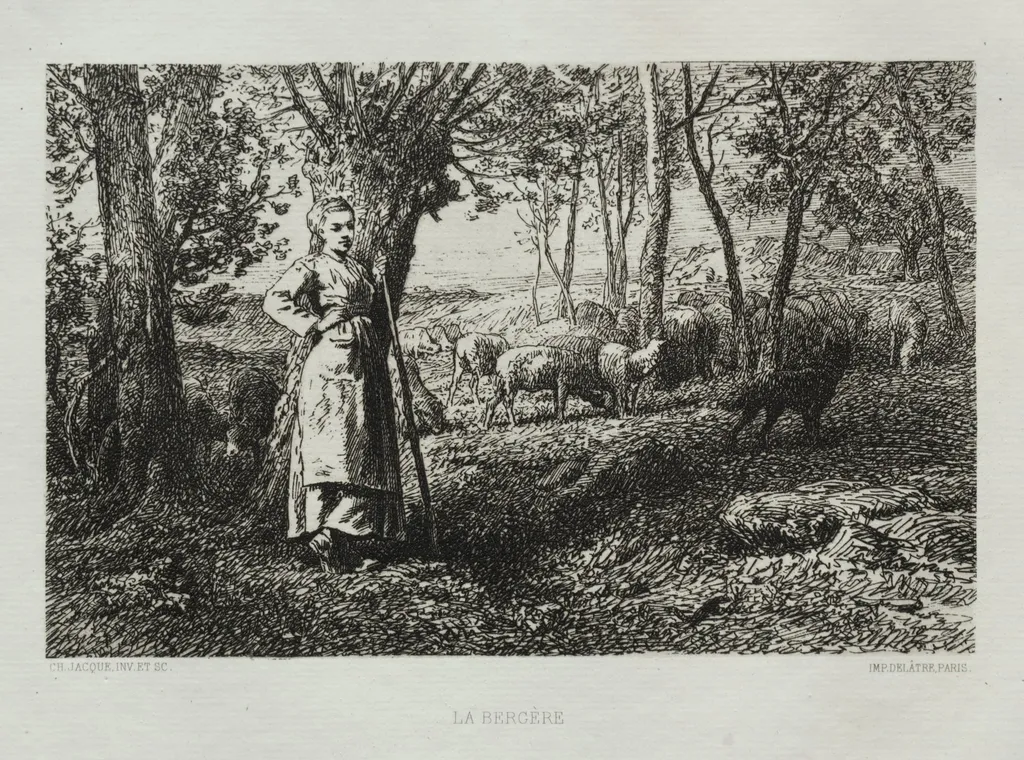
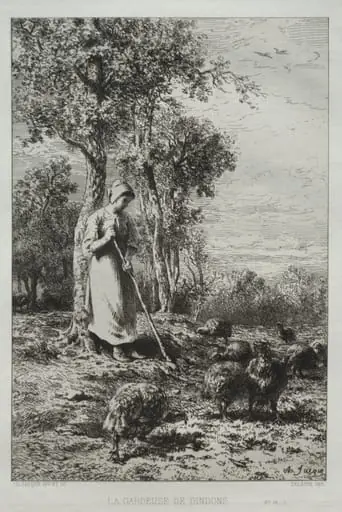
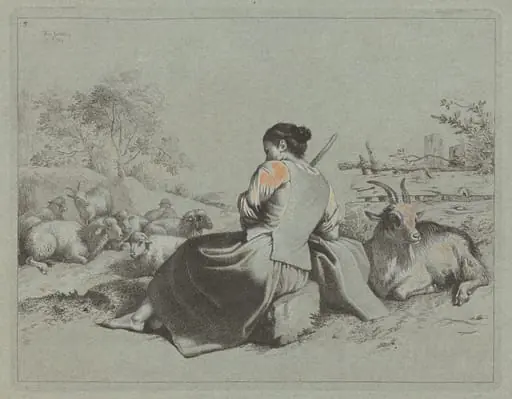
The Shepherdess is a print by the Impressionist artist Charles Jacque. It dates from 1868 and is held in the collection of the Cleveland Museum of Art.
About this work
Overview
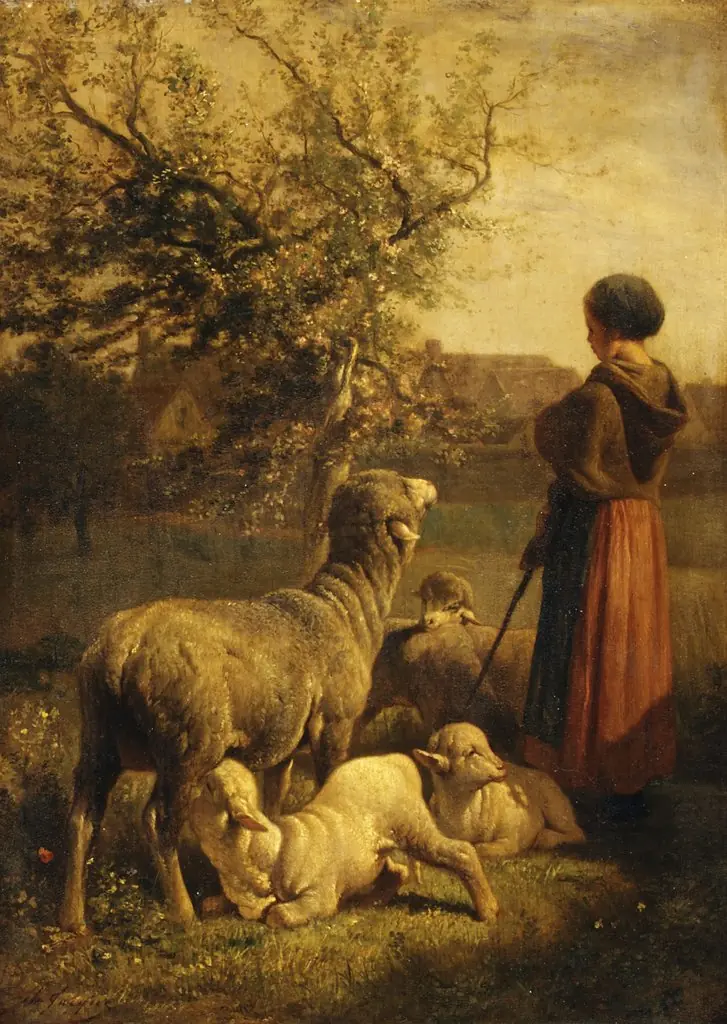
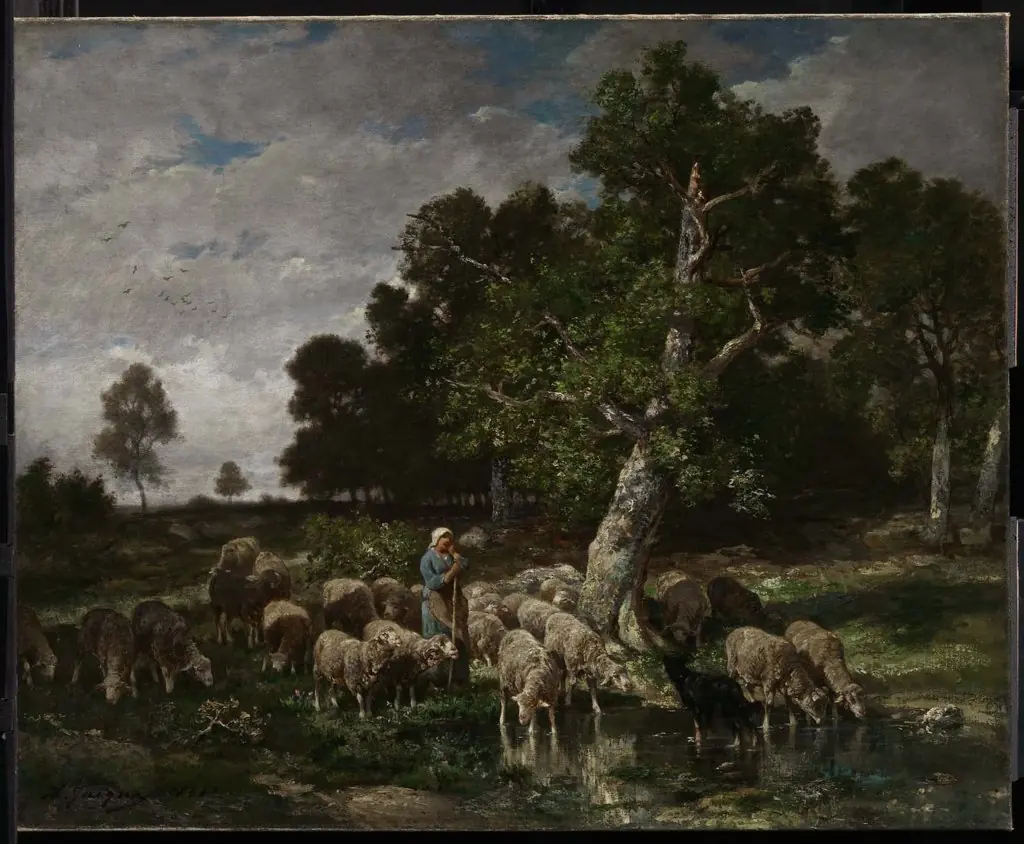
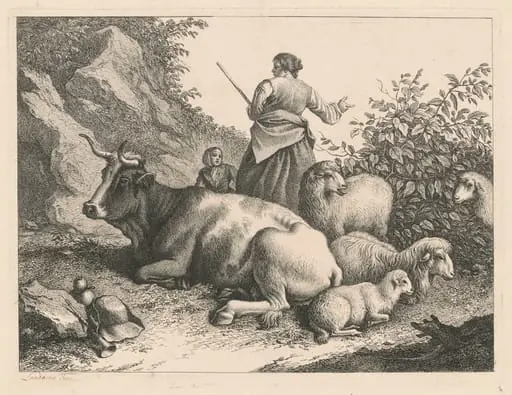
Created in 1868, *The Shepherdess* is a black‑and‑white print by French artist Charles‑Émile Jacque. The image presents a solitary woman in a loose robe, holding a staff and a small bundle, standing amid a wooded landscape where a few sheep graze among gnarled trees and scattered foliage.
Subject & Meaning
The work portrays a quiet moment of rural labor, emphasizing the everyday existence of a shepherdess tending her flock. By focusing on a single figure within a natural setting, the print underscores the dignity of ordinary agricultural life, a theme central to the artist’s vision.
Technique & Style
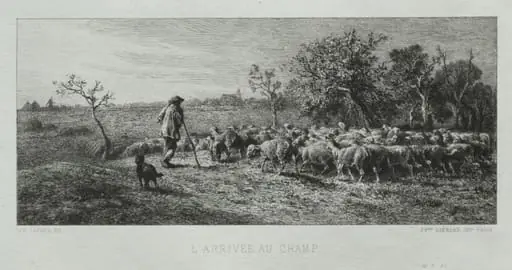
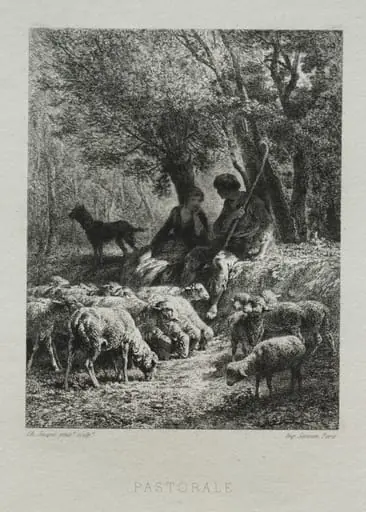
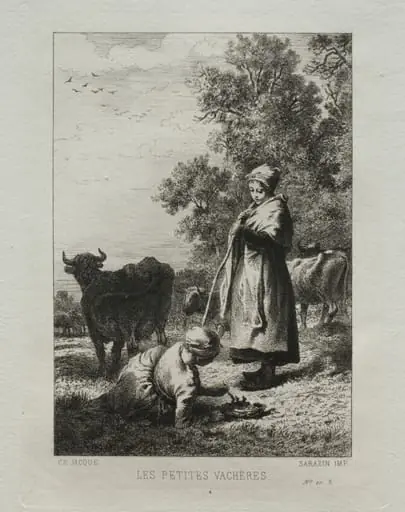
Jacque employs fine line work and graduated shading to model forms and suggest depth. The contrast between dark outlines and lighter tones renders the trees, shadows, and the figure’s drapery with a naturalistic clarity characteristic of the Barbizon School’s realist approach.
History & Provenance
Charles‑Émile Jacque, who trained as an engraver during a seven‑year service in the French army, produced the print while active in the Barbizon circle alongside Jean‑François Millet. The piece reflects his long‑standing interest in pastoral subjects that defined much of his oeuvre.
Context
The Barbizon School, emerging in mid‑19th‑century France, sought to depict the countryside with fidelity, moving away from idealized classical motifs. *The Shepherdess* aligns with this movement’s commitment to natural observation, illustrating the shift toward realism in French art during the 1860s.
Own this work as a print
Artist & collection
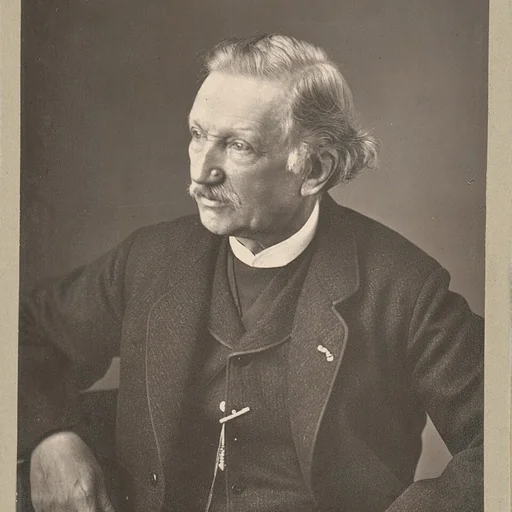
Artist
Charles-Émile Jacque (23 May 1813 – 7 May 1894) was a French painter of Pastoralism and engraver who was, with Jean-François Millet, part of the Barbizon School. He first learned to engrave maps when he spent seven years in the French Army.