Artwork
Keeper of the Turkeys
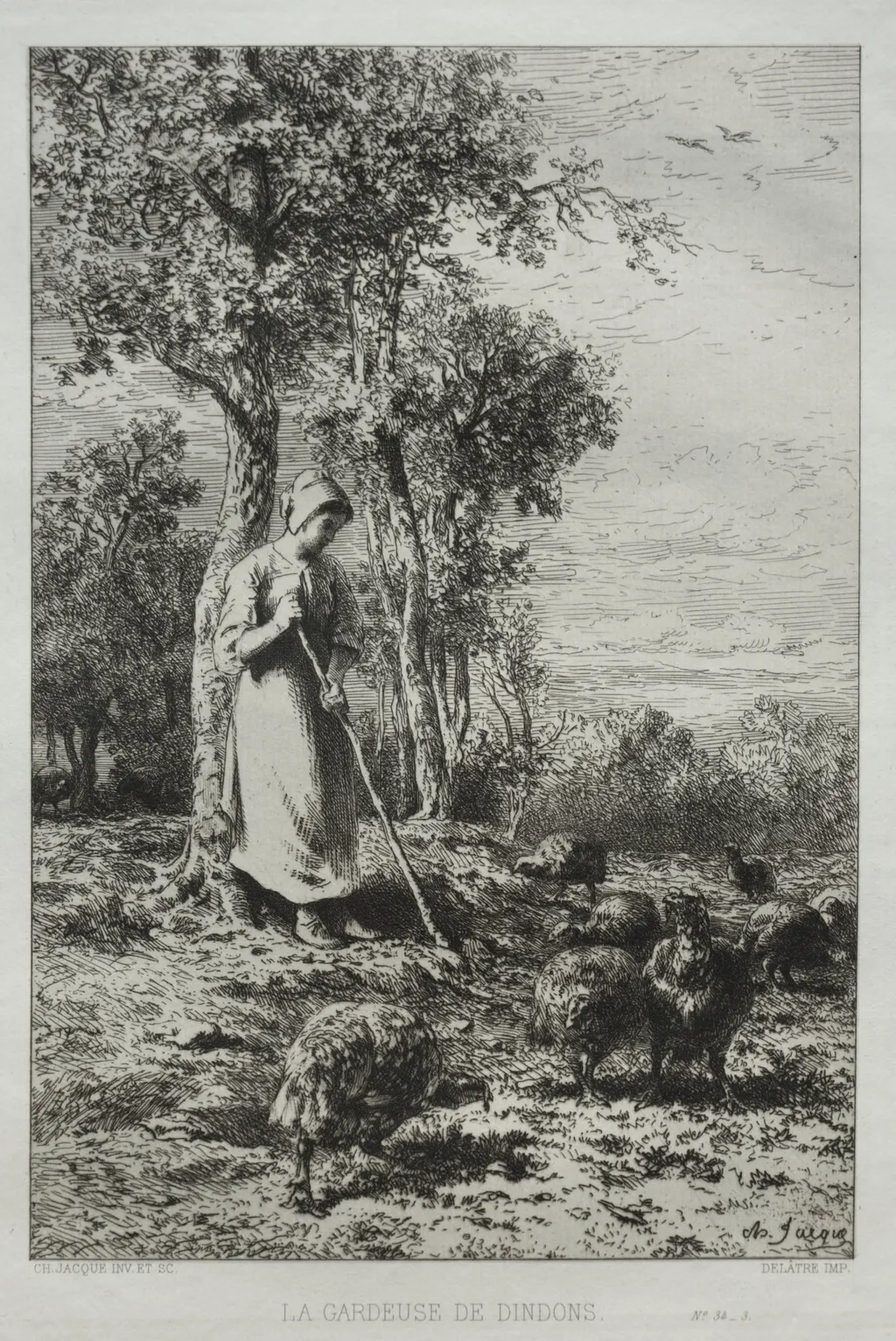
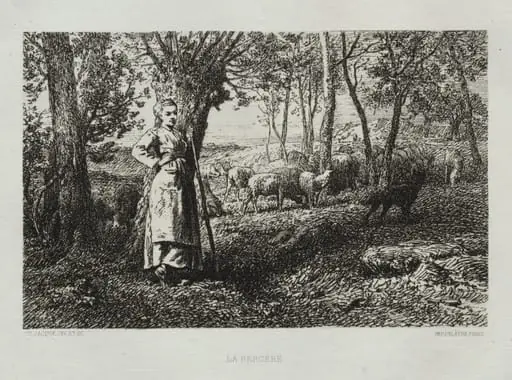
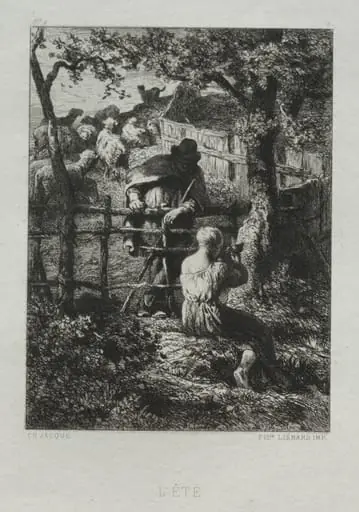
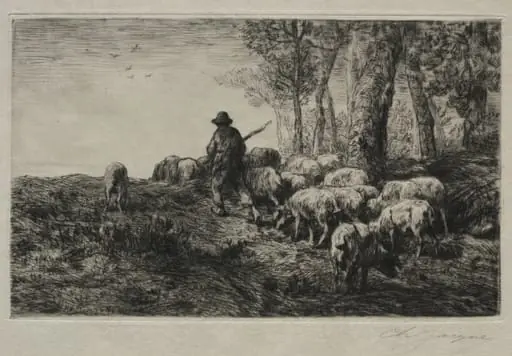
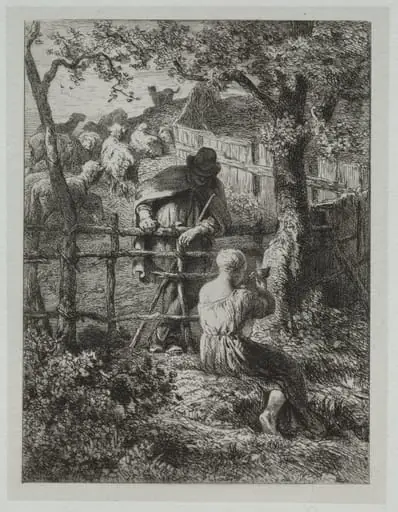
Keeper of the Turkeys is a print by the Impressionist artist Charles Jacque. It dates from 1866 and is held in the collection of the Cleveland Museum of Art.
About this work
Overview
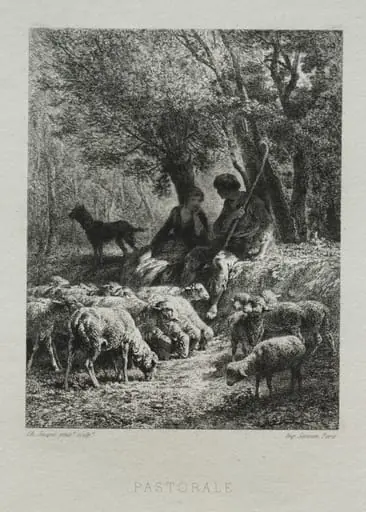
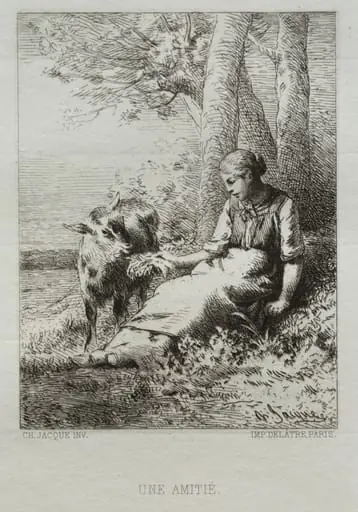
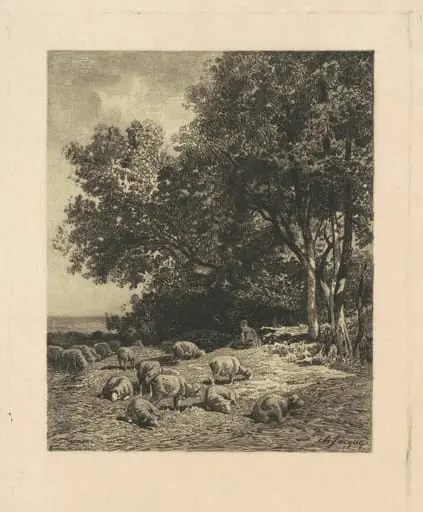
Created in 1866 by Charles-Émile Jacque, *Keeper of the Turkeys* is a black-and-white print that captures a quiet moment of rural labor. Jacque, a member of the Barbizon School, turned to printmaking after military service introduced him to engraving. The work reflects his sustained interest in peasant life and the natural world, rendered with restrained precision rather than idealization.
Subject & Meaning
The image portrays a woman, her back turned, tending to a group of turkeys in a wooded clearing. Her posture and simple attire suggest daily agricultural duties, while the scattered birds imply movement and routine. The title underscores her role as caretaker, not owner, highlighting the dignity of uncelebrated labor. There is no narrative drama—only the quiet rhythm of rural existence.
Technique & Style
Jacque employed fine, controlled lines to define form and texture, particularly in the birds' feathers and the uneven ground.
Jacque employed fine, controlled lines to define form and texture, particularly in the birds' feathers and the uneven ground. The composition avoids detail, using sparse strokes to suggest depth and motion. The monochrome palette enhances the somber tone, aligning with the Barbizon emphasis on naturalism. The woman’s silhouette merges with the landscape, reinforcing harmony between figure and environment.
History & Provenance
Jacque produced this print during a period when he was deeply engaged with printmaking, following his seven-year enlistment in the French Army, where he first learned engraving. It was likely made for private circulation or as part of a series on rural themes. No public record of its early ownership exists, but it was exhibited in French artistic circles aligned with Realist and Barbizon ideals.
Context
Emerging alongside Jean-François Millet, Jacque contributed to a broader shift in 19th-century French art toward depicting ordinary rural life without romanticism. *Keeper of the Turkeys* fits within this movement’s rejection of academic grandeur in favor of observed truth. The scene reflects growing public interest in agrarian labor as industrialization reshaped French society.
Legacy
Though less widely known than his contemporaries, Jacque’s prints influenced later generations of printmakers interested in naturalistic subject matter. His focus on the quiet dignity of labor contributed to the legitimacy of rural themes in fine art. *Keeper of the Turkeys* remains a modest but enduring example of how everyday scenes could carry artistic weight through restraint and observation.
Artist & collection
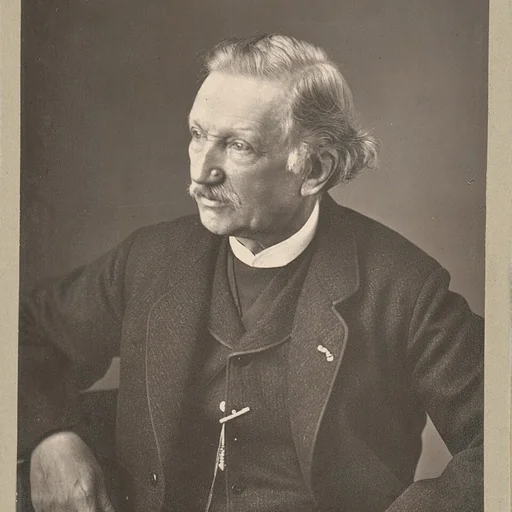
Artist
Charles-Émile Jacque (23 May 1813 – 7 May 1894) was a French painter of Pastoralism and engraver who was, with Jean-François Millet, part of the Barbizon School. He first learned to engrave maps when he spent seven years in the French Army.