Artwork
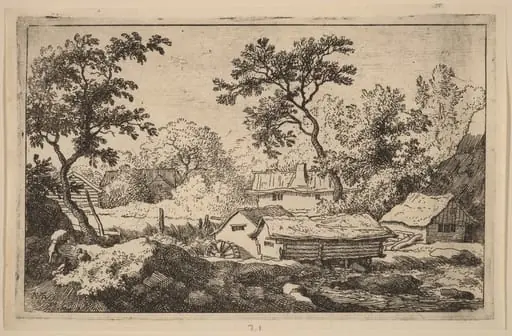
Two Cottages on a Bank
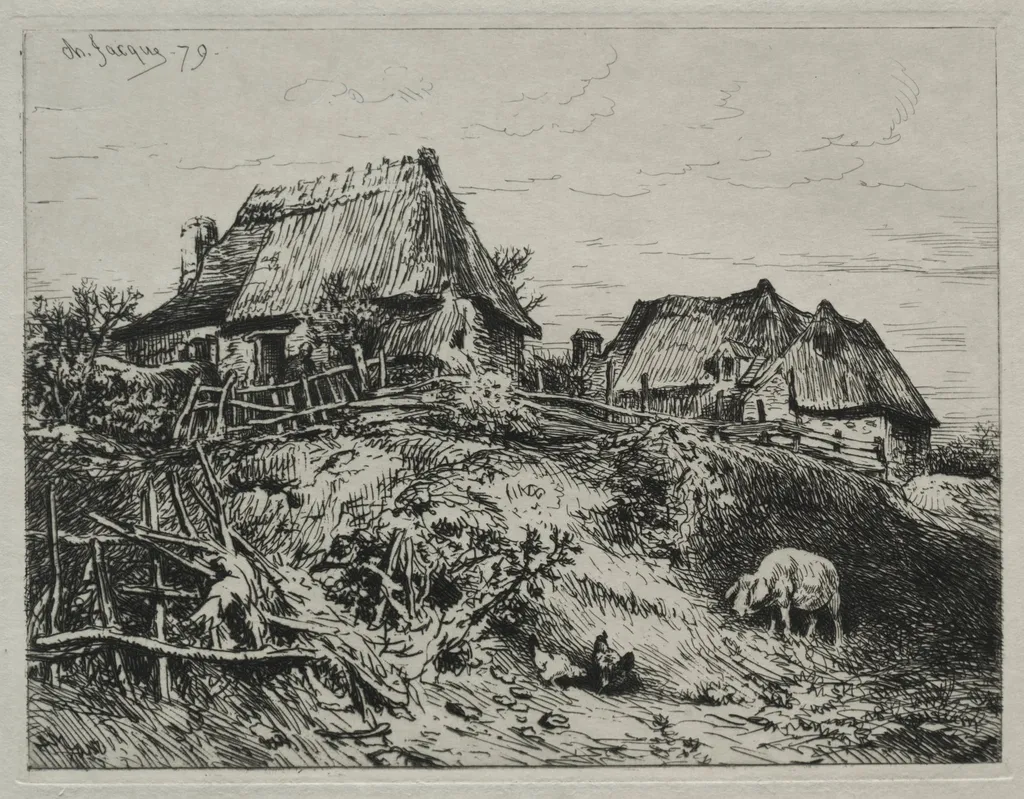
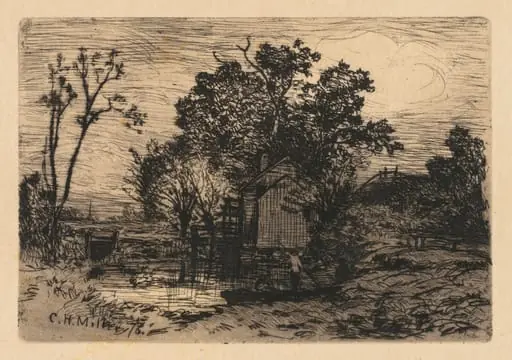
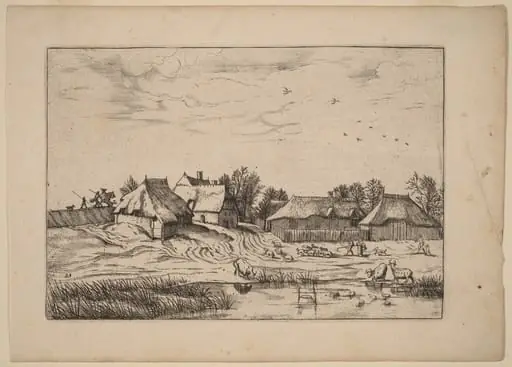
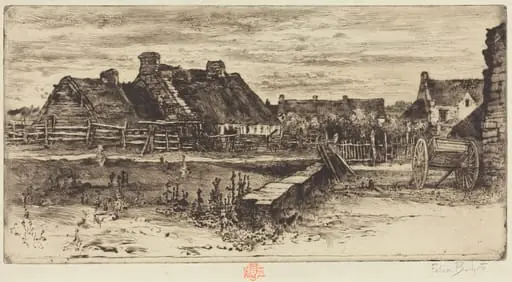
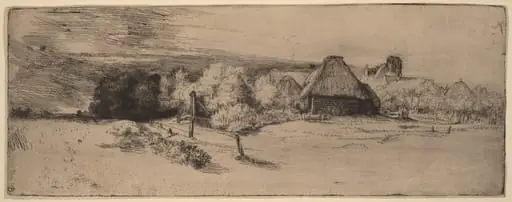
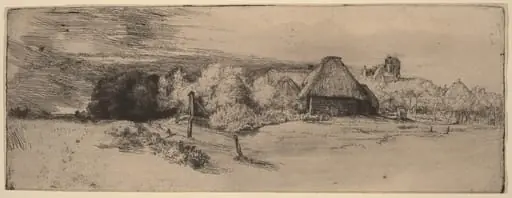
Two Cottages on a Bank is a print by the Impressionist artist Charles Jacque. It dates from 1879 and is held in the collection of the Cleveland Museum of Art.
About this work
Overview
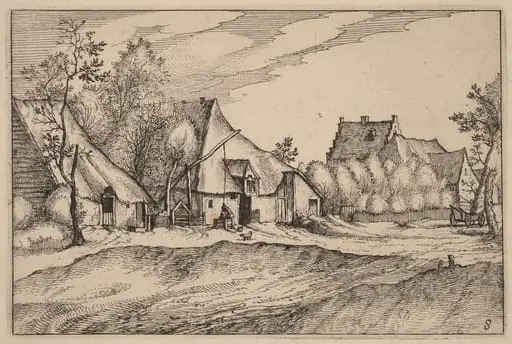
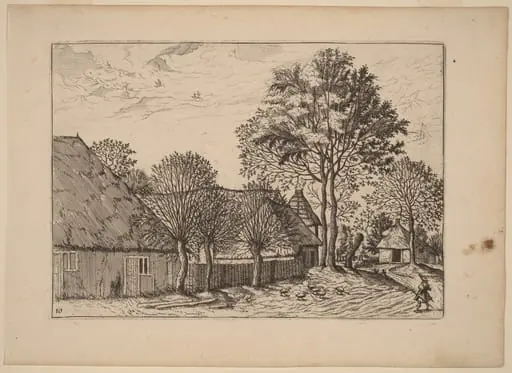
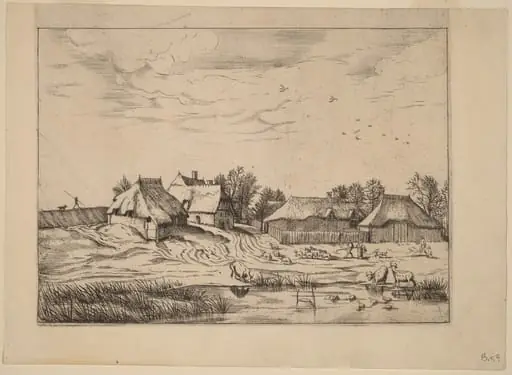
Created in 1879 by French artist Charles‑Émile Jacque, *Two Cottages on a Bank* is a print that presents a quiet rural scene. The composition centers on two modest stone cottages with thatched roofs, set back from a grassy riverbank and framed by trees and low vegetation.
Subject & Meaning
The work captures a moment of everyday country life, showing the cottages alongside a small animal—likely a sheep or goat—grazing near the water’s edge. By focusing on ordinary structures and a simple pastoral setting, the image reflects the Barbizon School’s interest in the dignity of rural existence.
Technique & Style
Jacque employs a restrained palette of earth tones, using subtle shifts of light and shadow to model the stone walls and thatch. The print’s line work and tonal gradations emphasize texture and atmosphere, aligning with the school’s naturalistic approach that predates, yet anticipates, later Impressionist concerns with light.
History & Provenance
As a member of the Barbizon circle, Jacque produced this piece alongside contemporaries such as Jean‑François Millet, who shared his focus on agrarian subjects. The print has remained within collections that document 19th‑century French landscape art, illustrating the period’s shift toward depicting unidealized countryside scenes.
Own this work as a print
Artist & collection
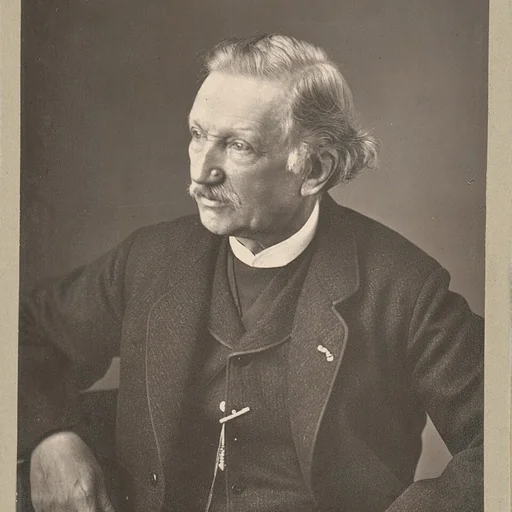
Artist
Charles-Émile Jacque (23 May 1813 – 7 May 1894) was a French painter of Pastoralism and engraver who was, with Jean-François Millet, part of the Barbizon School. He first learned to engrave maps when he spent seven years in the French Army.