Artwork
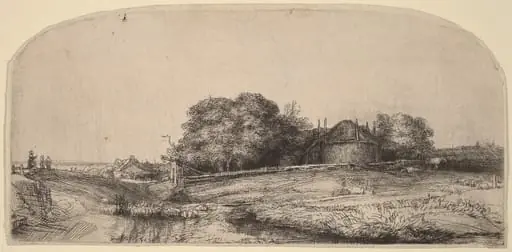
Landscape with Trees, Farm Buildings and a Tower
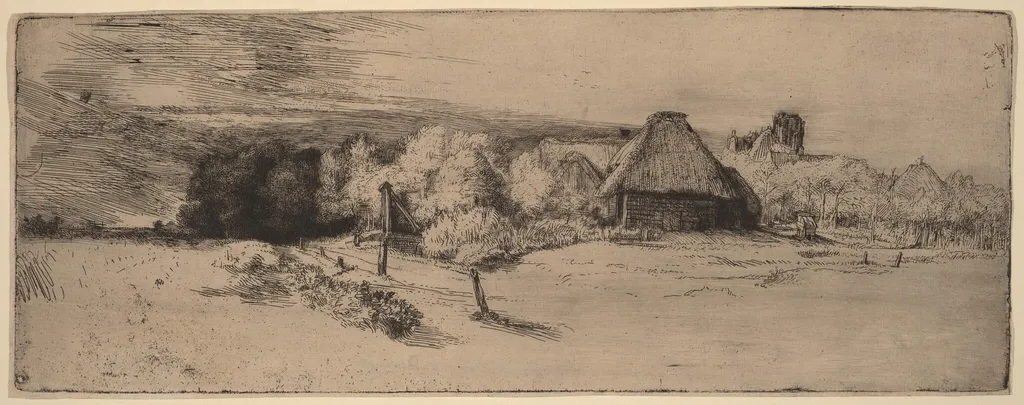
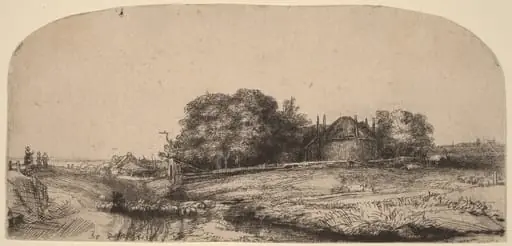
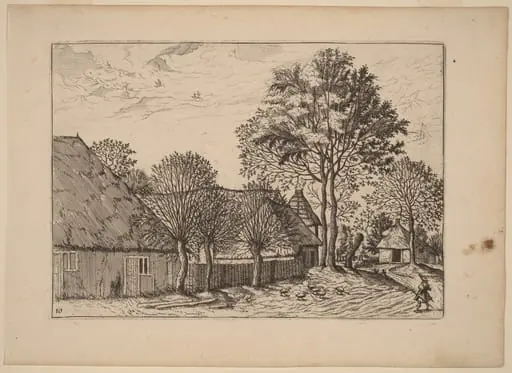
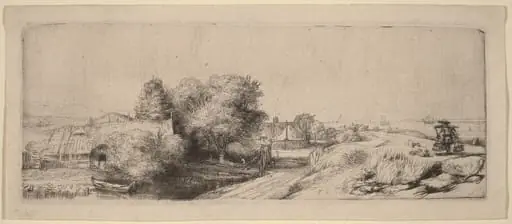
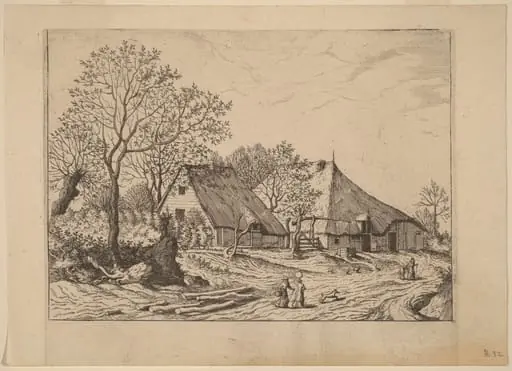
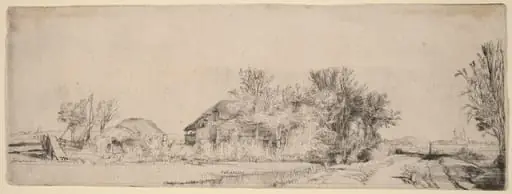
Landscape with Trees, Farm Buildings and a Tower is an ink print by the Baroque artist Rembrandt. It dates from 1651 and is held in the collection of the National Gallery of Art.
About this work
Overview
Created around 1651, this print by Rembrandt van Rijn combines etching and drypoint techniques to depict a rural Dutch scene.
Created around 1651, this print by Rembrandt van Rijn combines etching and drypoint techniques to depict a rural Dutch scene. Unlike painted landscapes, it relies on incised lines on a metal plate to produce tonal variation and texture. The composition is quiet and unidealized, focusing on ordinary elements—farm buildings, scattered trees, and a distant tower—rendered with subtle atmospheric depth.
Subject & Meaning
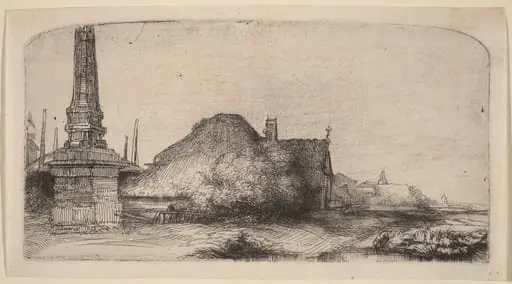
The scene presents a modest countryside, devoid of human figures, emphasizing solitude and the passage of time. A thatched farmhouse, bare trees, and a looming tower suggest the quiet persistence of rural life. The tower, partially obscured, may reference local architecture or serve as a visual anchor, grounding the composition in a specific, unembellished reality rather than an idealized vision.
Technique & Style
Rembrandt employed etching to define broad forms and drypoint to add rich, velvety lines, particularly in the sky and tree trunks. The sky’s textured strokes evoke wind and movement, while the ground’s patchy, uneven lines suggest uneven earth and sparse vegetation. The interplay of fine, deliberate marks and loose, expressive strokes reveals his mastery in manipulating ink and plate to achieve depth and mood.
History & Provenance
The print was produced during Rembrandt’s later years, a period marked by personal hardship and artistic experimentation. Though its early ownership is undocumented, it entered major collections in the 18th and 19th centuries, recognized for its technical innovation. Multiple impressions survive, reflecting its circulation among collectors and artists who studied his printmaking methods.
Context
In mid-17th century Holland, landscape prints were increasingly valued for their intimacy and realism. Rembrandt’s work diverged from idealized pastoral scenes, instead capturing the quiet dignity of everyday rural life. His use of etching and drypoint aligned with a broader interest in printmaking as a medium for personal expression, not just reproduction.
Legacy
This print influenced later generations of printmakers through its expressive use of line and tonal gradation. Its unadorned subject matter and technical experimentation helped redefine landscape printmaking as a vehicle for emotional resonance. Scholars continue to study its layered marks as a testament to Rembrandt’s evolving approach to light, texture, and atmosphere.
Artist & collection
Artist
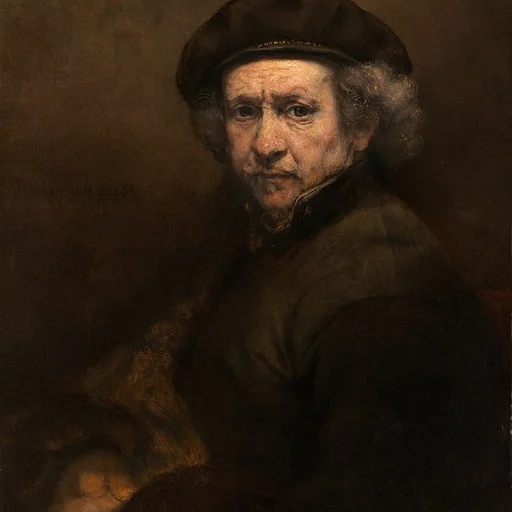
Rembrandt Harmenszoon van Rijn (15 July 1606 – 4 October 1669), known mononymously as Rembrandt, was a Dutch Golden Age painter, printmaker, and draughtsman.