Artwork
Two Pigs
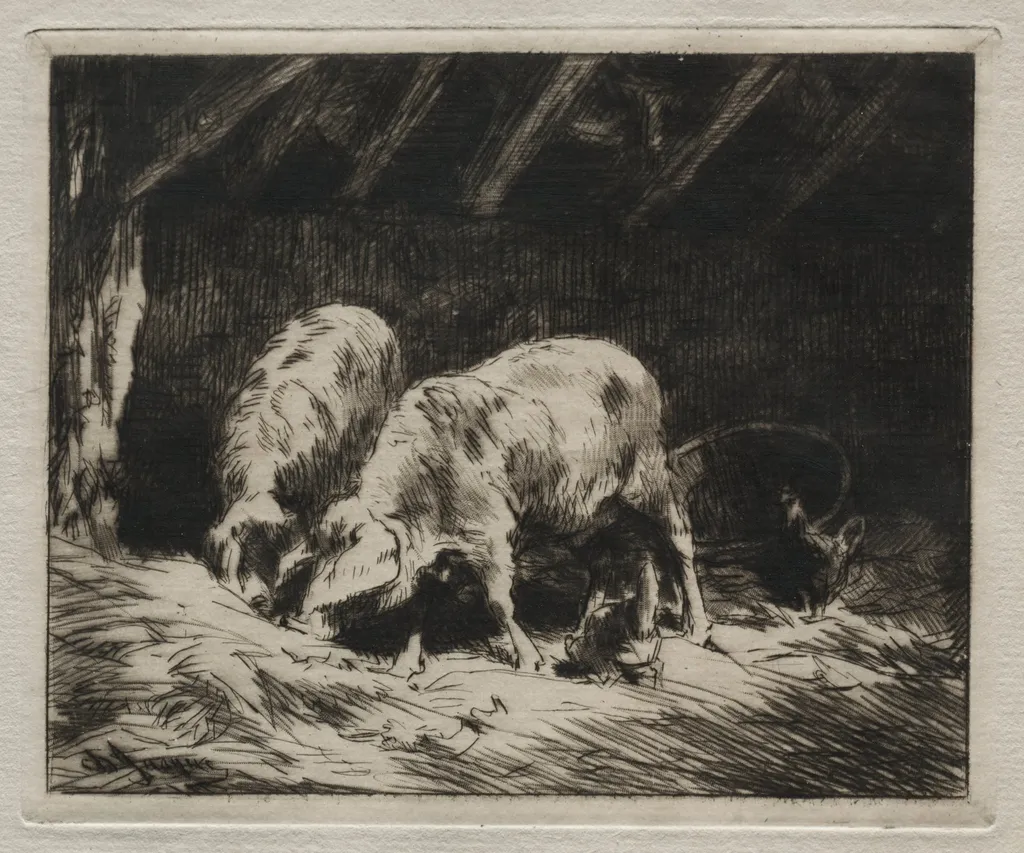
Two Pigs is a print by the Impressionist artist Charles Jacque. It dates from 1884 and is held in the collection of the Cleveland Museum of Art.
About this work
Overview
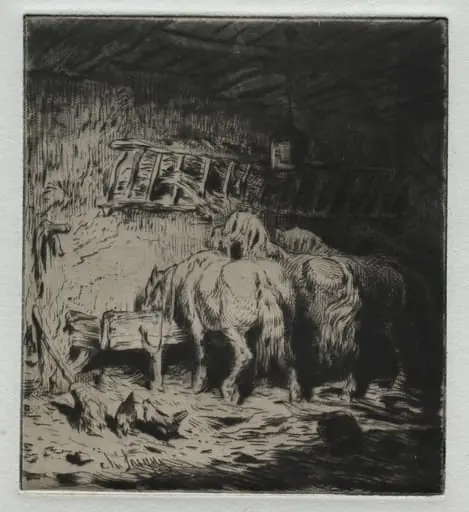
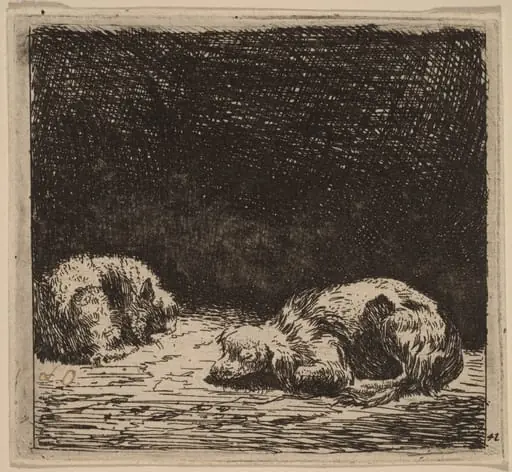
Created in 1884, *Two Pigs* is a print by French artist Charles‑Émile Jacque, who was active in the Barbizon circle. The image presents a modest rural tableau: two pigs feeding from a heap of hay against a dark, textured backdrop that suggests a barn wall or fence. The composition reflects the artist’s interest in ordinary farm life.
Subject & Meaning
The work isolates the two animals, emphasizing their natural behavior and the simple act of feeding. By focusing on such a quotidian moment, Jacque underscores the dignity of everyday labor and the intimate relationship between livestock and the countryside, themes central to the Barbizon School’s celebration of rural existence.
Technique & Style
Jacque employs loose, sketchy lines that convey the softness of the pigs’ fur and the coarse texture of the hay. The uneven strokes create a sense of immediacy, while the dark, rough background provides contrast and depth, reinforcing the tactile quality of the scene without detailed modeling.
History & Provenance
Charles‑Émile Jacque, a contemporary of Jean‑François Millet, produced the print during the later phase of his career, when he was consolidating his reputation as a chronicler of agrarian subjects. The piece remains documented within collections that focus on 19th‑century French realism and the Barbizon movement.
Own this work as a print
Artist & collection
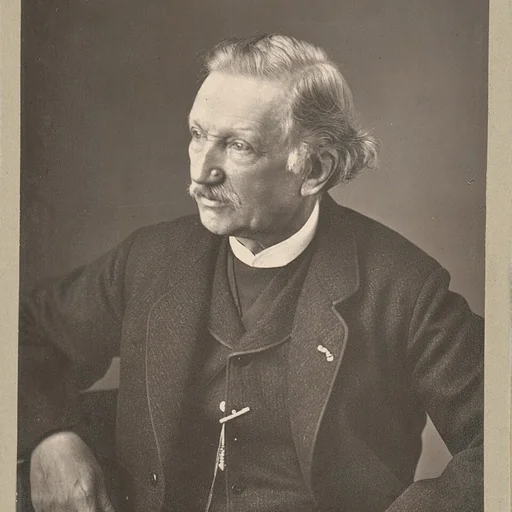
Artist
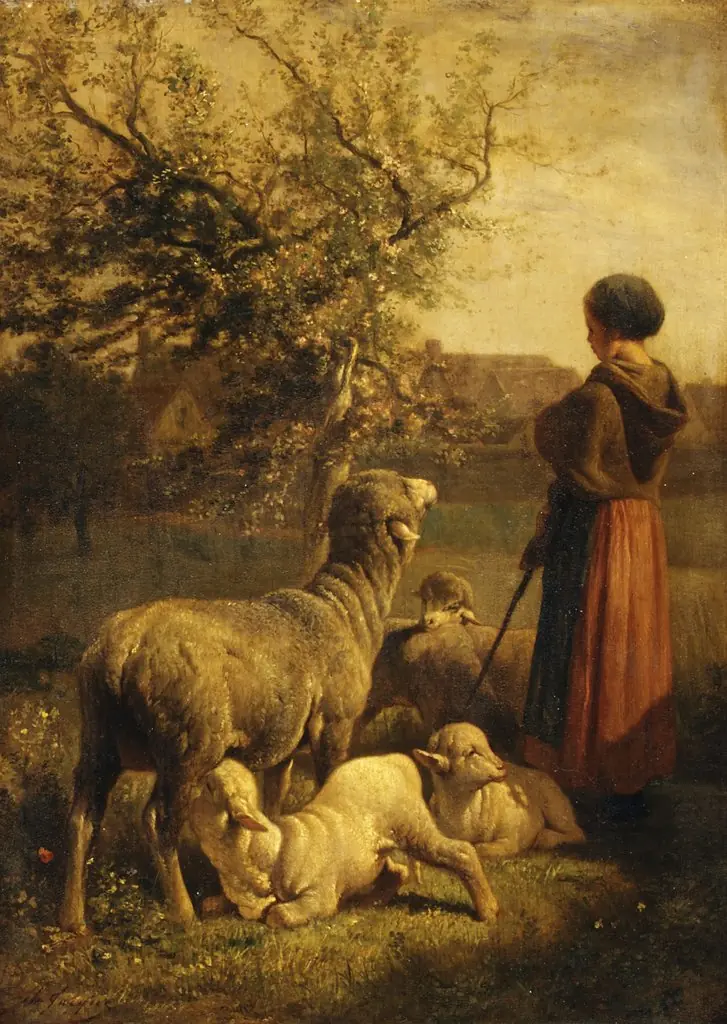
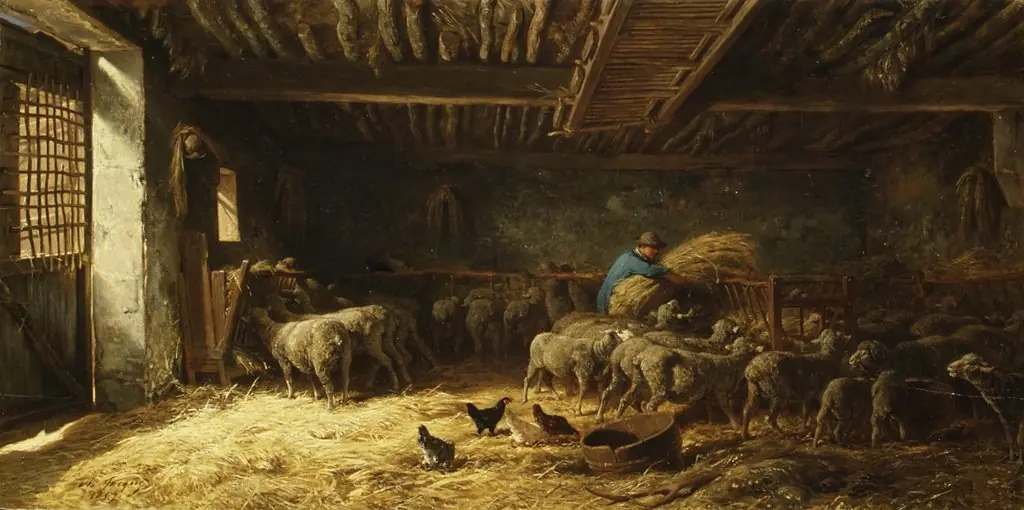
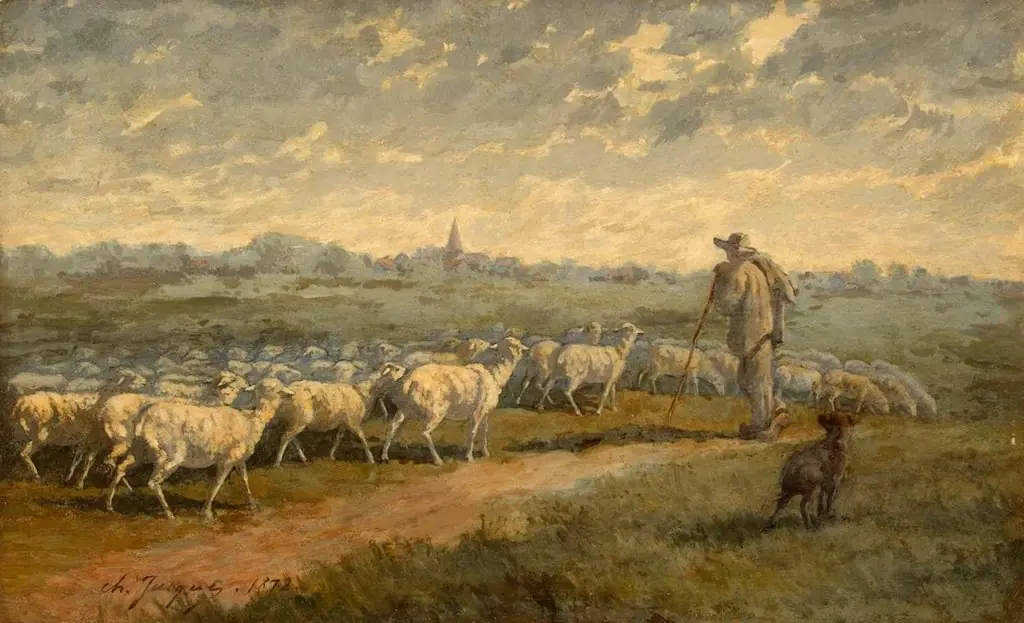
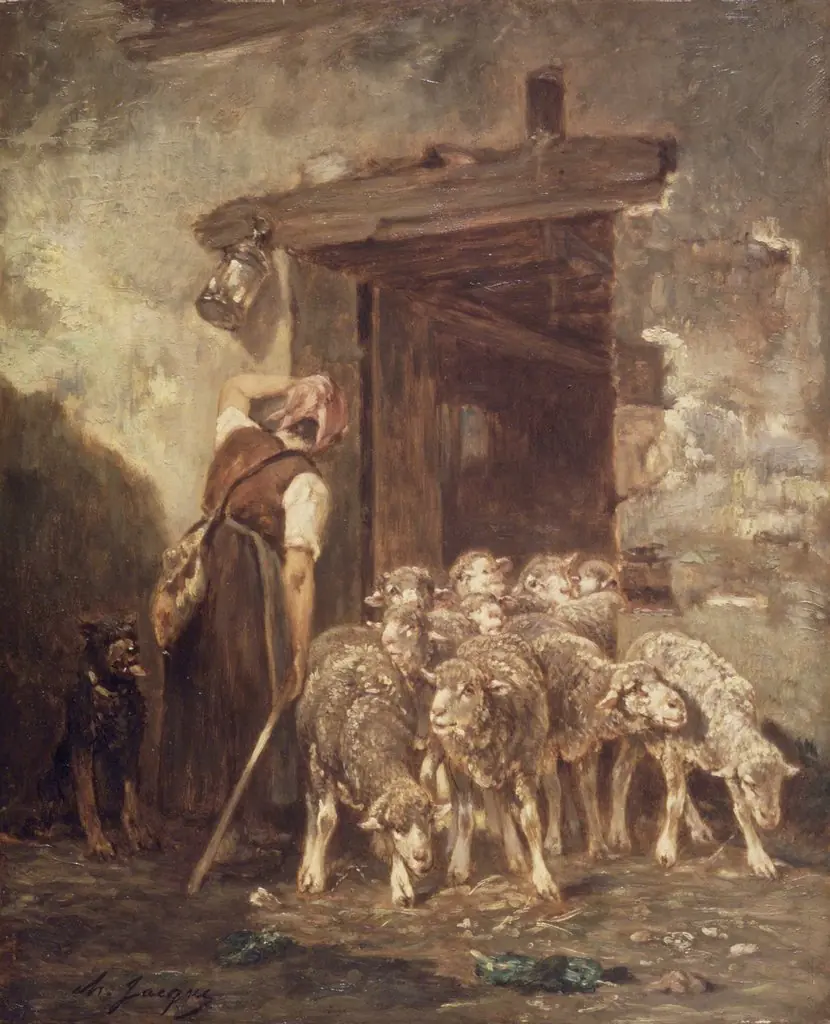
Charles-Émile Jacque (23 May 1813 – 7 May 1894) was a French painter of Pastoralism and engraver who was, with Jean-François Millet, part of the Barbizon School. He first learned to engrave maps when he spent seven years in the French Army.