Artwork
Harvest Scenes, Tomb of Menna
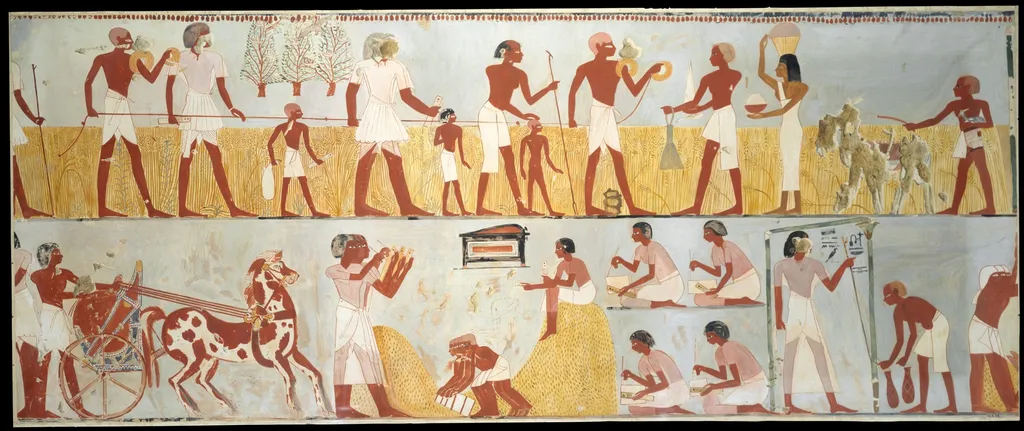
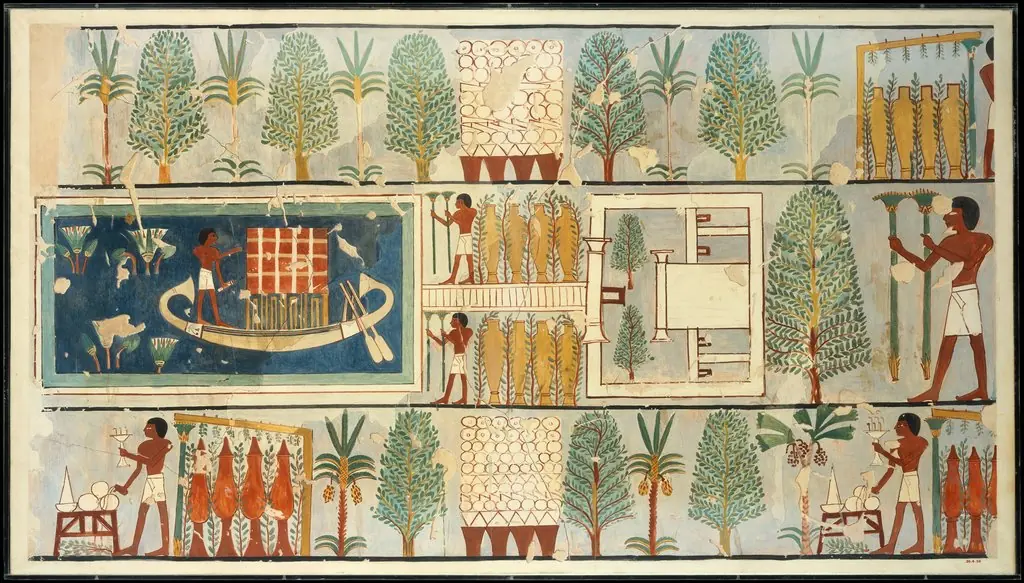
Harvest Scenes, Tomb of Menna is an unspecified painting by Charles Wilkinson. It is held in the collection of the Metropolitan Museum of Art. This wall painting comes from the Theban tomb of Menna, an official in ancient Egypt’s New Kingdom administration.
About this work
Overview
The scene was intended to ensure the deceased’s continued prosperity in the afterlife through symbolic repetition of vital tasks.
This wall painting comes from the Theban tomb of Menna, an official in ancient Egypt’s New Kingdom administration. It depicts a rural labor scene, rendered in flat, stylized forms typical of Egyptian funerary art. The composition centers on agricultural activity, with figures engaged in fieldwork under a pale blue sky. A horse-drawn chariot appears in the foreground, suggesting oversight or transport. The scene was intended to ensure the deceased’s continued prosperity in the afterlife through symbolic repetition of vital tasks.
Subject & Meaning
The painting illustrates the seasonal cycle of farming, likely harvest or land preparation, with workers using hoes and carrying baskets. Their white loincloths indicate common laborers, while the presence of a chariot implies supervision by a landowner or official—possibly Menna himself. In Egyptian belief, such scenes guaranteed the tomb owner’s eternal access to food and abundance. The depiction is not a literal record but a ritualized affirmation of order and productivity in the next world.
Technique & Style
Executed in tempera on plaster, the painting uses outlined figures filled with flat, unmodulated colors. Human forms follow canonical proportions: heads in profile, torsos frontal, legs in profile. The background is a uniform light blue, with subtle ochre and yellow accents for soil and vegetation. Tools and figures are arranged in horizontal registers, emphasizing clarity over depth. The chariot’s dynamic positioning introduces motion, yet the overall composition remains rigidly structured, adhering to traditional Egyptian artistic conventions.
History & Provenance
The painting was discovered in the Theban necropolis, likely during early 20th-century excavations. It was acquired by the Metropolitan Museum of Art in 1920 as part of a division of finds from the Egyptian Expedition’s work in Tomb TT69. Its preservation is exceptional, with minimal pigment loss. The tomb belonged to Menna, a scribe and overseer of fields during the reign of Thutmose IV or Amenhotep III, placing the artwork in the 18th Dynasty, circa 1400 BCE.
Context
Tomb paintings like this were standard in elite burials of the New Kingdom, serving as magical substitutes for real-world labor. Agricultural scenes were especially common, reflecting Egypt’s dependence on the Nile’s cycles. Menna’s tomb includes multiple such vignettes, each documenting different stages of farming. These images reinforced social hierarchy and divine order, aligning the deceased with the eternal rhythms of nature and state authority.
Legacy
This painting remains a key example of Egyptian funerary art’s symbolic function. It illustrates how daily labor was transformed into eternal ritual through visual convention. Modern scholars use such scenes to reconstruct ancient farming practices and social structures. While not innovative in technique, its clarity and preservation make it a frequently referenced work in studies of Egyptian daily life and afterlife beliefs.
Artist & collection
Artist
Egyptian artists carved lively scenes on tomb walls to keep the dead company. Wilkinson’s bundle offers five such reliefs, from a falcon guarding a pharaoh to wine presses and chariots left behind for the next world.…

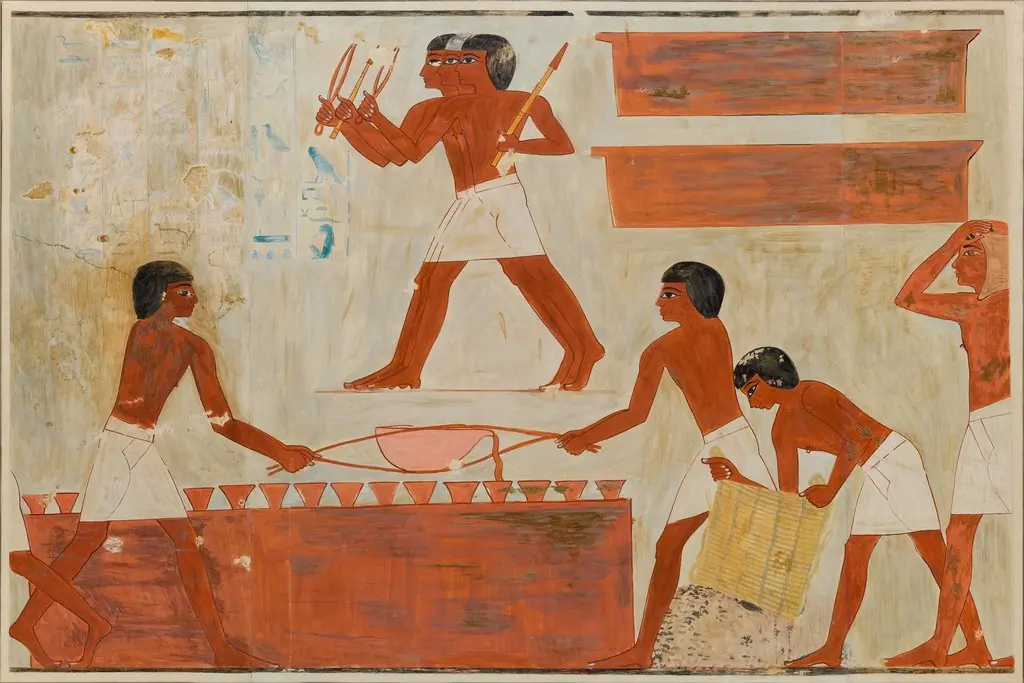 Casting Metal, Tomb of Rekhmire
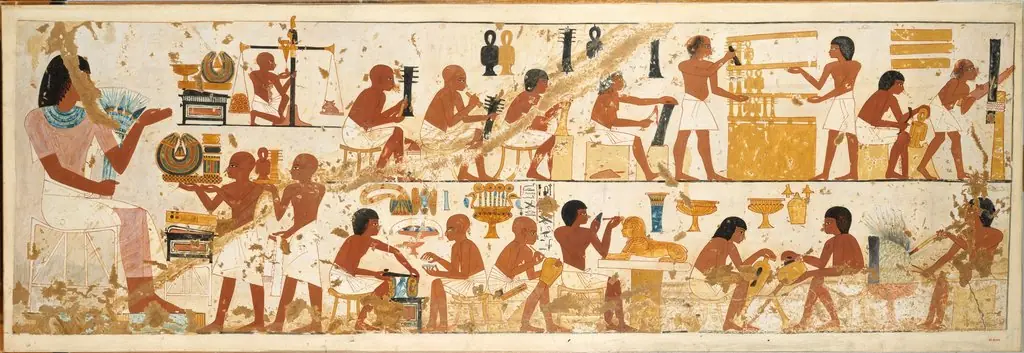 Craftsmen, Tomb of Nebamun and Ipuky
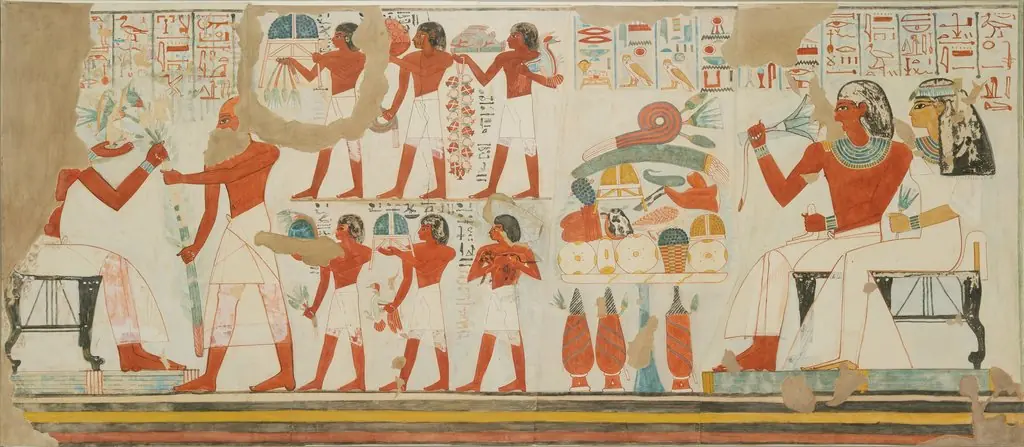 Offerings Made to the Deceased and his Wife, Tomb of Djehutyemheb
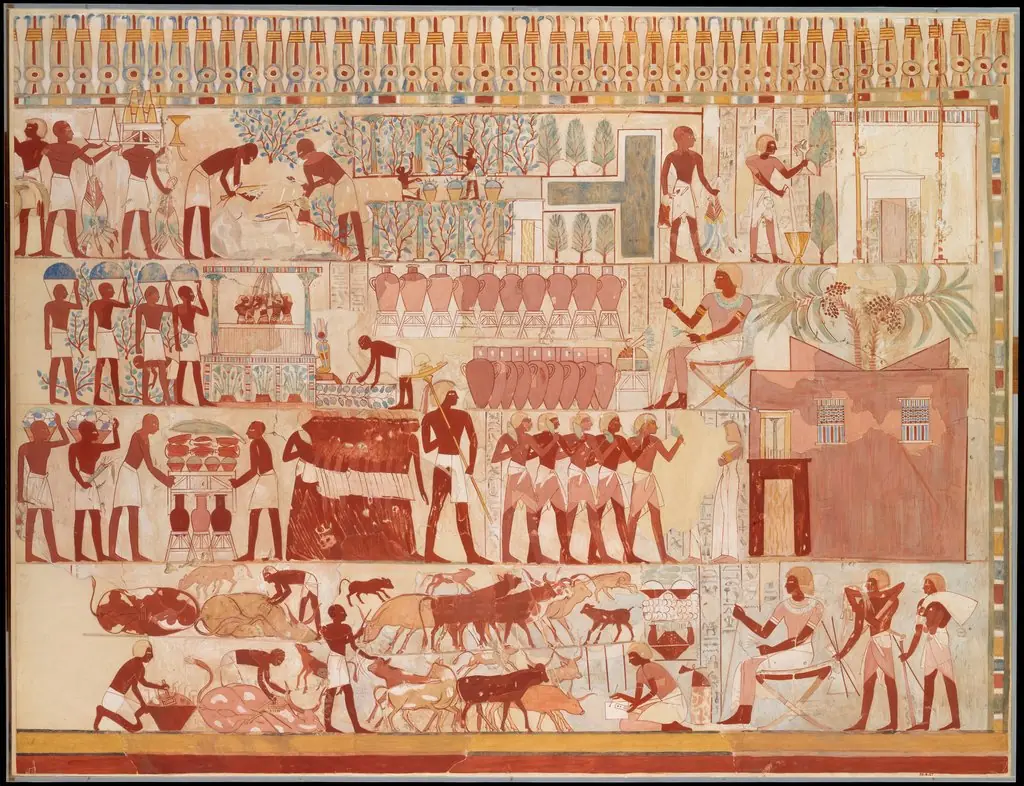 Nebamun Supervising Estate Activities, Tomb of Nebamun
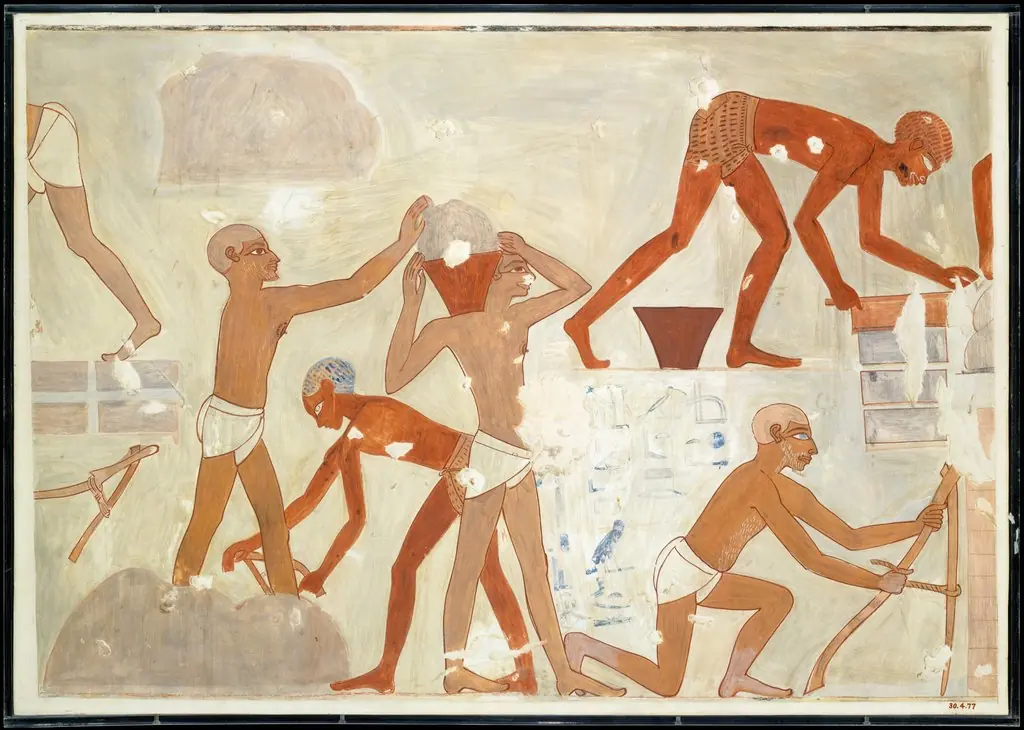 Brickmakers, Tomb of Rekhmire
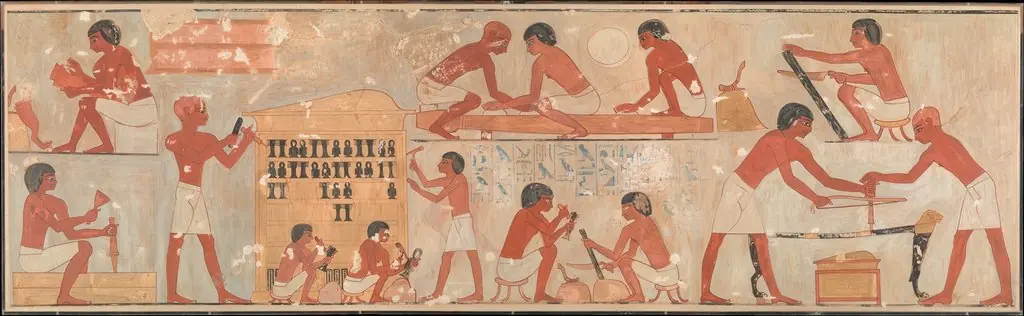 Carpenters at Work, Tomb of Rekhmire
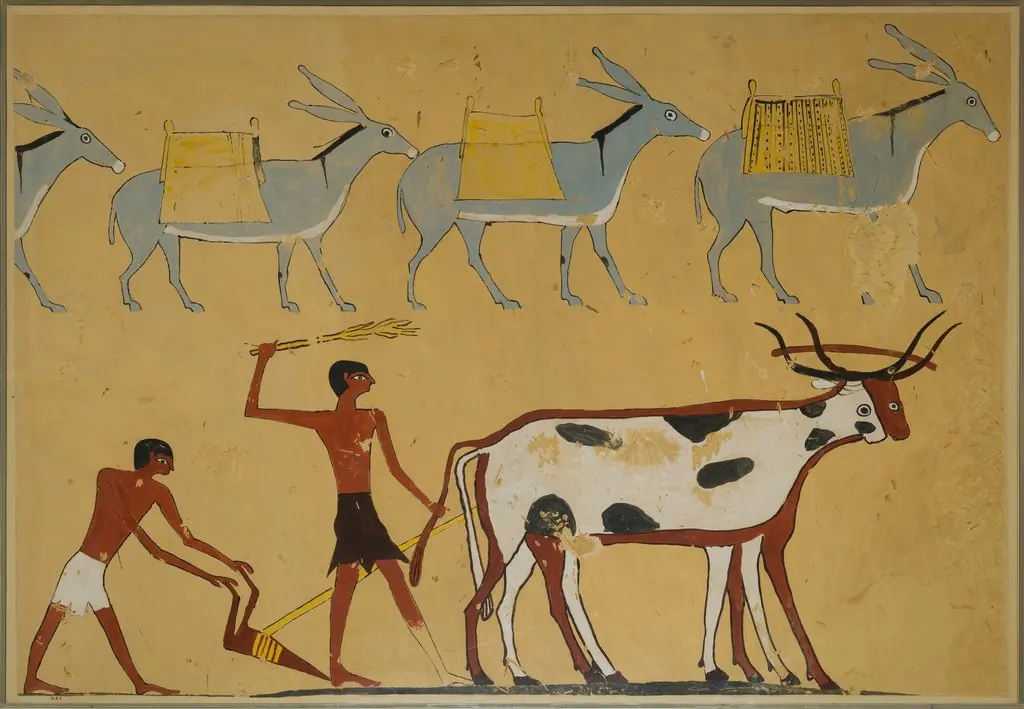 Laden Donkeys and Ploughing, Tomb of Djar
 Stringing and Drilling Beads, Tomb of Rekhmire
 Sennedjem and Iineferti in the Fields of Iaru