Artwork
Étude de Mandiants (Study of Beggars)
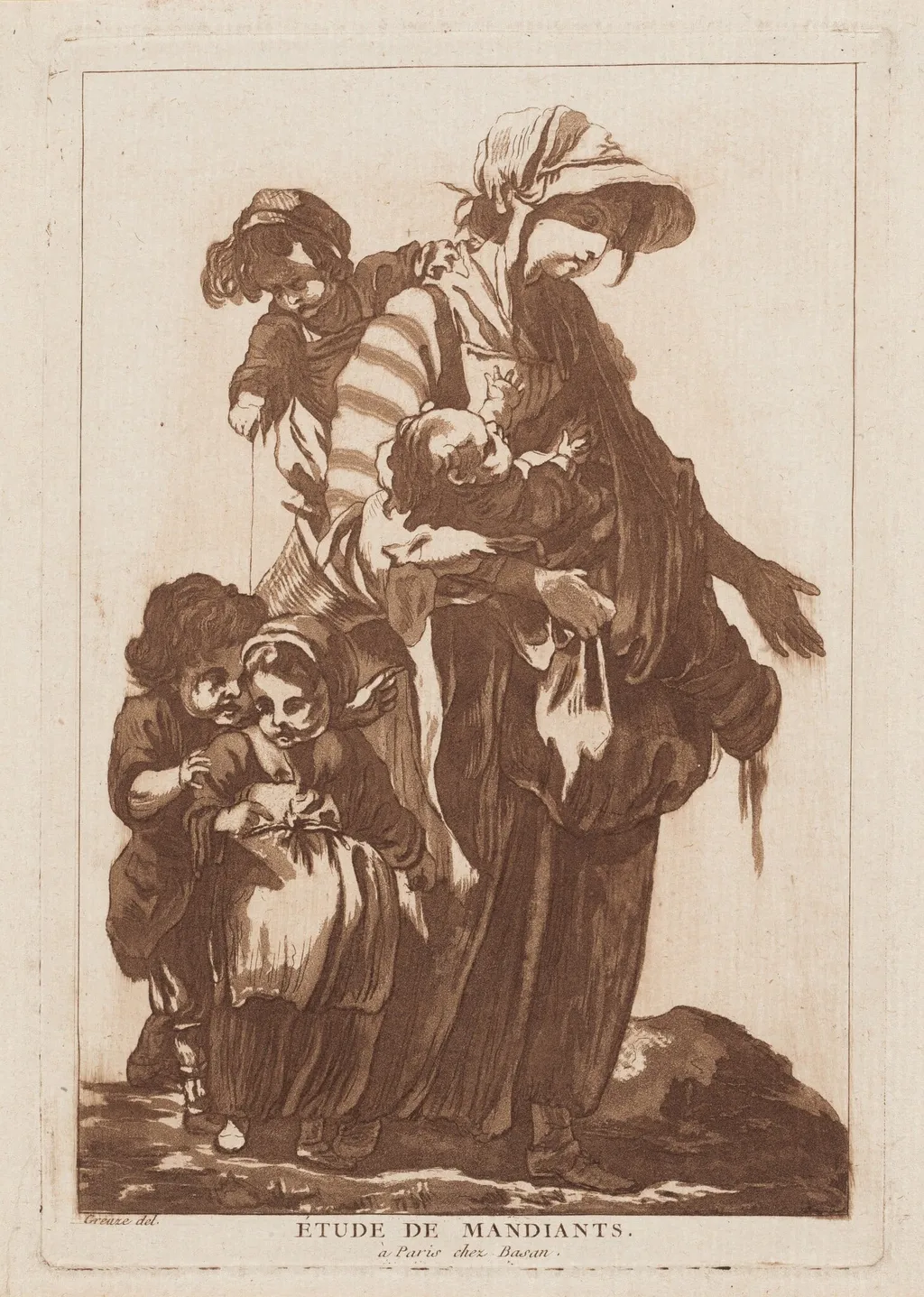
Étude de Mandiants (Study of Beggars) is an ink print by the Romanticist artist François-Philippe Charpentier. It dates from 1764 and is held in the collection of the National Gallery of Art.
About this work
Overview
Étude de Mandiants (Study of Beggars) is a 1764 print by French engraver François-Philippe Charpentier, executed in etching and aquatint on laid paper in a monochromatic brown hue.
Subject & Meaning
The print portrays a group of weary, impoverished individuals, including a woman with a baby and children, conveyed with emotional depth through a loose, expressive technique rather than direct realism.
Technique & Style
Charpentier's innovative use of an early mechanical aquatint process, combined with etching, achieves a detailed, tonal quality, emphasizing the subjects' plight with rough, earthy brown tones on textured paper.
History & Provenance
Created in 1764 by Charpentier, a pioneer in aquatint development, trained under a Parisian engraver after leaving Jesuit college; original training as a bookbinder's son influenced his later printmaking innovations.
Context
Reflects 18th-century French societal awareness of poverty, presented through a sympathetic, nuanced artistic lens facilitated by Charpentier's technical advancements in printmaking.
Legacy
Contributed significantly to the evolution of printmaking techniques, particularly in aquatint, influencing subsequent generations of artists with its expressive and emotional rendering capabilities.
Artist & collection

Artist
François-Philippe Charpentier (b. Blois, 1734; d. there 22 July 1817) was a French engraver and inventor. His father was a bookbinder, a poor man who reportedly made many sacrifices so that his son might attend the…

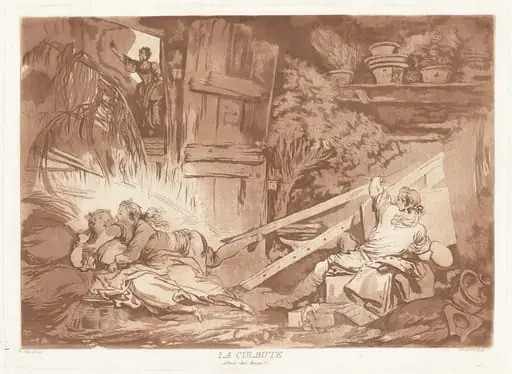 La Culbute (The Tumble)
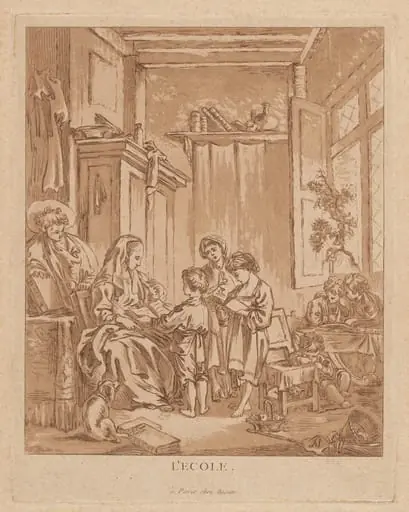 L’École (The School)
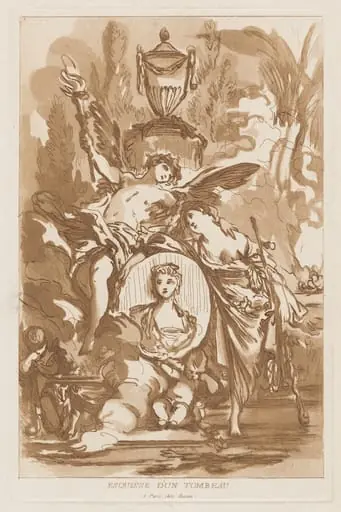 Esquisse d’un tombeau (Sketch for a Tomb)
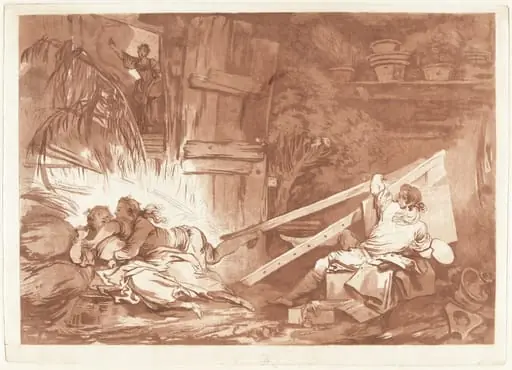 The Tumble
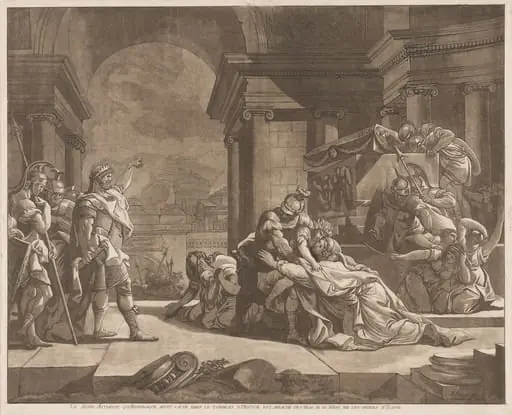 Le Jeune Astianax qu’Andromaque avoit caché dans le tombeau d’Hector est arraché des bras de sa Mere par les ordres d'Ulisse (Young Astianax, who Andromache Hid in Hector's Tomb, is Seized from his Mother's Arms by Ulysses' Orders)
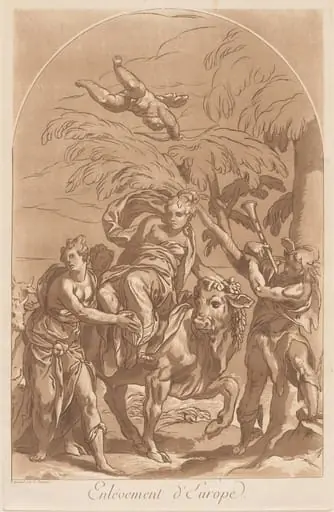 Rape of Europa
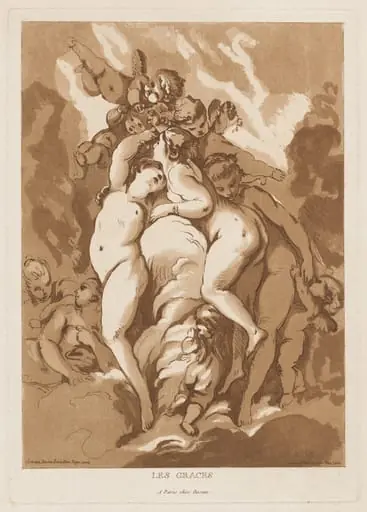 Les Graces (The Graces)
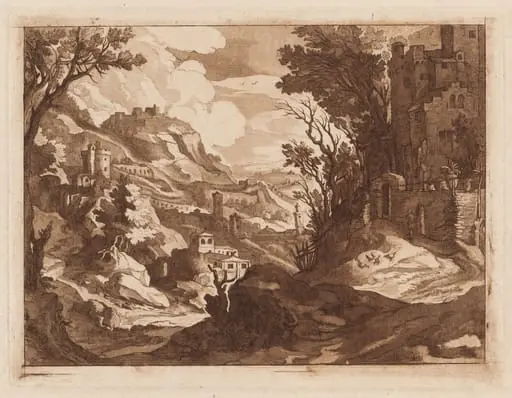 Alpine Landscape
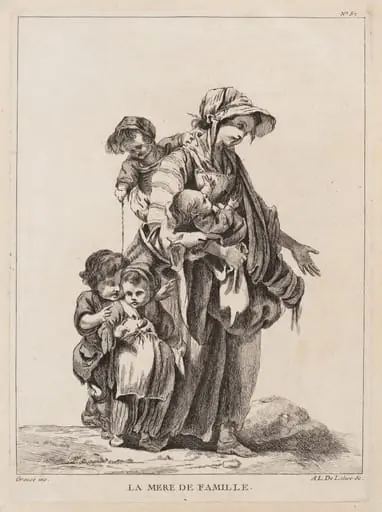 La Mère de famille (The Mother of the Family)
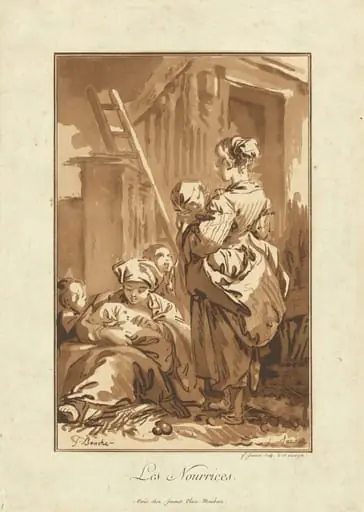 Les Nourrices (The Nurses)
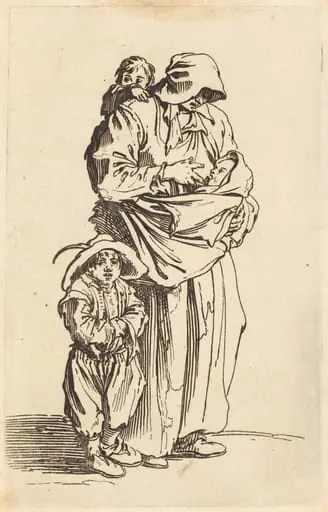 Mother and Three Children
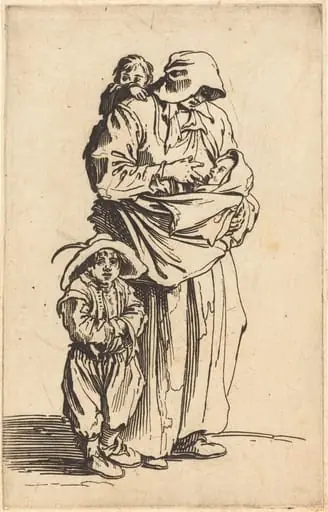 Mother and Three Children
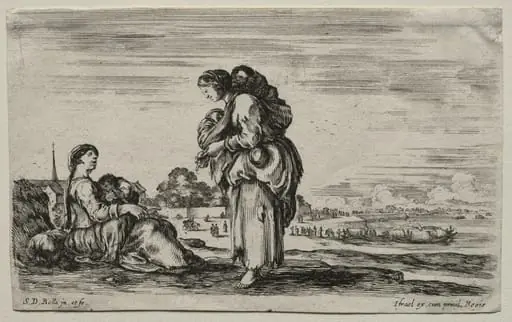 Various Figures and Landscapes: Two Mothers Chatting Together
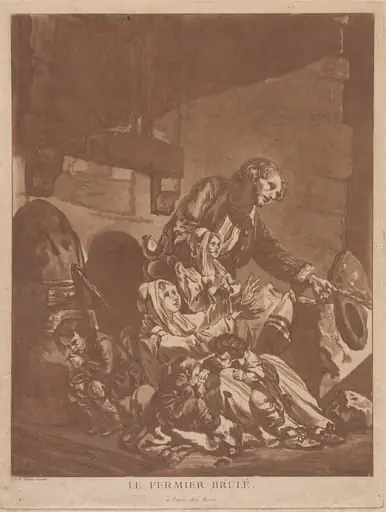 Le Fermier brulé (A Burnt-Out Farmer, Begging with his Family)
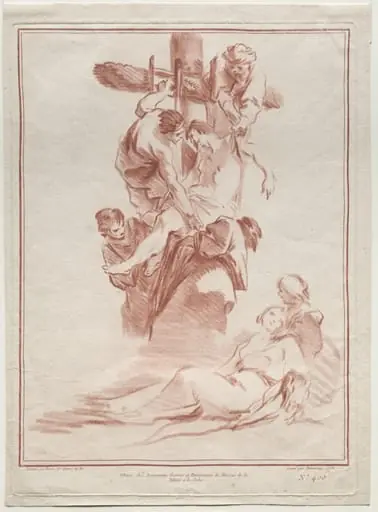 The Descent from the Cross
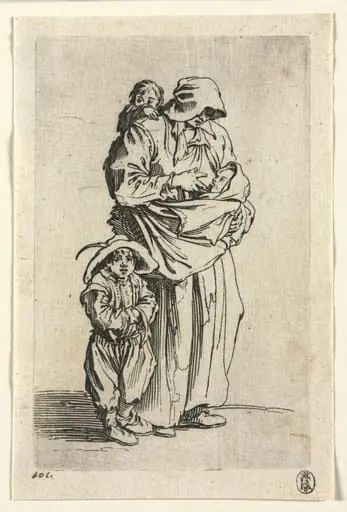 The Beggars: A Mother and Her Three Children
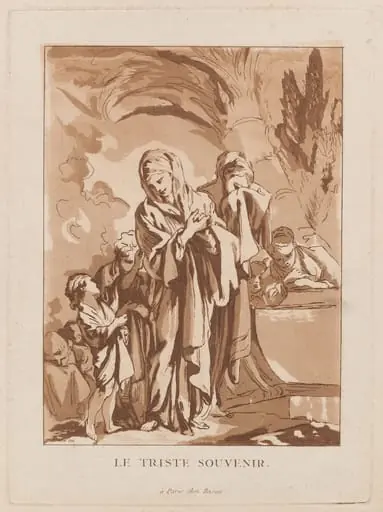 Le Triste Souvenir (The Sad Memory)
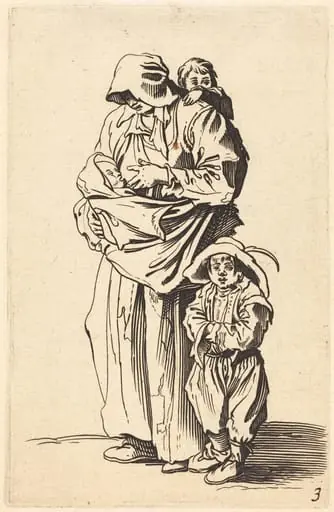 Mother and Three Children
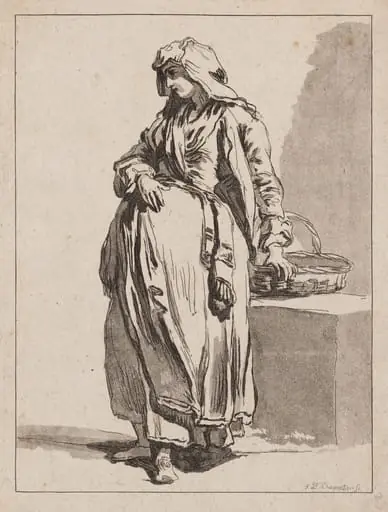 Italian Peasant Woman
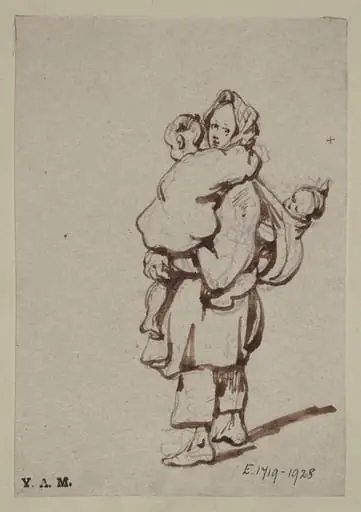 A boatwoman with two children