Artwork
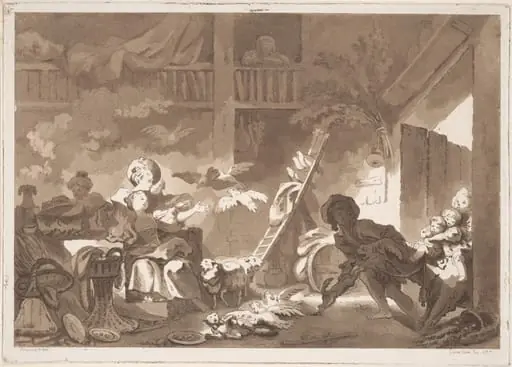
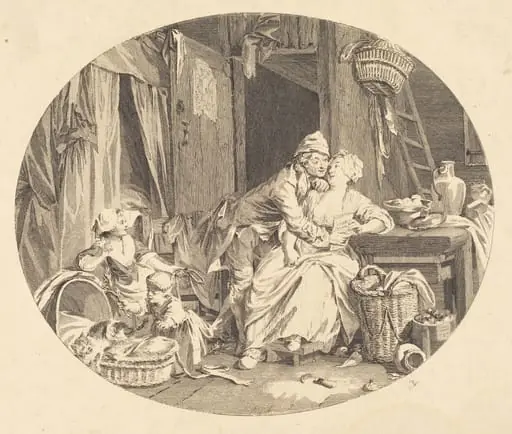
La Culbute (The Tumble)
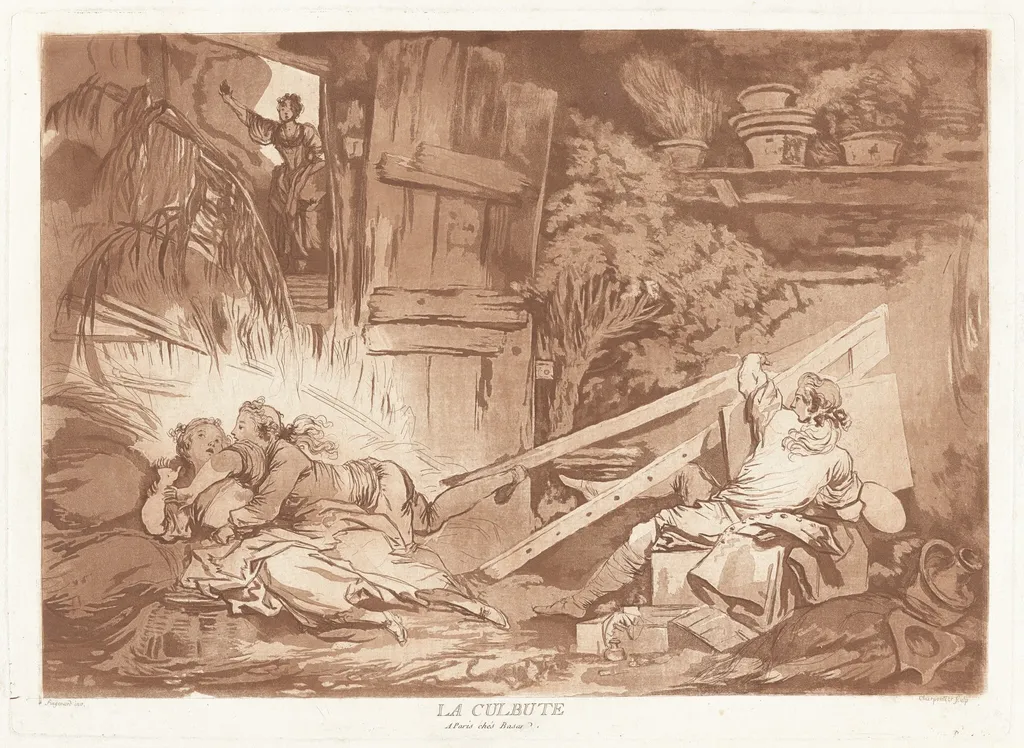
La Culbute (The Tumble) is an ink print by the Baroque artist François-Philippe Charpentier. It dates from 1766 and is held in the collection of the National Gallery of Art.
About this work
Overview
La Culbute (The Tumble) is a 1766 print by François-Philippe Charpentier, a French engraver and inventor. Created using etching and aquatint on laid paper, it showcases Charpentier's technical innovations in printmaking.
Subject & Meaning
The print depicts a chaotic scene with figures in various states of distress, including a person falling from a ladder and a woman reacting in a doorway. The setting is a rustic building with scattered objects, conveying a sense of sudden commotion.
Technique & Style
Charpentier's use of etching and aquatint creates texture and depth, while the brown ink adds a warm tone. The techniques employed contribute to the overall energy and movement in the scene.
History & Provenance
Charpentier, born in 1734 in Blois, was trained in Paris after leaving a Jesuit college. He developed early innovations in aquatint engraving, reflected in this 1766 work.
Artist & collection

Artist
François-Philippe Charpentier (b. Blois, 1734; d. there 22 July 1817) was a French engraver and inventor. His father was a bookbinder, a poor man who reportedly made many sacrifices so that his son might attend the…

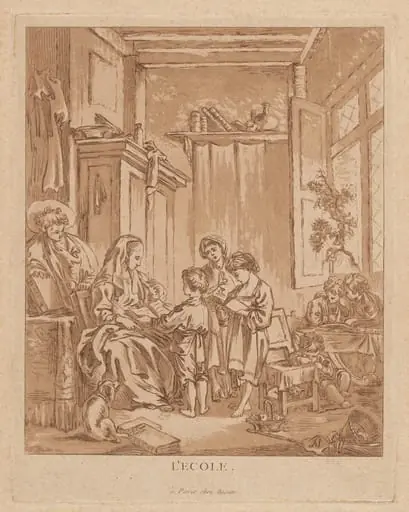 L’École (The School)
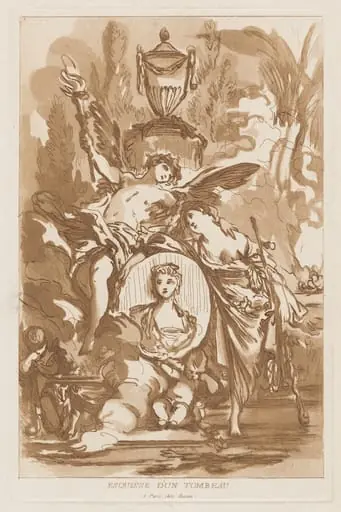 Esquisse d’un tombeau (Sketch for a Tomb)
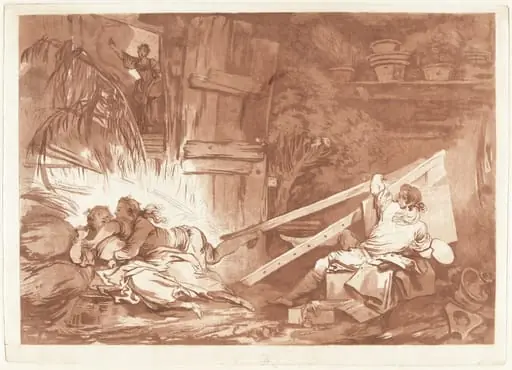 The Tumble
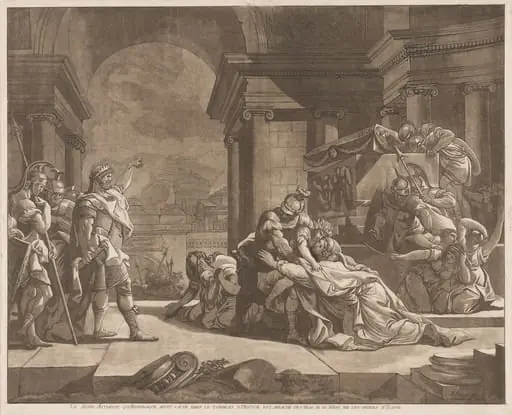 Le Jeune Astianax qu’Andromaque avoit caché dans le tombeau d’Hector est arraché des bras de sa Mere par les ordres d'Ulisse (Young Astianax, who Andromache Hid in Hector's Tomb, is Seized from his Mother's Arms by Ulysses' Orders)
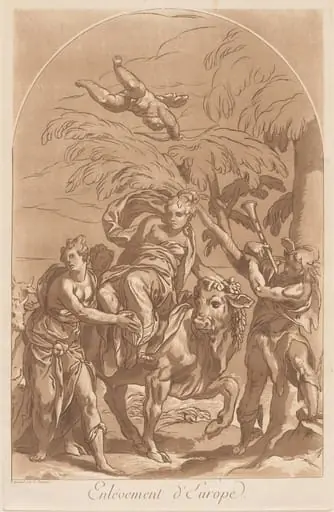 Rape of Europa
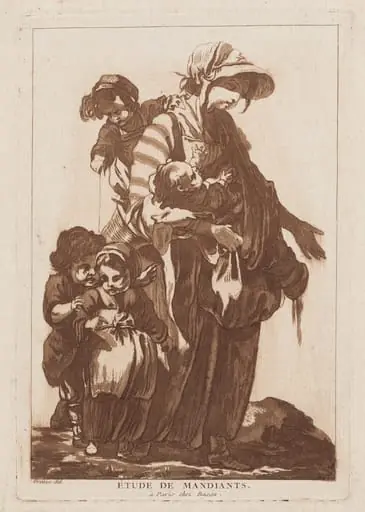 Étude de Mandiants (Study of Beggars)
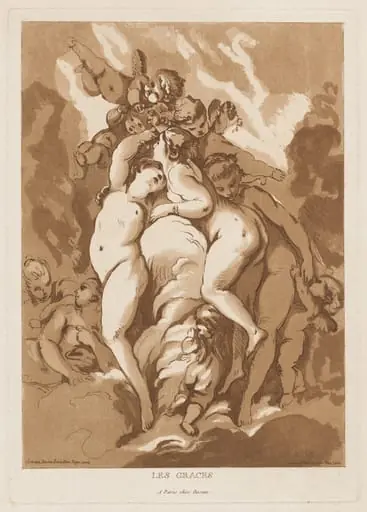 Les Graces (The Graces)
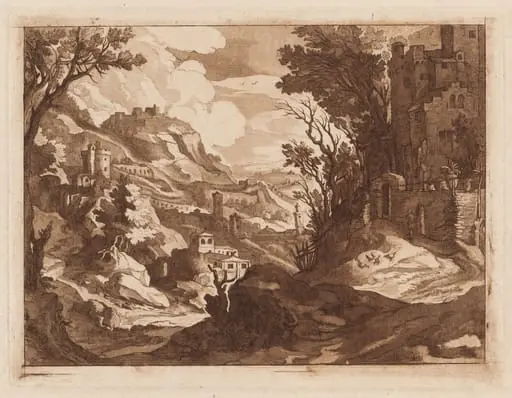 Alpine Landscape