Artwork
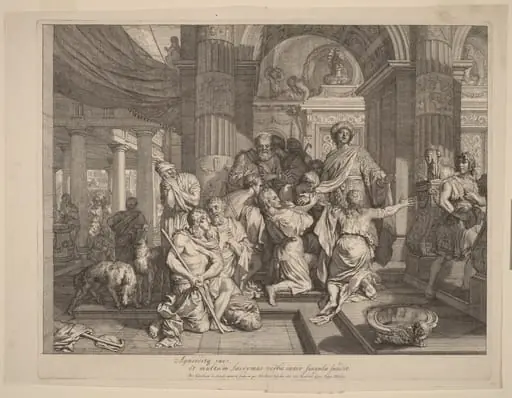
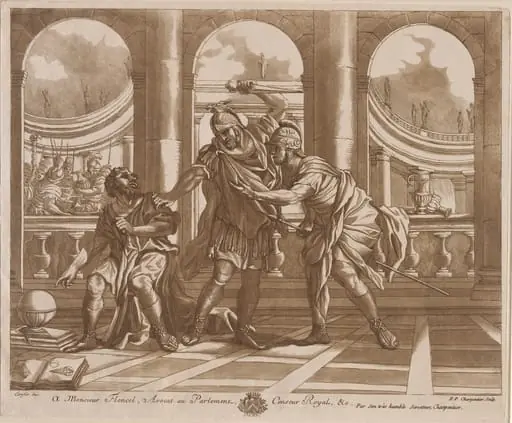
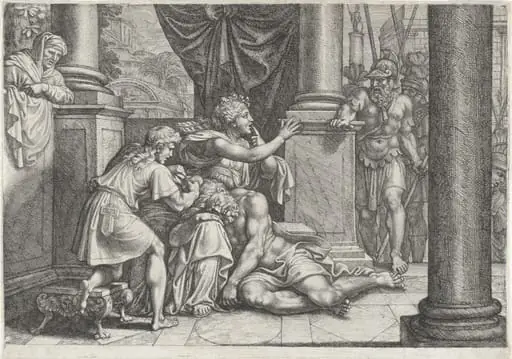
Le Jeune Astianax qu’Andromaque avoit caché dans le tombeau d’Hector est arraché des bras de sa Mere par les ordres d'Ulisse (Young Astianax, who Andromache Hid in Hector's Tomb, is Seized from his Mother's Arms by Ulysses' Orders)
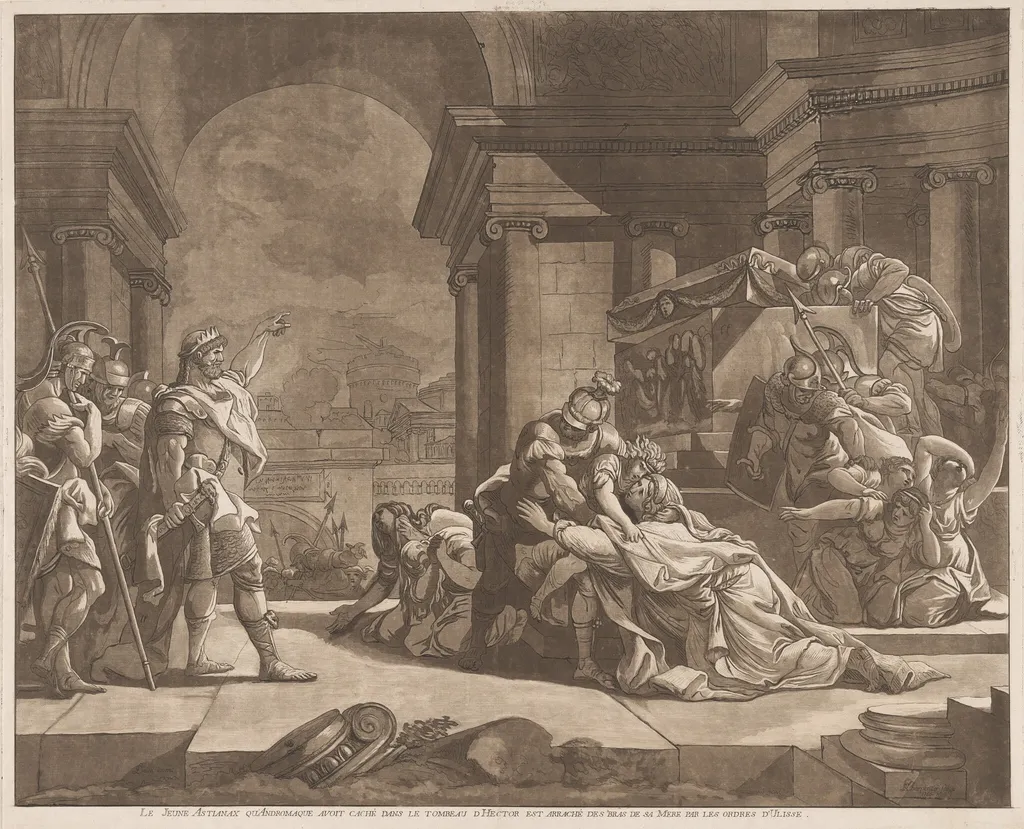
Le Jeune Astianax qu’Andromaque avoit caché dans le tombeau d’Hector est arraché des bras de sa Mere par les ordres d'Ulisse (Young Astianax, who Andromache Hid in Hector's Tomb, is Seized from his Mother's Arms by Ulysses' Orders) is an ink print by the Romanticist artist François-Philippe Charpentier. It dates from 1766 and is held in the collection of the National Gallery of Art.
About this work
Overview
This 1766 etching and aquatint print by François-Philippe Charpentier depicts a poignant scene from ancient Greek legend, capturing a moment of dramatic conflict and emotional turmoil.
Subject & Meaning
The print illustrates the forced separation of Astianax, son of Hector, from his mother Andromache. According to legend, Andromache had hidden Astianax in Hector's tomb to protect him, but he is seized on Ulysses' orders. The scene conveys themes of maternal grief, war's brutality, and the vulnerability of innocence.
Technique & Style
Charpentier employed etching and aquatint on laid paper, techniques in which he was innovating at the time. The bold lines and dramatic lighting are characteristic of emerging Romantic tendencies, while the aquatint adds depth and texture, enhancing the emotional intensity of the scene.
History & Provenance
Created in 1766 by François-Philippe Charpentier, a French engraver and inventor from Blois, the print reflects his technical contributions to aquatint engraving. Charpentier's career began as an apprentice to a Parisian copperplate engraver.
Context
The work is set against the backdrop of 18th-century French art's growing interest in classical themes and the burgeoning Romantic movement, which emphasized strong emotion and dramatic narrative.
Legacy
While specific legacy details of this print are not widely documented, Charpentier's innovations in aquatint engraving contributed significantly to the technical evolution of printmaking in the late 18th century.
Own this work as a print
Artist & collection

Artist
François-Philippe Charpentier (b. Blois, 1734; d. there 22 July 1817) was a French engraver and inventor. His father was a bookbinder, a poor man who reportedly made many sacrifices so that his son might attend the…

![The Martyrdom of Saints Peter and Paul [recto], by Antonio da Trento](https://artifactworldgallery.com/img/antonio-da-trento--the-martyrdom-of-saints-peter-and-paul-recto--a51e90060085a207-w320.webp)