Artwork
Charles I in an Octagonal Border
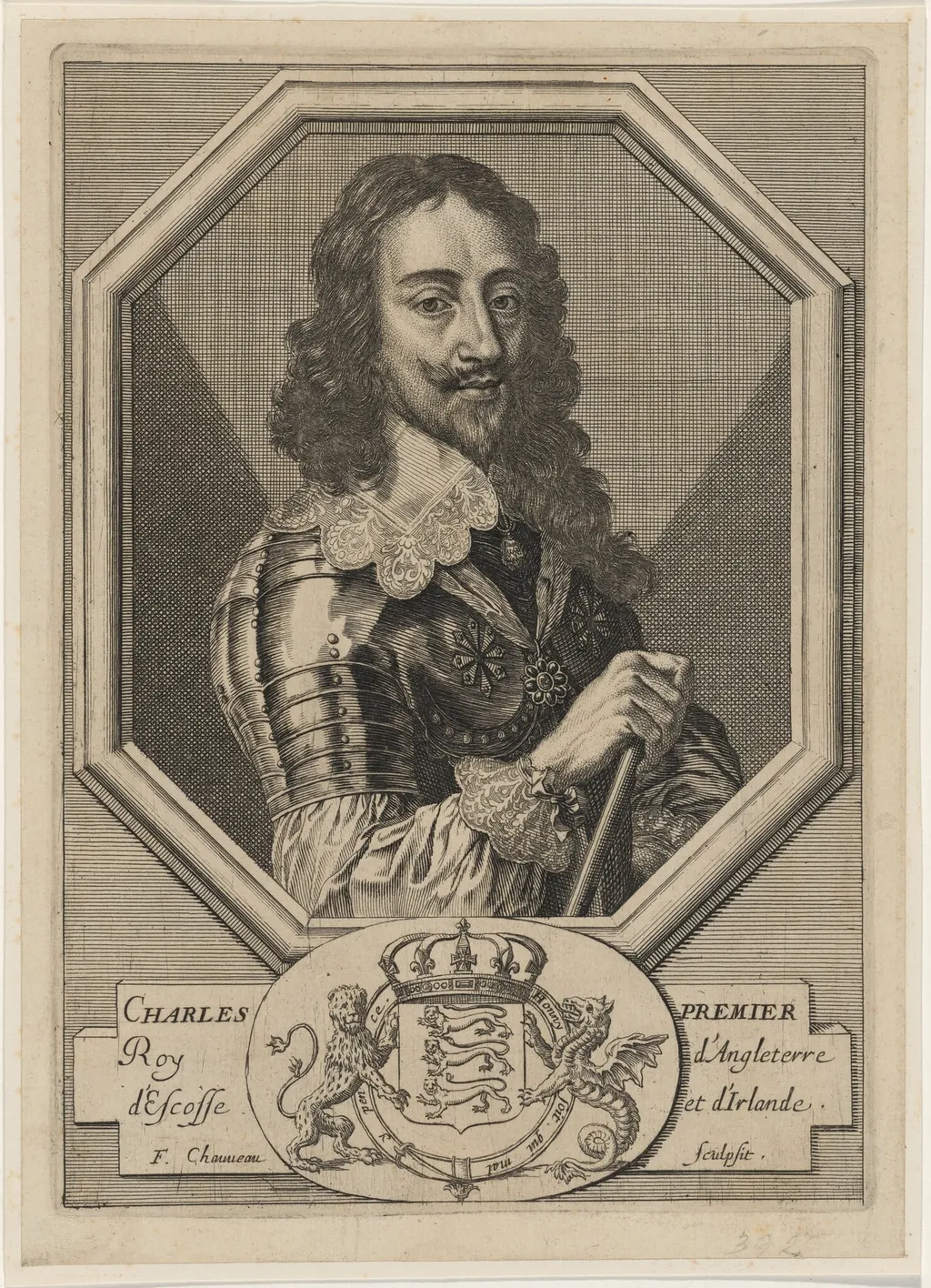
Charles I in an Octagonal Border is an ink print by the Baroque artist François Chauveau. It dates from 1644 and is held in the collection of the National Gallery of Art.
About this work
Overview
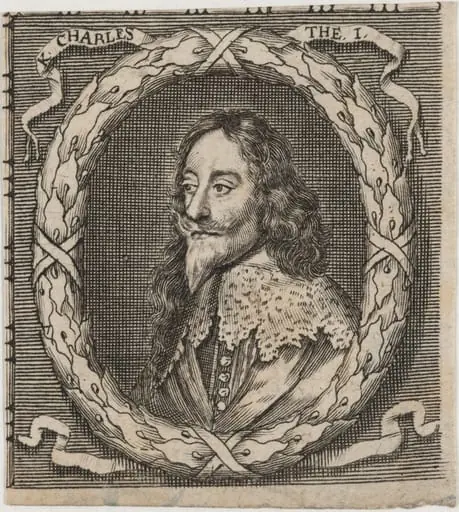
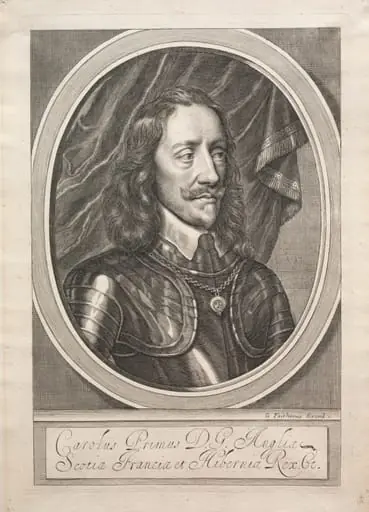
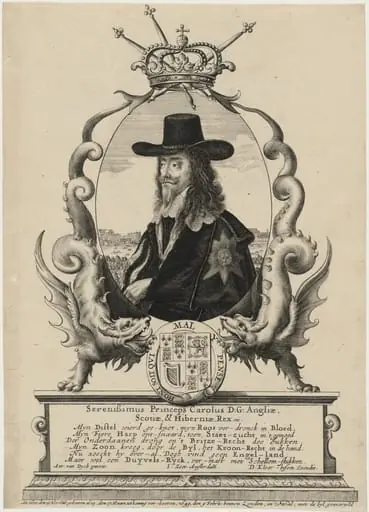
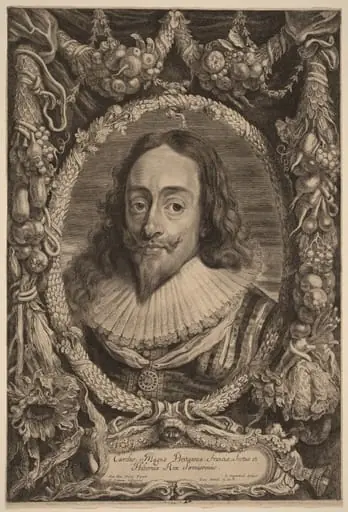
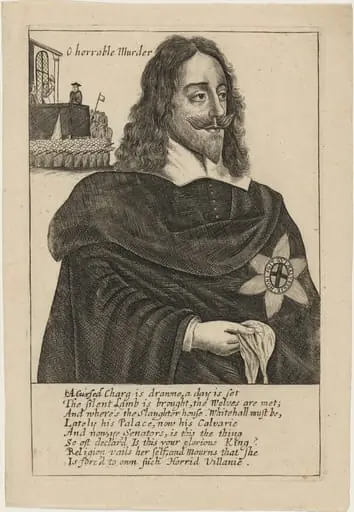
François Chauveau’s 1644 engraving presents the English monarch Charles I framed within an octagonal border composed of eight interlocking ovals. The portrait captures the king in a plain black costume, his expression composed yet dignified. The work is executed entirely in line, relying on varied densities of hatching to render form and texture.
Subject & Meaning
The image isolates Charles I, emphasizing his regal bearing through a restrained pose and sober attire. The calm, slightly proud visage conveys both authority and a measured self‑assurance, reflecting contemporary expectations of monarchical poise during a period of political tension in England.
Technique & Style
Chauveau employs meticulous cross‑hatching to model the folds of the king’s clothing and the subtle planes of his face. Fine parallel lines build tonal depth, while denser clusters create the impression of softness in the collar. The octagonal frame is delineated by precise, repeated oval motifs, showcasing the artist’s control of line work.
History & Provenance
Created in 1644, the engraving was produced amid the English Civil War, a time when royal imagery served both propagandistic and commemorative purposes. Copies circulated among collectors of French prints, and the work later entered museum collections specializing in 17th‑century European graphic art.
Artist & collection