Artwork
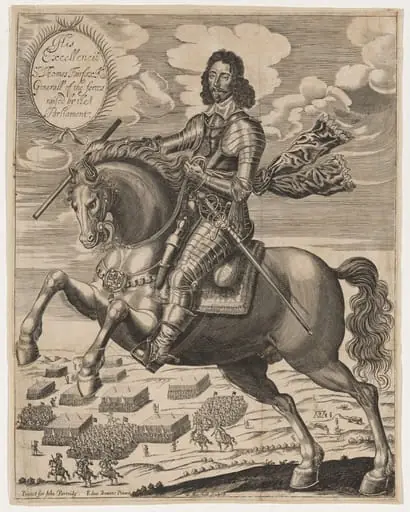
Charles I on Horseback
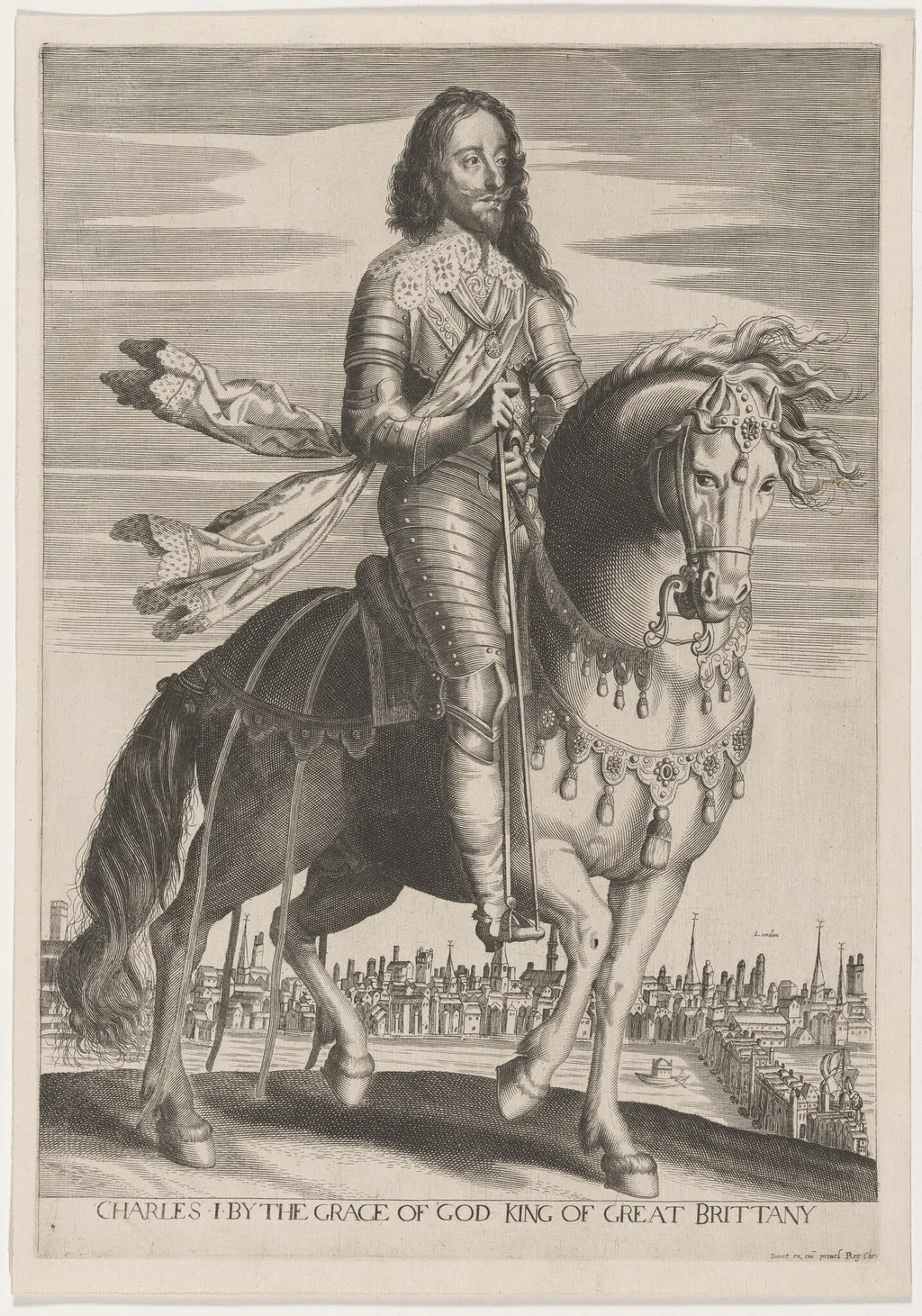
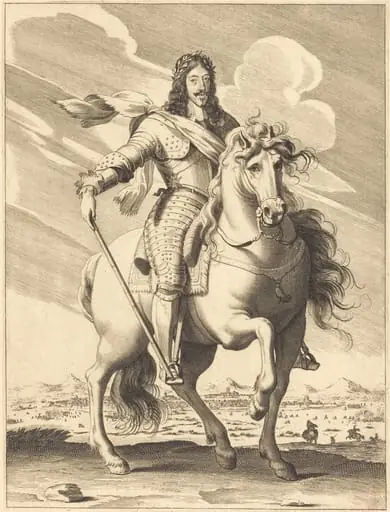
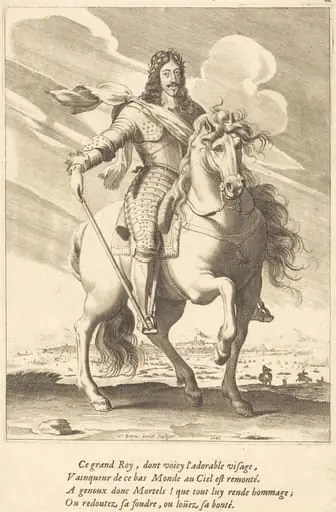
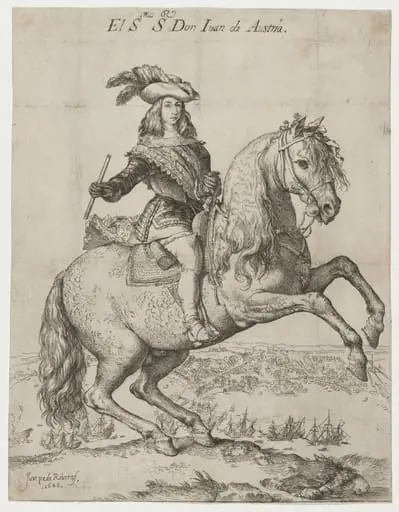
Charles I on Horseback is an ink print by the Baroque artist Pierre Daret de Cazeneuve. It dates from 1641 and is held in the collection of the National Gallery of Art. This 1641 copper engraving presents a portrait of Charles I mounted on a horse.
About this work
Overview
This 1641 copper engraving presents a portrait of Charles I mounted on a horse. Executed by Pierre Daret de Cazeneuve, the image combines a dignified rider in contemporary court dress with a richly equipped animal, conveying the monarch’s status through a formal, static composition typical of early‑modern print portraiture.
Subject & Meaning
The central figure is Charles I of England, depicted as a sovereign ruler. By placing the king on a horse, the work alludes to traditional symbols of power, martial authority, and regal presence, reinforcing his political legitimacy and the visual language of monarchy prevalent in the seventeenth‑century.
Technique & Style
Created through copper engraving, the image relies on incised lines to render texture, shading, and intricate details of clothing and tack. Daret’s handling of hatching produces a sense of depth and materiality, while the overall linear precision reflects the print‑making conventions of the Baroque period.
History & Provenance
Pierre Daret de Cazeneuve, a French engraver active in the early 1600s, produced this work shortly after Charles I’s accession. The print circulated among collectors and court circles, serving both as a portrait and as a means of disseminating the king’s likeness across Europe during his reign.
Artist & collection