Artwork
Charles I
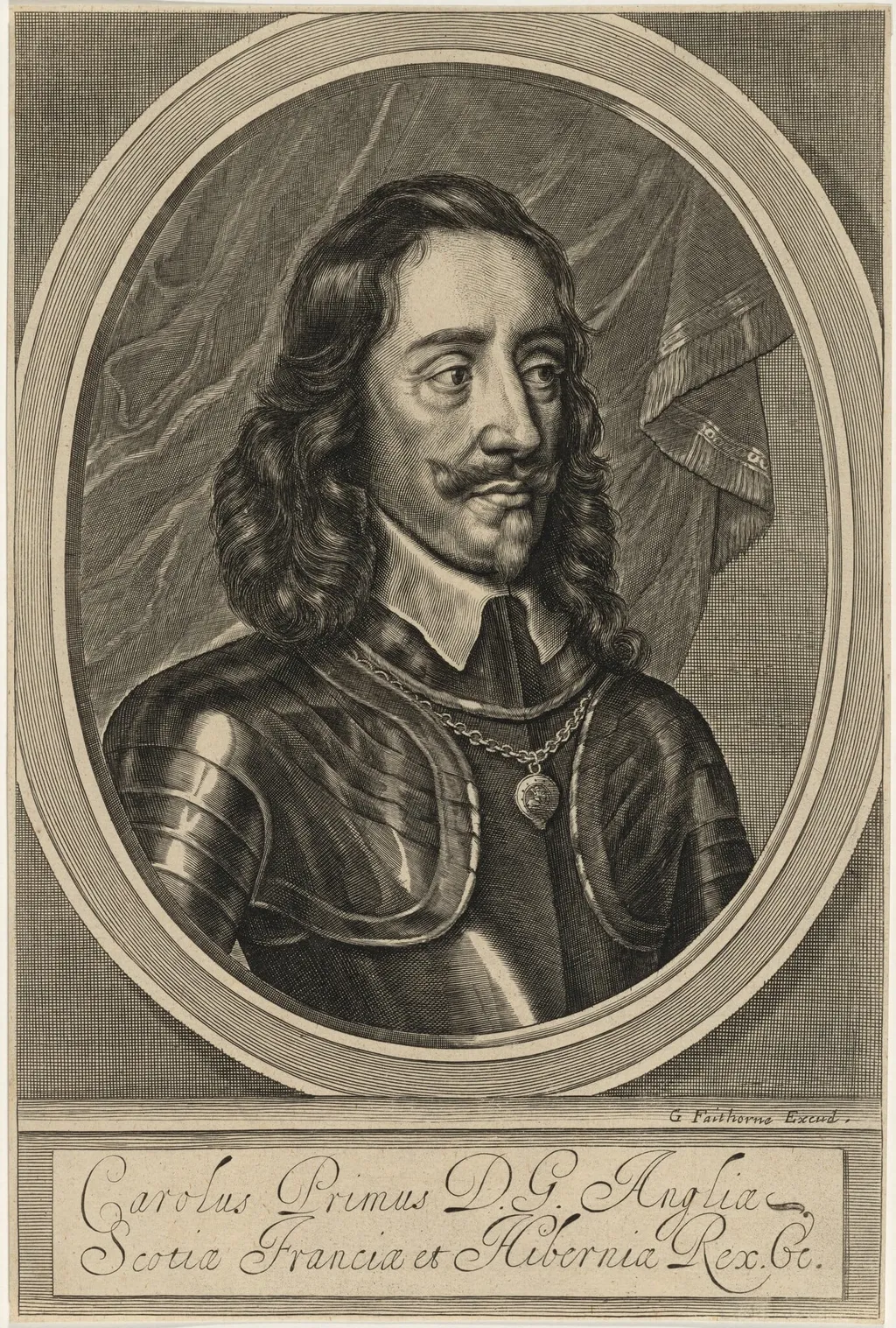
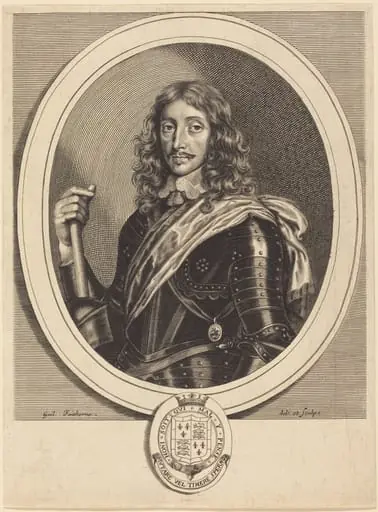
Charles I is an ink print by the Baroque artist William Faithorne. It dates from 1658 and is held in the collection of the National Gallery of Art.
About this work
Overview
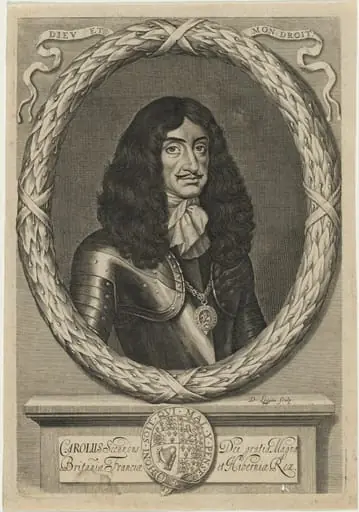
William Faithorne’s 1658 engraving presents a portrait of Charles I, rendered in stark black and white. The king is depicted with curled hair, a solemn expression, and attire that includes a dark collar, a neck chain, and a draped piece of fabric. A plain background isolates the figure, directing attention to his face and regal garments.
Subject & Meaning
The image identifies the sitter as Charles I, styled in Latin as "Carolus Primus D.G. Anglia Scotia Francia et Hibernia Rex Ge," asserting his claim to the thrones of England, Scotland, France, and Ireland. The dignified pose and minimal adornment convey a sense of authority and solemnity appropriate to a monarch.
Technique & Style
Faithorne employed the traditional engraving method, incising fine lines into a metal plate to produce the print. The contrast of deep blacks and delicate hatching creates tonal variation, while the precise line work defines facial features and fabric textures, exemplifying mid‑17th‑century English printmaking.
History & Provenance
Created in 1658, the work dates to the period following Charles I’s execution (1649) and reflects the continued interest in his image. Faithorne, a prominent English engraver, signed the plate, confirming authorship. The print has circulated among collectors of early modern portraiture and appears in several museum collections.
Context
The engraving emerges from a turbulent era in British history, when royal imagery was both politically charged and commercially viable. Faithorne’s portrait aligns with contemporary practices of reproducing royal likenesses for a market that sought visual connections to the former monarch.
Artist & collection
Artist
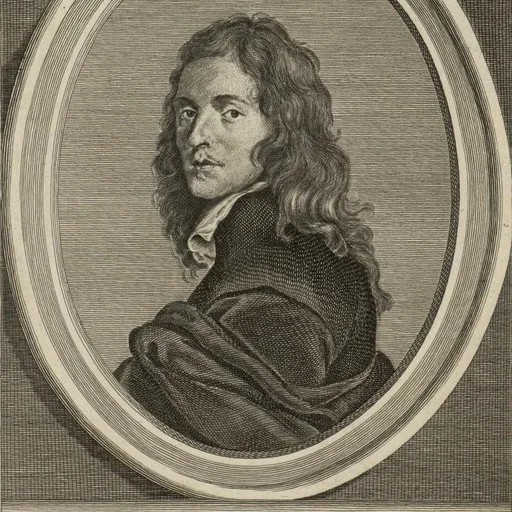
William Faithorne (1616–1691) was a British artist, born in Greater London.