Artwork
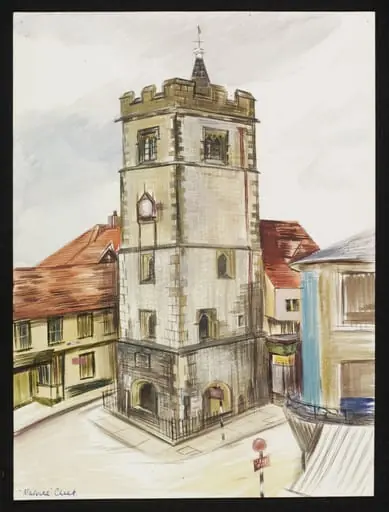
Redbourn Church
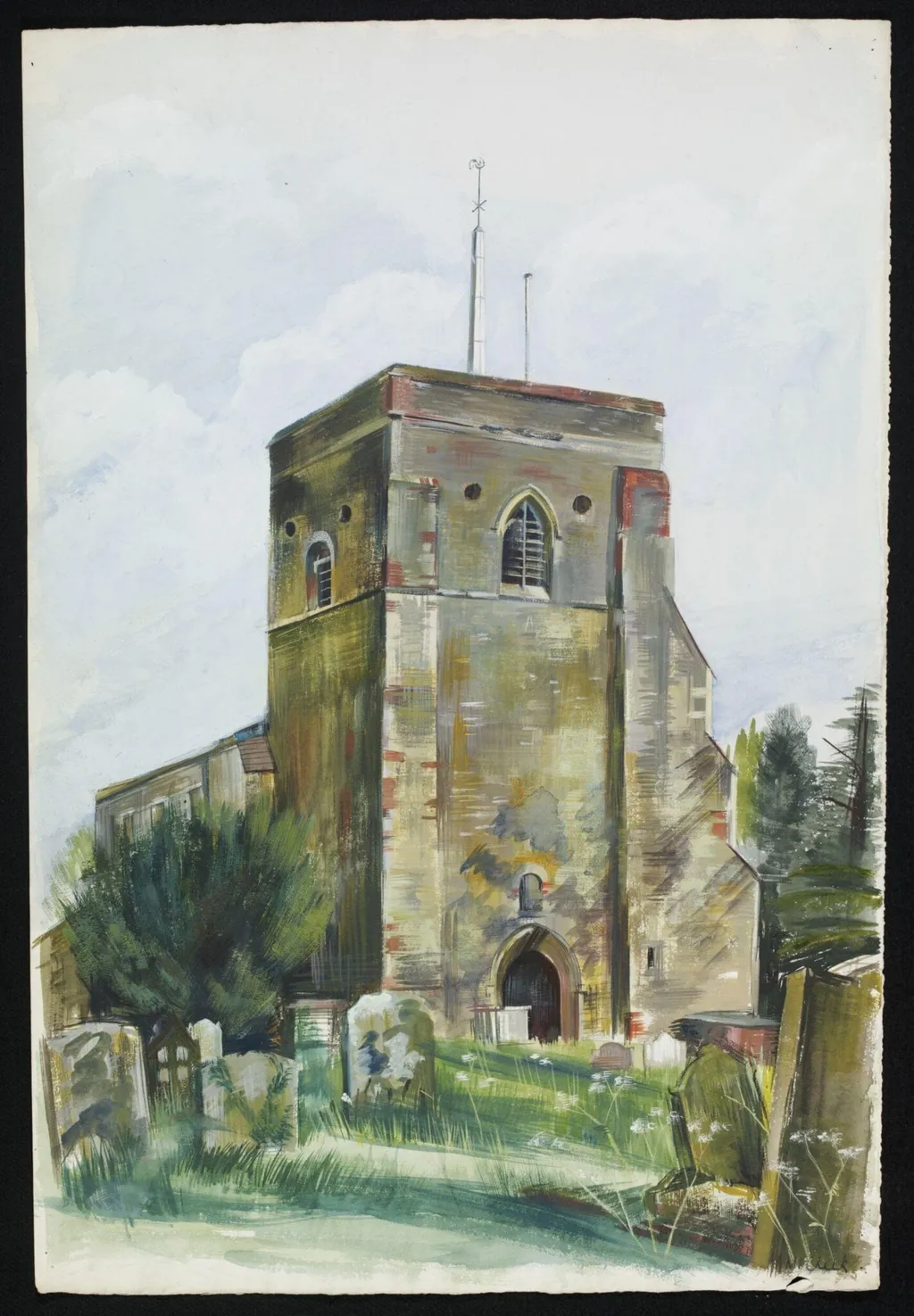
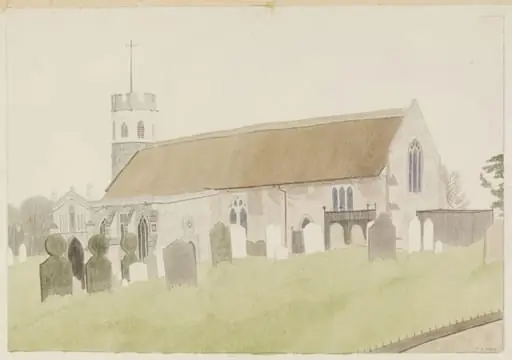
Redbourn Church is a watercolor work on paper by Cheek. It dates from 1943 and is held in the collection of the Victoria and Albert Museum.
About this work
Overview
The work forms part of the Recording Britain project, a wartime effort to document the nation’s built environment.
Created in 1943, this watercolour by the artist Cheek records the Church of St. Mary in Redbourn, Hertfordshire. The composition centres on the Norman tower, set against a modestly rendered churchyard where a few headstones, grazing sheep, and a solitary figure in dark clothing appear. The work forms part of the Recording Britain project, a wartime effort to document the nation’s built environment.
Subject & Meaning
The painting captures a rural English parish scene, emphasizing the longevity of the medieval tower amid a simple, cultivated landscape. By including everyday details—sheep and a lone passerby—the image suggests continuity of community life despite the disruptions of the Second World War, reflecting a quiet resilience of local heritage.
Technique & Style
Cheek employs loose, rapid brushwork that lends the image a sketch‑like quality. A restrained palette of greens, browns and greys conveys the weathered stone and surrounding foliage without elaborate detail. The quick handling of pigment highlights form over surface texture, creating a sense of immediacy appropriate to the project’s documentary aims.
History & Provenance
The watercolour was produced under the Recording Britain scheme, initiated in 1940 by the Committee for the Employment of Artists in Wartime and funded by the Pilgrim Trust. The initiative, overseen by the Ministry of Labour and National Service, employed artists to capture Britain’s landscapes and architecture during wartime. The piece now belongs to the Recording Britain collection and is held by the Victoria and Albert Museum.
Artist & collection
Artist
Cheek painted quiet British streets and landmarks in watercolor during the 1940s, leaving behind soft, unhurried scenes of St.

![Marlborough House [garden front], Falmouth, by Cheek](https://artifactworldgallery.com/img/cheek--marlborough-house-garden-front-falmouth--3a2b89526c7641e3-w320.webp)