Artwork
Church of SS. Peter & Paul, Lavenham
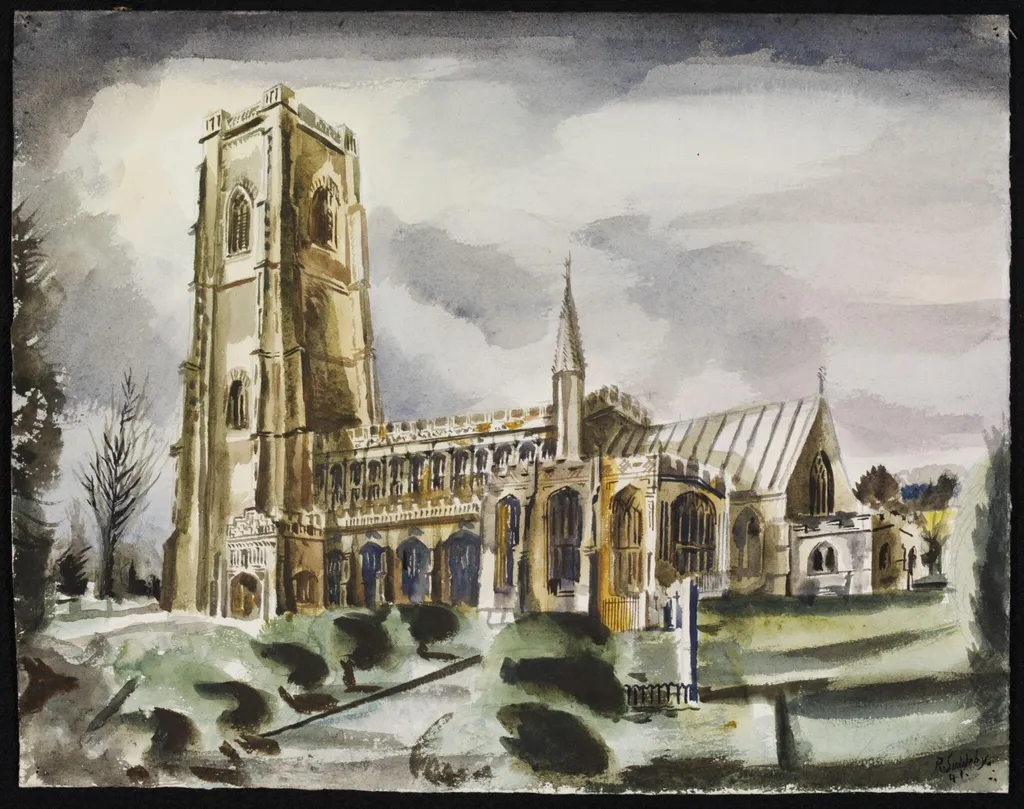
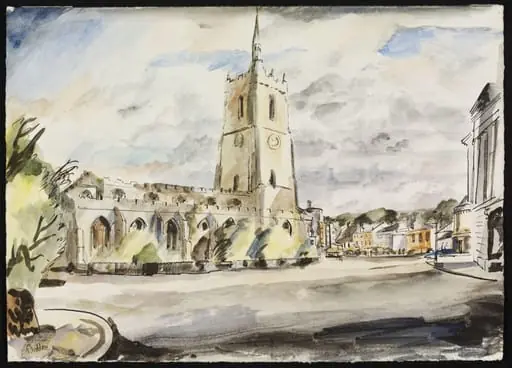
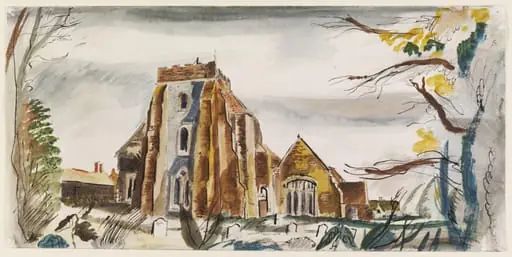
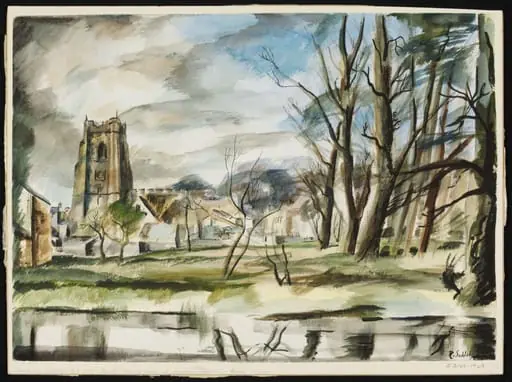
Church of SS. Peter & Paul, Lavenham is a watercolor work on paper by Suddaby. It dates from 1941 and is held in the collection of the Victoria and Albert Museum.
About this work
Overview
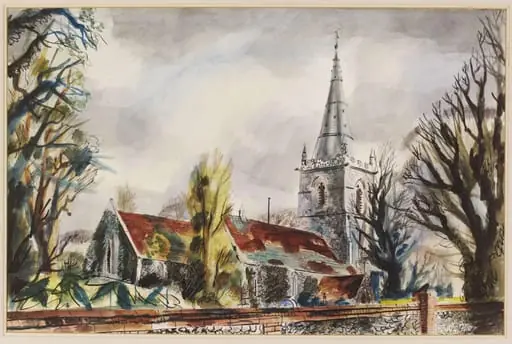
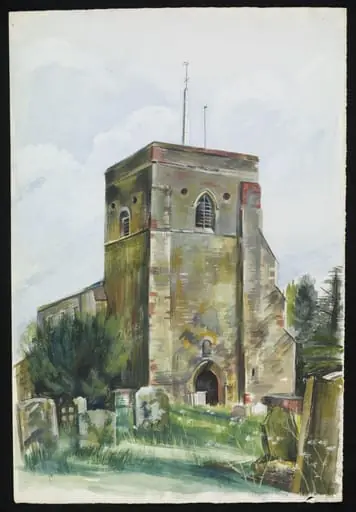
Rowland Suddaby’s 1941 watercolour captures the Late Gothic parish church of St Peter and St Paul in Lavenham. Rendered in a restrained palette, the composition presents the stone edifice with its square tower, arched windows and sloping side roof, set against a cloudy sky and a wet, reflective ground that hints at recent rain.
Subject & Meaning
The painting records a moment of everyday life: a few figures in dark coats linger near the church entrance, while trees and a low fence frame the scene. By focusing on this rural landmark, Suddaby emphasizes the continuity of local worship and community amidst the broader disruptions of wartime Britain.
Technique & Style
Suddaby employs delicate washes of watercolour to model the building’s stone texture, allowing light to strike the façade and reveal subtle tonal contrasts. A modest use of reflected light on the soggy ground creates a sense of immediacy, while the soft, muted sky reinforces the work’s contemplative atmosphere.
History & Provenance
Created under the Recording Britain project, the work was commissioned by the Ministry of Labour and National Service and funded by the Pilgrim Trust. The scheme, overseen by Sir Kenneth Clark, sought to document structures deemed vital to national identity during World War II, preserving visual records of sites vulnerable to bomb damage or post‑war alteration.
Context
The Recording Britain initiative responded to fears that the war and subsequent modernization would erase elements of the British landscape and heritage. Suddaby’s contribution reflects this urgency, providing a visual archive of a quintessential medieval church that exemplifies the architectural and cultural patrimony the program aimed to safeguard.
Artist & collection
Artist
A British watercolor artist from the mid-20th century, Suddaby painted quiet, detailed scenes of East Anglia’s streets and churches in the 1940s.