Artwork
Paintings after Ancient Masters: Lotus and Rocks
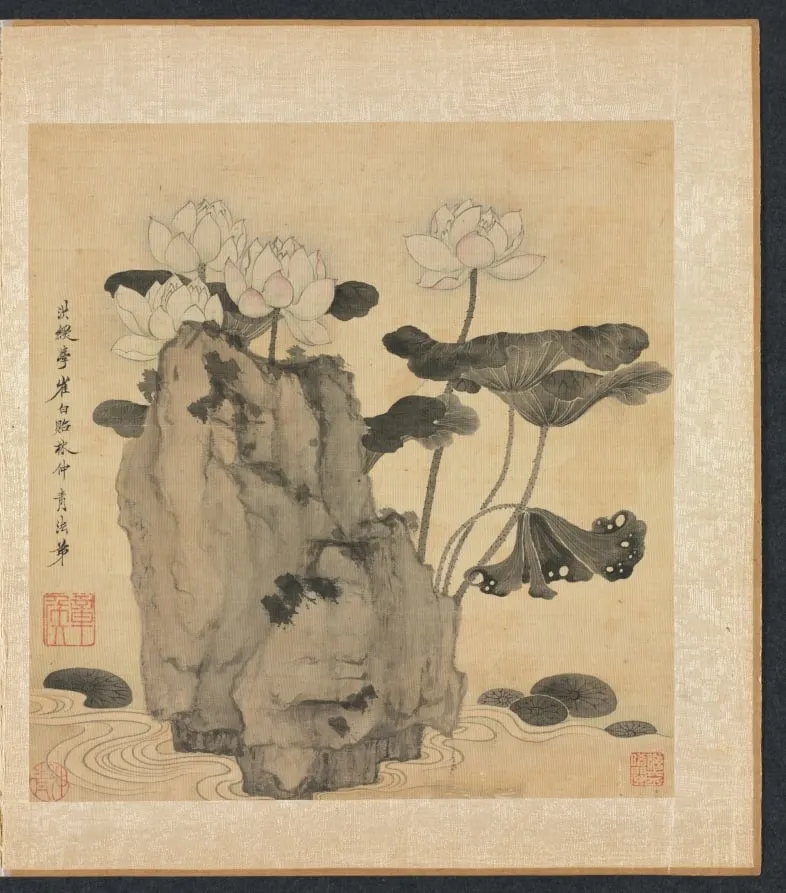
Paintings after Ancient Masters: Lotus and Rocks is an unspecified painting by the Ming dynasty painting artist Chen Hongshou. It dates from 1625 and is held in the collection of the Cleveland Museum of Art.
About this work
If you like this mix of precise and playful, look up china, ming dynasty (1368–1644) for more artists who bent tradition.
You see a single lotus flower rising from jagged rocks, painted in black ink on paper.
Chen Hongshou often copied old masters, but he twisted the rules. Here, the lotus looks almost too perfect—like a porcelain doll of a flower. The rocks are sharp, almost cartoonish, yet the whole thing feels quiet and balanced.
If you like this mix of precise and playful, look up china, ming dynasty (1368–1644) for more artists who bent tradition.
Overview
This work is one of twenty leaves in a double album by Chen Hongshou, created during the late Ming period. It depicts a solitary lotus rising from angular rocks, rendered in ink on paper. Unlike his earlier works, these late pieces are intentionally scaled down, evoking the intimacy of miniature landscapes and scholar’s rocks. The album as a whole reflects a retreat from public life, channeling personal and political disillusionment into restrained, stylized forms.
Subject & Meaning
The lotus, a traditional symbol of purity, appears here in an unnaturally perfect form, detached from naturalism. Paired with jagged, almost abstract rocks, the composition suggests a world stripped of harmony yet still ordered. The image may reflect the inner state of Ming loyalists—isolated, refined, and emotionally restrained—whose cultural identity persisted despite political collapse. The absence of human figures underscores a sense of quiet withdrawal.
Technique & Style
Chen employed precise, linear ink strokes to define the lotus and rocks, emphasizing contour over texture. The flower’s idealized shape contrasts with the fractured, exaggerated contours of the rocks, creating a tension between elegance and distortion. His technique draws from archaic models but subverts them with deliberate stylization—neither purely decorative nor emotionally excessive, it balances control with eccentricity.
History & Provenance
The album was produced in the final years of Chen’s life, after the fall of the Ming dynasty. As a scholar-official who refused service under the Qing, he turned inward, producing intimate works for private contemplation. This album, like others from the period, circulated among close circles of loyalist intellectuals, preserving a visual language of resistance through aesthetic restraint rather than overt political statement.
Context
Chen’s late style emerged amid widespread cultural upheaval. With the Ming collapse, many scholars withdrew from public life, turning to art as a space for moral and aesthetic preservation. His miniaturized compositions echo the literati tradition of viewing nature in microcosm—through scholar’s rocks or garden design—but infuse it with a new psychological weight, reflecting the fragility of personal and dynastic honor.
Legacy
Chen’s approach influenced later Qing artists who sought to reconcile tradition with personal expression. His fusion of archaic references with idiosyncratic form became a model for how to engage the past without imitation. The quiet intensity of works like this lotus leaf demonstrated that restraint could carry profound emotional and political resonance, shaping the trajectory of ink painting beyond mere stylistic revival.
Artist & collection


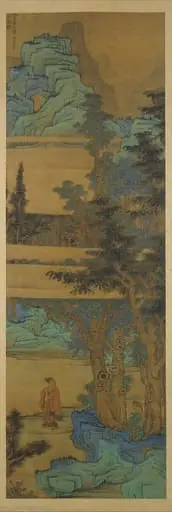 明 陳洪綬 樹下高士圖 軸|Scholar-recluse in blue-green landscape
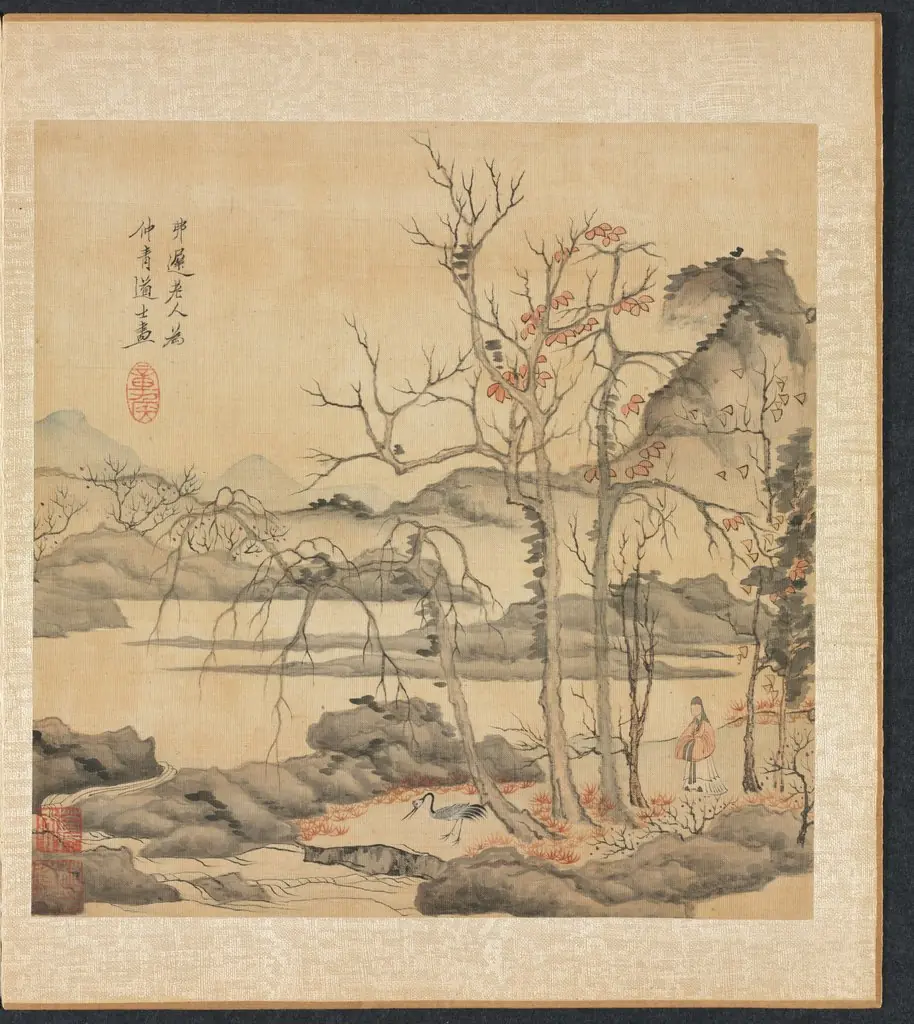 Paintings after Ancient Masters: Daoist and Crane in Autumn Landscape
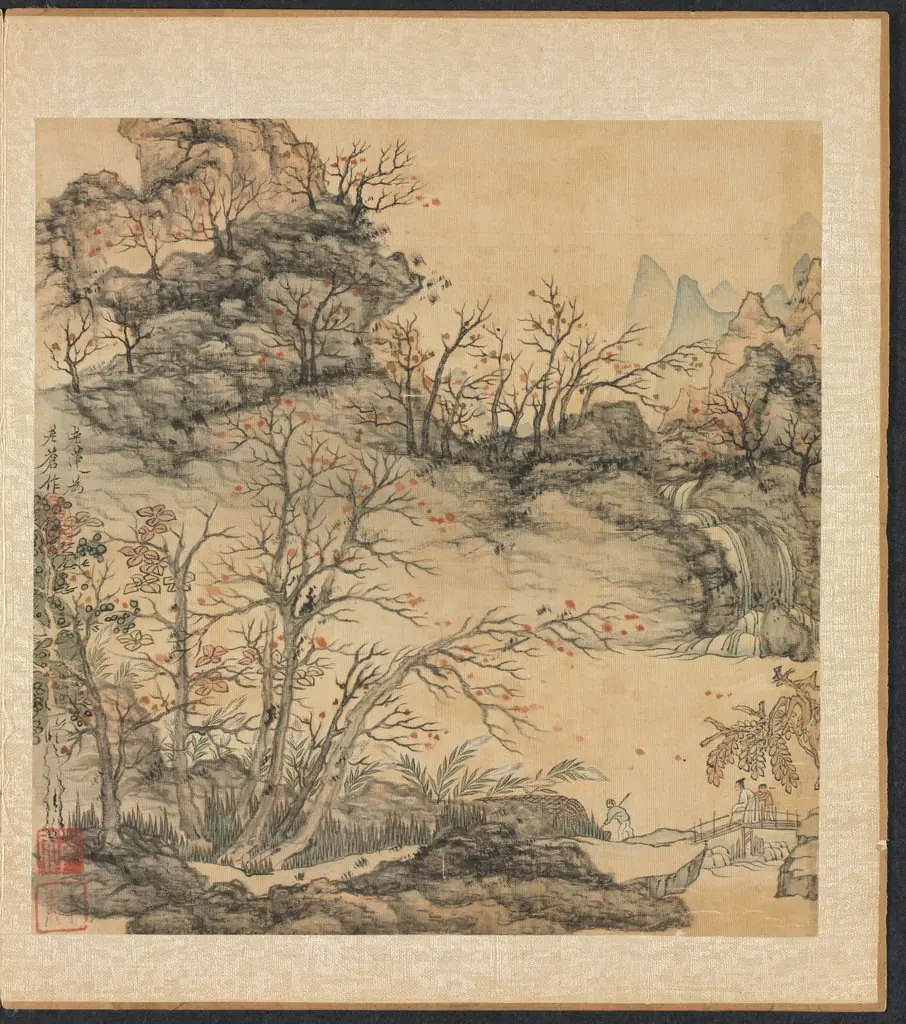 Paintings after Ancient Masters: Autumn Landscape
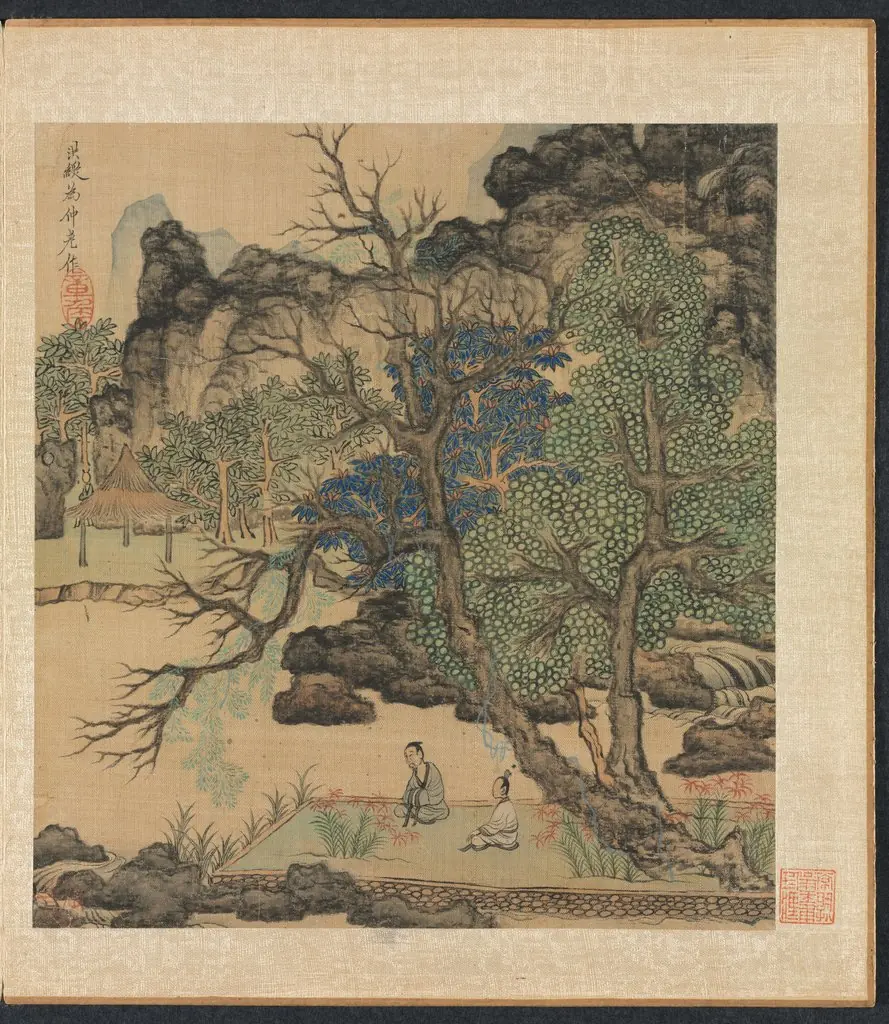 Paintings after Ancient Masters: Scholars in a Garden
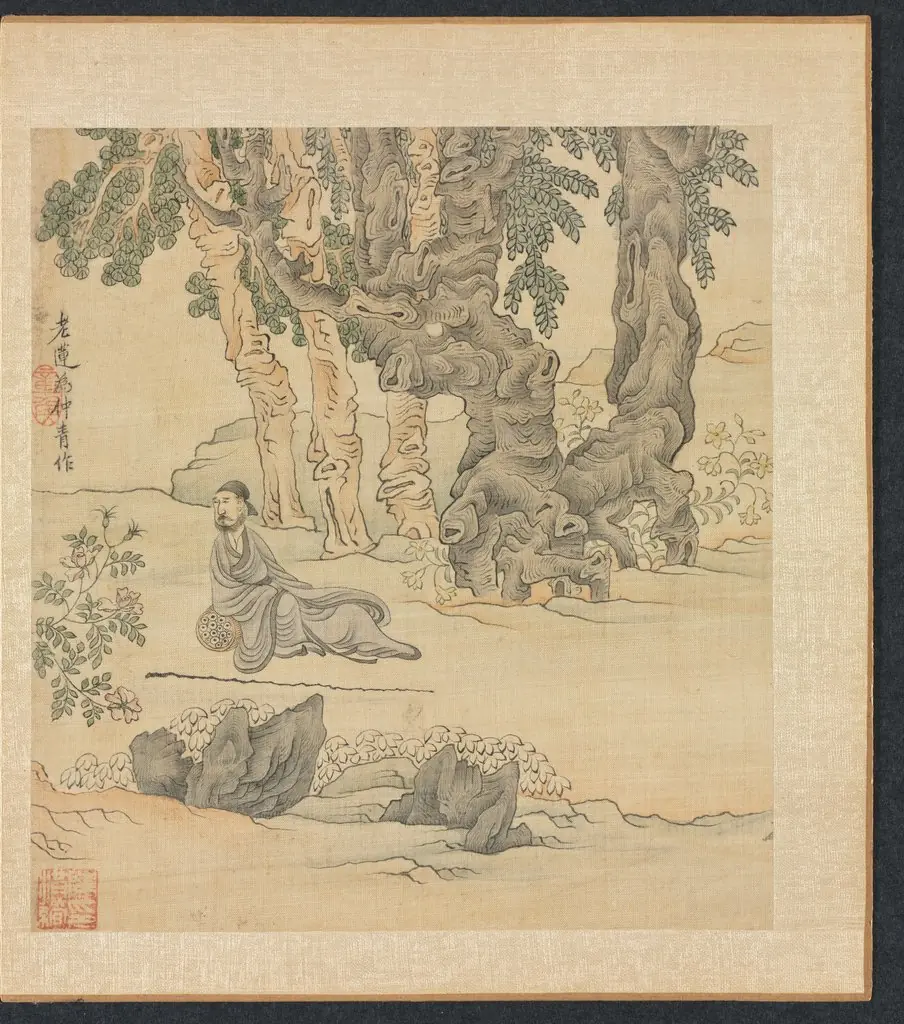 Paintings after Ancient Masters: Portrait of Zhongqing in a Landscape
 明 陳洪綬 準提佛母法像圖 軸|Bodhisattva Guanyin in the Form of the Buddha Mother
 明 陳洪綬 山水花鳥人物圖 扇冊|Landscapes and Flowers
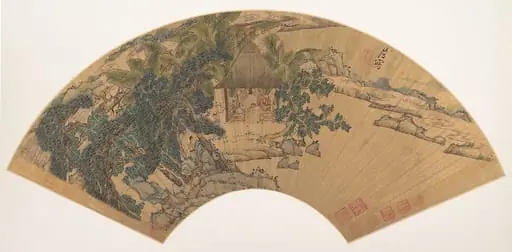 明 陳洪綬 山水圖 扇|Landscape
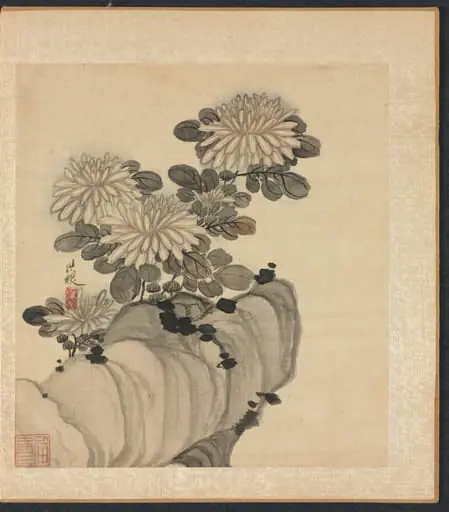 Paintings after Ancient Masters: Chrysanthemum and Rock
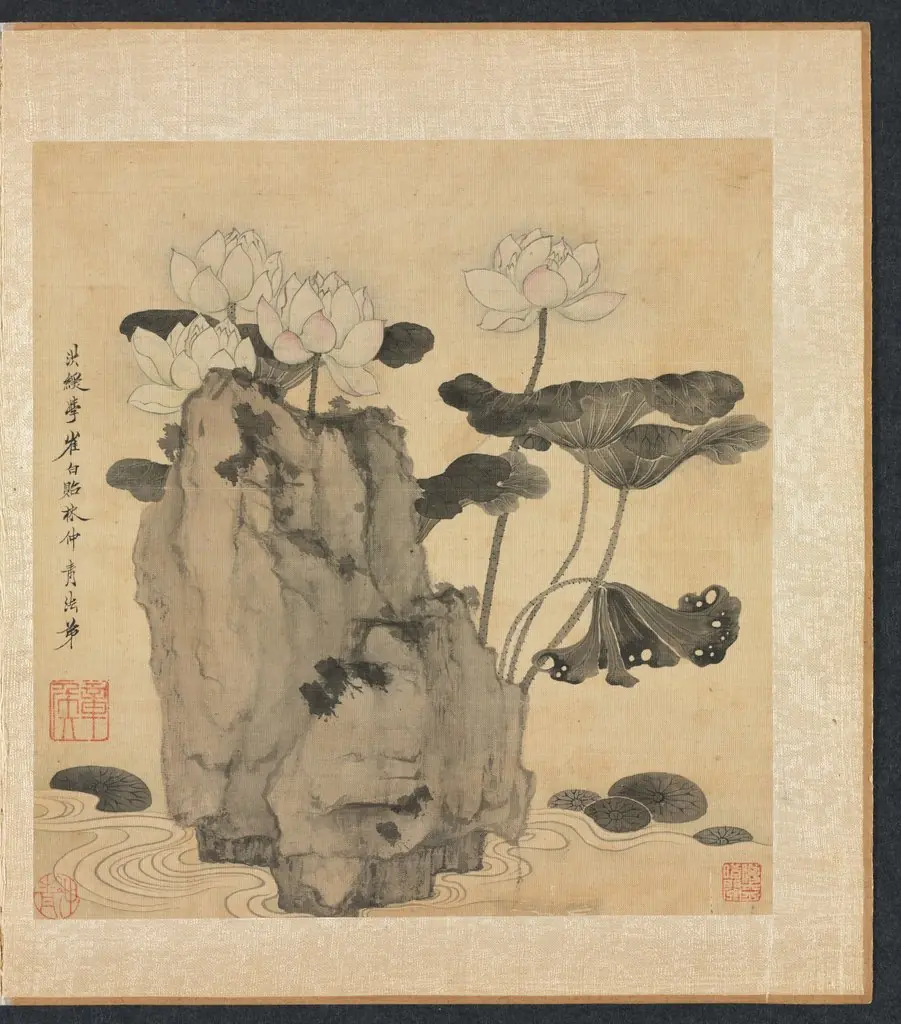 Paintings after Ancient Masters: Lotus and Rocks
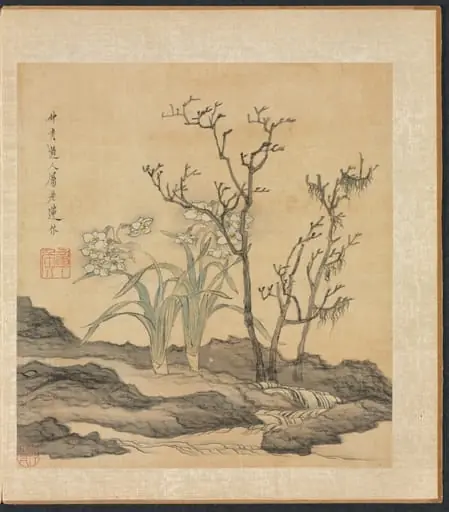 Paintings after Ancient Masters: Narcissus and Bare Trees
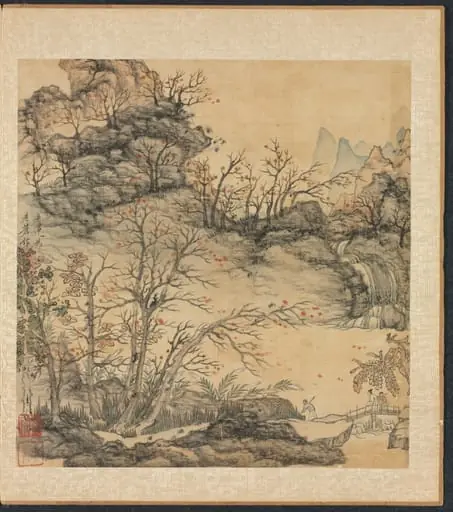 Paintings after Ancient Masters: Autumn Landscape
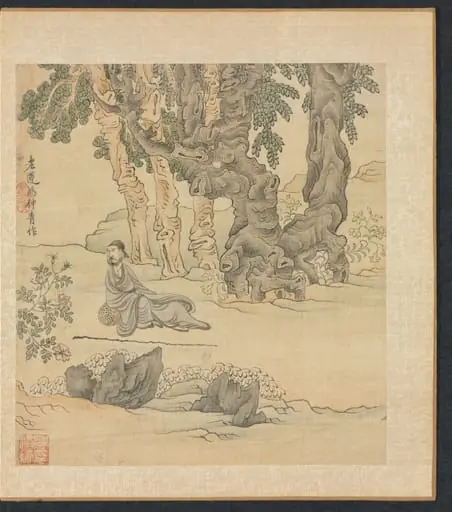 Paintings after Ancient Masters: Portrait of Zhongqing in a Landscape
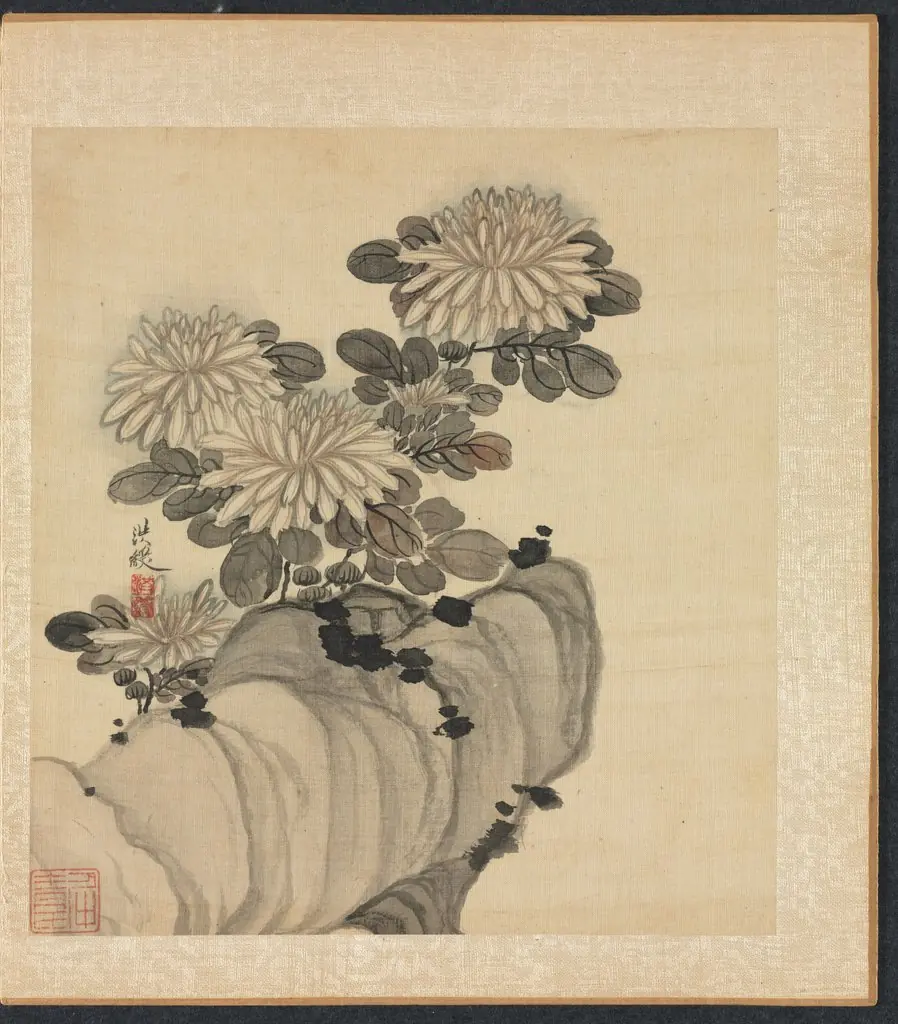 Paintings after Ancient Masters: Chrysanthemum and Rock
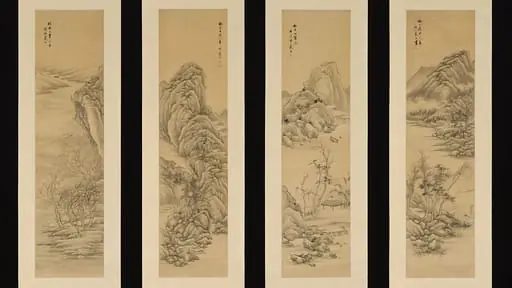 清 戴熙 仿古山水四屏 軸|Landscapes after old masters