Artwork
Paintings after Ancient Masters: Narcissus and Bare Trees
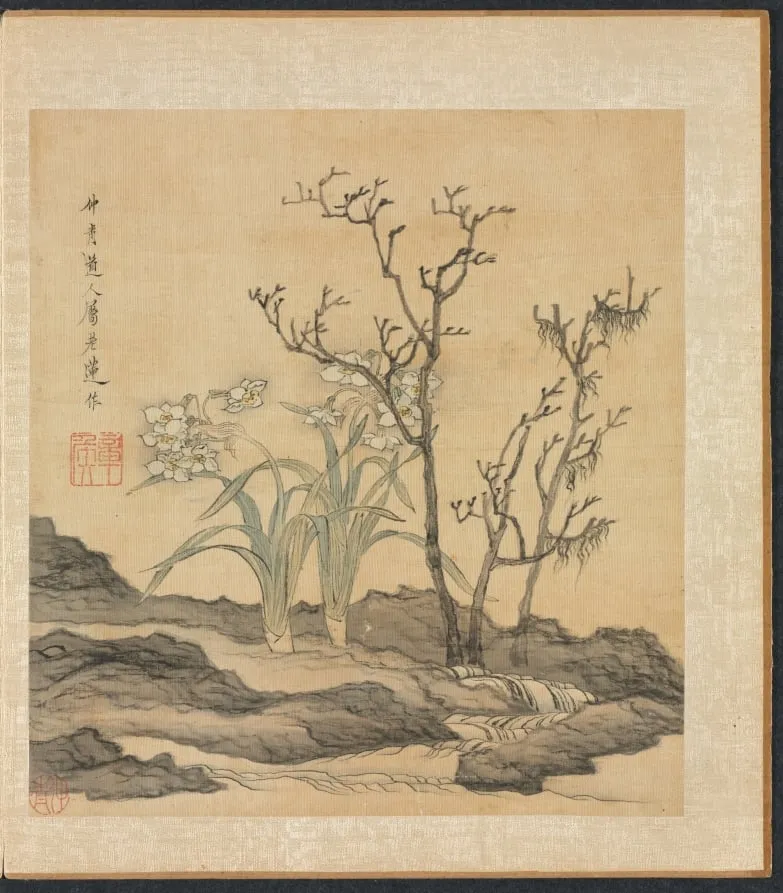
Paintings after Ancient Masters: Narcissus and Bare Trees is an unspecified painting by the Chinese Orthodox School artist Chen Hongshou. It dates from 1625 and is held in the collection of the Cleveland Museum of Art.
About this work
Overview
The work belongs to a pair of albums comprising twenty small paintings by Chen Hongshou, a late Ming artist noted for his distinctive, highly refined style. Within these albums he juxtaposes landscapes, figure studies and floral motifs, including a rare single leaf portrait of a woman that does not appear in his other late collections.
Subject & Meaning
In this particular painting a solitary figure gazes at his own reflection in a pool of water, surrounded by stark, leaf‑less trees. The composition evokes the classical myth of Narcissus while also suggesting the introspection and constrained existence experienced by Ming loyalist scholars under political duress.
Technique & Style
Chen employs a restrained palette of thin lines and simplified shapes, stripping the scene to its essentials. The minimal detailing creates a quiet atmosphere, demonstrating his ability to convey mood through reduction rather than elaborate ornamentation.
Context
The miniature scale of the figures and landscapes mirrors the practice of arranging tiny garden scenes or table rocks for contemplation. This deliberate shrinking reflects the psychological state of a disenfranchised scholarly class, whose loss of status is symbolized by the painting’s reduced dimensions.
Legacy
These late albums are regarded as concise summations of Chen Hongshou’s idiosyncratic, archaic aesthetic. By avoiding sentimentality while maintaining technical virtuosity, they have influenced subsequent generations of Chinese painters interested in the balance between refinement and emotional restraint.
Artist & collection


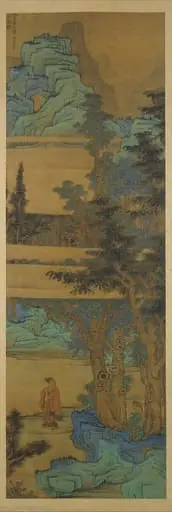 明 陳洪綬 樹下高士圖 軸|Scholar-recluse in blue-green landscape
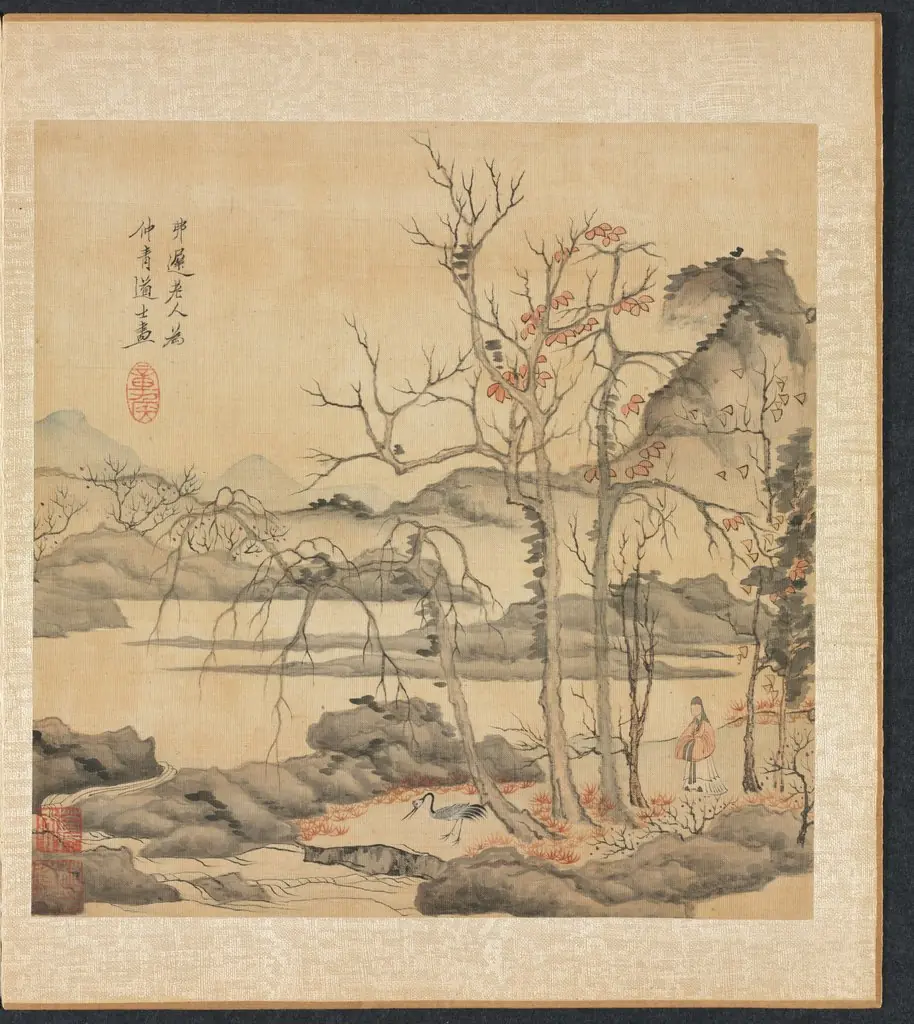 Paintings after Ancient Masters: Daoist and Crane in Autumn Landscape
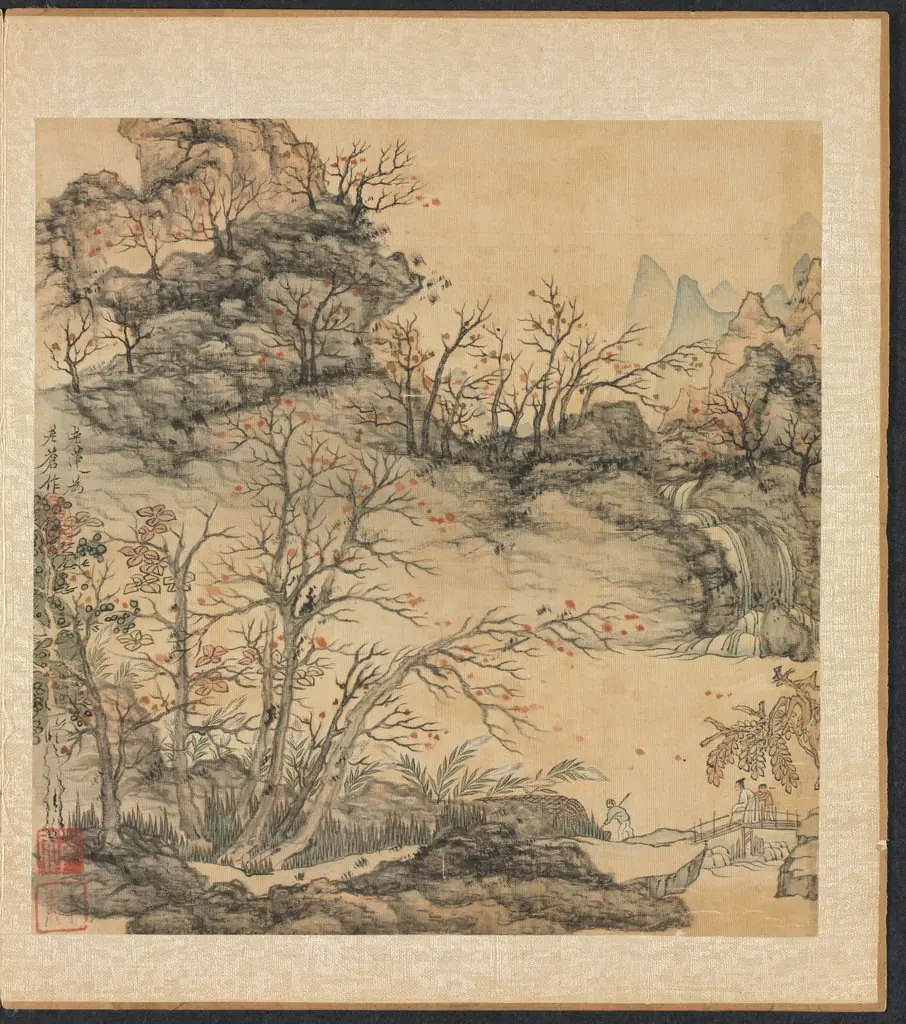 Paintings after Ancient Masters: Autumn Landscape
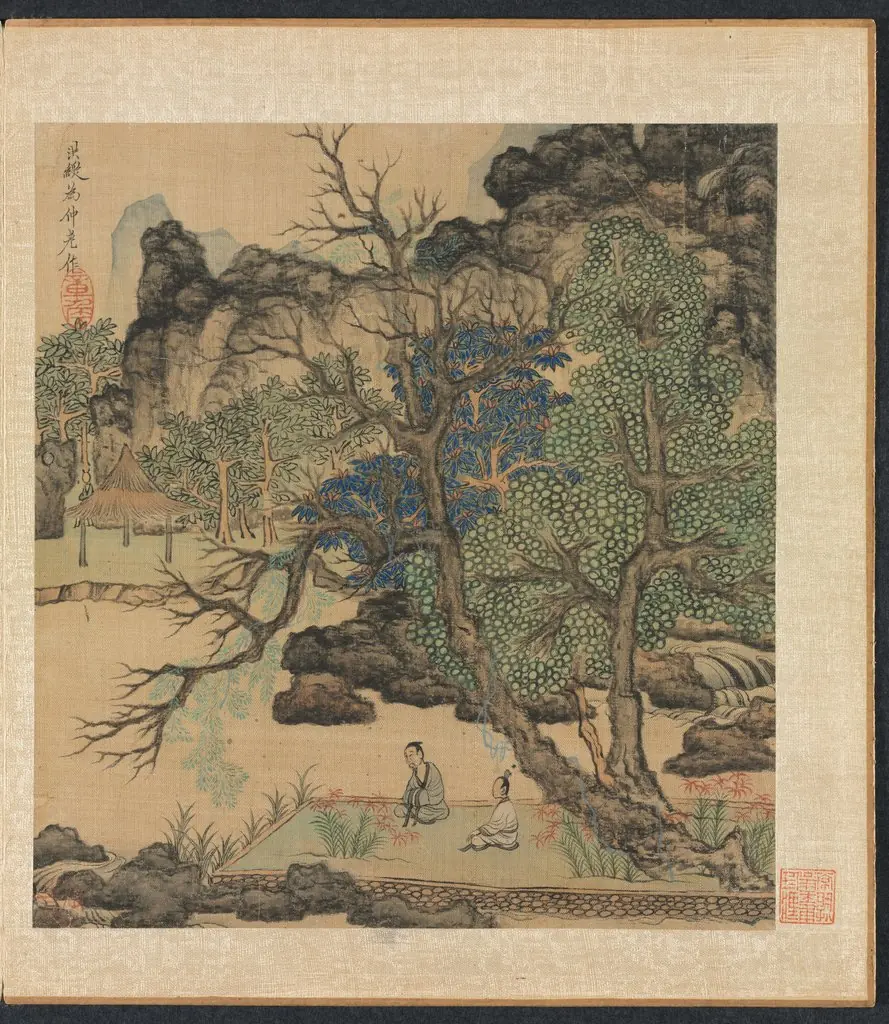 Paintings after Ancient Masters: Scholars in a Garden
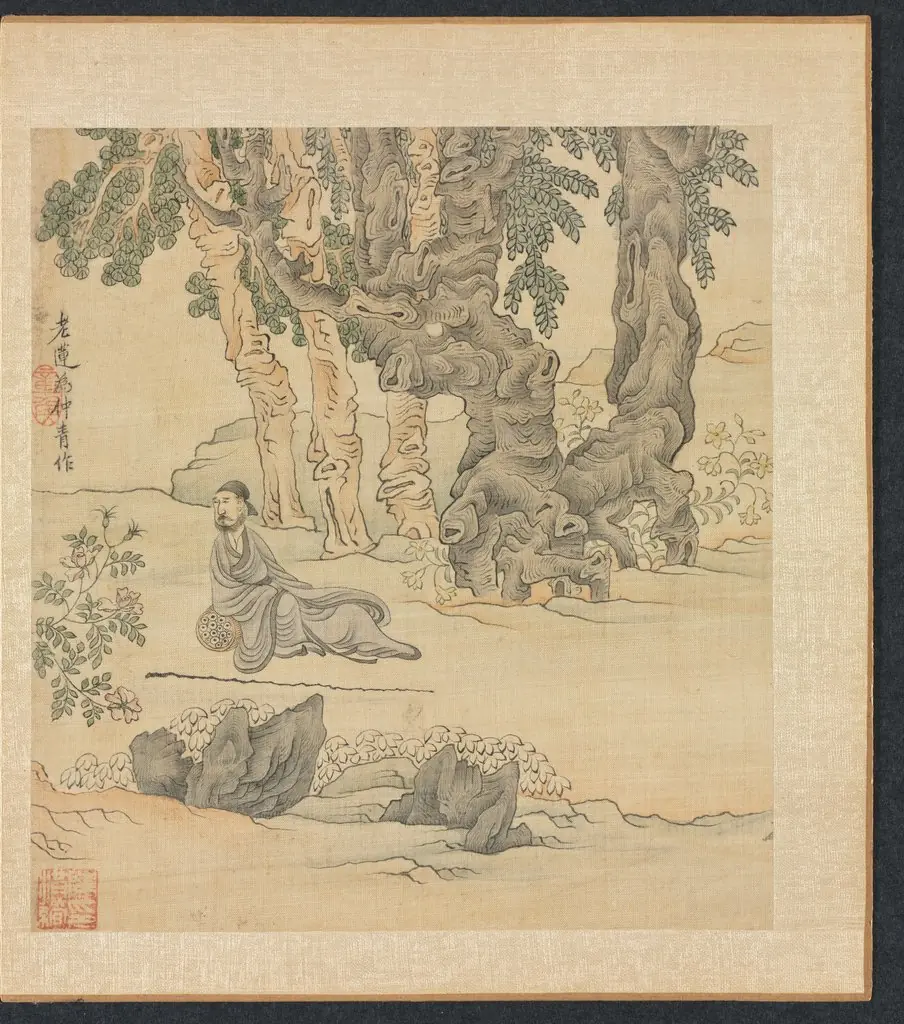 Paintings after Ancient Masters: Portrait of Zhongqing in a Landscape
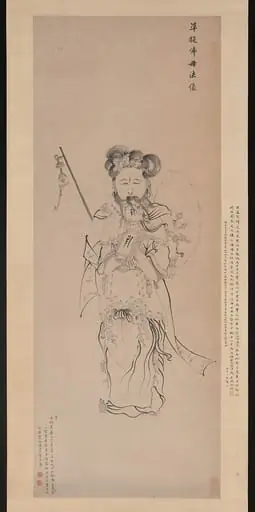 明 陳洪綬 準提佛母法像圖 軸|Bodhisattva Guanyin in the Form of the Buddha Mother
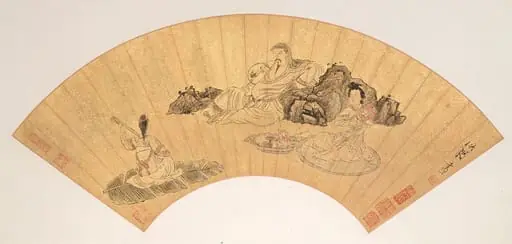 明 陳洪綬 山水花鳥人物圖 扇冊|Landscapes and Flowers
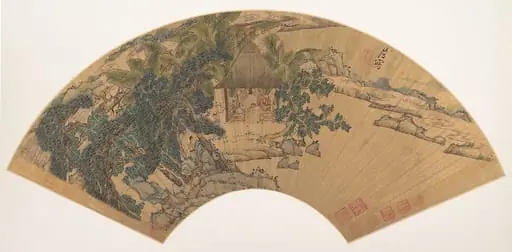 明 陳洪綬 山水圖 扇|Landscape
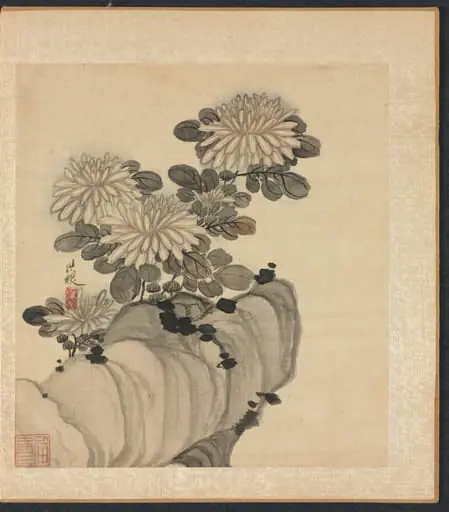 Paintings after Ancient Masters: Chrysanthemum and Rock
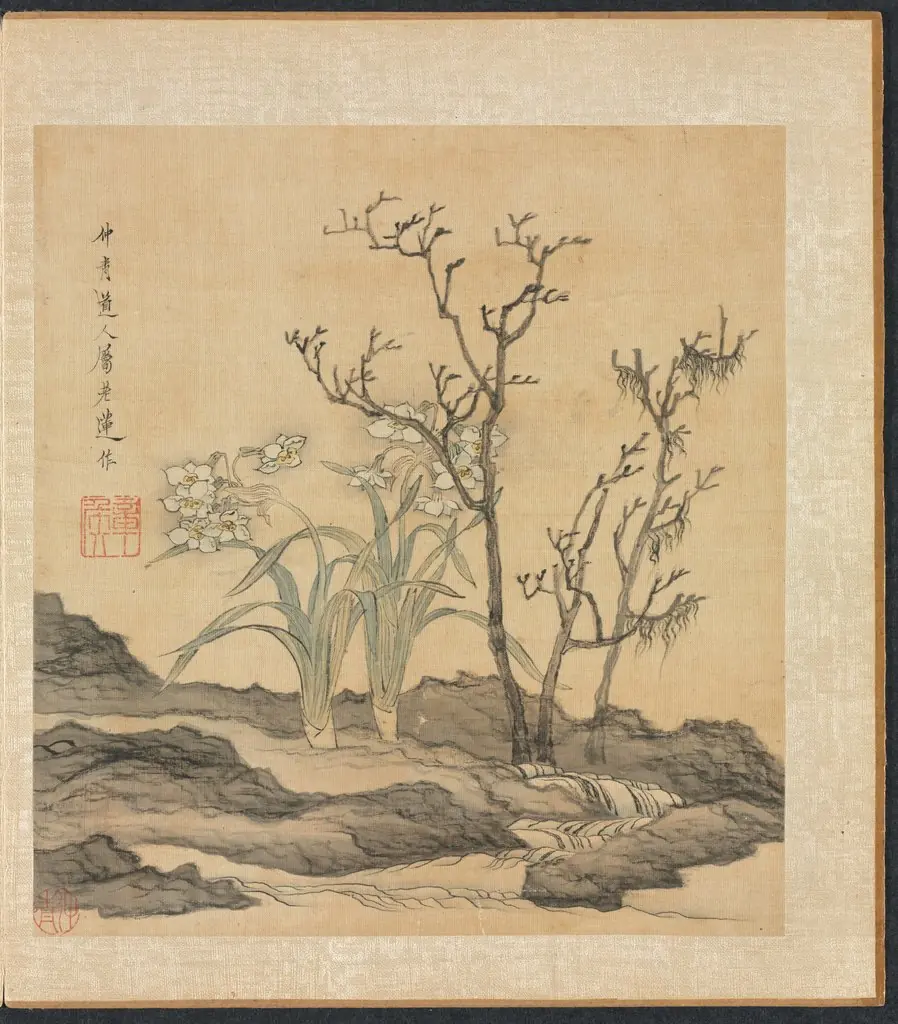 Paintings after Ancient Masters: Narcissus and Bare Trees
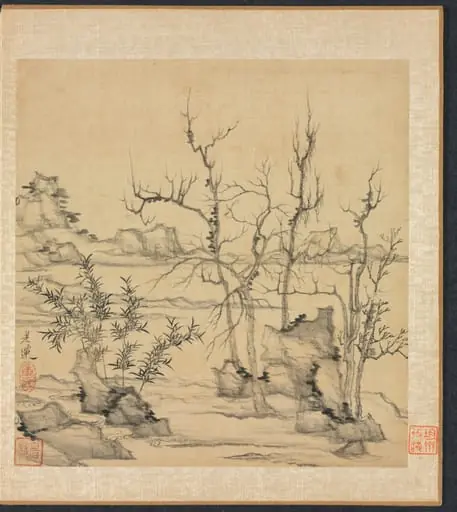 Paintings after Ancient Masters: Landscape in the Style of Ni Zan
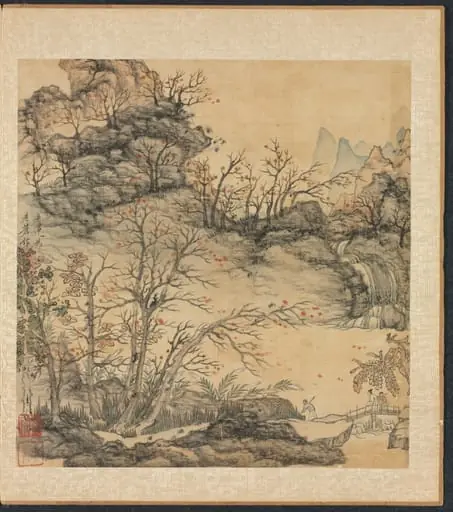 Paintings after Ancient Masters: Autumn Landscape
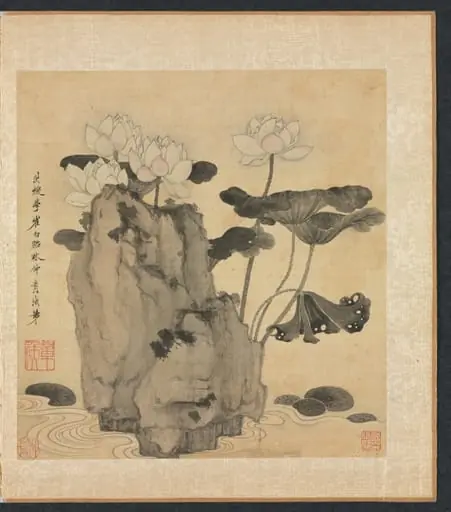 Paintings after Ancient Masters: Lotus and Rocks
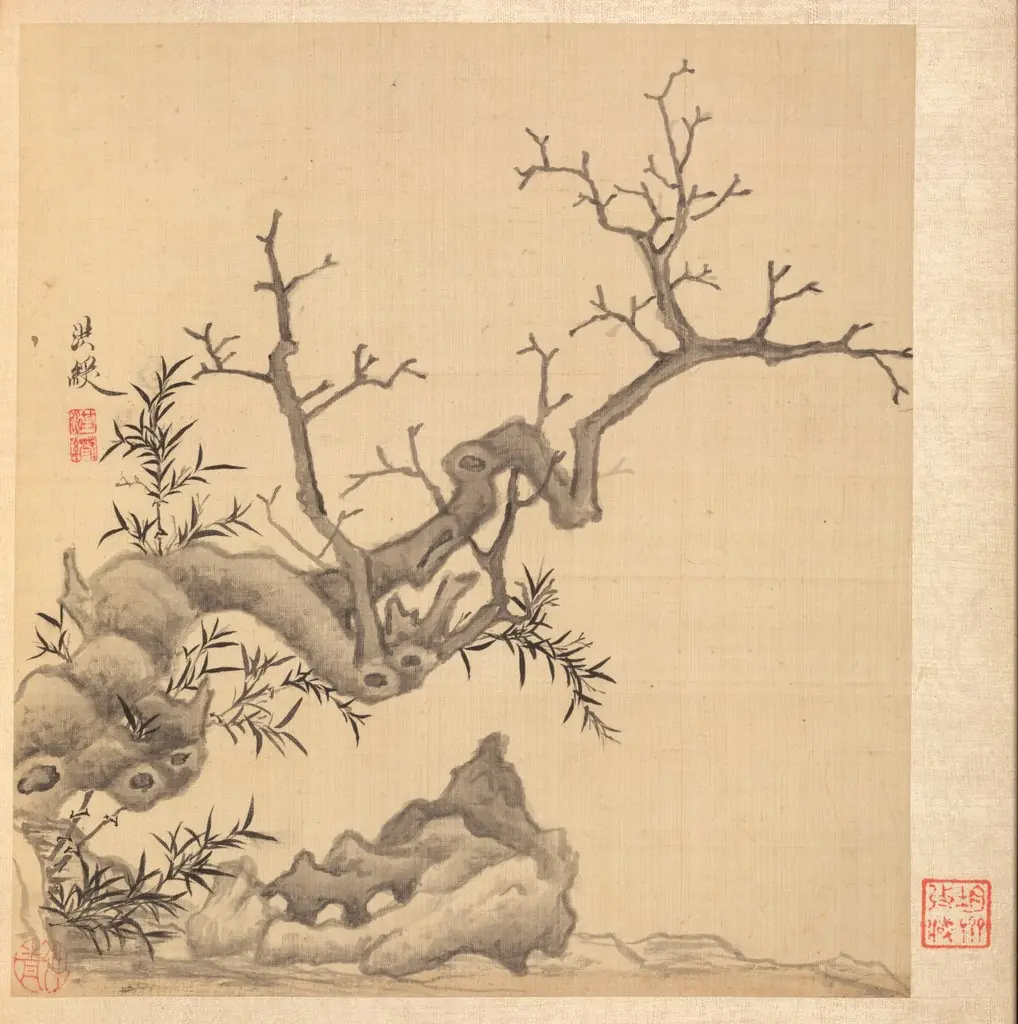 Paintings after Ancient Masters: Rock, Old Tree, and Bamboo
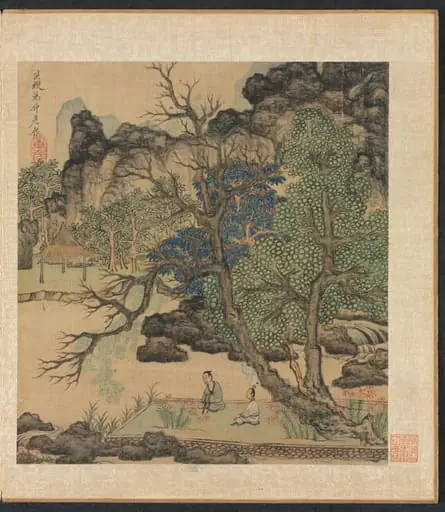 Paintings after Ancient Masters: Scholars in a Garden
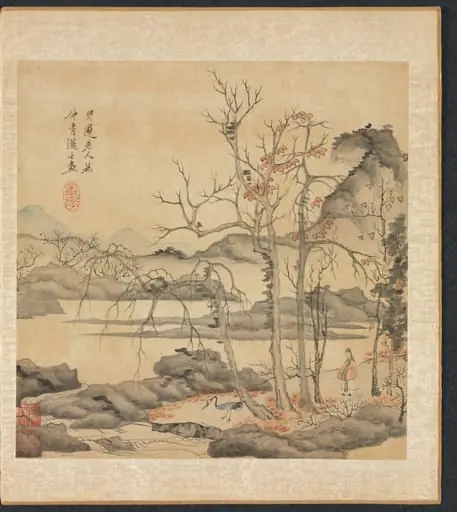 Paintings after Ancient Masters: Daoist and Crane in Autumn Landscape
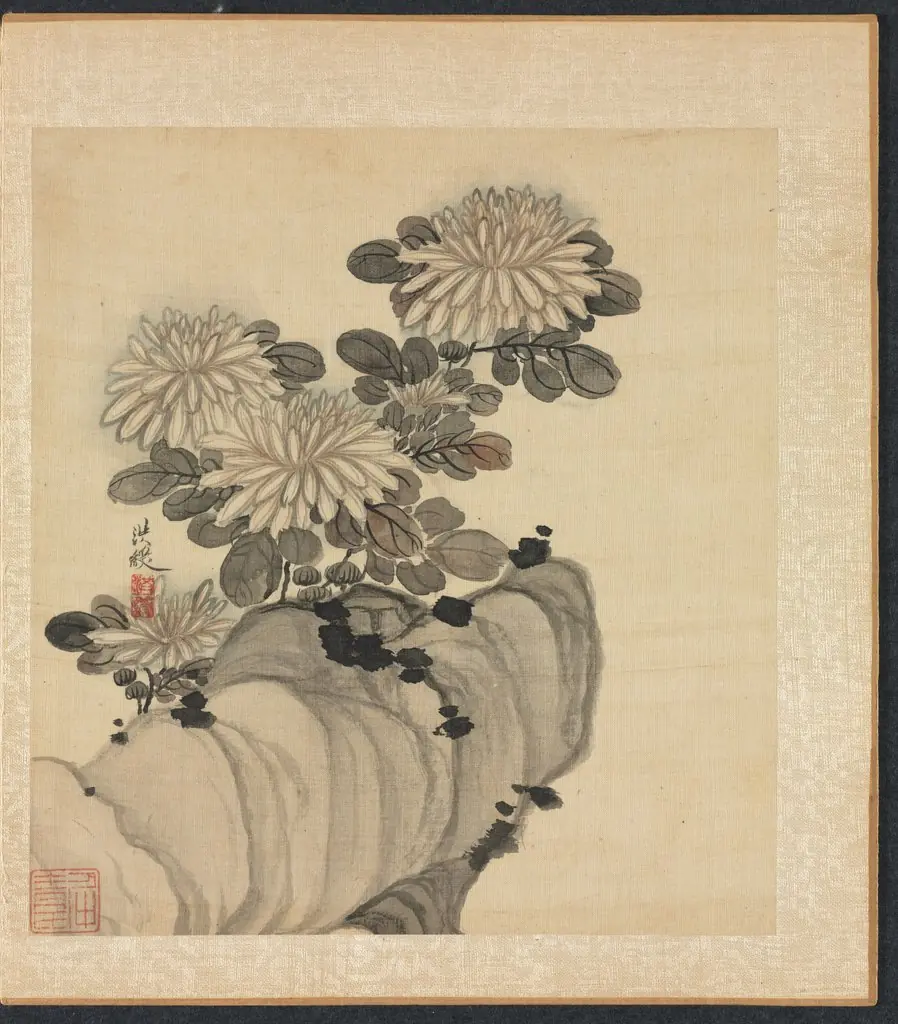 Paintings after Ancient Masters: Chrysanthemum and Rock