Artwork
La France Libératrice
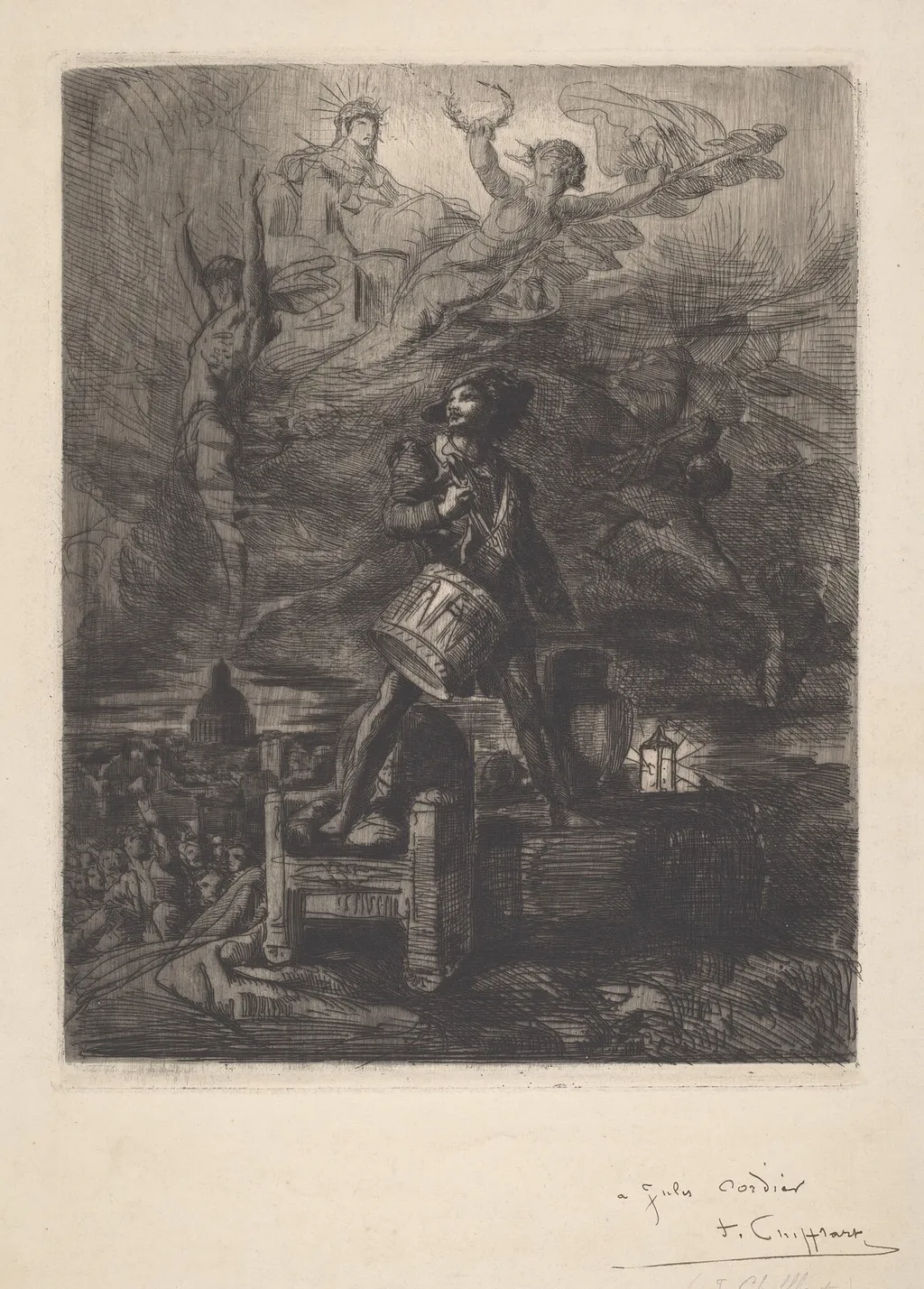
La France Libératrice is an ink print by the Impressionist artist François-Nicolas Chifflart. It dates from 1859 and is held in the collection of the National Gallery of Art.
About this work
Overview
It presents an allegorical scene centered on a male figure drumming atop a pedestal, while a female figure hovers above, holding a sword and laurel wreath.
La France Libératrice is an 1859 print by François-Nicolas Chifflart, combining etching, drypoint, and monoprint inking on laid paper. It presents an allegorical scene centered on a male figure drumming atop a pedestal, while a female figure hovers above, holding a sword and laurel wreath. The composition uses layered printing techniques to achieve tonal richness and tactile detail, reinforcing its symbolic intent without literal narrative.
Subject & Meaning
The figures represent abstract ideals: the drummer embodies the spirit of national awakening or revolutionary momentum, while the woman above, seated on clouds, signifies victory and justice. Her laurel wreath and sword suggest triumph and protection, evoking the mythic language of liberty. The pairing implies a union of action and divine sanction, common in 19th-century political allegory, though without direct reference to specific events.
Technique & Style
Chifflart employed etching and drypoint to create fine, expressive lines and dense shadow, while monoprint inking added varied, irregular tones to the clouds and drapery. The textures contrast the sharpness of the figures with the soft, atmospheric background. This layered approach enhances the ethereal quality of the scene, guiding the viewer’s focus toward the central pair through tonal gradation and linear precision.
History & Provenance
Created in 1859, the print emerged during a period of political tension in France under Napoleon III, though it avoids direct commentary on contemporary governance. It was likely produced for private circulation among intellectual or artistic circles. No public exhibition record is documented, and its early ownership remains untraced, suggesting it was not intended for mass distribution.
Context
The image reflects broader 19th-century European trends in allegorical printmaking, where national identity was expressed through mythic figures. Similar imagery appeared in revolutionary and Romantic art, blending classical symbolism with emerging nationalist sentiment. Chifflart’s work aligns with this tradition but avoids partisan messaging, favoring a more poetic, universal tone over political specificity.
Legacy
La France Libératrice remains a minor but illustrative example of French printmaking’s symbolic mode in the mid-1800s. It is not widely reproduced or studied, yet it offers insight into how artists used print media to explore abstract ideals of freedom and sovereignty without overt political engagement. Its quiet resonance lies in its restraint and technical refinement.
Artist & collection


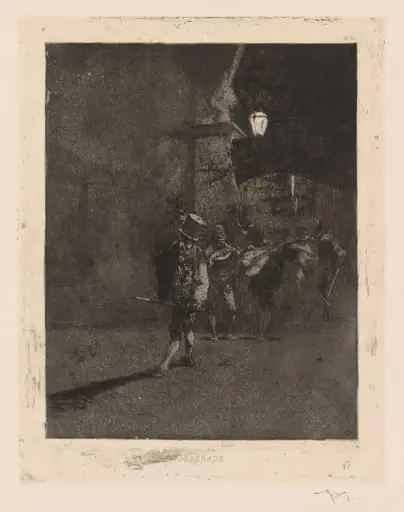 Serenade
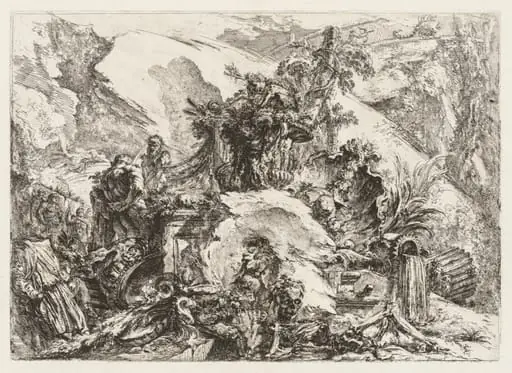 The Skeletons
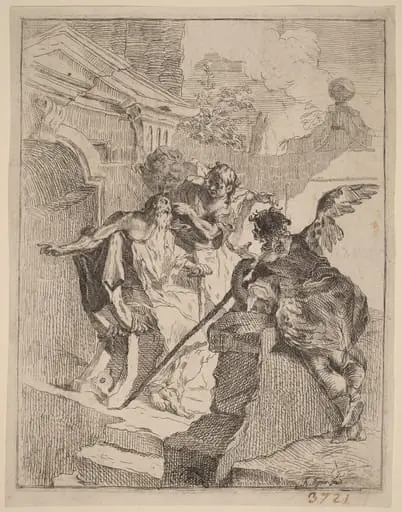 Tobias Healing His Father
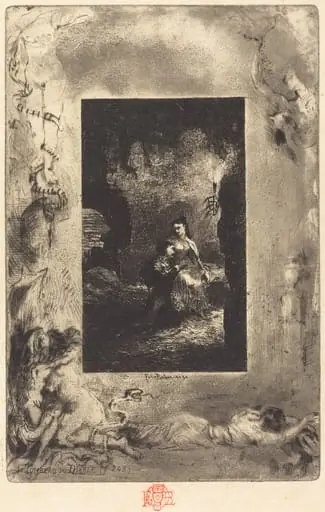 Le Tombeau du Diable (The Devil's Tomb)
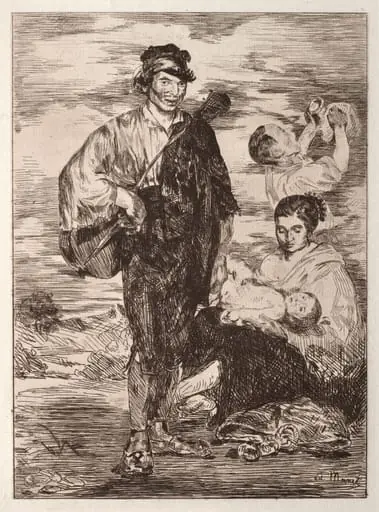 Les Gitanos
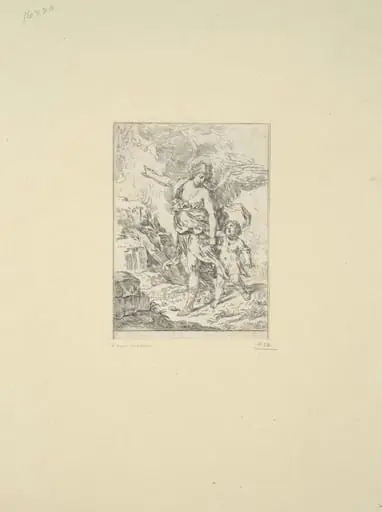 Guardian Angel
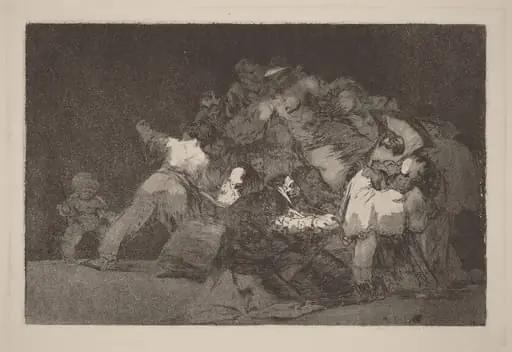 Disparate general (General Folly)
 Dios los cria y ellos se juntan (God Creates Them and They Join Up Together)
 Disparate claro (Clear Folly)
 Thomas Le Hardouaye
 Four Saints
 Saint Nicholas Rescuing Sailors