Artwork
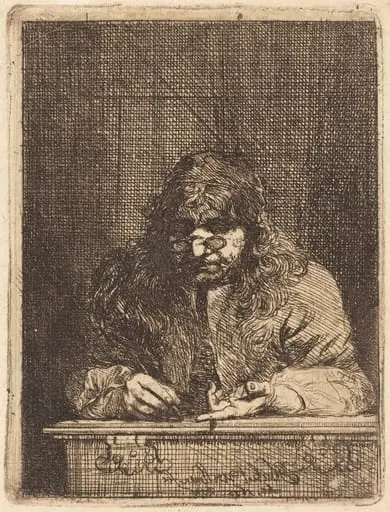
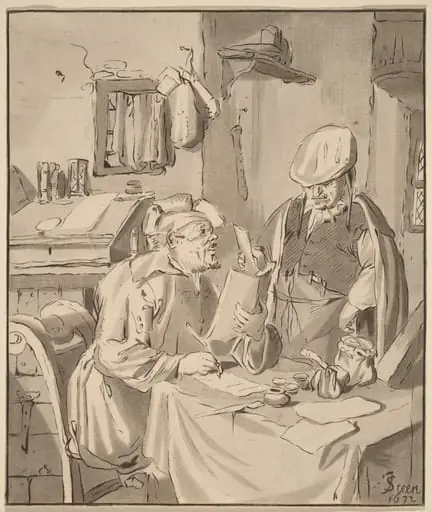
A Man Writing at a Table
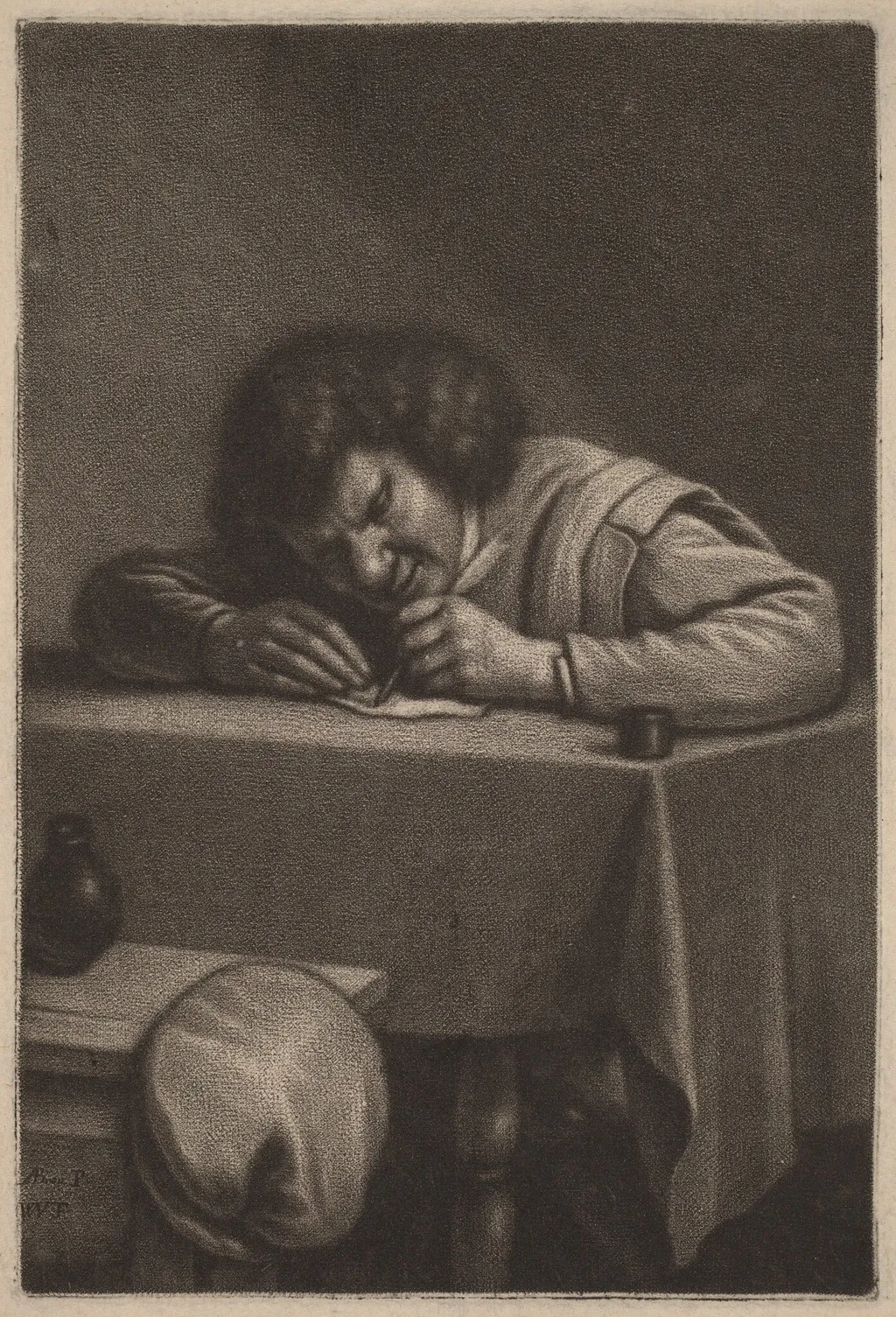
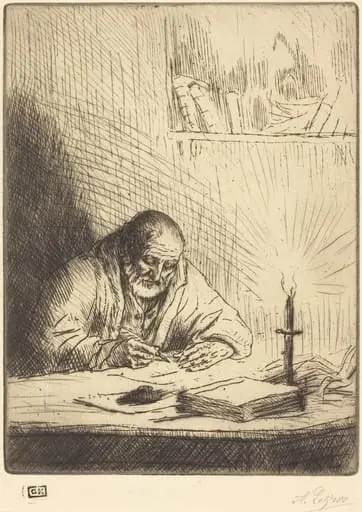
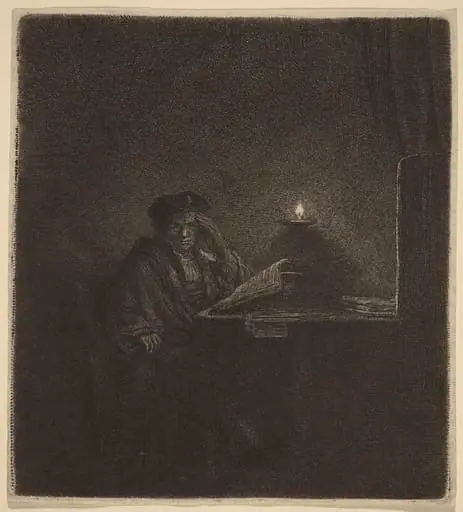
A Man Writing at a Table is an ink print by the Baroque artist Wallerant Vaillant. It dates from 1650 and is held in the collection of the National Gallery of Art.
About this work
Overview
Created in 1650 by Wallerant Vaillant, this mezzotint on laid paper captures a solitary figure absorbed in writing.
Created in 1650 by Wallerant Vaillant, this mezzotint on laid paper captures a solitary figure absorbed in writing. Vaillant, a Dutch artist active during the Golden Age, was among the earliest practitioners of mezzotint, a printmaking method that relies on a textured metal plate to produce subtle gradations of tone. Unlike line-based techniques, this process allows for continuous transitions between light and dark, giving the image a sculptural depth uncommon in prints of the period.
Subject & Meaning
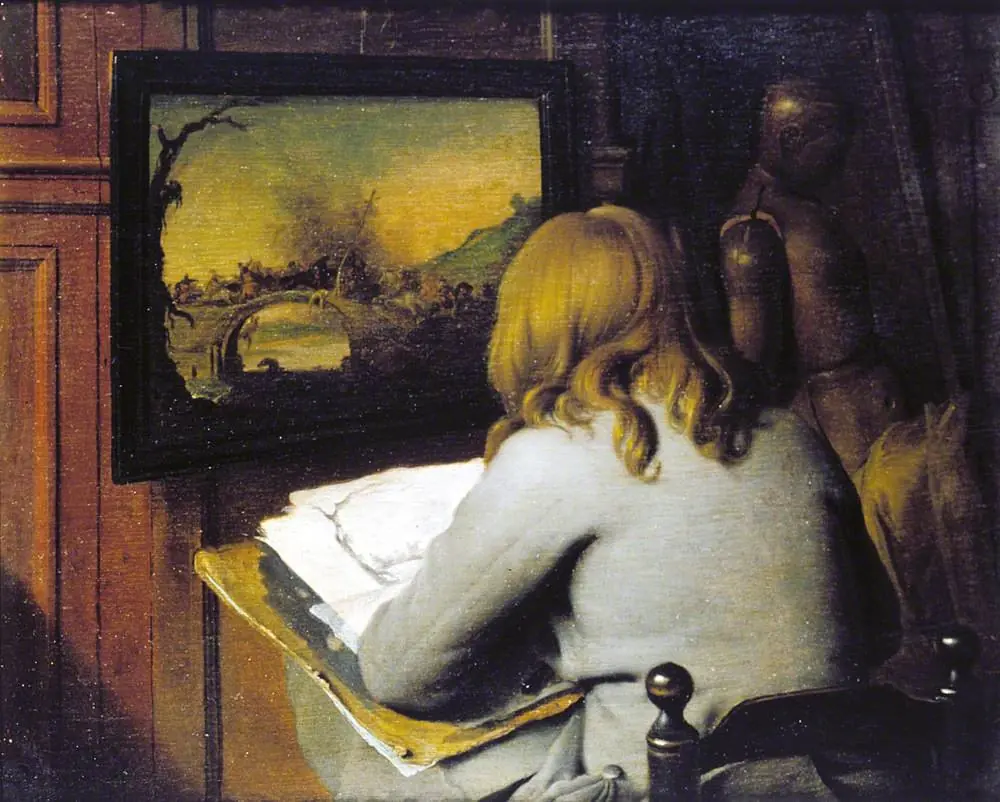
The figure, seated at a table, is shown mid-motion—quill suspended above paper—as if caught in a moment of contemplation. No narrative context is provided; the focus is on quiet concentration. The absence of identifying details universalizes the scene, transforming it into a meditation on intellectual labor. The composition invites quiet reflection, aligning with 17th-century Dutch ideals of introspection and disciplined routine.
Technique & Style
Vaillant employed mezzotint, a technique involving a plate roughened with a rocker to hold ink, then smoothed selectively to create light areas. This method enabled him to render soft, atmospheric transitions without outlines. The light, falling from the upper left, sculpts the man’s face and hand with chiaroscuro effects, while the surrounding space recedes into deep shadow. The result is a tactile, almost three-dimensional presence achieved through ink alone.
History & Provenance
Vaillant developed his mastery of mezzotint during the 1640s and 1650s, likely refining the technique after encountering its early forms in England. This print, dated to 1650, is among his earliest known mezzotints and reflects his role in establishing the medium in the Netherlands. While its early ownership is undocumented, it entered institutional collections in the 19th century, where it has remained as an example of technical innovation in printmaking.
Context
In mid-17th-century Holland, domestic scenes and studies of quiet activity were common in painting and print. Vaillant’s work aligns with this tradition but distinguishes itself through its medium: mezzotint allowed for tonal richness previously reserved for oil painting. His choice to render a writer in this format elevated printmaking’s capacity for nuance, bridging the gap between graphic art and painterly realism.
Legacy
Vaillant’s use of mezzotint influenced later printmakers across Europe, particularly in portraiture and genre scenes. His ability to achieve painterly effects in ink helped legitimize the technique as a serious artistic medium. Though less widely known than his contemporaries, his technical innovations laid groundwork for 18th-century mezzotint masters, ensuring the method’s endurance beyond its Dutch origins.
Artist & collection
Artist
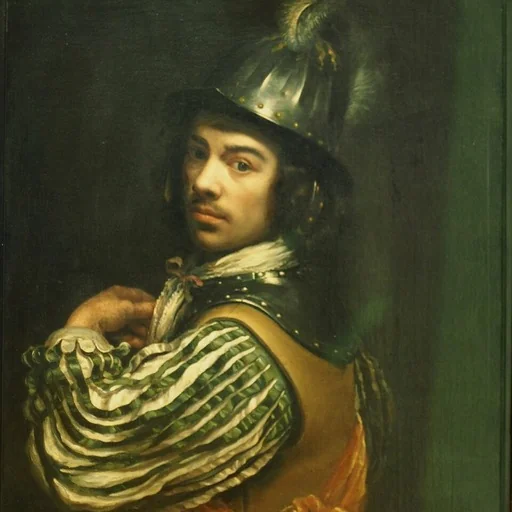
Wallerant Vaillant (30 May 1623 – 28 August 1677) was a painter of the Dutch Golden Age and one of the first artists to use the mezzotint technique, which he probably helped to develop.