Artwork
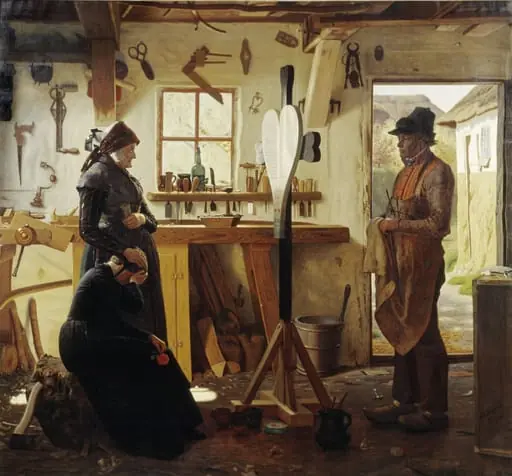
To kvinder besøger landsbykunstneren for at se det bestilte gravkors
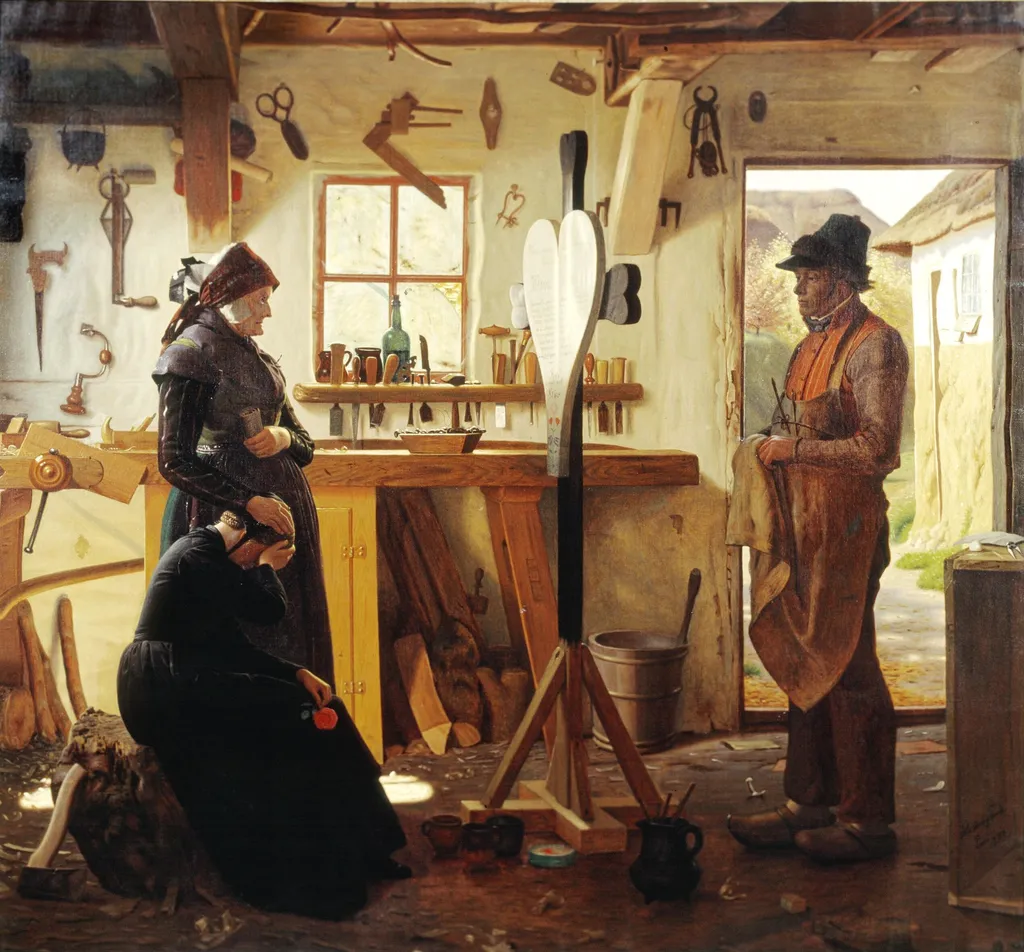
To kvinder besøger landsbykunstneren for at se det bestilte gravkors is an oil painting by the Realist artist Christen Dalsgaard. It dates from 1873 and is held in the collection of the Statens Museum for Kunst.
About this work
Overview
Painted in 1873 by Danish artist Christen Dalsgaard, this oil-on-canvas work captures a quiet moment in a rural artisan’s workshop.
Painted in 1873 by Danish artist Christen Dalsgaard, this oil-on-canvas work captures a quiet moment in a rural artisan’s workshop. Dalsgaard, trained in the academic tradition of Christoffer Wilhelm Eckersberg, here aligns with the principles of realism, focusing on ordinary life with unembellished observation. The scene is neither dramatic nor symbolic, but grounded in the daily rhythms of provincial Denmark.
Subject & Meaning
Two women, dressed in somber attire, have arrived to inspect a gravestone commissioned for a deceased relative. Their presence suggests a personal, solemn ritual. The artist, identified by his apron and tools, stands nearby, ready to explain his work. The gravestone itself is not the focus; rather, the painting emphasizes the human exchange—grief, trust, and craftsmanship—within a small community.
Technique & Style
Dalsgaard employs precise brushwork to render textures: the rough grain of wood, the weight of woolen fabric, the gleam of metal tools. Natural light enters through a large rear window, casting soft shadows and highlighting dust motes in the air. The composition is balanced yet unforced, with figures positioned to guide the eye across the cluttered interior without artificial staging.
History & Provenance
Completed in 1873, the painting remained within Danish collections for much of its early history. It reflects Dalsgaard’s consistent interest in rural life during the latter half of the 19th century, a period when Danish artists increasingly turned from mythological or aristocratic subjects to depict everyday scenes. Its provenance traces through private and institutional holdings in Denmark, though public records of early ownership are limited.
Context
In 1870s Denmark, realism gained traction as artists sought to document the lives of common people amid industrialization. Dalsgaard’s work aligns with this trend, portraying artisans and villagers with dignity rather than sentimentality. The depiction of a gravestone commission speaks to enduring rural customs, where personal mourning was intertwined with local craftsmanship and community ties.
Legacy
Though not widely exhibited outside Denmark, the painting exemplifies Dalsgaard’s contribution to Scandinavian realism. It preserves a vanishing aspect of rural life—the intimate relationship between maker and mourner—without romanticizing it. Art historians note its quiet precision as representative of a broader Danish movement that valued authenticity over spectacle.
Own this work as a print
Artist & collection
Artist
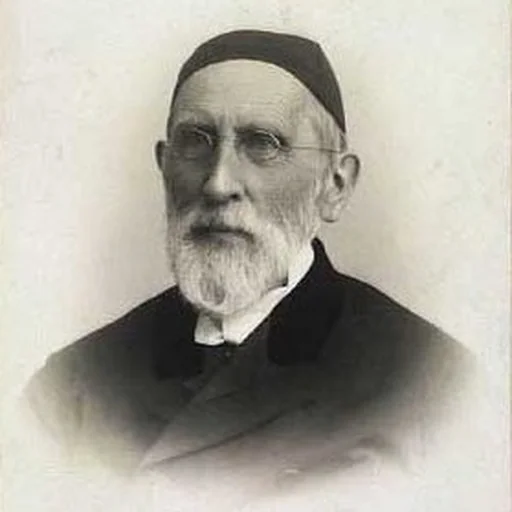
Christen Dalsgaard (30 October 1824 – 11 February 1907) was a Danish painter, a late student of Christoffer Wilhelm Eckersberg.

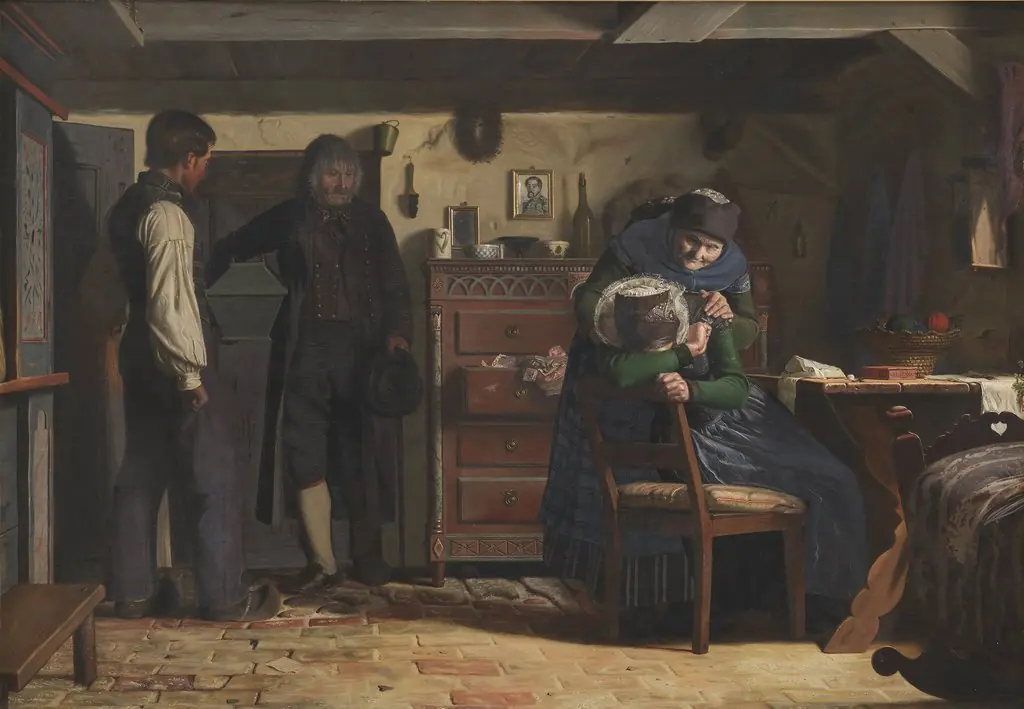 The Village Carpenter Bringing a Coffin for a Dead Child
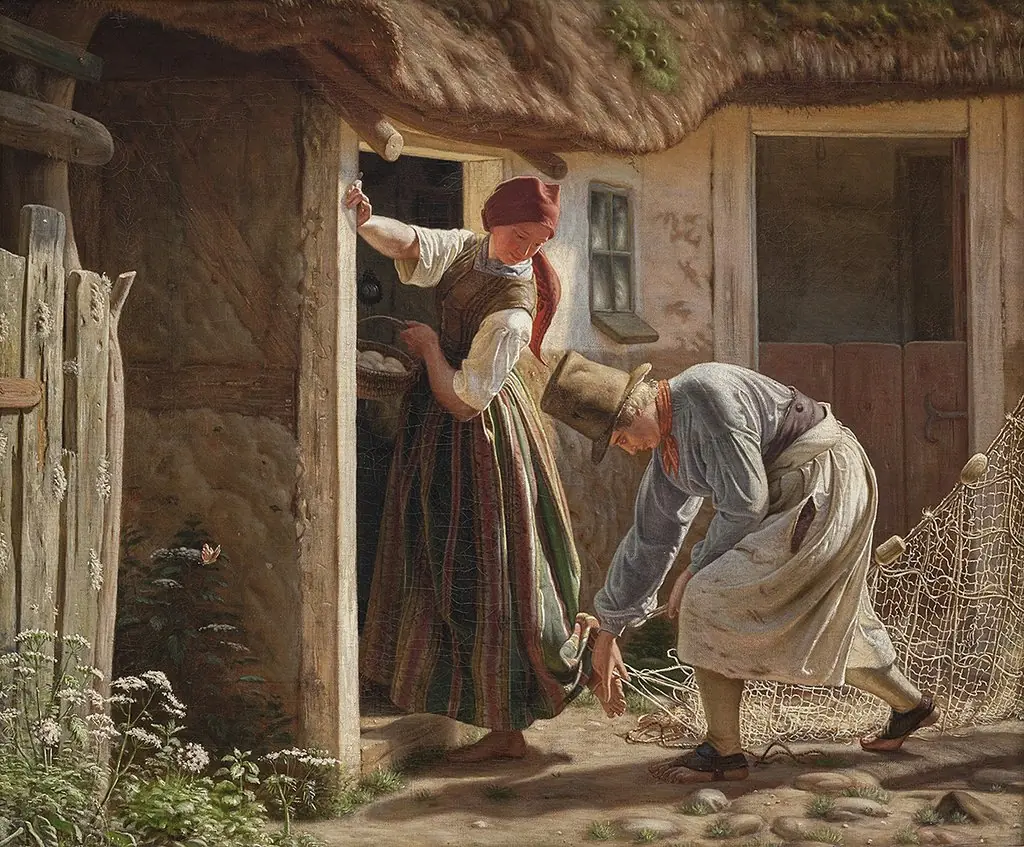 Pigen, der fanges i nettet
 Portræt af ung pige med kyse, bortvendt profil mod venstre
 Study from the Interior of Vartov Church in Copenhagen
 Landscape near the Town of Skive with Skivehus Manor, Jutland
 A Woman's Solemn Churching after Childbirth
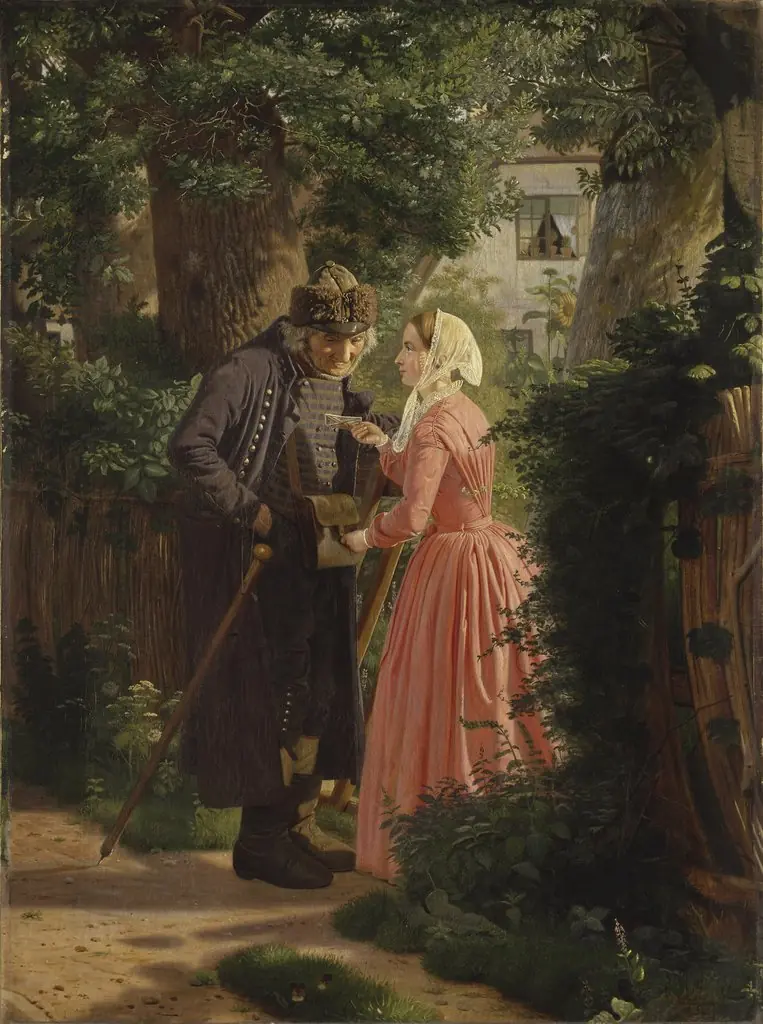 En ung pige beder landsbyens gamle postbud besørge et brev
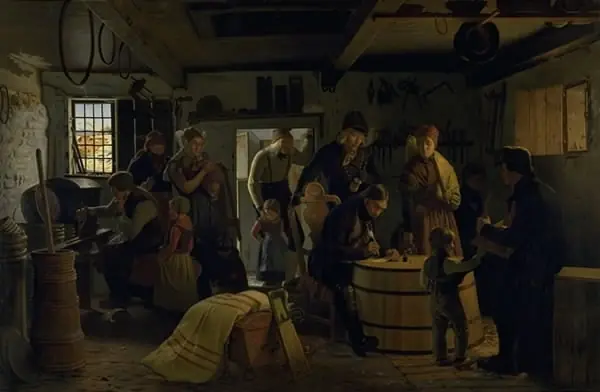 The Bailiff Calls on a Poor Cooper in Salling
 The Shoeing-Smith
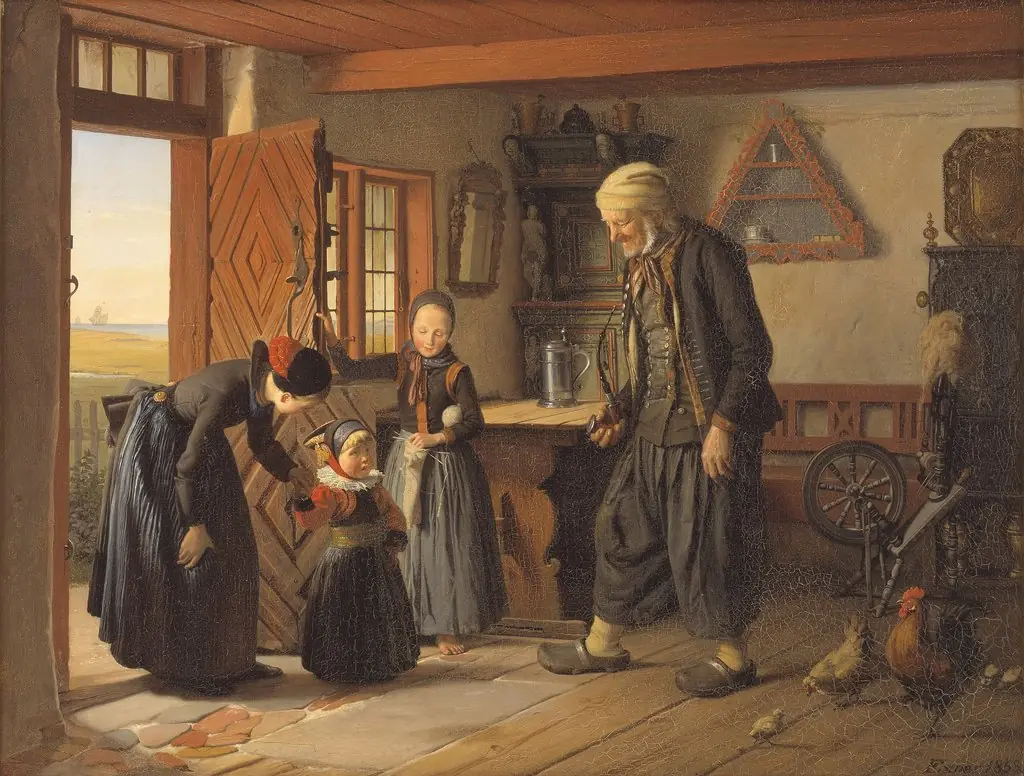 Visiting Grandfather
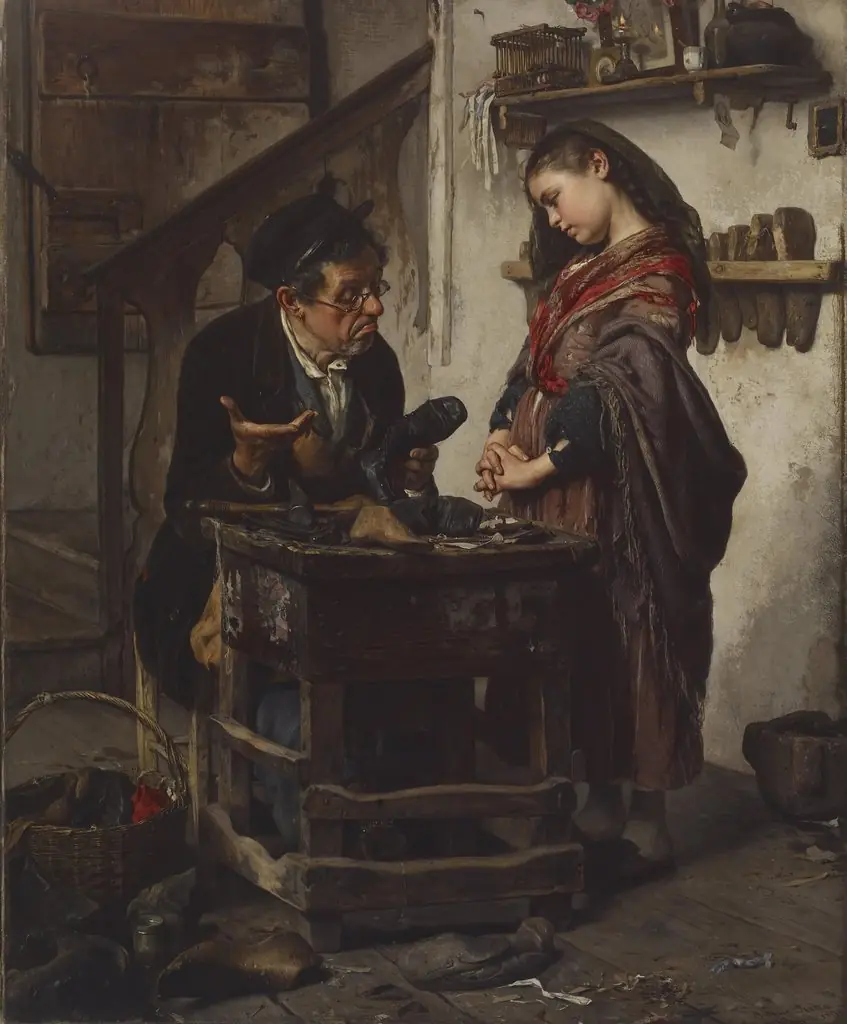 The Hopeless Case
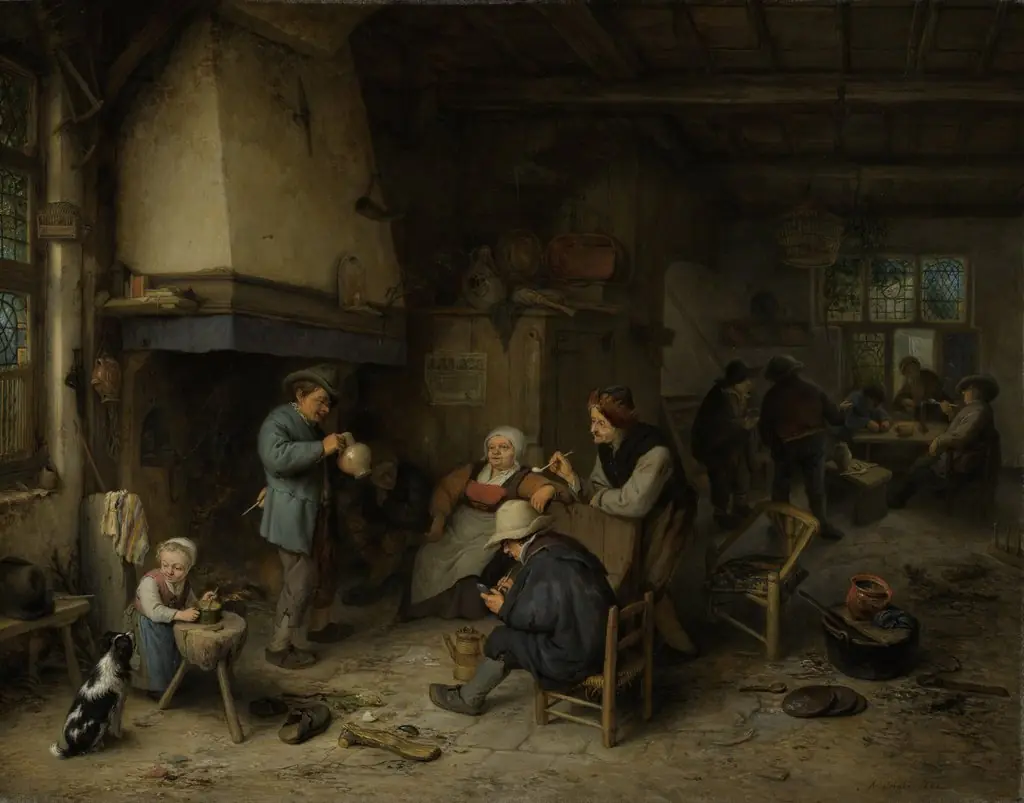 Peasants in an Interior
 Boerengezelschap binnenshuis
 ‘De schaatsenrijders’: boerengezelschap in interieur
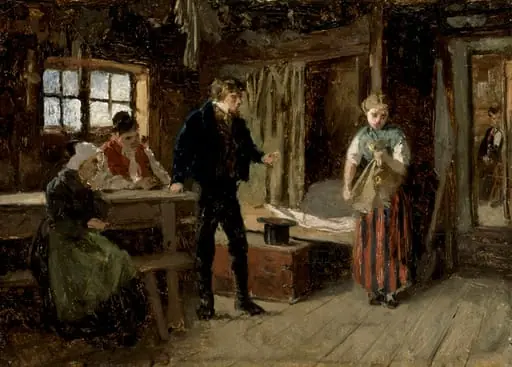 Kosinta Ahvenanmaalla, harjoitelma
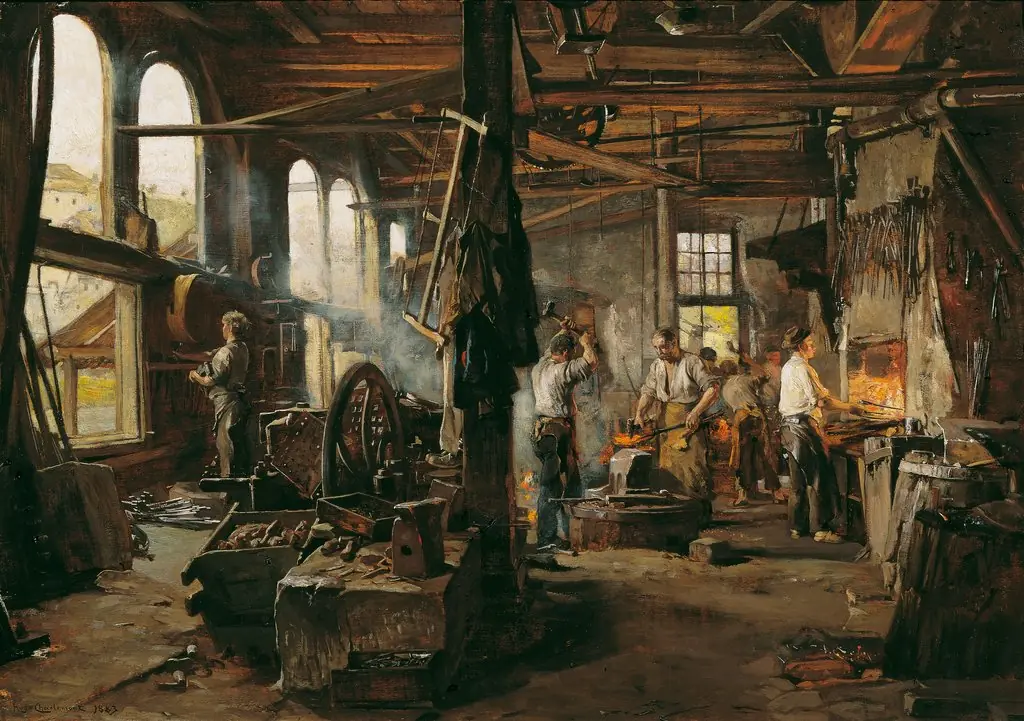 Interieur einer Hammerschmiede
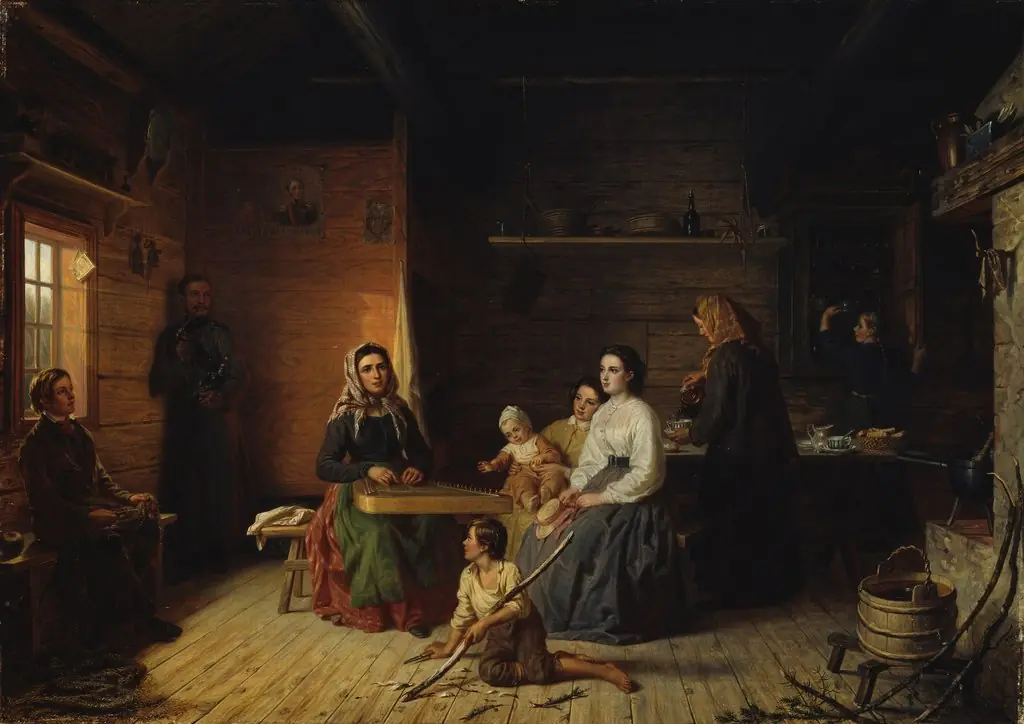 Kreeta Haapasalo Playing the Kantele in a Peasant Cottage
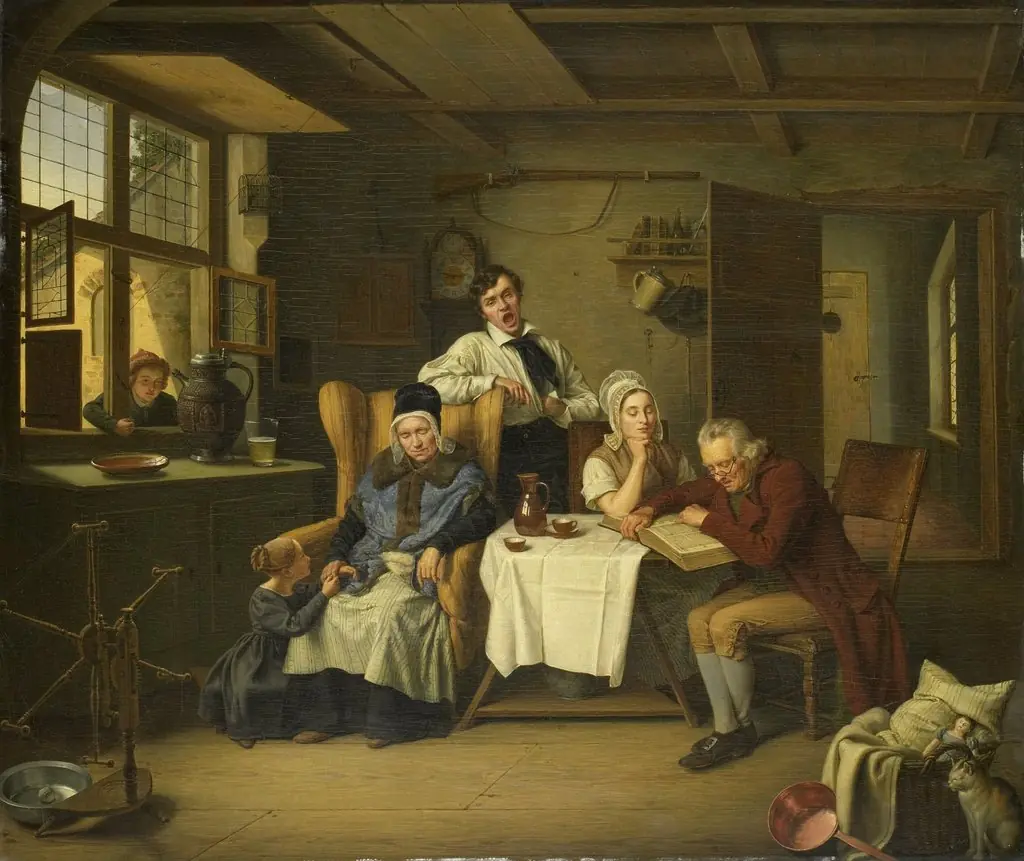 Bible Reading
 A Shoemaker's Workshop
 To kvinder besøger landsbykunstneren for at se det bestilte gravkors