Artwork
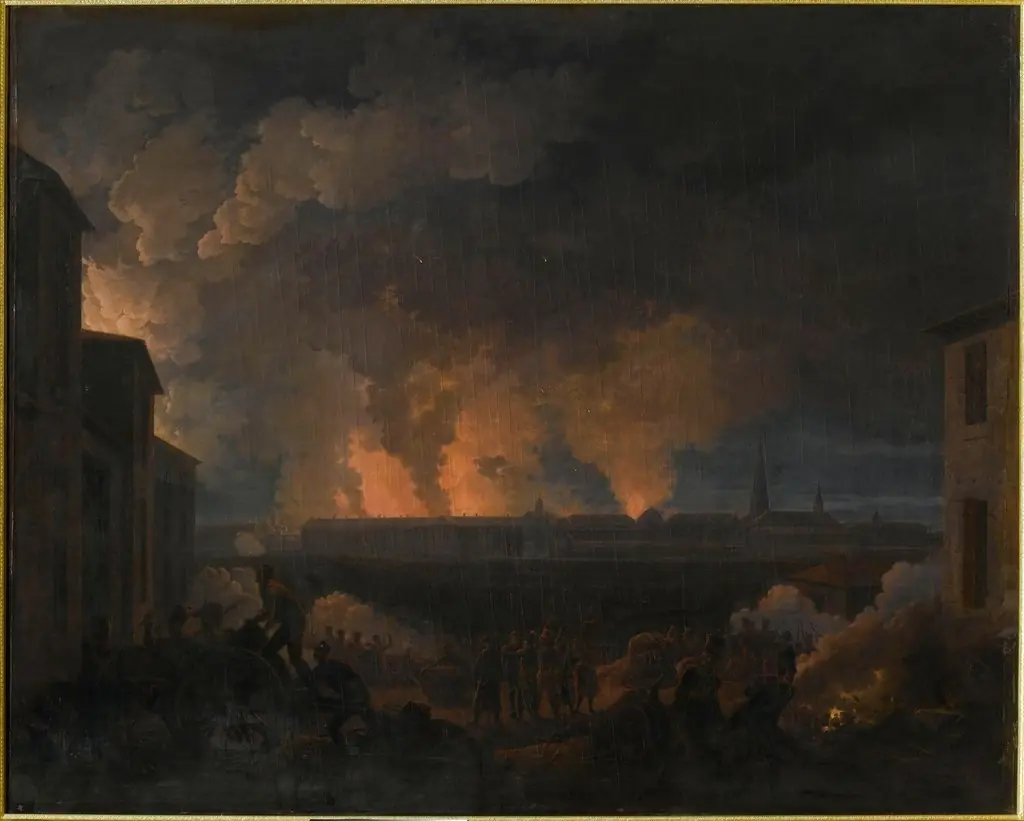
The Most Terrible Night. View of Kongens Nytorv in Copenhagen During the English Bombardement of Copenhagen at Night between 4 and 5 September 1807
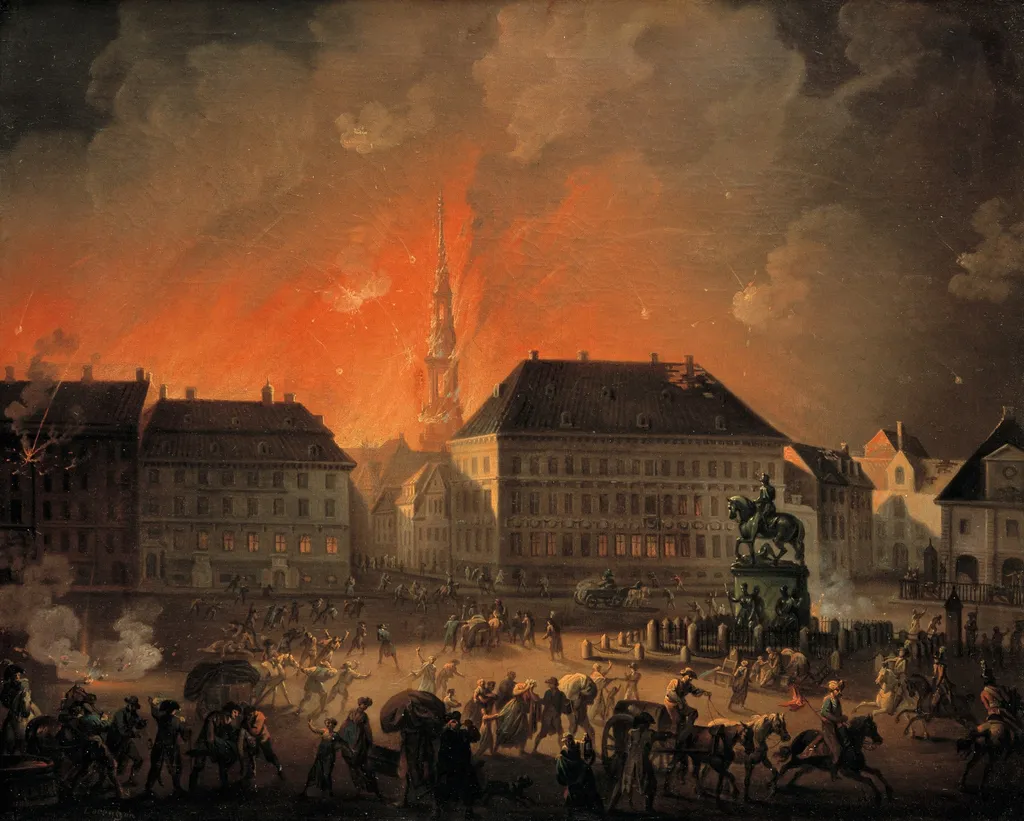
The Most Terrible Night. View of Kongens Nytorv in Copenhagen During the English Bombardement of Copenhagen at Night between 4 and 5 September 1807 is an oil painting by Christian August Lorentzen. It dates from 1807 and is held in the collection of the Statens Museum for Kunst.
About this work
Buildings with dark roofs line the square, and a tall church spire burns in the background, lighting the sky with orange and red flames.
This painting shows a chaotic night scene with a city square full of people running and horses pulling carriages. Buildings with dark roofs line the square, and a tall church spire burns in the background, lighting the sky with orange and red flames. Smoke fills the air, and a statue of a rider on a horse stands in the center, looking calm while chaos swirls around it.
The artist used thick, dark brushstrokes to show the panic and danger, making the fire glow sharply against the shadows. This wasn’t just a random fire—it was a real attack on Copenhagen in 1807.
Next, check out chiaroscuro to see how artists use light and shadow to create drama.
Overview
Christian August Lorentzen’s 1807 oil painting records the night of September 4–5, when British forces bombarded Copenhagen. The canvas captures Kongens Nytorv, the city’s central square, amid the chaos of fire and fleeing crowds. The work is part of the collection of Denmark’s National Gallery, Statens Museum for Kunst.
Subject & Meaning
The scene portrays a densely populated square illuminated by the flames of a burning church spire. Pedestrians and horse‑drawn carriages scramble away, while a bronze equestrian statue remains oddly composed at the centre, suggesting a contrast between civic order and the surrounding panic caused by the attack.
Technique & Style
Lorentzen employs a vigorous, impasto application of dark pigments to convey movement and tension. Strong chiaroscuro contrasts the orange‑red glow of the fire against deep shadows, heightening the drama. The brushwork is deliberately thick, giving the smoke and flickering light a tactile presence.
History & Provenance
Created in the immediate aftermath of the 1807 bombardment, the painting served as a contemporary visual record of the event. It entered the national collection of Denmark’s Statens Museum for Kunst, where it remains on display as a historical document of the city’s wartime experience.
Context
The English bombardment was part of the Napoleonic Wars, aimed at neutralizing the Danish fleet. Lorentzen’s work reflects the broader European trend of history painting that combined documentary detail with emotive composition, documenting national trauma through a dramatic visual narrative.
Own this work as a print
Artist & collection

Artist
Christian August Lorentzen (1749–1828) was an artist, born in Sønderborg.

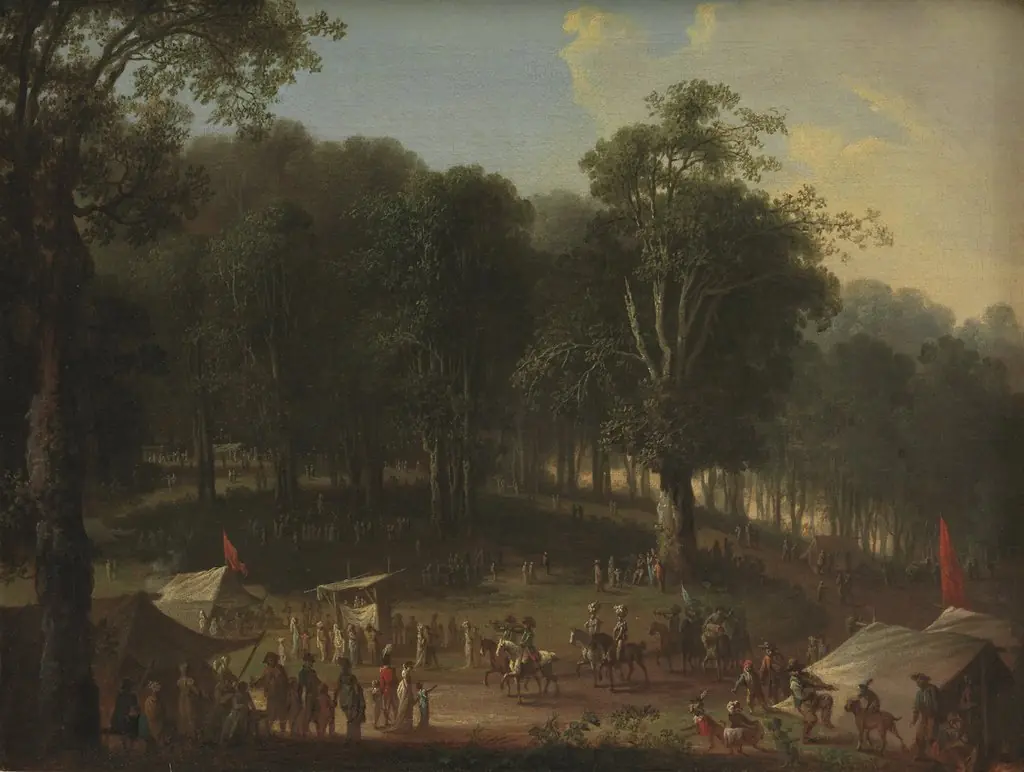 A Troup of Performers Arriving at the Fair at Dyrehavsbakken Near the Deer Park, North of Copenhagen
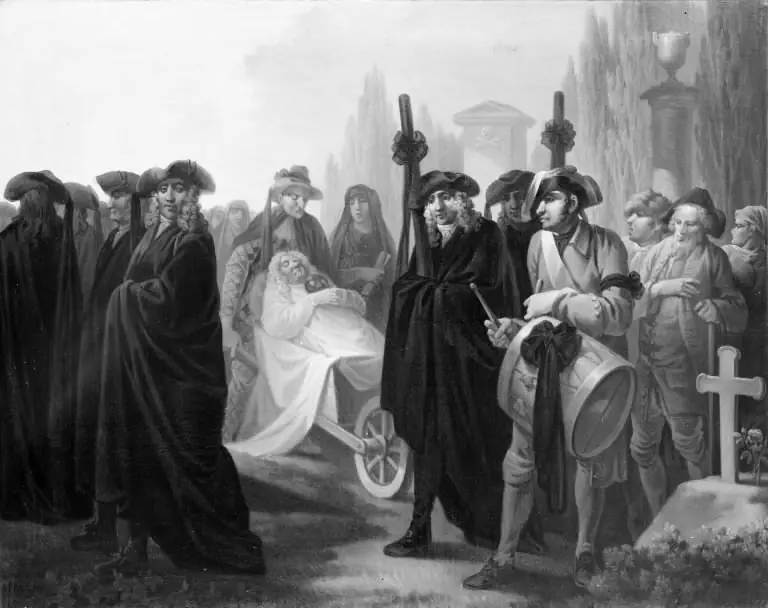 Den danske Comedies Ligbegængelse, 5. scene
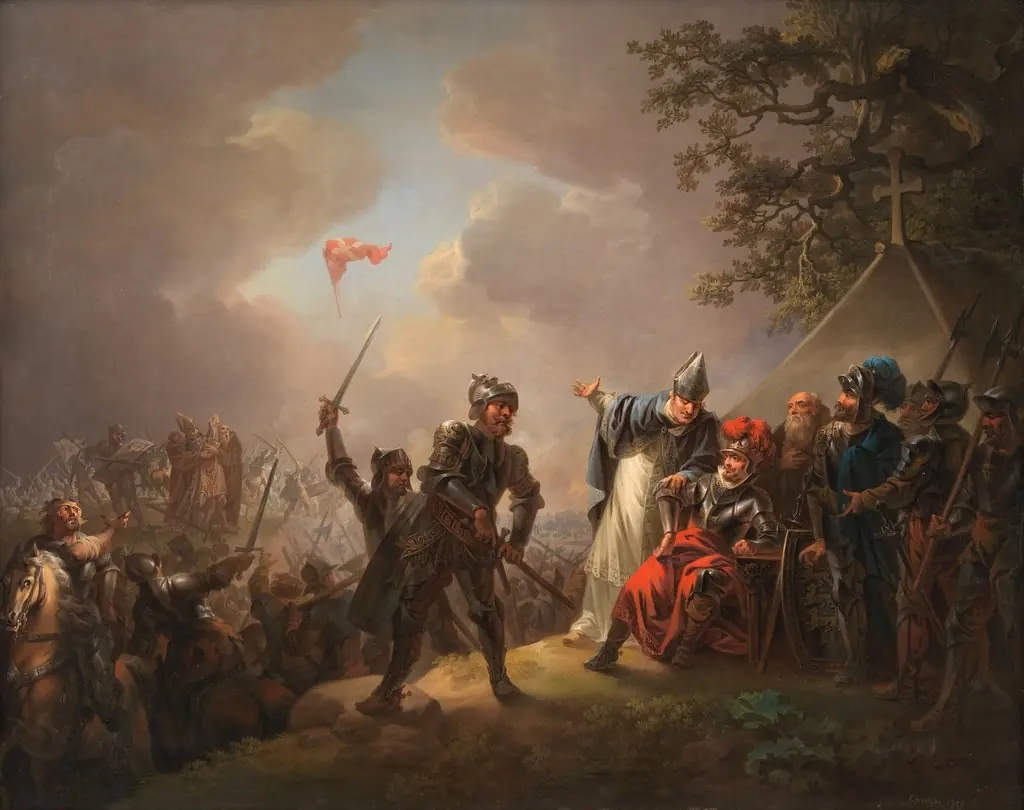 The Legend of the Danish Flag (the Dannebrog) Falling from the Heavens during the Battle of Lyndanise in Estonia in 1219
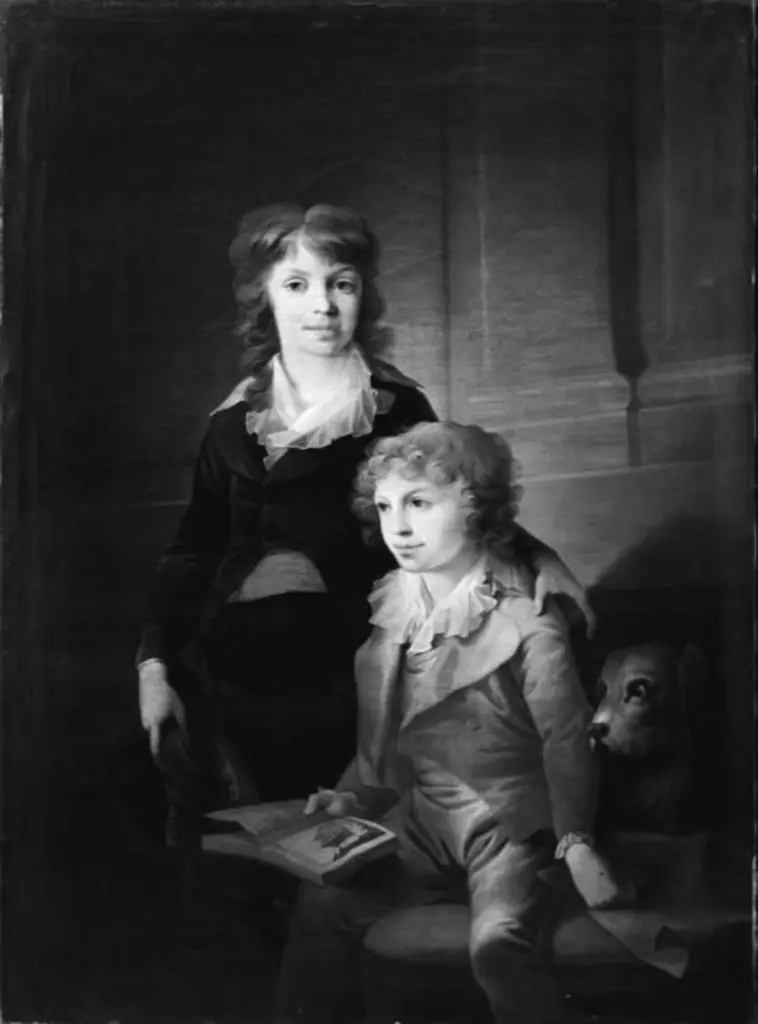 To ynglinge med en hund
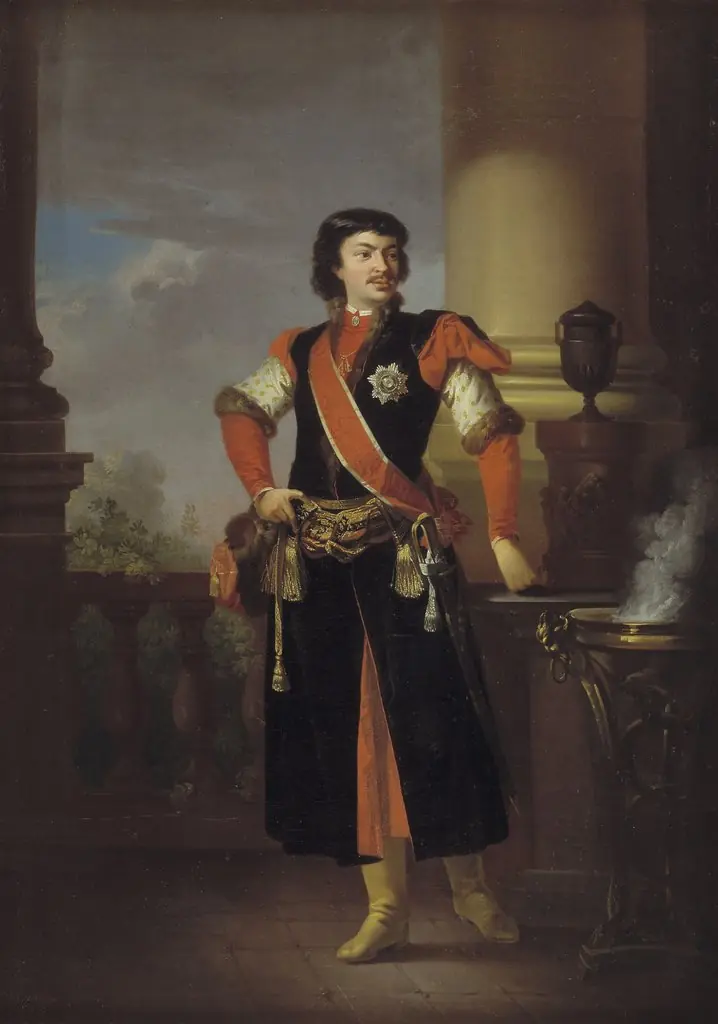 Portrait of Count Rzewuski, Polish Ambassador to Denmark
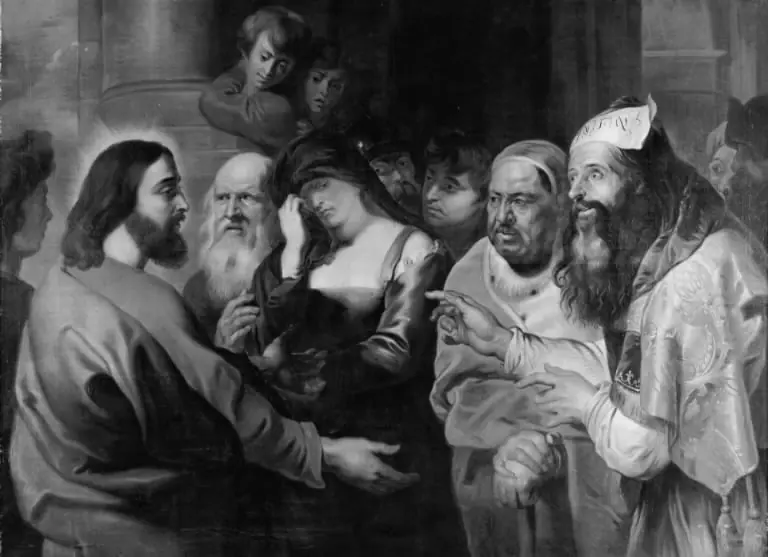 Kristus og synderinden
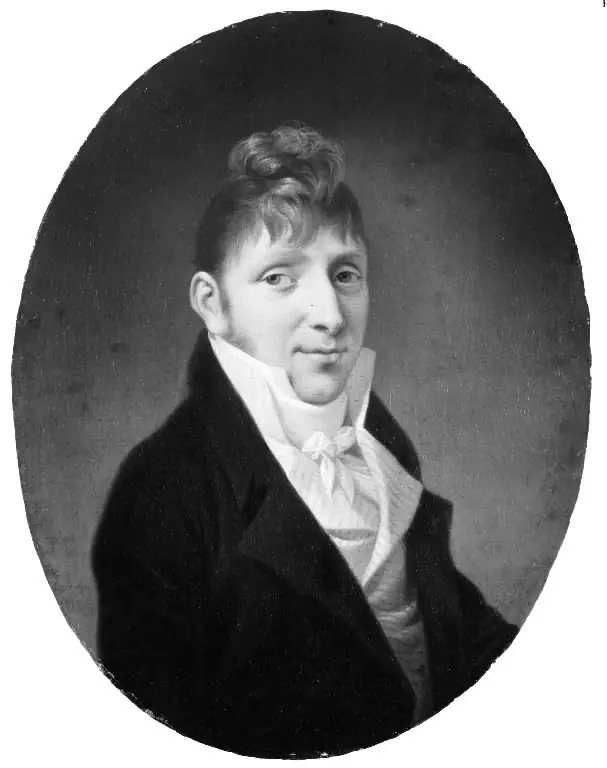 Mandsportræt
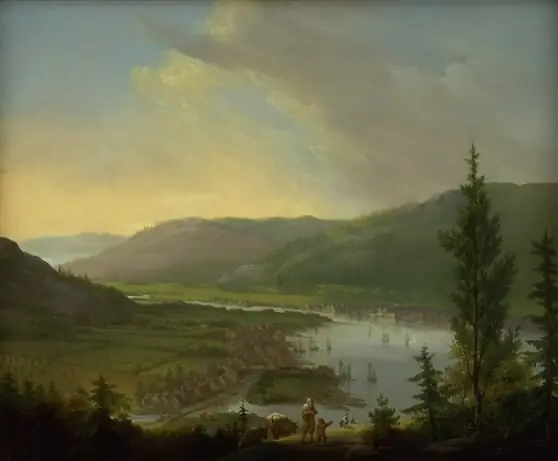 View towards Drammen, Norway
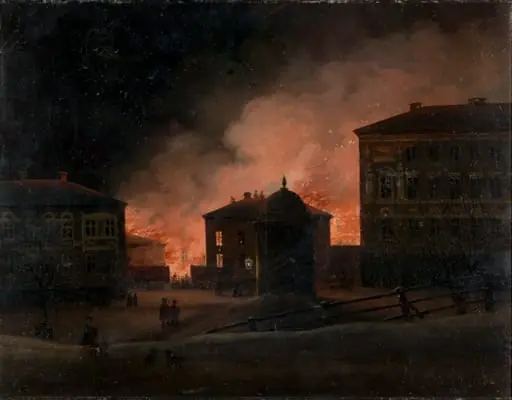 Tulipalo Eteläisellä Makasiinikadulla
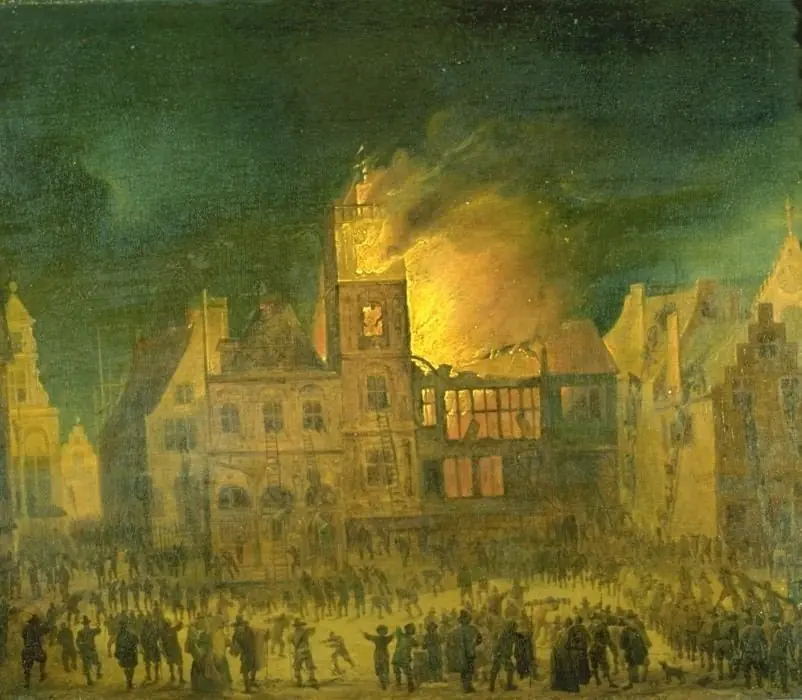 Fire in the Old City Hall of Amsterdam
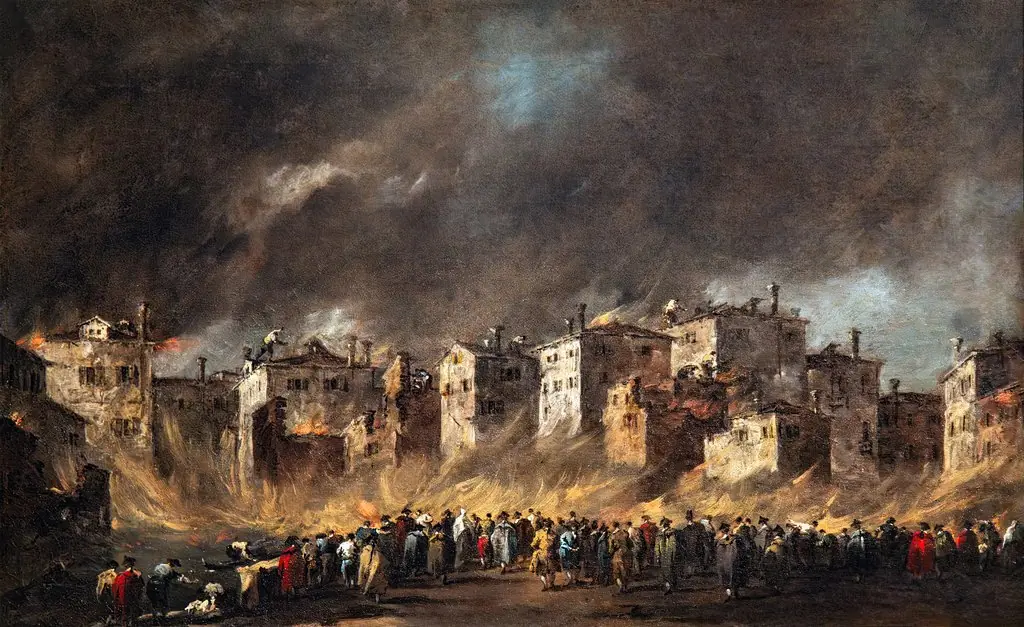 Fire in the oil warehouses at San Marcuola
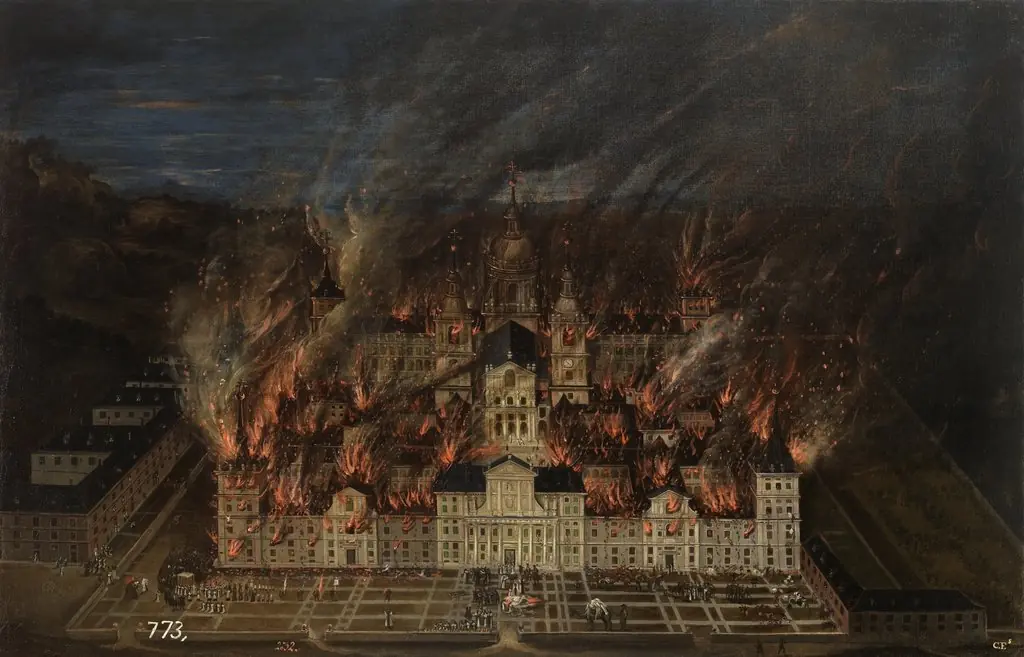 Incendio del Monasterio de El Escorial en 1671
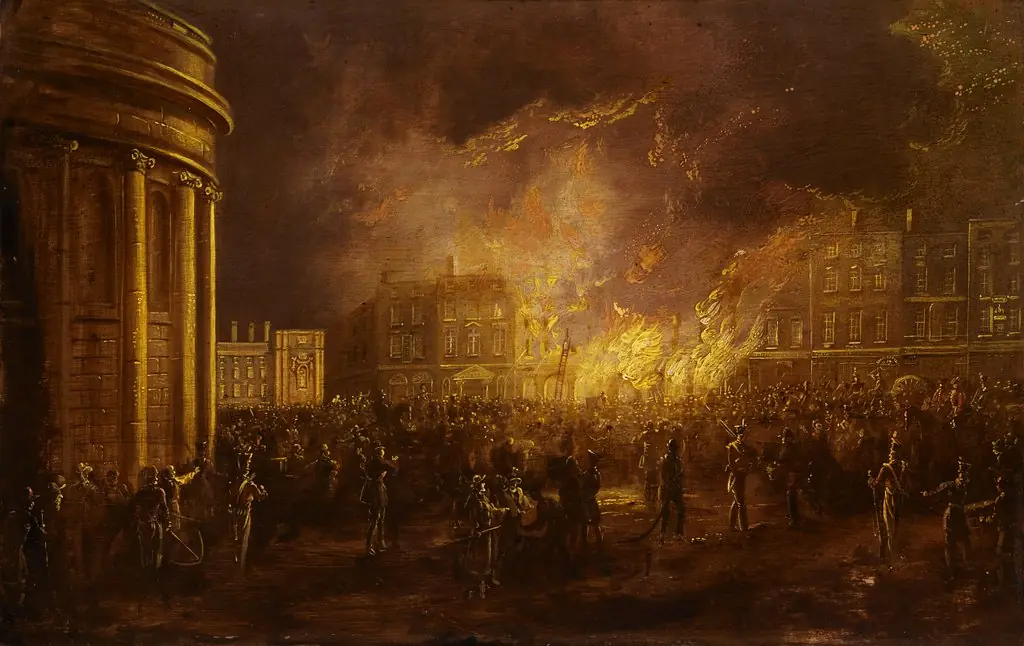 The Burning of the Arcade in College Green, Dublin
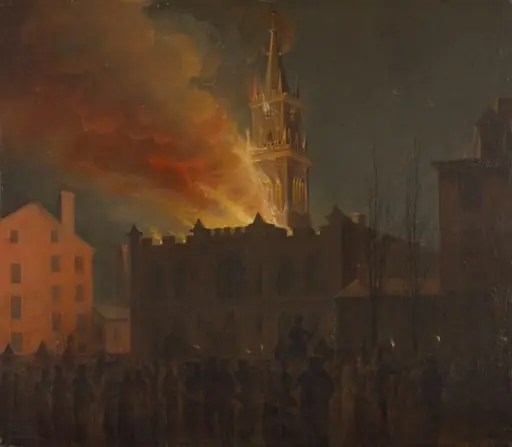 Conflagration of the Masonic Hall, Chestnut Street, Philadelphia, Pennsylvania
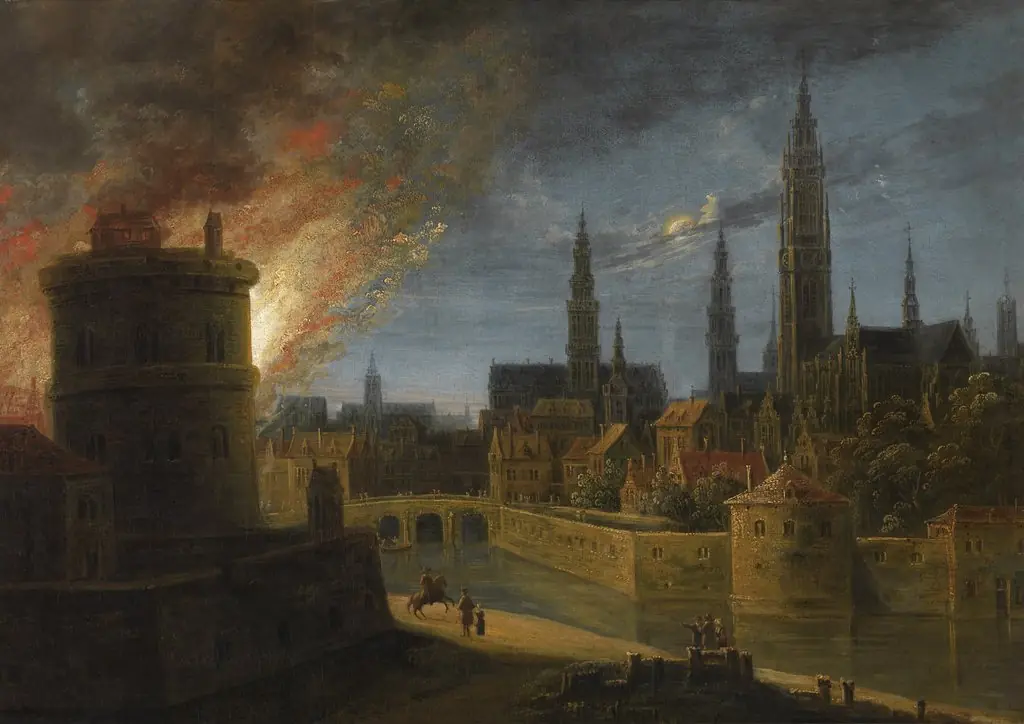 Fire in Antwerp
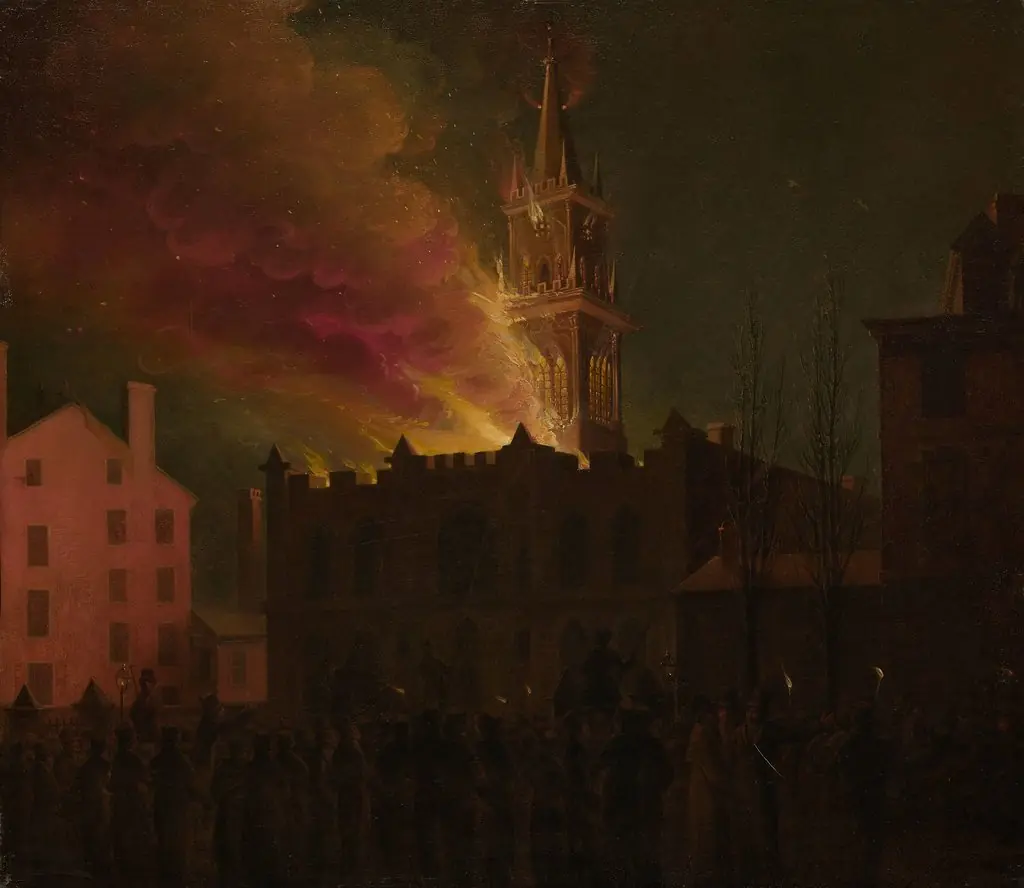 Conflagration of the Masonic Hall, Chestnut Street, Philadelphia, Pennsylvania
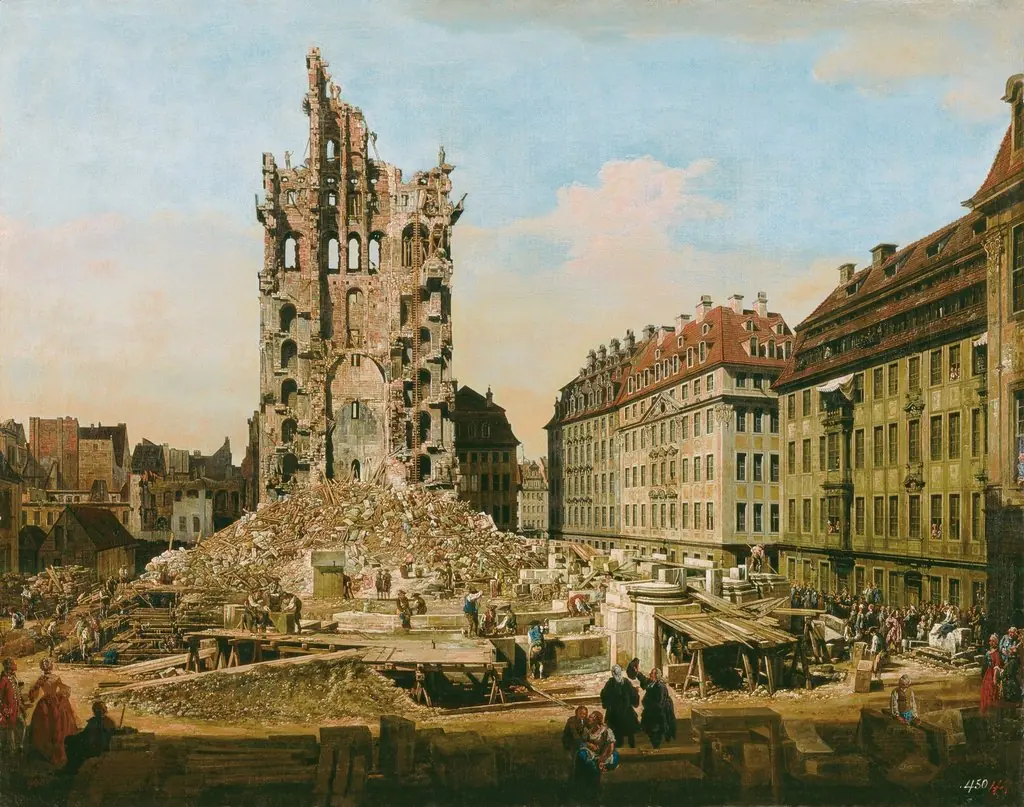 The Ruins of the old Kreuzkirche, Dresden
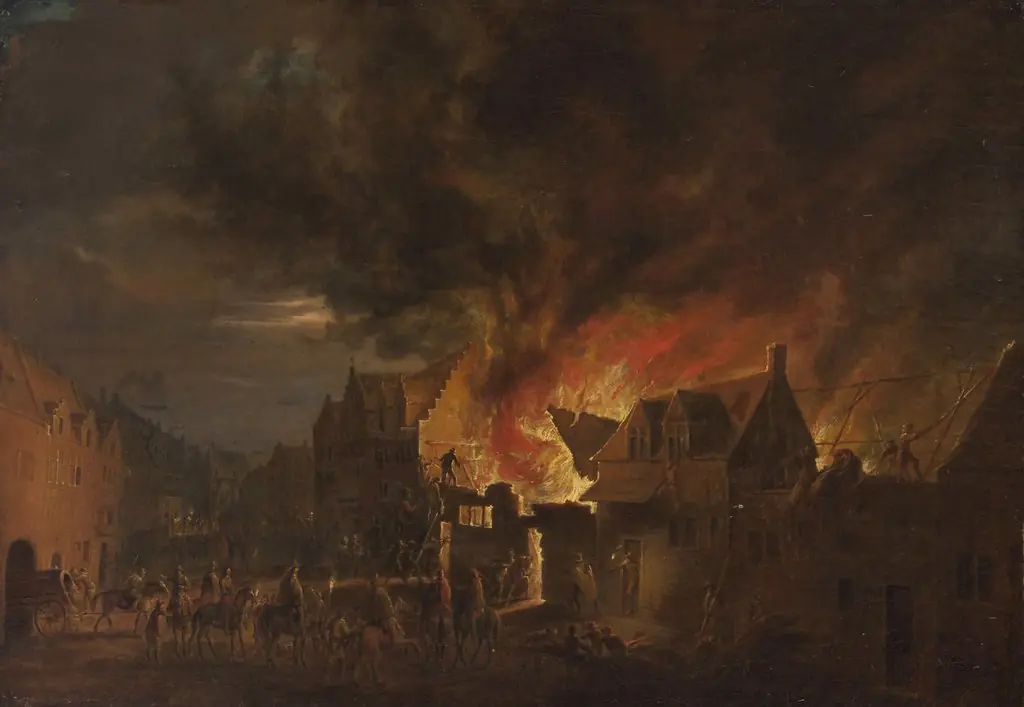 Archduke Leopold Wilhelm at a nocturnal fire
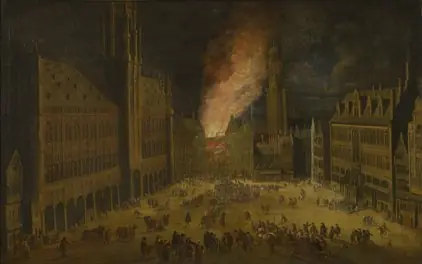 Fire of the house the Wolvin in Brussels in 1690
 Bombardement de Vienne, 11 mai 1809