Artwork
Untitled
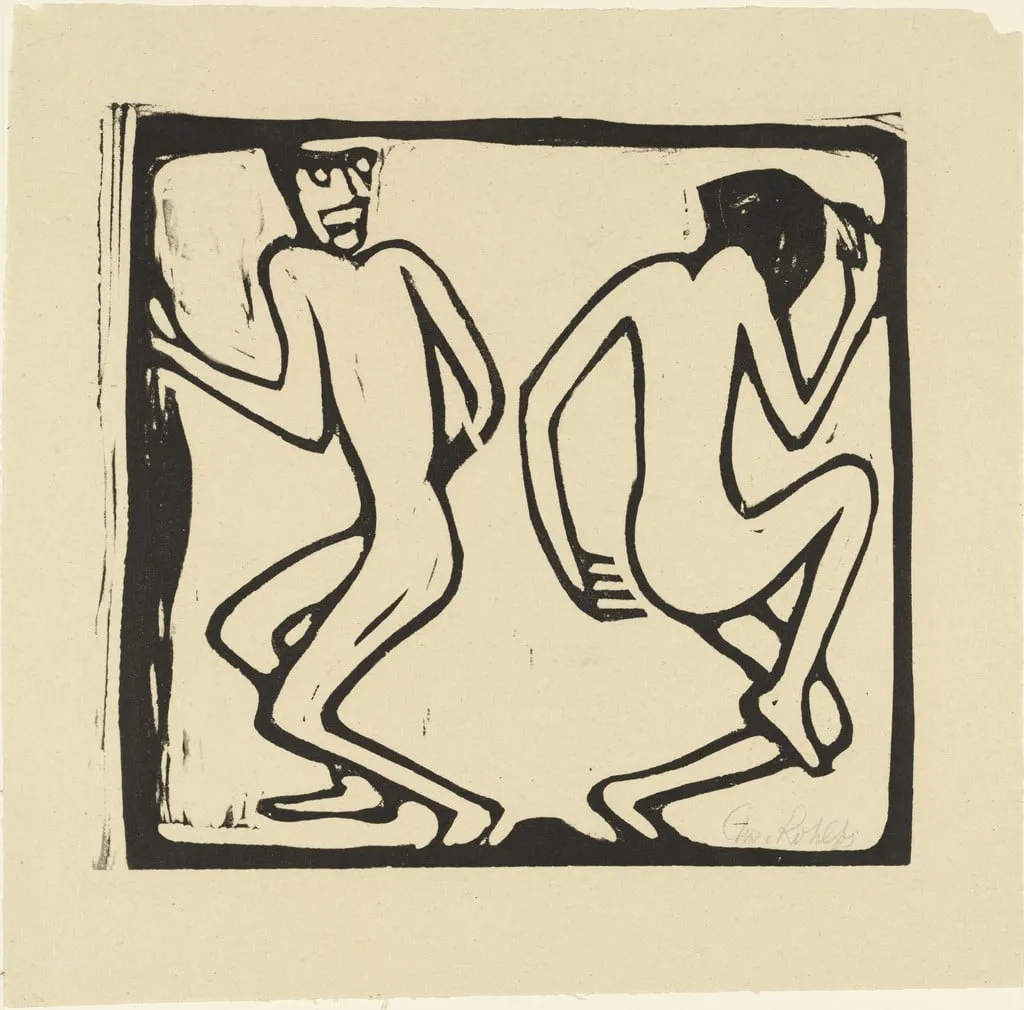
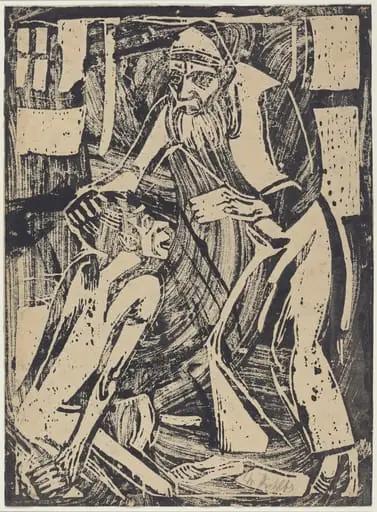
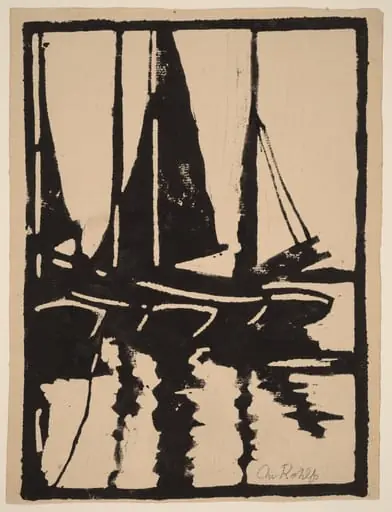
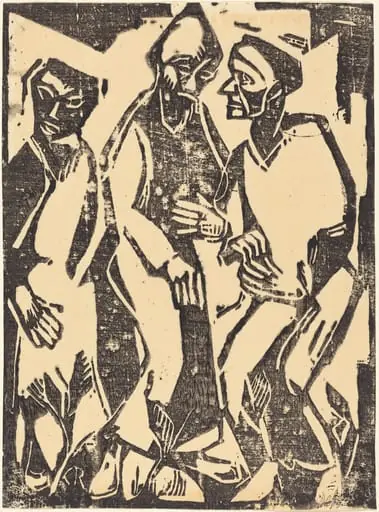
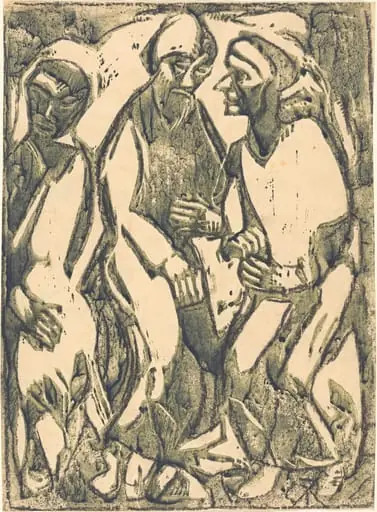
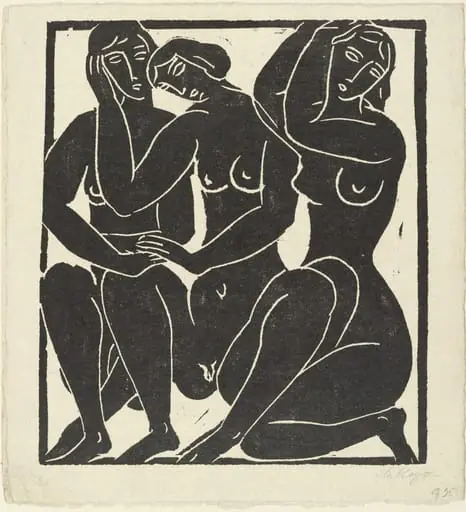
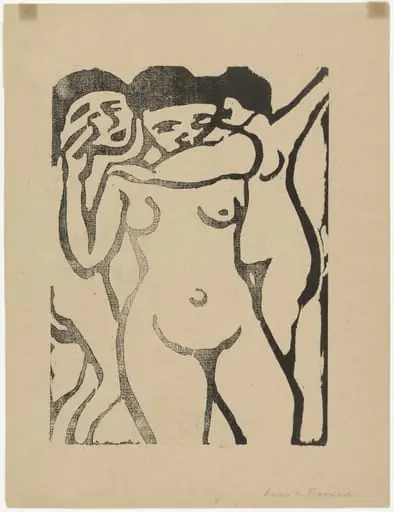
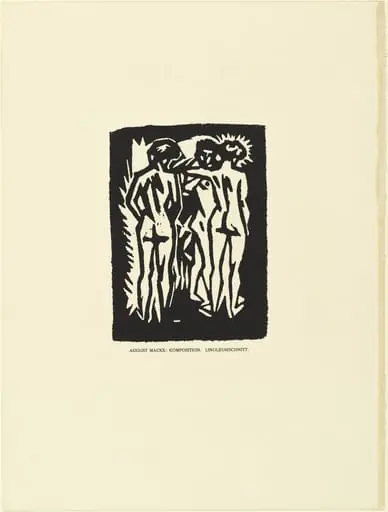
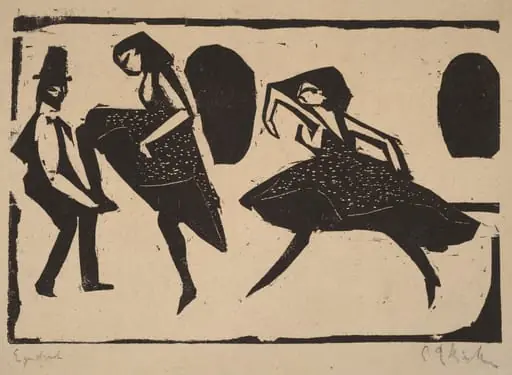
Untitled is a print by Christian Rohlfs. It dates from 1913 and is held in the collection of the Museum of Modern Art.
About this work
Overview
Created around 1913, this linoleum cut by Christian Rohlfs is part of The Museum of Modern Art’s collection.
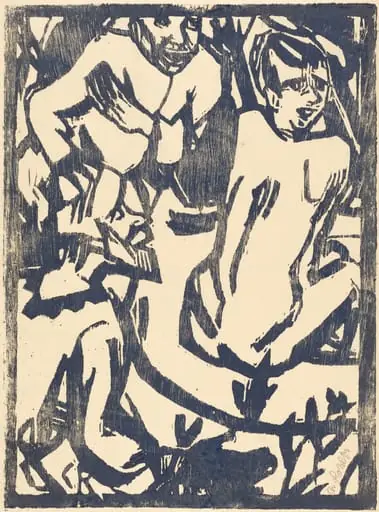
Created around 1913, this linoleum cut by Christian Rohlfs is part of The Museum of Modern Art’s collection. The work is a black-and-white print characterized by stark contrasts and simplified forms. It exemplifies Rohlfs’s interest in reducing figures to essential shapes, using the physical properties of linoleum carving to produce bold, unmodulated surfaces. The technique yields a graphic, almost architectural quality to the composition.
Subject & Meaning
Two human figures stand in quiet proximity—one upright and still, the other crouched, arm resting on a knee. Their poses suggest a moment of pause or introspection, though no narrative is explicitly offered. The absence of facial features and contextual details invites interpretation without anchoring meaning. The figures appear detached from environment or time, emphasizing emotional stillness over storytelling.
Technique & Style
Rohlfs employed linoleum cut, a relief printing method similar to woodcut but with a softer, more uniform surface. The carved grooves hold ink, producing sharp, unbroken lines and solid areas of black against white. No gradations or shading are present; forms emerge through contrast alone. This approach aligns with early 20th-century movements favoring abstraction and expressive reduction over naturalism.
History & Provenance
The print was made during a period when Rohlfs was deeply engaged in printmaking, following his earlier work in painting. It entered The Museum of Modern Art’s collection in the 20th century as part of its broader effort to document modernist experiments in print media. Its provenance reflects institutional interest in German Expressionist-affiliated artists who pushed beyond traditional representation.
Context
Rohlfs created this work amid broader European artistic shifts toward abstraction and emotional directness. Though not formally aligned with Die Brücke or Der Blaue Reiter, his prints share their interest in primal forms and reduced detail. Linoleum cuts were gaining traction as accessible, affordable alternatives to woodcuts, allowing artists to explore bold visual language outside academic conventions.
Legacy
This print contributes to Rohlfs’s reputation as a quiet innovator in early modern printmaking. His use of linoleum helped expand the medium’s expressive range beyond decorative uses. While less widely known than his contemporaries, his works influenced later generations interested in the interplay of form, material, and minimalism in graphic art.
Artist & collection

Artist
Christian Rohlfs (November 22, 1849 - January 8, 1938) was a German painter and printmaker, one of the important representatives of German expressionism.