Artwork
Coronation of the Virgin
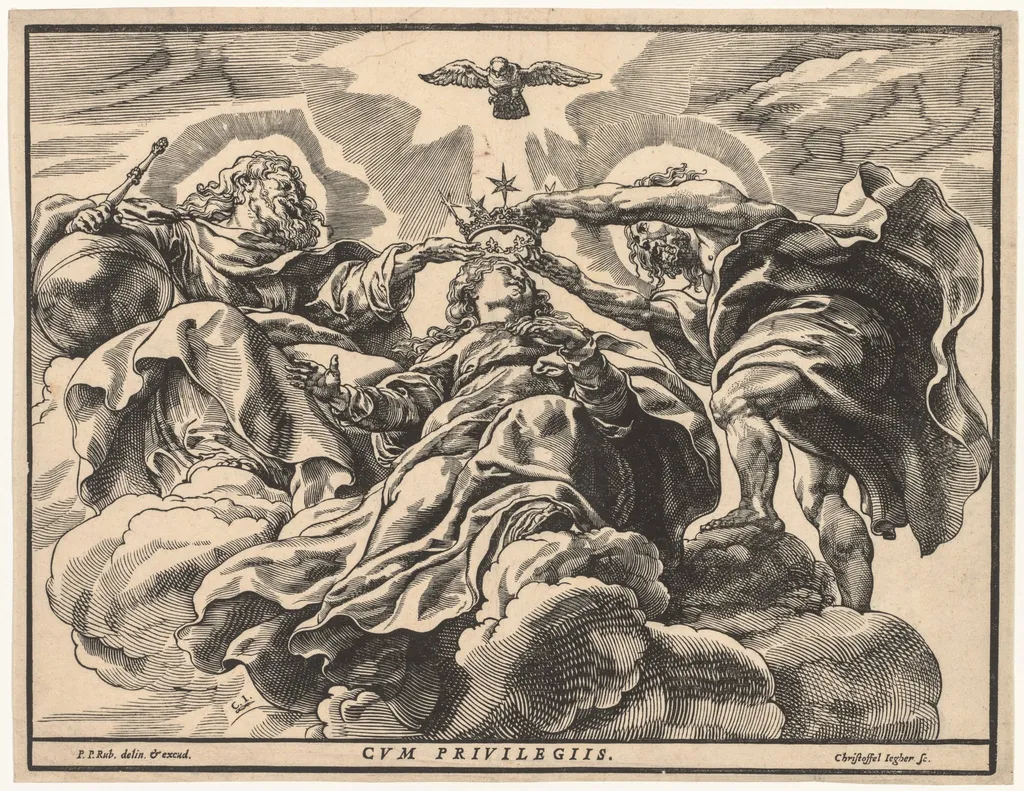
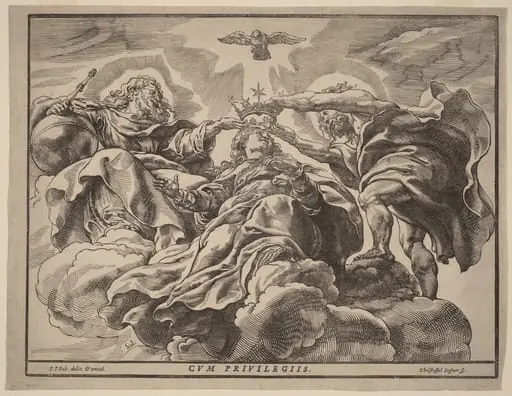
Coronation of the Virgin is a print by the Baroque artist Christoffel Jegher. It dates from 1634 and is held in the collection of the Cleveland Museum of Art.
About this work
Made for a print series, it copies Rubens’ painting but uses rough edges and bold lines.
This woodcut shows Mary kneeling as Jesus crowns her queen of heaven.
Made for a print series, it copies Rubens’ painting but uses rough edges and bold lines.
Rubens liked Jegher’s woodcuts as more than copies—they felt fresh and alive.
Jegher carved this in 1632–36, turning paint into light and shadow with gouges.
Unlike smooth engravings, woodcuts keep the tool’s marks, so each print feels handmade.
Next, check out Christoffel Jegher (Flemish, 1596–1652/53).
Overview
The woodcut entitled *Coronation of the Virgin* reproduces a composition originally painted by Peter Paul Rubens. Executed by the Flemish engraver Christoffel Jegher between 1632 and 1636, the print presents the Virgin Mary kneeling as Christ places a crown upon her head, designating her as queen of heaven. The image forms part of a series of large-scale woodcuts that translate Rubens’s painterly vision into a graphic medium.
Subject & Meaning
In the scene, the infant Jesus, depicted as a youthful figure, crowns the kneeling Virgin, symbolising her exaltation within Christian theology. The gesture underscores the theological concept of Mary’s heavenly queenship, a theme frequently explored in Counter‑Reformation art to emphasize her intercessory role and divine favor.
Technique & Style
Jegher’s woodcut employs bold, irregular lines and pronounced edges, characteristics that distinguish it from the finer, smoother lines of contemporary intaglio engravings. The carving retains the texture of the gouge marks, giving each impression a tactile, hand‑crafted quality. By converting Rubens’s painted chiaroscuro into stark contrasts of black and white, the print captures a sense of immediacy and vigor absent in many reproductive prints of the period.
History & Provenance
Rubens recognized the commercial and reputational potential of printed reproductions and commissioned Jegher to produce a series of woodcuts after his paintings. While engravings were generally viewed as mere copies, these large woodcuts were regarded as original artworks in their own right. The *Coronation of the Virgin* is among the few single‑sheet, large‑format woodcuts produced in 17th‑century Flanders, marking a brief revival of a practice that had flourished in 16th‑century Italy and the Netherlands.
Context
The collaboration between Rubens and Jegher reflects a broader 17th‑century trend of artists exploiting print media to disseminate their compositions widely. By treating the woodcut as an autonomous artistic expression rather than a simple reproduction, Rubens elevated the status of the medium. Jegher’s prints, including this coronation, remain the most notable examples of Flemish large‑scale woodcut art from the era, illustrating the intersection of commercial ambition and artistic innovation.
Artist & collection


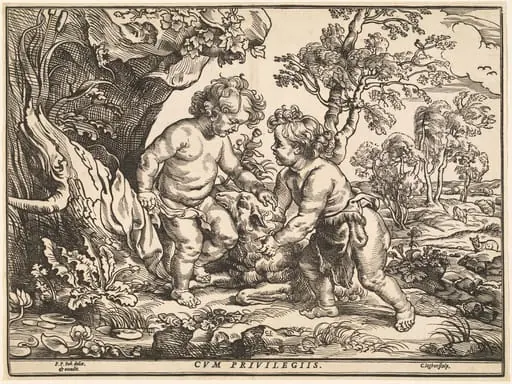 The Infant Christ and Saint John Playing with the Lamb
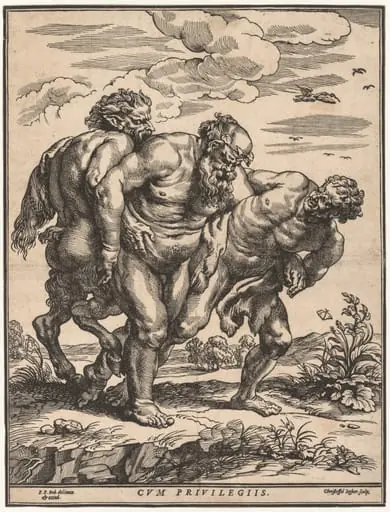
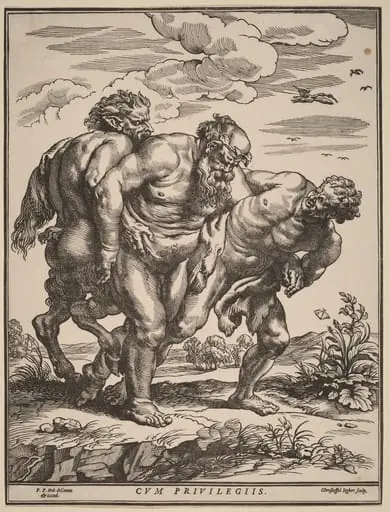 Silenus Accompanied by a Satyr and a Faun
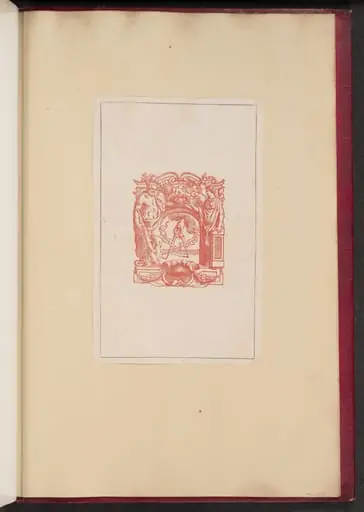 Printer's Device for the Plantin Press
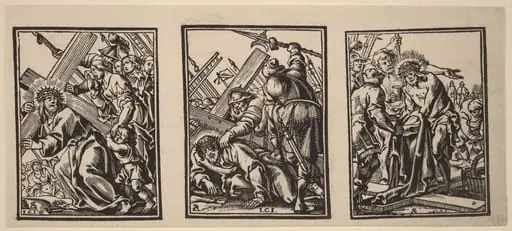 Three Scenes on the Road to Calvary
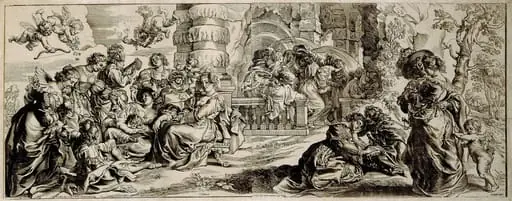 The Garden of Love
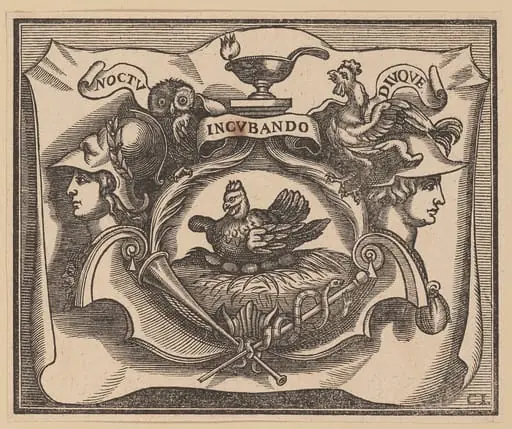 Vignette for the Title Page of C. Peregrino, Principes Hollandiae et Zelandiae
 Coronation of the Virgin
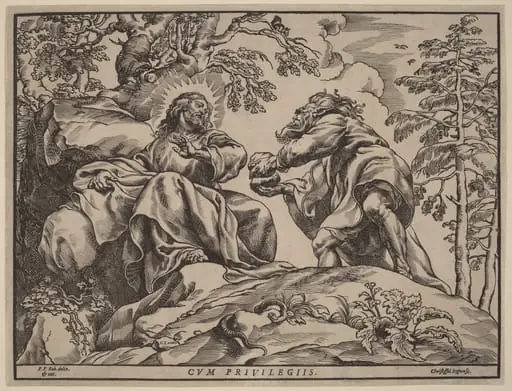 The Temptation of Christ by the Devil
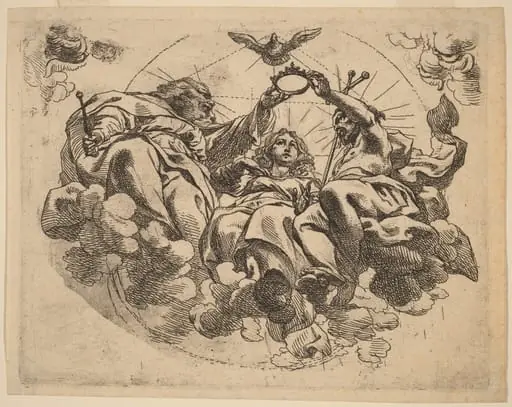 Coronation of the Virgin
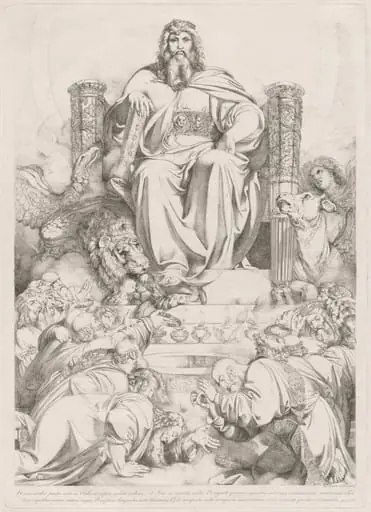 Et ecce sedes posita erat in coelo... (God the Son in Majesty on the Throne Surrounded by the Four Creatures and Worshipped by the Twenty-four Elders)
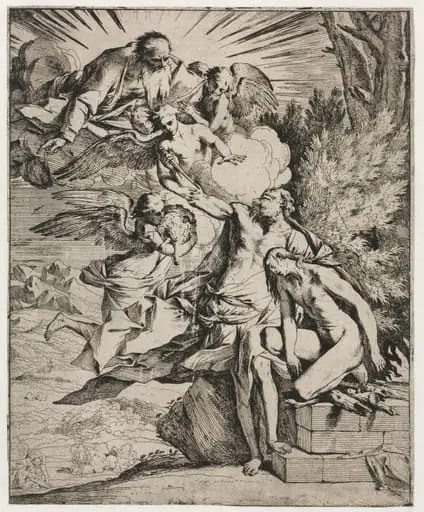 The Sacrifice of Abraham
 The Vision of St. Jerome
 Untitled
 The Assumption of the Virgin
 Minerva
 The Sudarium Held by One Angel
 Two Sibyls and an Angel
 The Virgin in Glory
 Silenus Accompanied by a Satyr and a Faun