Artwork
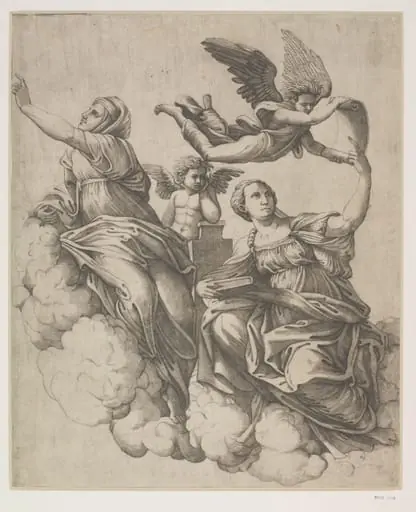
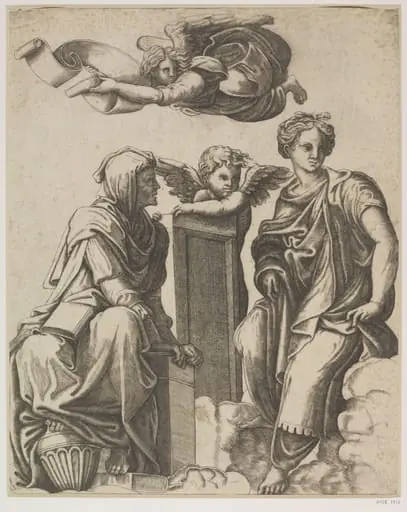
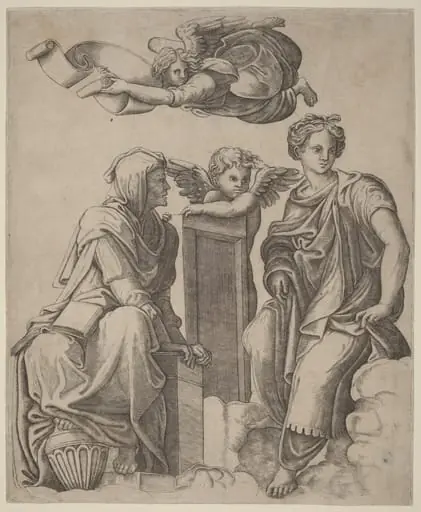
Two Sibyls and an Angel
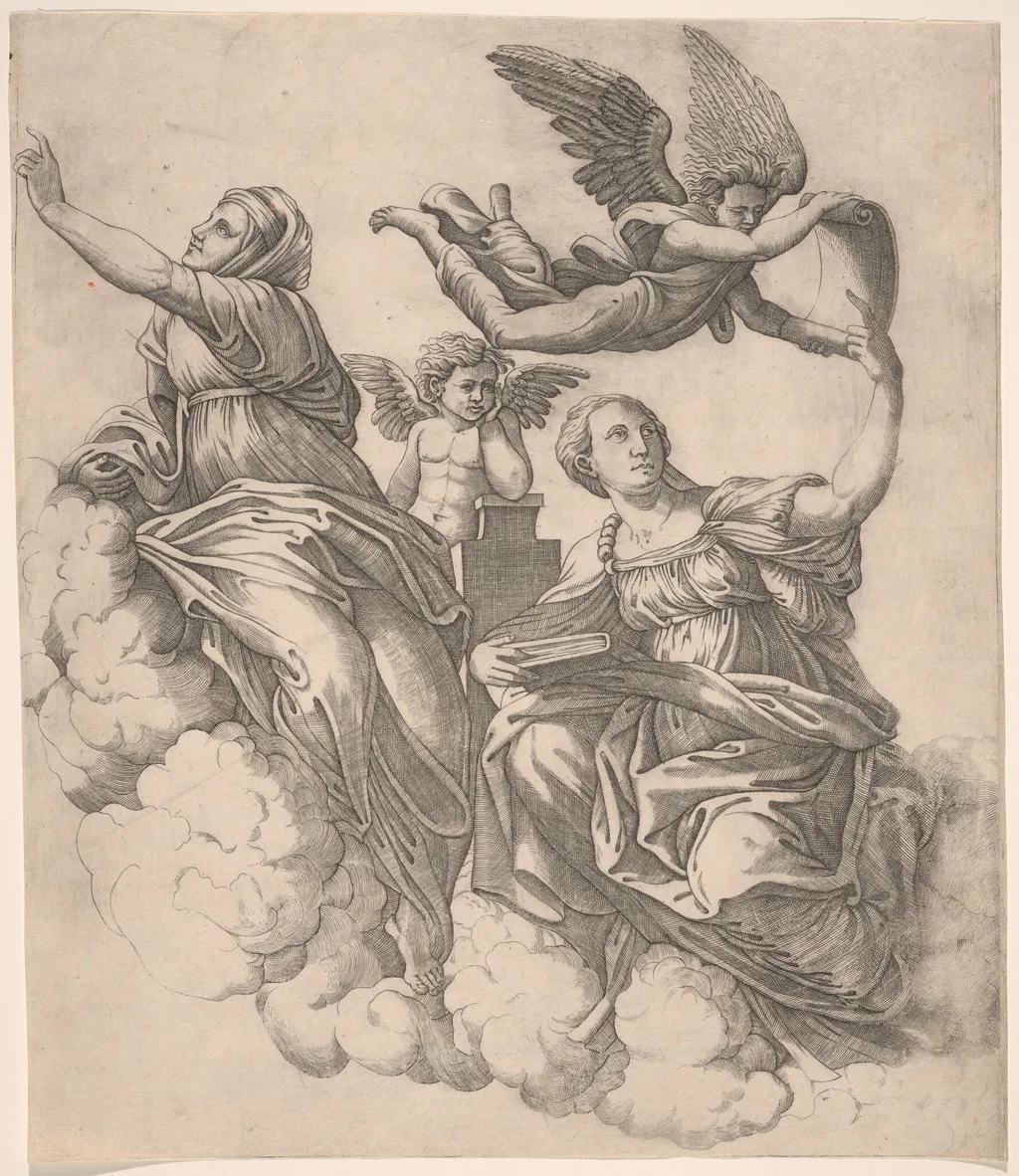
Two Sibyls and an Angel is an ink print by the Renaissance artist Giovanni Antonio da Brescia. It is held in the collection of the National Gallery of Art.
About this work
Overview
Two Sibyls and an Angel is an engraving on laid paper created by Giovanni Antonio da Brescia around 1524. It is a print held in the National Gallery of Art in Washington.
Subject & Meaning
The engraving depicts two sibyls, figures from classical mythology, alongside an angel and cherubs, combining religious and classical themes. The sibyls are shown with symbolic objects: one points upwards, while the other and a cherub hold scrolls.
Technique & Style
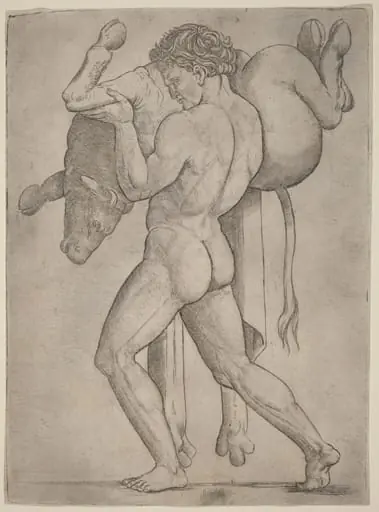
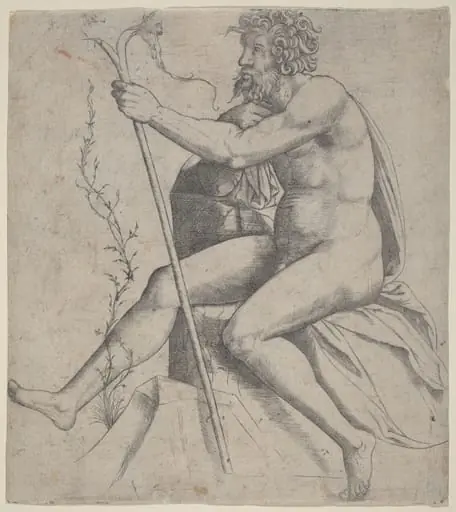
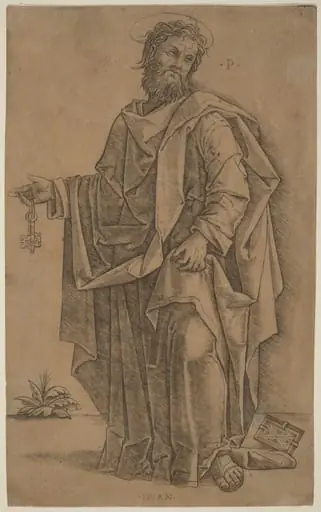
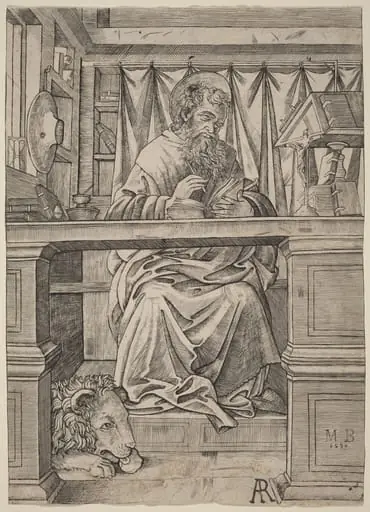
The work showcases da Brescia's skill with engraving techniques, using intricate lines, textures, and cross-hatching to achieve depth and a range of tones. The level of detail contributes to the overall visual interest of the piece.
History & Provenance
Giovanni Antonio da Brescia was active in northern Italy during the early 16th century. Initially known by the monogram 'Z.A.', he later adopted more detailed signatures, indicating a development in his professional identity over time.
Artist & collection

Artist
Giovanni Antonio da Brescia was an Italian engraver of northern Italy, active in the approximate period 1490–1519, during the Italian Renaissance.