Artwork
Untitled
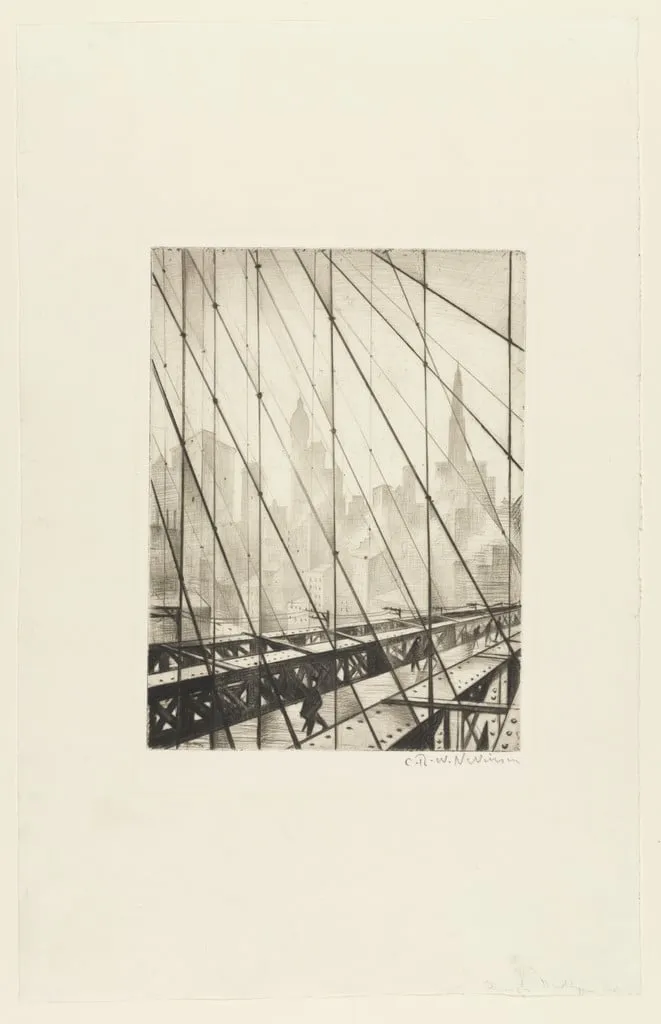
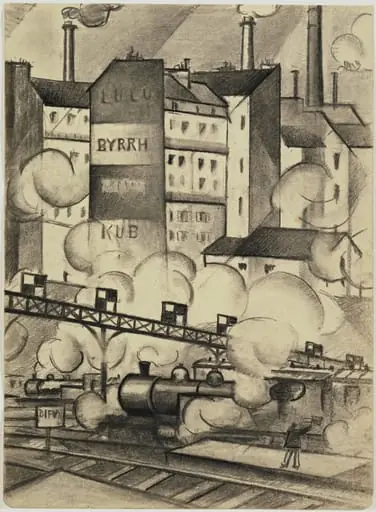
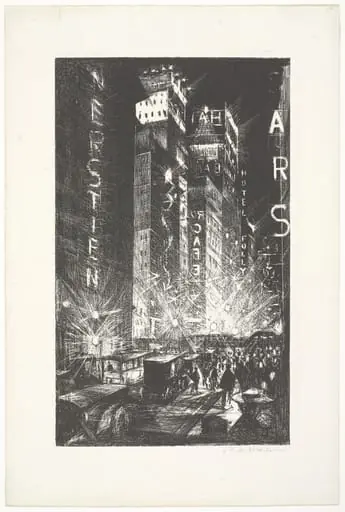
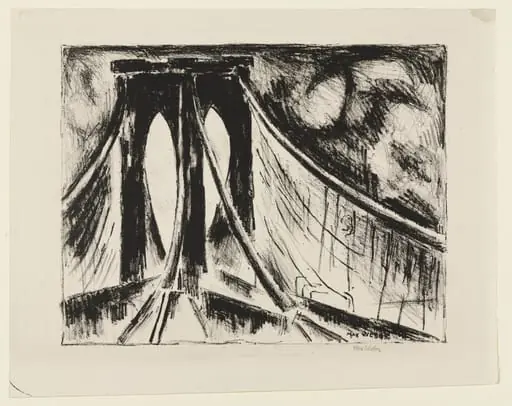
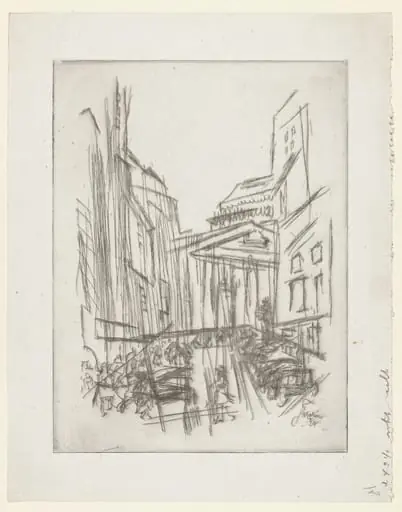
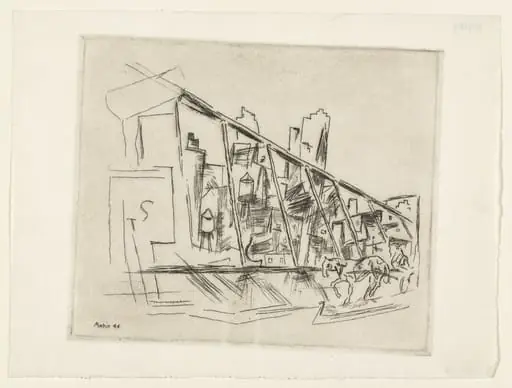
Untitled is an ink print by C. R. W. Nevinson. It dates from 1920 and is held in the collection of the Museum of Modern Art. Created in 1920, this drypoint print by C.
About this work
Overview
His choice of medium reflects a precision suited to architectural detail and atmospheric depth, distinguishing it from his more gestural paintings.
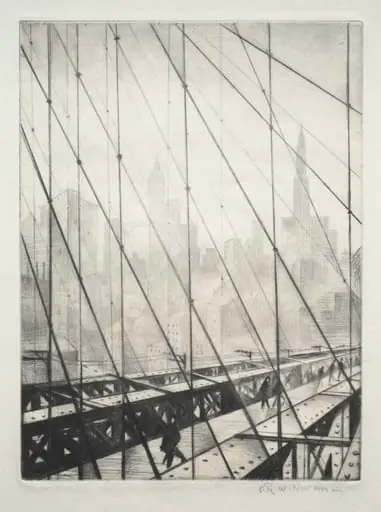
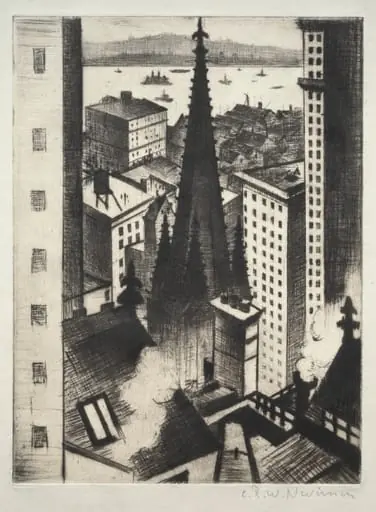
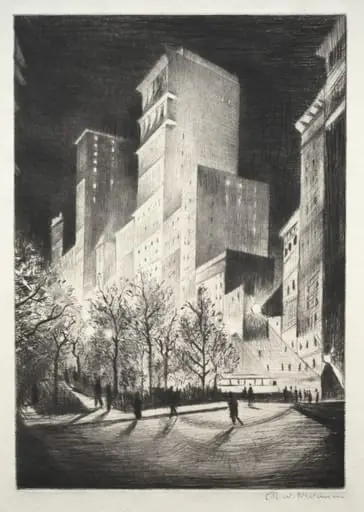
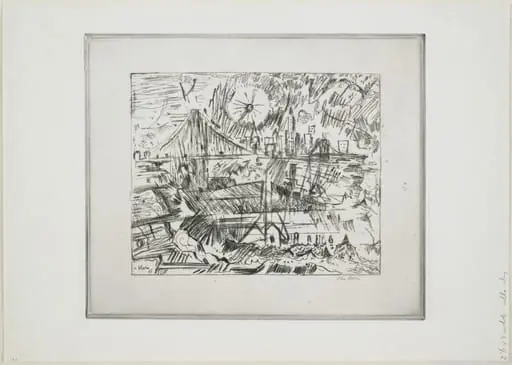
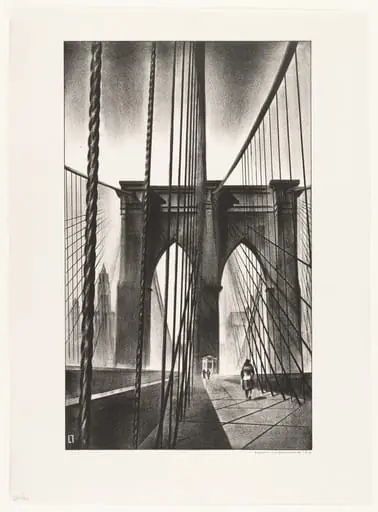
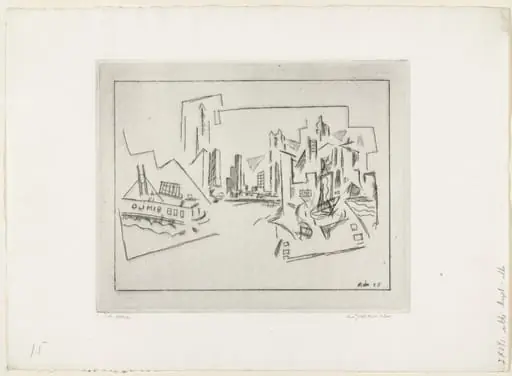
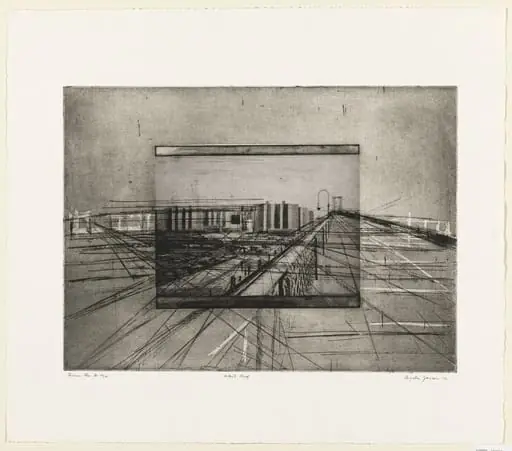
Created in 1920, this drypoint print by C. R. W. Nevinson depicts an urban landscape dominated by a bridge and a dense skyline of tall buildings. The work belongs to a series of prints in which Nevinson explored modern cityscapes using the fine, incised lines characteristic of drypoint. His choice of medium reflects a precision suited to architectural detail and atmospheric depth, distinguishing it from his more gestural paintings.
Subject & Meaning
The composition centers on a steel bridge with intricate cables and girders, framing a vertical array of industrial buildings that rise into the upper register. Rather than portraying a specific location, the image synthesizes elements of modern urban life—infrastructure, density, and verticality—to evoke the rhythm and scale of the early 20th-century metropolis. The absence of human figures amplifies the sense of an autonomous, mechanized environment.
Technique & Style
Nevinson employed drypoint to generate rich tonal gradations through varied line density and burr. The technique’s capacity for fine, sharp marks allowed him to render the bridge’s structural complexity and the skyline’s repetitive forms with clarity. Subtle shifts from light to dark gray create spatial recession and a tactile surface, reinforcing the impression of motion and mechanical energy without overt abstraction.
History & Provenance
This print emerged during a period when Nevinson was transitioning from wartime imagery to urban subjects, following his role as an official war artist. Produced after his exposure to Italian Futurism and his training at the Slade School, the work reflects his ongoing engagement with modernist aesthetics. It was likely made for private circulation or exhibition, as few of his drypoints were widely published during his lifetime.
Context
In the postwar years, British artists like Nevinson turned from battlefield scenes to the evolving urban fabric, responding to rapid industrialization and architectural change. His drypoints sit within a broader European interest in mechanized form, though they avoid Futurist dynamism in favor of restrained, observational detail. This work aligns with contemporaneous efforts to document the modern city as both structure and symbol.
Legacy
Nevinson’s drypoints, including this one, remain significant for their technical discipline and quiet modernism. Though less celebrated than his war paintings, these prints demonstrate his sustained interest in capturing the visual language of industry. They influenced later British printmakers who sought to reconcile realism with the formal demands of modern life, preserving a nuanced record of interwar urban experience.
Artist & collection
Artist
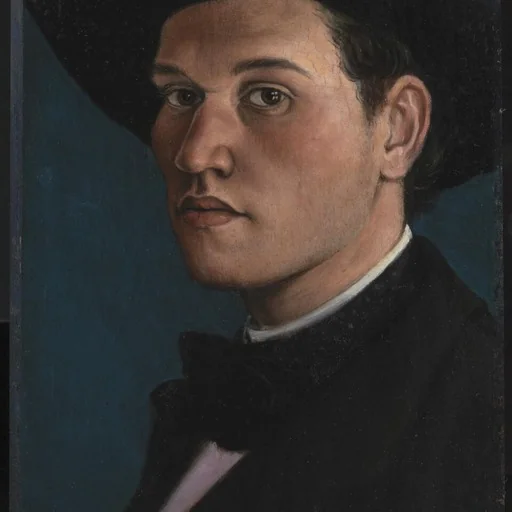
Christopher Richard Wynne Nevinson (13 August 1889 – 7 October 1946) was an English figure and landscape painter, etcher and lithographer, who was one of the most famous war artists of the First World War.