Artwork
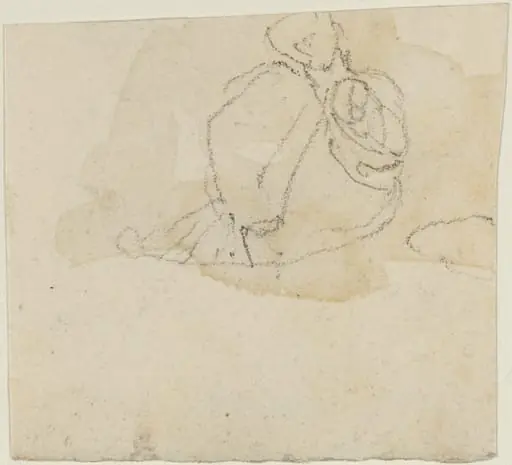
Reclining Woman [verso]
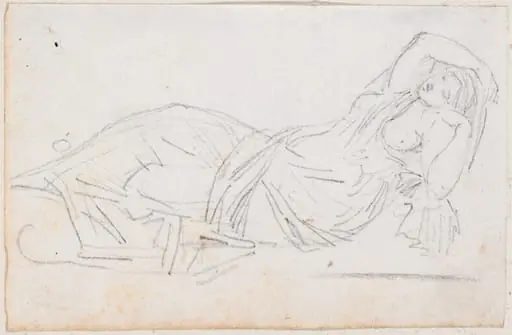
![Reclining Woman [verso], by Giovanni Battista Cipriani, graphite, 1756](https://artifactworldgallery.com/img/giovanni-battista-cipriani--reclining-woman-verso--00754221290578f9-w1024.webp)
Reclining Woman [verso] is a graphite drawing by the Baroque artist Giovanni Battista Cipriani. It dates from 1756 and is held in the collection of the National Gallery of Art.
About this work
Overview
Giovanni Battista Cipriani, an Italian artist who moved to England in 1755, produced this graphite drawing in 1756. Executed on laid paper, the work is a study of a reclining female figure, reflecting his transition from Italian academic training to his emerging role in London’s artistic circles. It belongs to a body of preparatory drawings that supported his later print designs.
Subject & Meaning
The figure is depicted in a relaxed, reclining posture, suggesting contemplation or rest rather than narrative action. There is no identifiable mythological or literary reference; the focus is on the formal qualities of the human form. The pose, though simple, demonstrates an interest in anatomical grace and the interplay of light and shadow.
Technique & Style
Cipriani employed graphite to achieve subtle tonal variations, using delicate hatching and soft smudging to model the figure’s contours. The paper’s laid texture subtly influences the surface, adding a tactile quality to the lines. His approach is restrained, prioritizing clarity and proportion over dramatic expression, consistent with his training in classical draftsmanship.
History & Provenance
Created shortly after Cipriani’s arrival in England, the drawing likely served as a study for future engravings, possibly intended for collaboration with Francesco Bartolozzi, who later reproduced many of his designs. Its survival suggests it was retained in the artist’s personal archive rather than being transferred to a publisher.
Context
In mid-18th-century London, Italian draftsmen like Cipriani were sought after for their ability to adapt classical forms to British tastes. This drawing reflects the period’s demand for elegant, decorative imagery in print culture, bridging Italian Renaissance ideals with the emerging English aesthetic of refined simplicity.
Legacy
Though not widely exhibited, the drawing exemplifies Cipriani’s contribution to the dissemination of Italianate design in England. His preparatory works, including this one, helped shape the visual language of reproductive prints during the late 1700s, influencing the stylistic direction of British illustration.
Artist & collection
Artist
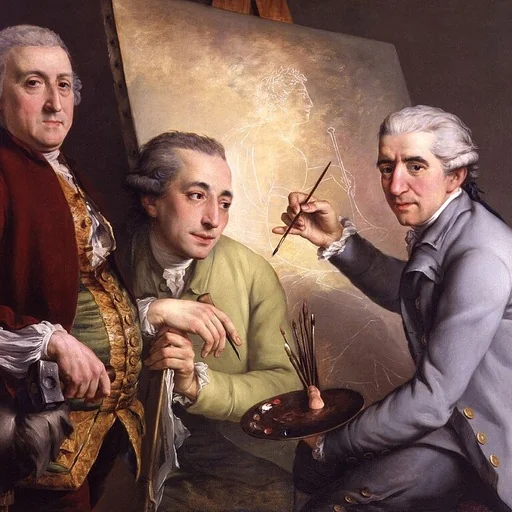
Giovanni Battista Cipriani (1727 – 14 December 1785) was an Italian painter and engraver, who lived in England from 1755.

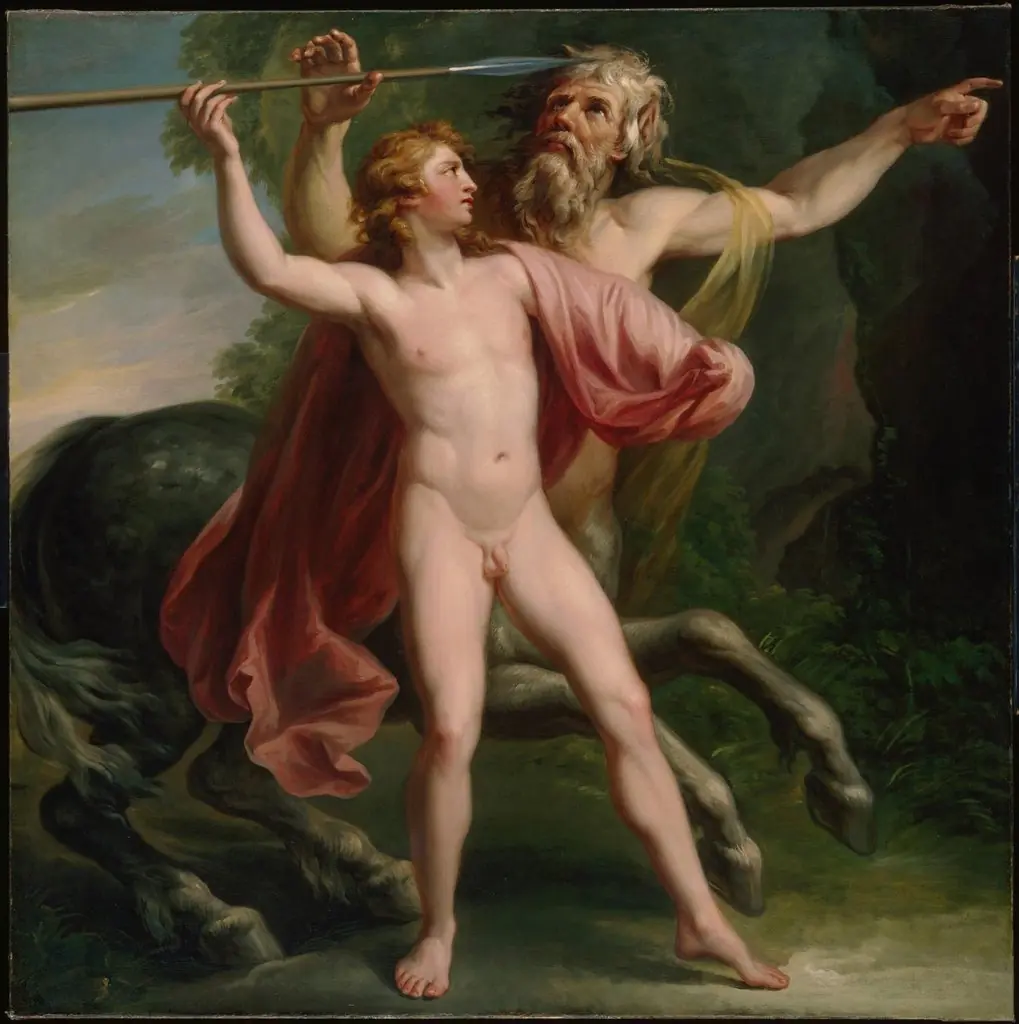
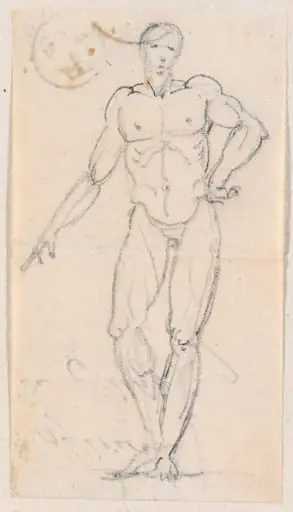
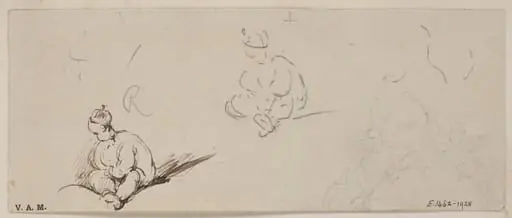
![A Turk [recto], by Giovanni Battista Cipriani](https://artifactworldgallery.com/img/giovanni-battista-cipriani--a-turk-recto--12cde5f9bac9a966-w320.webp)
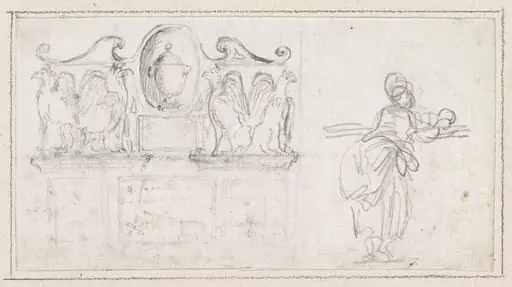
![Mythological Composition with Chronos and Harpies [recto], by Giovanni Battista Cipriani](https://artifactworldgallery.com/img/giovanni-battista-cipriani--mythological-composition-with-chronos-and-harpies-recto--23e4197a1ba0ae7e-w320.webp)
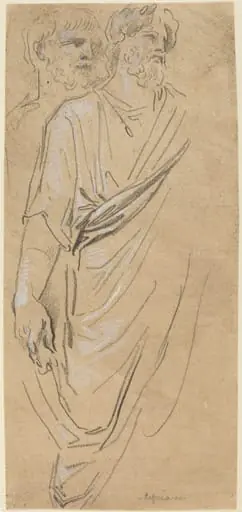
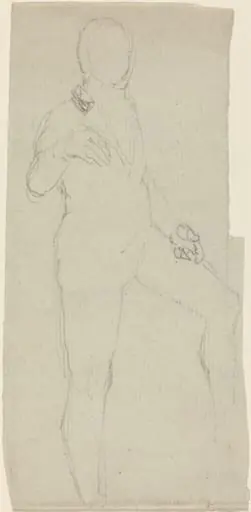
![Figure Studies [recto], by Giovanni Battista Cipriani](https://artifactworldgallery.com/img/giovanni-battista-cipriani--figure-studies-recto--32b47b1a71716a78-w320.webp)
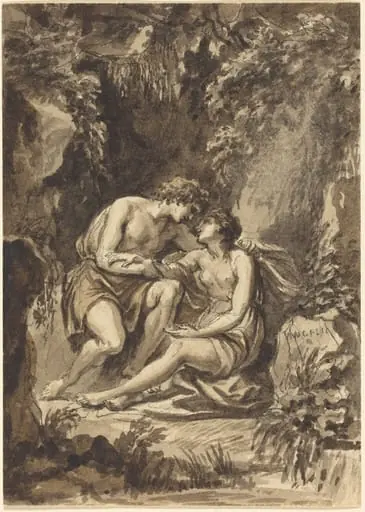
![Seated Guitarist [recto], by Jean Antoine Watteau](https://artifactworldgallery.com/img/jean-antoine-watteau--seated-guitarist-recto--1923603ffd027bd7-w320.webp)
![A Female Nude [verso], by Domenico Tintoretto](https://artifactworldgallery.com/img/domenico-tintoretto--a-female-nude-verso--26f16f952b7ade17-w320.webp)