Artwork
A Turk [recto]
![A Turk [recto], by Giovanni Battista Cipriani, graphite, 1756](https://artifactworldgallery.com/img/giovanni-battista-cipriani--a-turk-recto--12cde5f9bac9a966-w1024.webp)
A Turk [recto] is a graphite drawing by the Baroque artist Giovanni Battista Cipriani. It dates from 1756 and is held in the collection of the National Gallery of Art.
About this work
Overview
Executed on laid paper, the work belongs to a series of studies reflecting his engagement with exoticized figures common in 18th-century European art.
Giovanni Battista Cipriani, an Italian artist who moved to England in 1755, produced this graphite drawing in 1756. Executed on laid paper, the work belongs to a series of studies reflecting his engagement with exoticized figures common in 18th-century European art. Though primarily known for his print designs, often translated into engravings by Francesco Bartolozzi, Cipriani’s drawings reveal a more immediate, observational approach.
Subject & Meaning
The figure is labeled as a Turk, a term used broadly in Europe at the time to denote individuals from the Ottoman Empire. The rendering emphasizes distinctive garments and headwear, aligning with contemporary European fascination with Eastern dress. Rather than a portrait of a specific person, the image functions as a type—part of a wider trend of cataloging foreign identities through visual shorthand.
Technique & Style
Cipriani employed graphite to achieve subtle tonal gradations, emphasizing texture in fabric and form with delicate, controlled lines. The use of laid paper, with its visible chain lines, adds a tactile quality to the surface. His approach is restrained, avoiding dramatic contrast in favor of quiet observation, characteristic of preparatory studies rather than finished works.
History & Provenance
Created shortly after Cipriani’s arrival in England, the drawing likely served as a reference for later decorative projects or prints. It remained within British collections, possibly linked to patrons interested in Orientalist themes. No record of its early exhibition exists, but its survival suggests it was valued as a study within the artist’s circle.
Context
In mid-18th-century London, interest in Ottoman culture was fueled by diplomatic contact, trade, and popular literature. Artists like Cipriani responded to this curiosity by producing images of so-called ‘Turks,’ often based on secondhand descriptions or costumes rather than direct observation. These works contributed to a visual lexicon of the ‘exotic’ that shaped European perceptions.
Legacy
The drawing exemplifies how European artists engaged with cultural difference during a period of expanding global awareness. While its subject reflects dated stereotypes, the work remains a document of artistic practice and cross-cultural curiosity. It stands as a quiet artifact of an era when identity was visually constructed through costume and convention.
Artist & collection
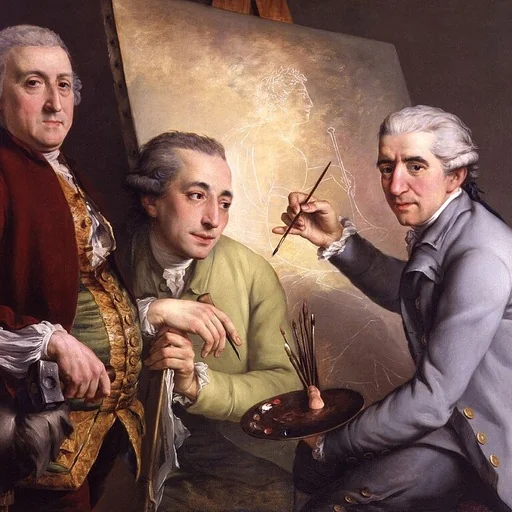
Artist
Giovanni Battista Cipriani (1727 – 14 December 1785) was an Italian painter and engraver, who lived in England from 1755.

![Reclining Woman [verso], by Giovanni Battista Cipriani](https://artifactworldgallery.com/img/giovanni-battista-cipriani--reclining-woman-verso--00754221290578f9-w320.webp)
![Mythological Composition with Chronos and Harpies [recto], by Giovanni Battista Cipriani](https://artifactworldgallery.com/img/giovanni-battista-cipriani--mythological-composition-with-chronos-and-harpies-recto--23e4197a1ba0ae7e-w320.webp)
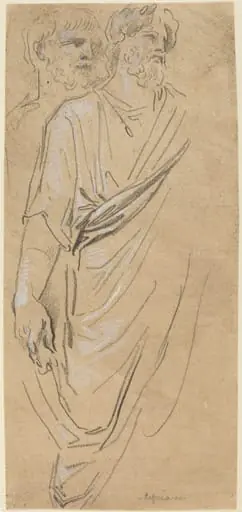
![Figure Studies [recto], by Giovanni Battista Cipriani](https://artifactworldgallery.com/img/giovanni-battista-cipriani--figure-studies-recto--32b47b1a71716a78-w320.webp)
 Standing Cavalier Wearing a Sword
 Mezzetin
 A French Gentleman Standing
 Standing Soldier, Facing Right
![A Comic Actor Dressed as a Gentleman [recto], by Jean-Baptiste Joseph Pater](https://artifactworldgallery.com/img/jean-baptiste-joseph-pater--a-comic-actor-dressed-as-a-gentleman-recto--e5df5dc0f9bcc859-w320.webp) A Comic Actor Dressed as a Gentleman [recto]
A Comic Actor Dressed as a Gentleman [recto] A Standing Man Leaning on a Stick
 Portrait of a Young Nobleman
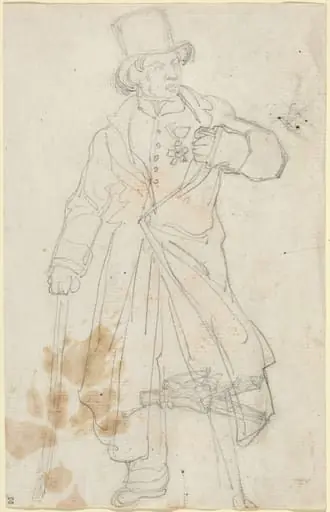 Study for "Swiss Sentry at the Louvre"
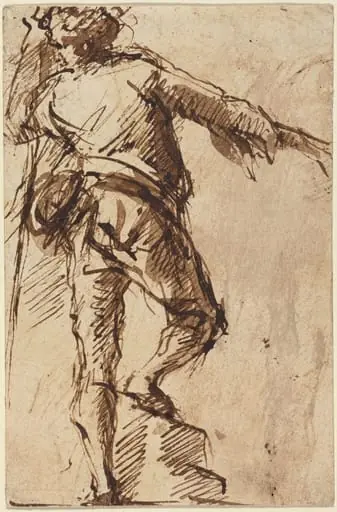 A Young Man with a Staff
![Man Playing a Lute [recto], by Matteo Rosselli](https://artifactworldgallery.com/img/matteo-rosselli--man-playing-a-lute-recto--ba21023023a336b9-w320.webp) Man Playing a Lute [recto]
Man Playing a Lute [recto]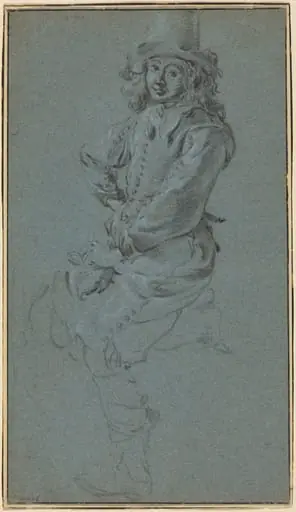 Seated Cavalier with His Arm Akimbo
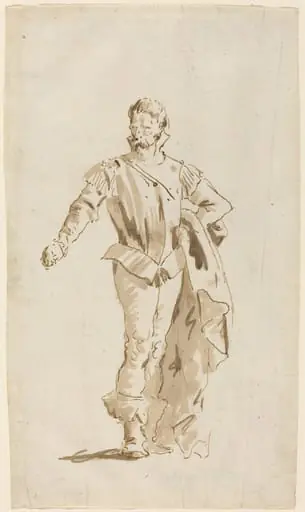 Standing Man in Sixteenth-Century Costume