Artwork
Greek and Egyptian Sculpture at Crystal Palace
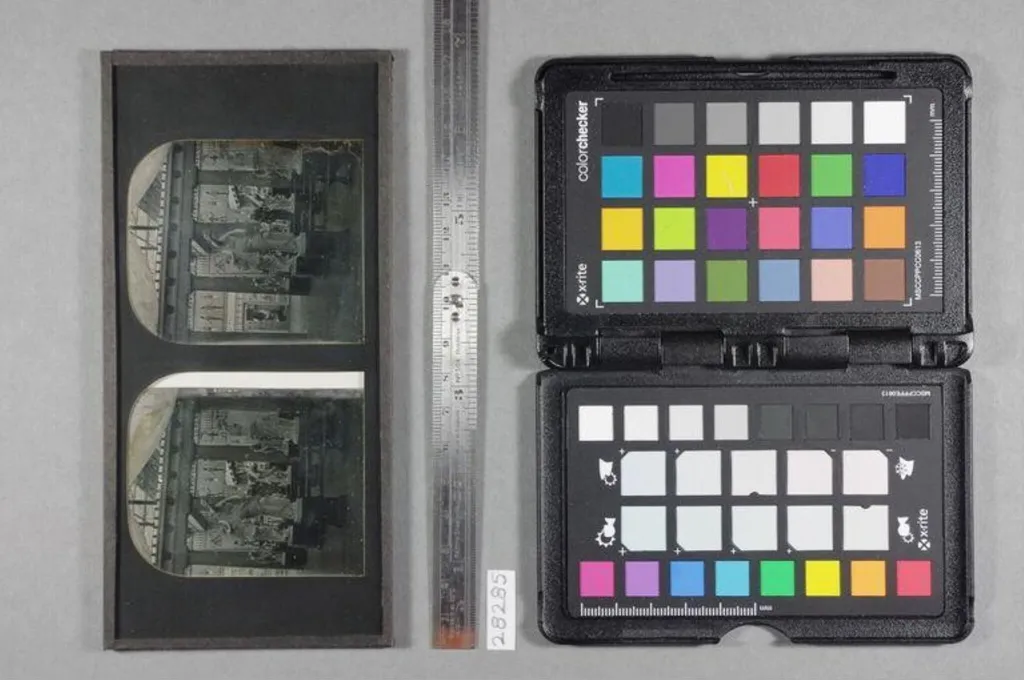
Greek and Egyptian Sculpture at Crystal Palace is a photographic photography by the Impressionist artist City Stereoscopic Depot. It dates from 1855 and is held in the collection of the Victoria and Albert Museum.
About this work
Overview
The image is presented as a pair of side-by-side photographs mounted in a black frame with glazed arched windows, designed for viewing with a stereoscope.
A stereoscopic daguerreotype from 1855 captures the arrangement of Greek and Egyptian sculptures within the Crystal Palace at Sydenham, following its 1854 relocation. The image is presented as a pair of side-by-side photographs mounted in a black frame with glazed arched windows, designed for viewing with a stereoscope. A label from the City Stereoscopic Depot identifies its origin, reflecting the era’s commercial interest in immersive visual experiences of antiquity.
Subject & Meaning
The sculptures depicted—ranging from classical Greek figures to Egyptian statuary—were assembled to illustrate the breadth of ancient civilizations for a Victorian audience. Their placement in a grand, glass-and-iron structure emphasized institutional authority and public education, transforming archaeological artifacts into accessible cultural exhibits. The pairing of cultures in one space suggested comparative study, aligning with contemporary scholarly interests in cross-cultural antiquity.
Technique & Style
The daguerreotype employs a curved lens to produce paired images that create a three-dimensional effect when viewed through a stereoscope. This technique, then a novel method of visual documentation, enhanced depth perception and realism. The black-and-white tonality and precise framing reflect early photographic standards, while the architectural backdrop of arches and columns in the image mirrors the palace’s own design, reinforcing the setting’s monumental character.
History & Provenance
The photograph was produced shortly after the Crystal Palace’s move from Hyde Park to Sydenham, where it housed a vast collection of architectural and sculptural reproductions. The City Stereoscopic Depot, a known publisher of such images, distributed these views to middle-class households, making ancient art available beyond the museumgoer. The original mount and label remain intact, preserving its provenance as a commercial educational product of the mid-19th century.
Context
In the 1850s, public interest in archaeology and antiquities surged alongside industrial expansion and imperial exploration. The Crystal Palace served as a cultural hub, displaying casts and originals to educate the public. Stereoscopic photography emerged as a tool to extend this experience, offering a tactile sense of distance and scale. This image reflects a broader trend of using technology to mediate historical artifacts for mass audiences.
Legacy
The photograph stands as an early example of how photography reshaped access to classical art, bridging physical exhibition and private contemplation. While the original sculptures have since been dispersed or lost, the image preserves their spatial arrangement and contextual framing within a landmark of Victorian public culture. Surviving examples, such as those in the Victoria and Albert Museum, continue to inform studies on the intersection of technology, display, and historical memory.
Artist & collection
Artist
City Stereoscopic Depot made 3D photographs in the 1850s. Their “Greek and Egyptian Sculpture at Crystal Palace” shows life-size plaster casts lined up like a museum hallway. Stereoscopic photos used two lenses to trick…

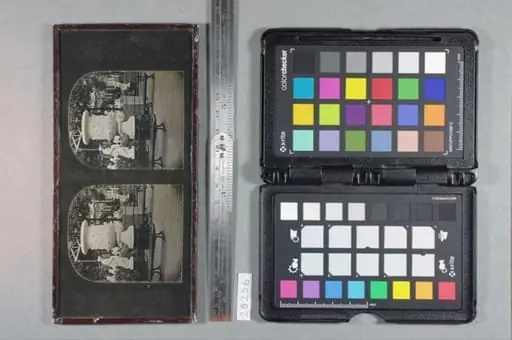 Sculptures at Crystal Palace
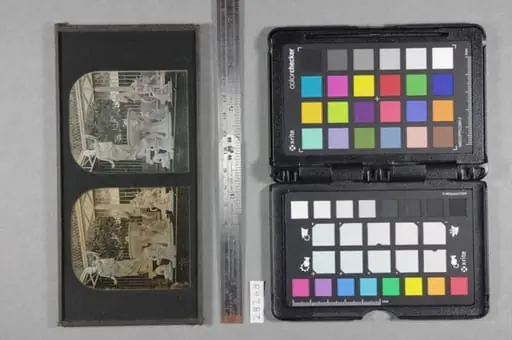 Greco-Roman Sculptures at Crystal Palace
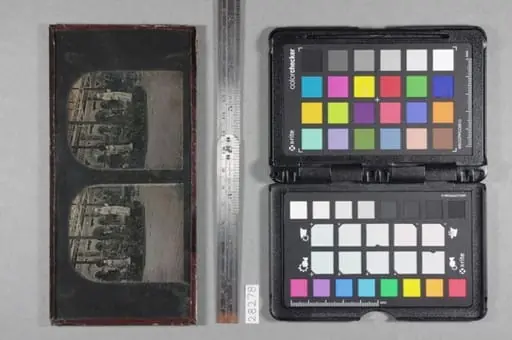 Interior View of the Crystal Palace with Sculptures
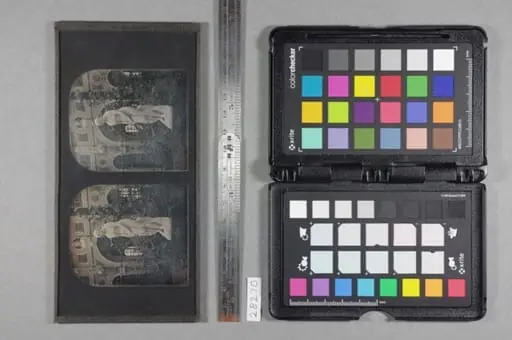 Statue of Venus at Crystal Palace
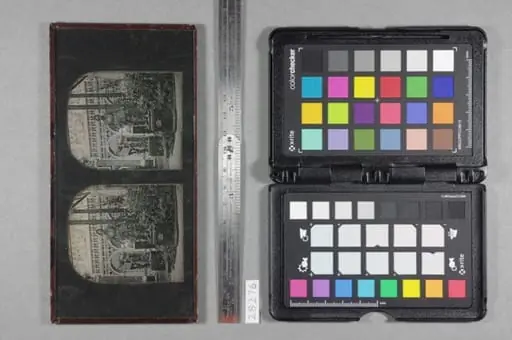 Sculptures at Crystal Palace including a 'Figure from the Tomb of Maximilian at Innsbruck'
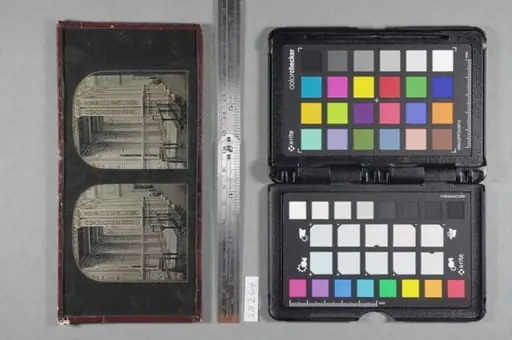 View of Architectural Sculpture Displayed at Crystal Palace
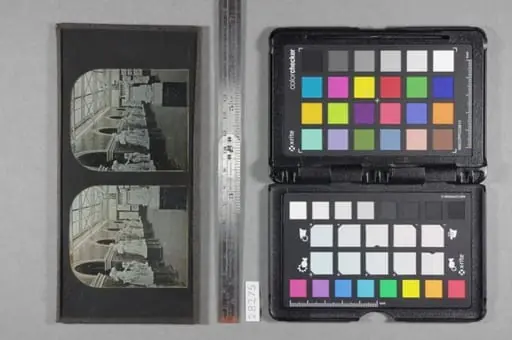 Sculptures on display at Crystal Palace
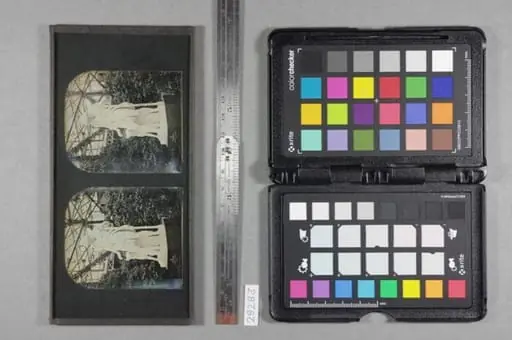 Sculpture of Ulysses at Crystal Palace
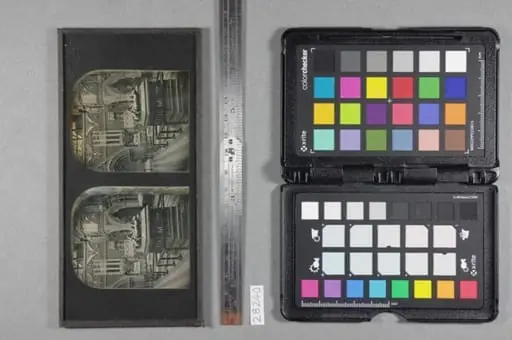 Medieval Architecture and Sculpture at Crystal Palace
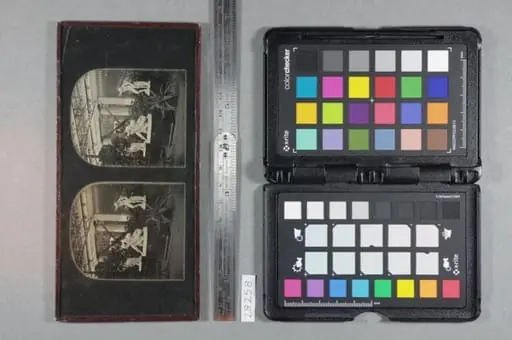 Sculpture Court at Crystal Palace, including 'The Wrestlers'
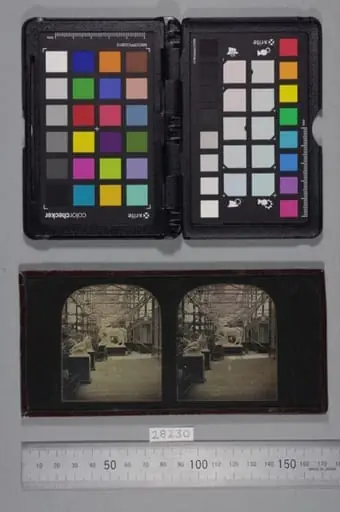 Sculptures Displayed at Crystal Palace