Artwork
Bambochades: Vois-tu que mon baromêtre est au beau!...c'est un riche temps pour les biens de la terre!!!
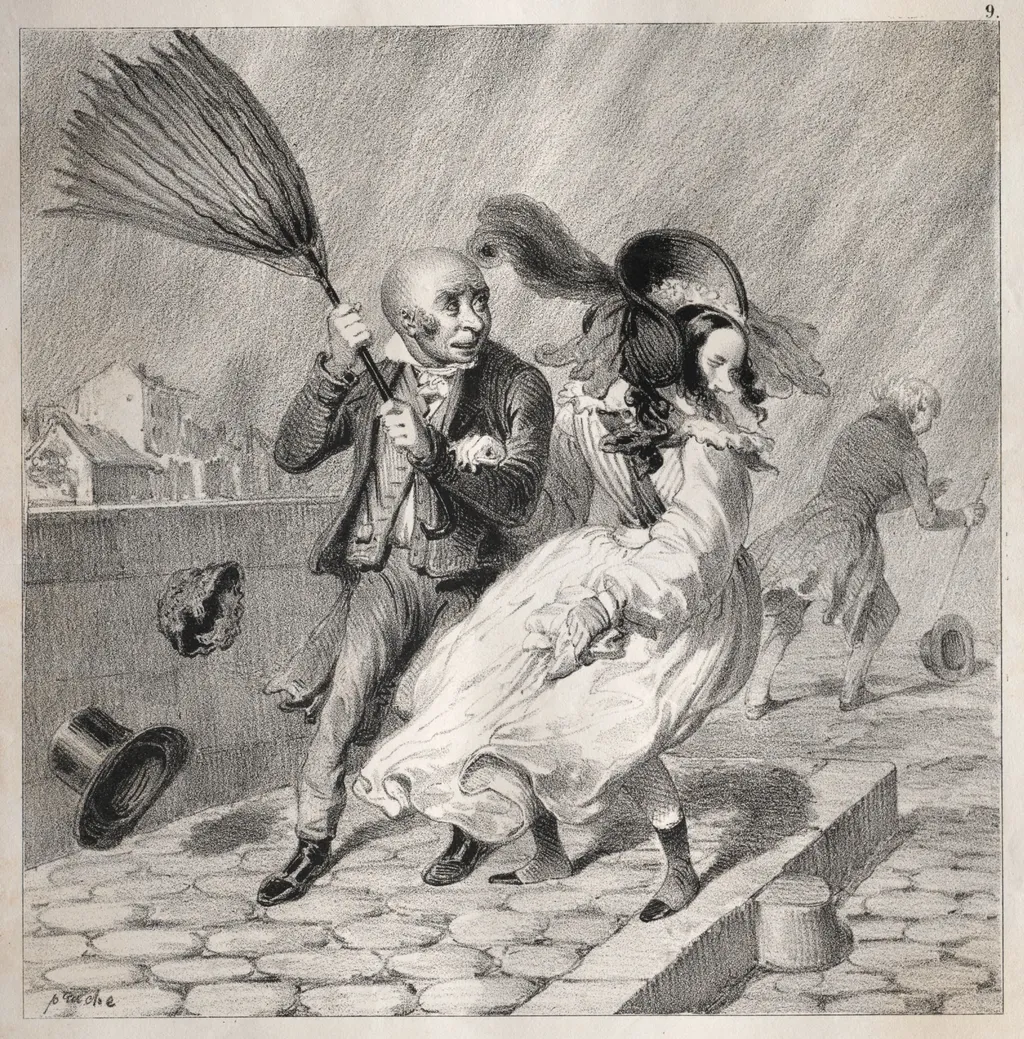
Bambochades: Vois-tu que mon baromêtre est au beau!...c'est un riche temps pour les biens de la terre!!! is a print by the Romanticist artist Clémente Pruche. It dates from 1841 and is held in the collection of the Cleveland Museum of Art.
About this work
Overview
Created in 1841 by Clémente Pruche, this print captures a fleeting moment of urban life with lively, spontaneous brushwork. Part of a series titled Bambochades, it reflects a 19th-century interest in informal, anecdotal scenes. The work is held in the collection of The Cleveland Museum of Art, where it exemplifies the artist’s engagement with everyday observation and theatrical gesture.
Subject & Meaning
The scene mocks the absurdity of human self-importance amid ordinary circumstances, blending humor with social commentary.
Two figures stand on a cobbled street, engaged in a moment of exaggerated expression. The man, with disheveled features, gestures dramatically toward a weather instrument, proclaiming favorable conditions. His companion leans in, as if responding with urgency. The overturned hat and running dog suggest disruption or haste. The scene mocks the absurdity of human self-importance amid ordinary circumstances, blending humor with social commentary.
Technique & Style
Pruche employed rapid, fluid lines to convey motion and emotional intensity. The sketchlike quality of the ink work avoids detail in favor of dynamic suggestion—fabric folds, facial expressions, and movement are implied rather than rendered precisely. The contrast between the figures’ animated postures and the static cobblestones heightens the sense of theatricality, aligning with Romantic-era tendencies toward expressive immediacy.
History & Provenance
The print originates from a series produced in France during the 1840s, a period marked by growing interest in genre scenes and satirical depictions of bourgeois life. Clémente Pruche, a lesser-known artist of the time, contributed to this trend through small-format prints circulated among collectors. The work entered The Cleveland Museum of Art’s collection through documented acquisition, preserving its place in the study of mid-19th-century French graphic art.
Context
Emerging during the July Monarchy, this print reflects broader cultural fascination with public behavior and social pretense. Artists increasingly turned to street life as subject matter, often infusing it with irony or melodrama. Pruche’s work aligns with contemporaries who used informal scenes to critique or observe the rituals of daily existence, distancing itself from grand historical narratives in favor of intimate, human-scale moments.
Legacy
Though not widely exhibited, Pruche’s Bambochades series contributes to the understanding of how printmakers in mid-19th-century France captured transient social interactions. The work’s emphasis on gesture and satire influenced later illustrators interested in the absurdities of urban life. Its preservation in a major museum underscores its value as a document of visual culture beyond elite artistic traditions.
Artist & collection

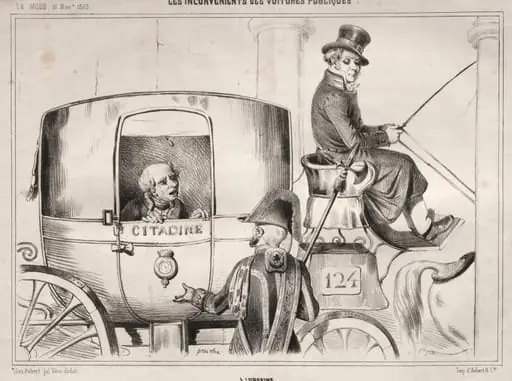 Actualités: Les Inconvénients des voitures publique: L'Urbaine
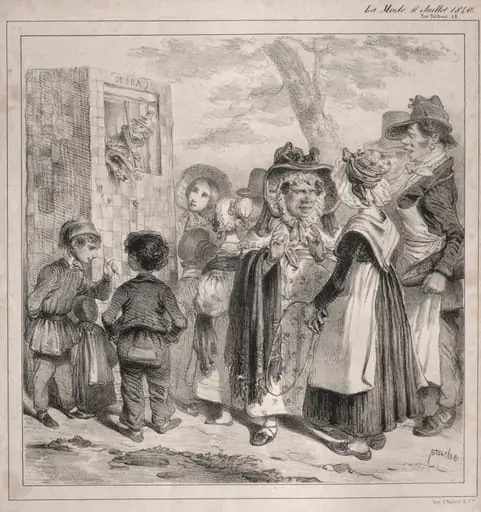 Voyez-vous ma Chère! c'est la police qui fait jouer ces polichinels là, pour détourner l'attention...
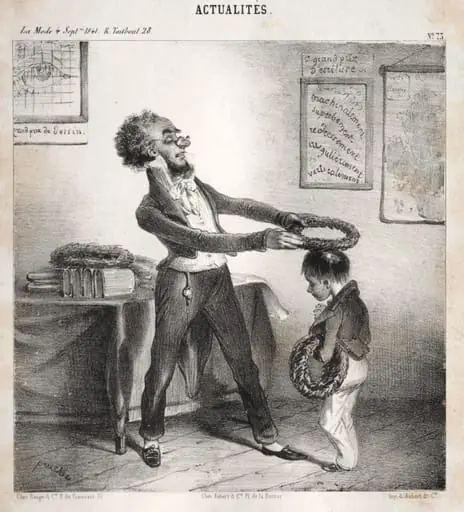 Actualités: Les distributions de Prix
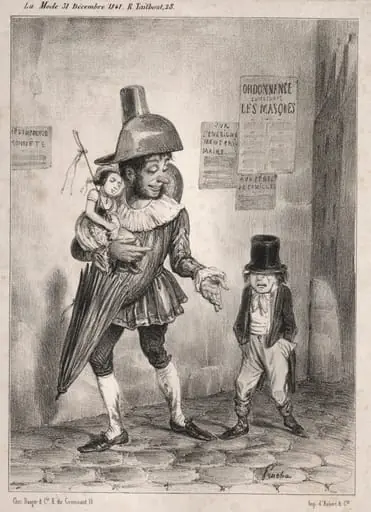 Pochades de carnaval: Vois-tu, si ton maître est bien content de toi et si tu as le prix de sagesse cette année! je te laisserai deguiser en paillasse! ...l'année prochaine!!
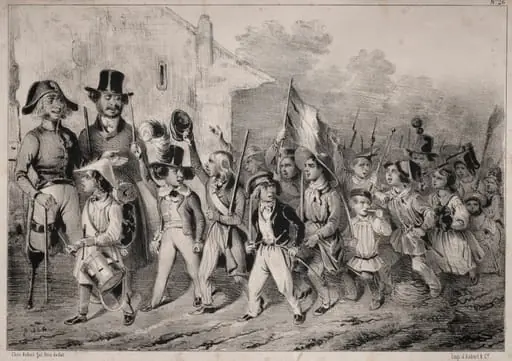 Actualités: Bon! Les moutards en veulent sussi! quand on parle de guerre! comme toute ca prend feu! ... On voit que c'est de la plante indigène!... ca promet!!
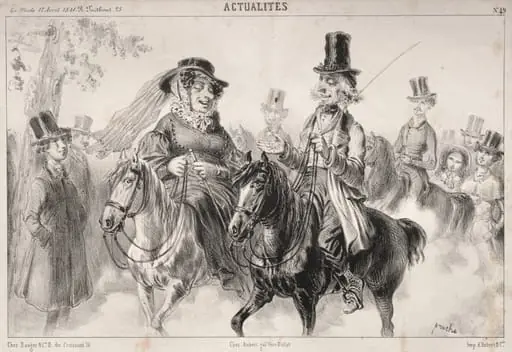 Actualités: Dis donc Madame Miroton il paraitrait que c'est nous qui donnons le ton à Longchamps cette année....
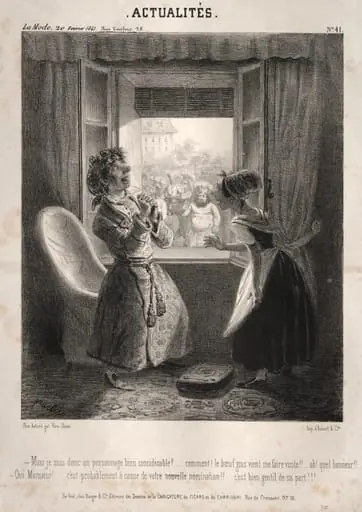 Actualités: ---Mais je suis donc un personnage bien considerable?
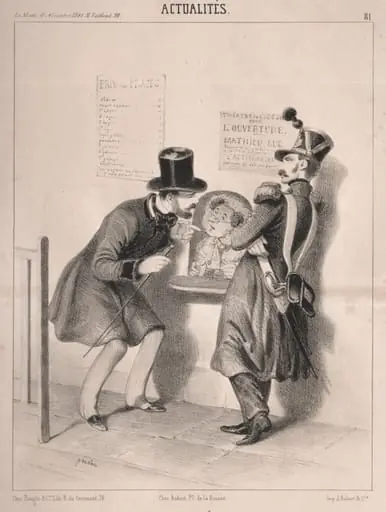 Actualités: L'Ouverture du second théatre français. Mr. tout est plein vous ne trouveriez pas même un place au paradis! si vous voulez revenir dans un quinzaine, peut-être que nous en aurons!
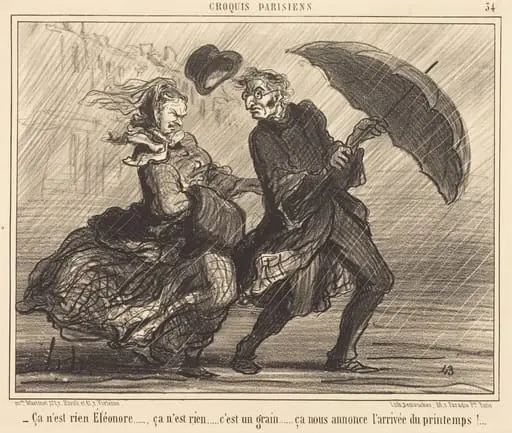 ça n'est rien Éléonore...ca n'est rien...
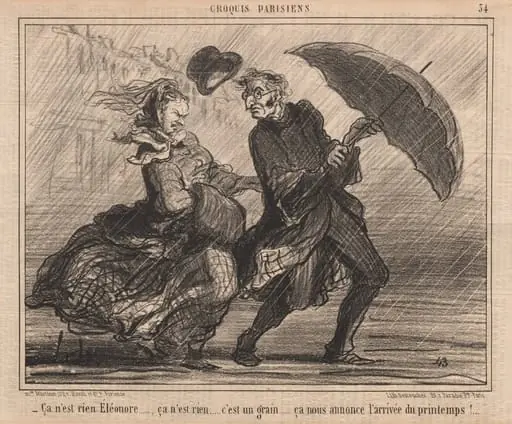 It's nothing Eleanor...
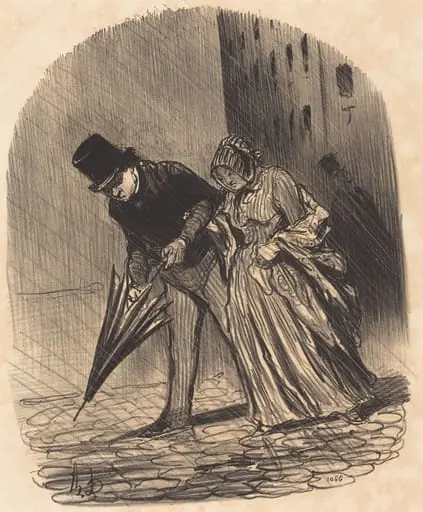 Inconvénient d'un parapluie a ressorts trop compliqués
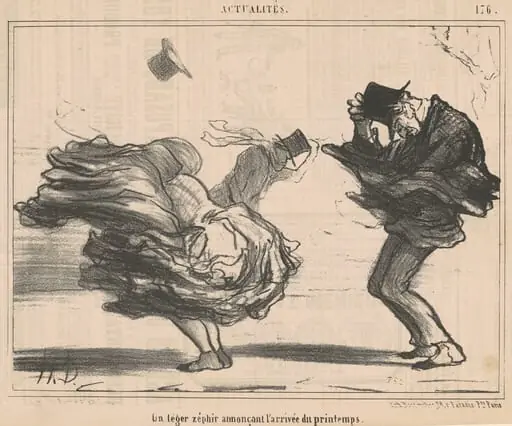 Un léger zéphir annoncant l'arrivée du printemps
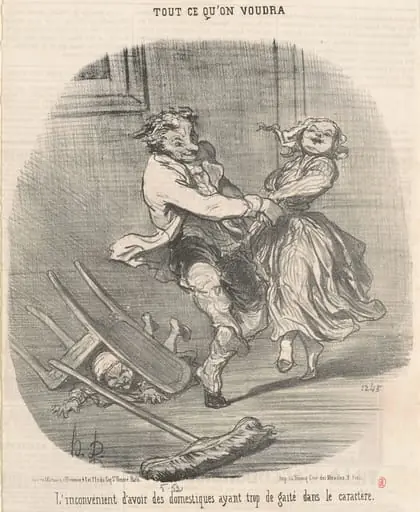 L'inconvénient d'avoir des domestiques ...
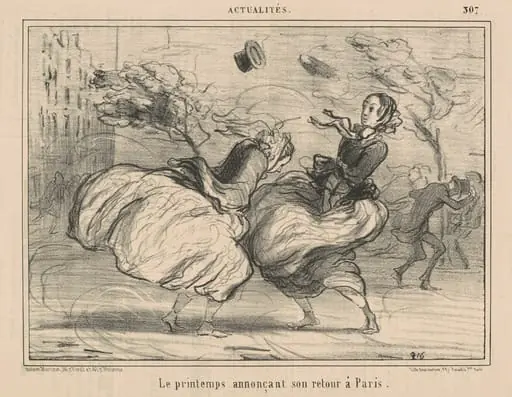 Le printemps annonçant son retour à Paris
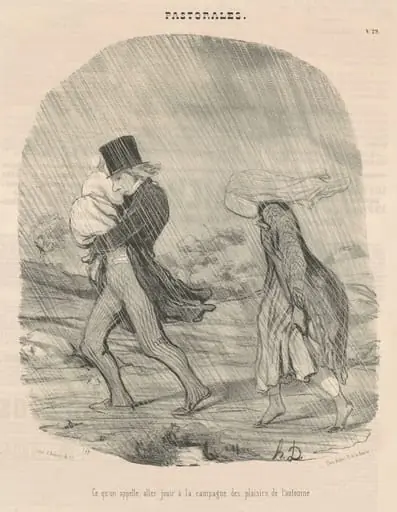 Ce qu'on appelle, aller jouir a la campagne ...
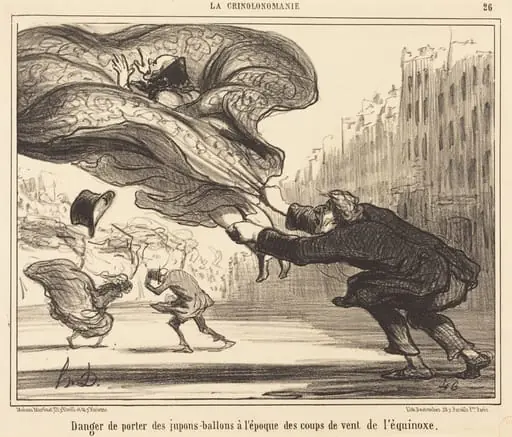 Danger de porter des jupons-ballons...
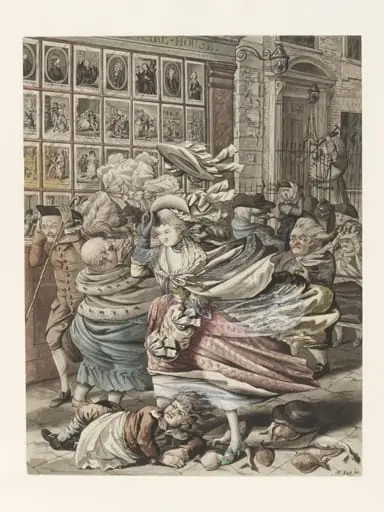 A Windy Day - scene outside the shop of Bowles, the printseller, in St. Paul's Churchyard
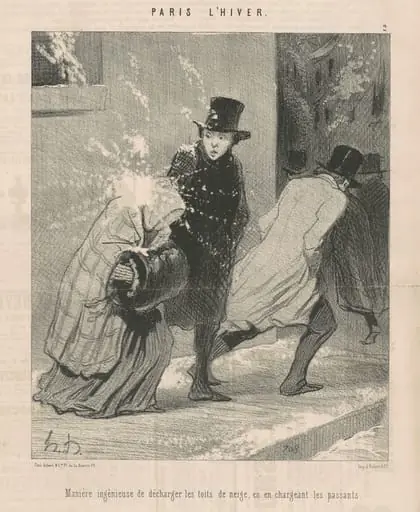 Manière ingénieuse de décharger les toites ...
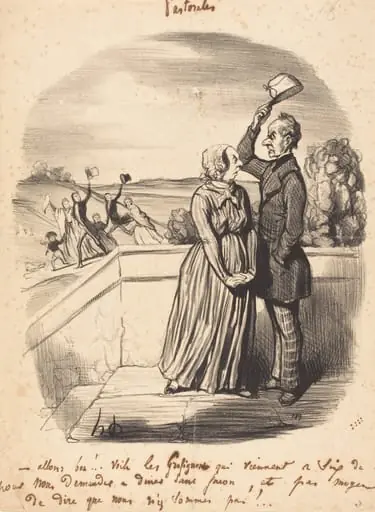 Allons bon!... voila les grafignons...
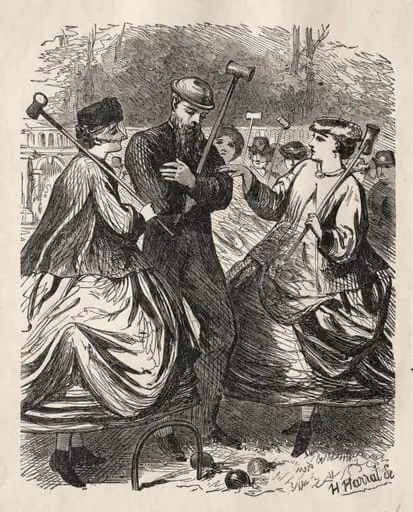 Our Croquet Party