Artwork
Untitled
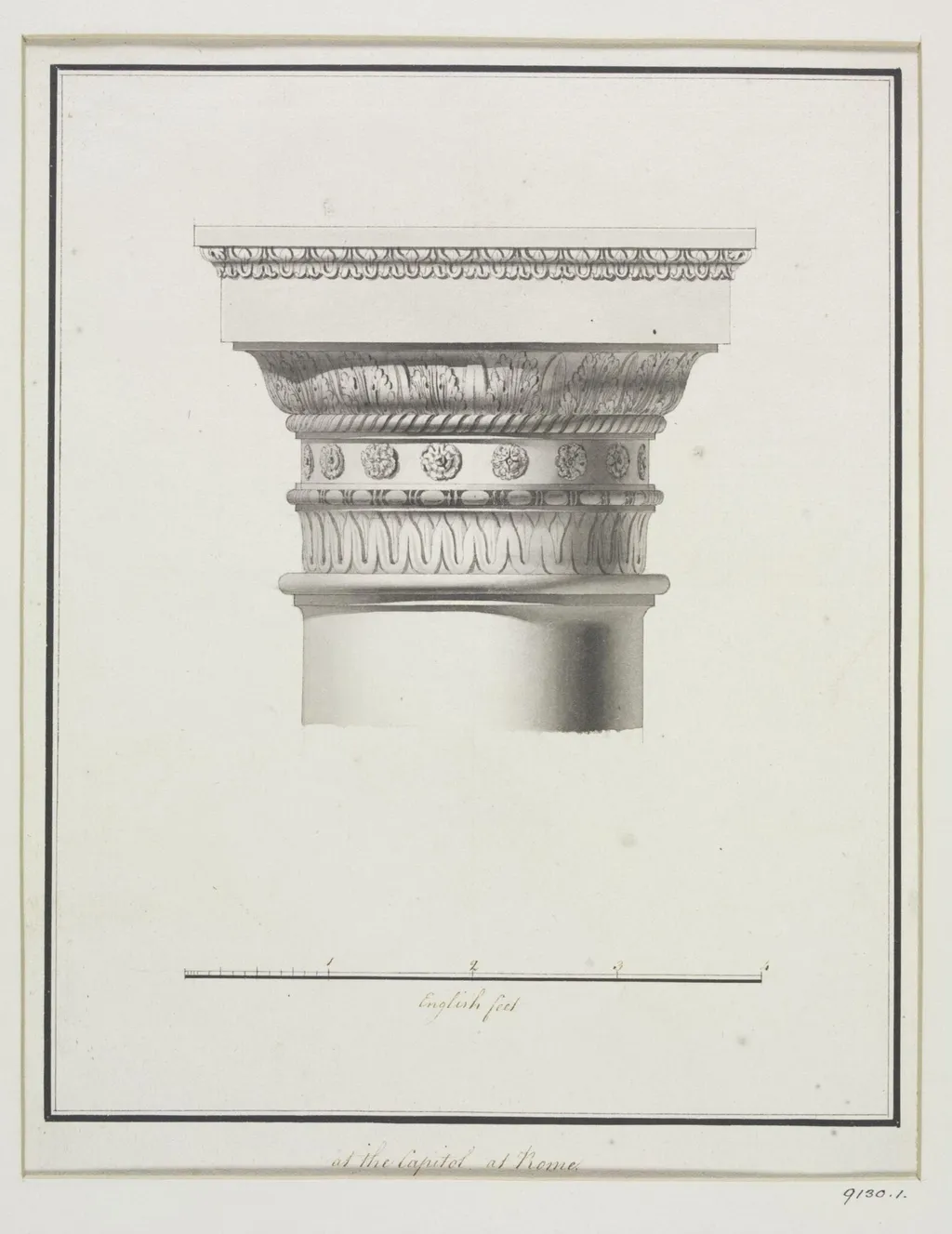
Untitled is a drawing by the Romanticist artist Robert Adam. It dates from 1754 and is held in the collection of the Victoria and Albert Museum.
About this work
Overview
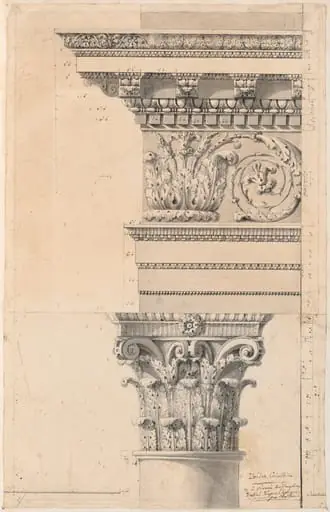
The inscription identifies its location as the Capitol in Rome, situating it within a broader study of Roman architectural forms.
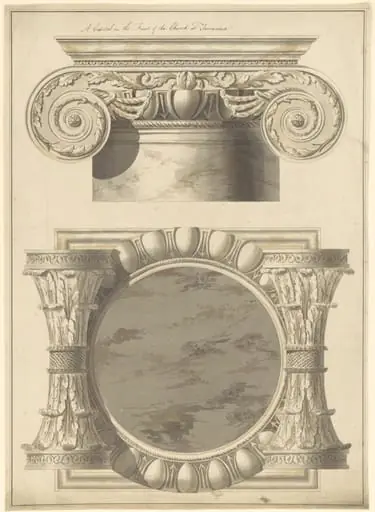
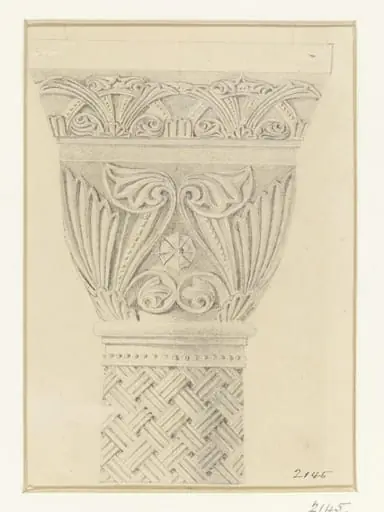
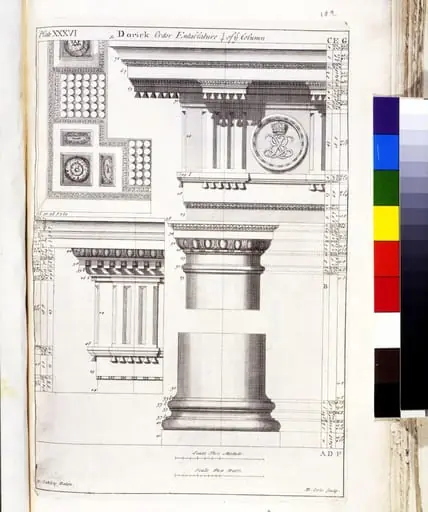
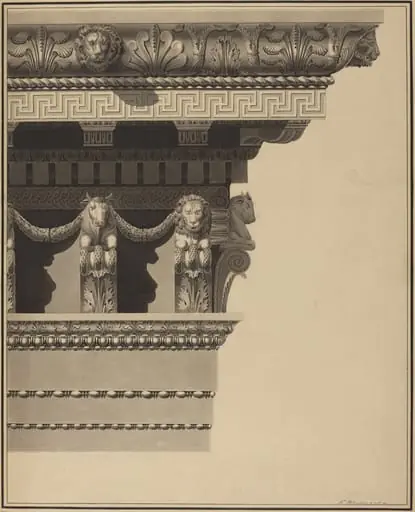
This 1754 drawing by Robert Adam records a classical capital from Rome, rendered with precise draftsmanship. Executed in pencil or ink, it captures the architectural detail of a fluted column shaft rising to an ornate capital, accompanied by a scaled measurement in English feet. The inscription identifies its location as the Capitol in Rome, situating it within a broader study of Roman architectural forms.
Subject & Meaning
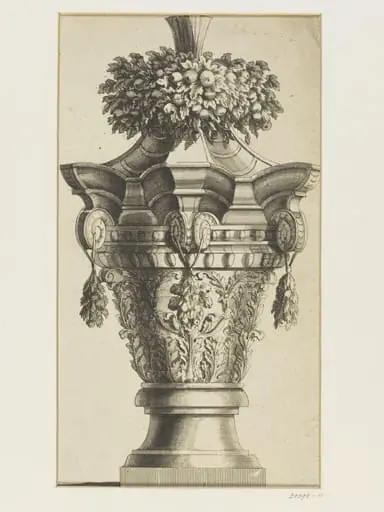
The drawing focuses on a single capital adorned with acanthus leaves and intricate foliation, typical of Roman Ionic or Composite orders. The inclusion of a scale and the specific location note suggest it was not merely decorative but intended as a reference for architectural study. It reflects an Enlightenment-era interest in documenting classical antiquity as a foundation for contemporary design.
Technique & Style
Adam employed fine, controlled lines to render the column’s fluting, leaf motifs, and circular decorative elements with clarity. The composition is centered and uncluttered, emphasizing structural accuracy over artistic flourish. The scale at the base indicates a functional purpose: to provide proportional guidance for students or practitioners engaged in architectural replication.
History & Provenance
The drawing entered a museum collection in 1880 as part of a group of 82 similar studies, all made during Adam’s travels in Italy. These works were assembled as pedagogical tools, intended to instruct aspiring architects in the nuances of Roman ornamentation. Their preservation underscores their role in the transmission of classical knowledge through the 18th and 19th centuries.
Context
In the mid-18th century, European architects increasingly turned to Roman ruins for inspiration, seeking to revive classical principles in public and domestic buildings. Adam’s drawings were part of a wider movement to systematize and disseminate these forms, moving beyond mere admiration toward technical understanding and practical application in neoclassical design.
Legacy
These studies contributed to the formal education of architects in Britain and beyond, influencing the development of neoclassical architecture. While the original Capitol capital may have been altered or lost, Adam’s record remains a tangible link to the precision and scholarly intent behind 18th-century architectural revivalism.
Artist & collection