Artwork
Norman tower at Bury St. Edmunds
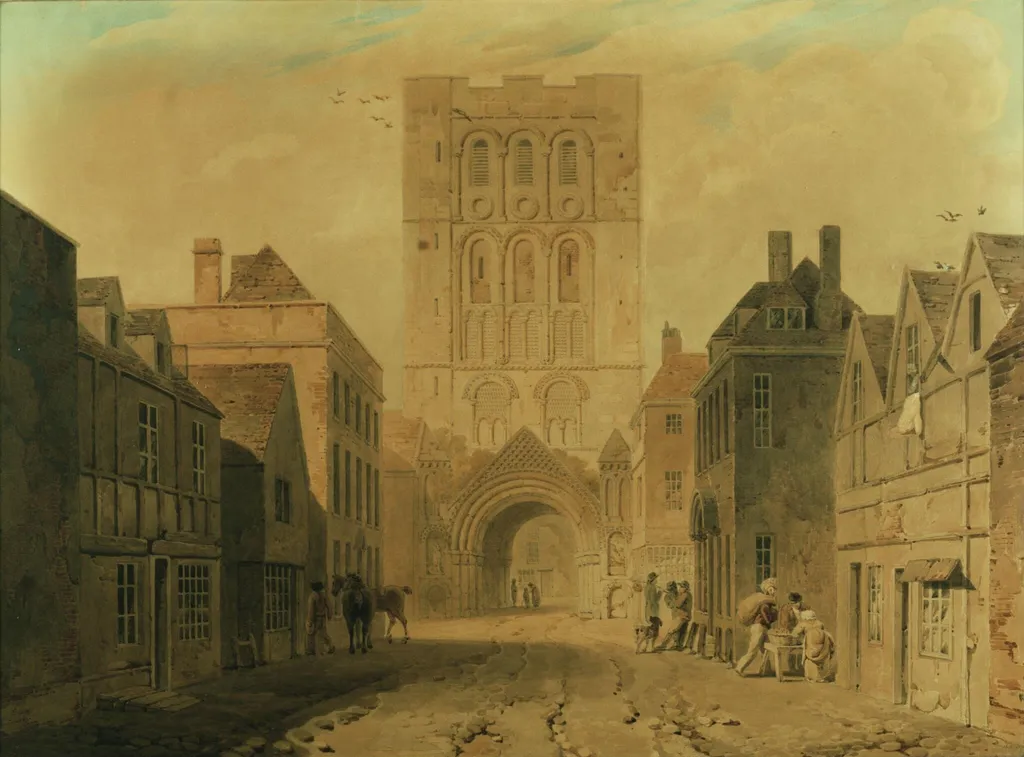
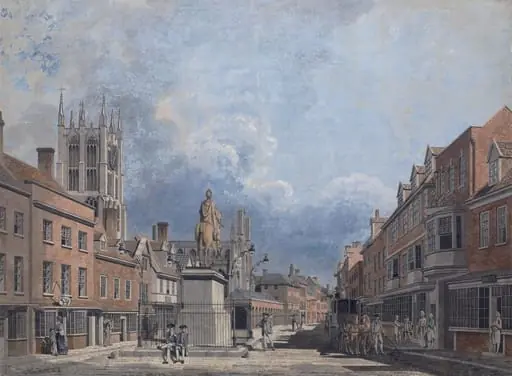
Norman tower at Bury St. Edmunds is a watercolor work on paper by the British Romanticist artist Clarendon Smith. It dates from 1805 and is held in the collection of the Victoria and Albert Museum.
About this work
Overview
Clarendon Smith's 1805 watercolour captures the Norman tower at Bury St. Edmunds, set within a serene street scene, conveying a sense of calm and historicity.
Subject & Meaning
The painting focuses on the imposing Norman tower of Bury St. Edmunds' church, surrounded by older, timber-framed buildings and everyday activity, highlighting the integration of historical architecture into daily life.
Technique & Style
Characterized by soft, light colors and gentle brushstrokes, the work embodies a warm, peaceful atmosphere, aligning with the emotive and visually nuanced principles of Romanticism.
History & Provenance
Created in 1805 by Clarendon Smith, specific provenance details (ownership history) are not provided in the available information.
Context
The painting reflects the Romantic movement's appreciation for historic landscapes and the interplay between architectural heritage and contemporary life, inviting contemplation of the past in the present.
Legacy
While not widely renowned as a singular landmark piece, it contributes to the broader body of early 19th-century watercolours documenting architectural heritage and everyday life through a Romantic lens.
Artist & collection
Artist
Clarendon Smith worked in watercolour around 1800, turning ordinary English scenes into small, detailed stories.

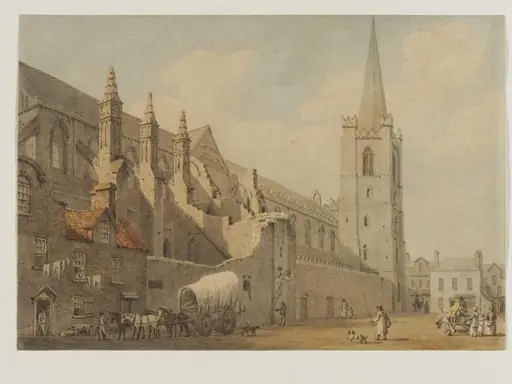 St Patrick's Cathedral, Dublin
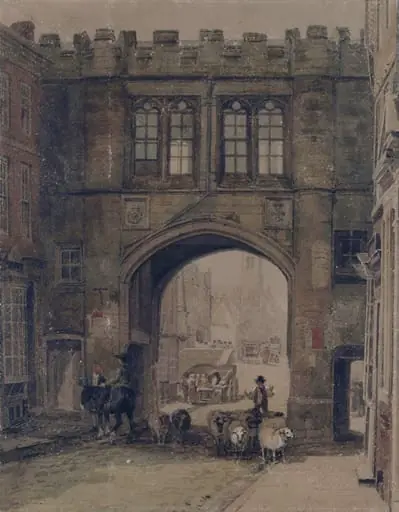 The Stonebrow : Gateway at Lincoln
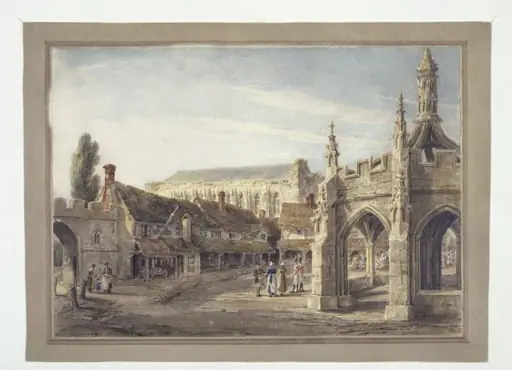 The Market Cross and Abbey Church, Malmesbury
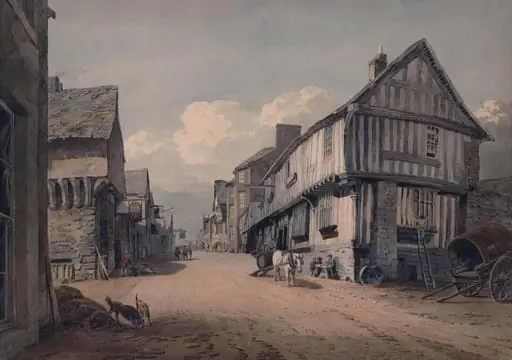 Looking up the High Street at Conway
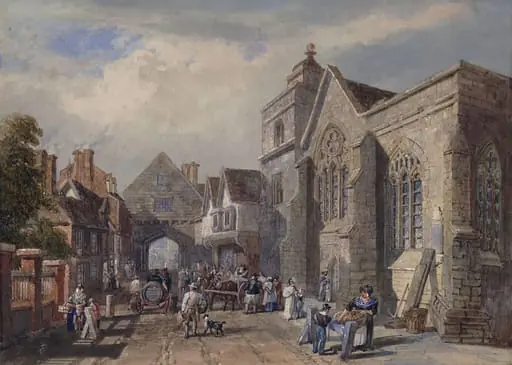 St. Nicholas Church and the College Gateway, Rochester
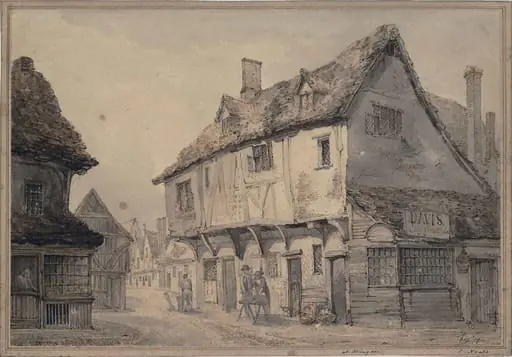 Old Houses at Abingdon, Berkshire
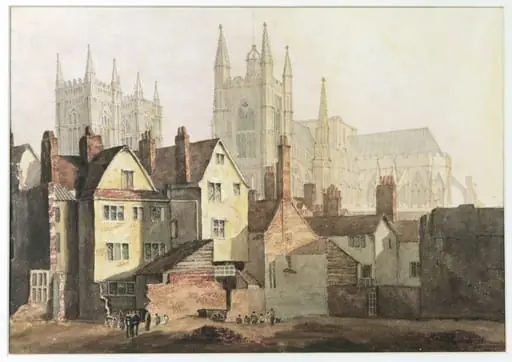 St. Margaret's, Westminster, and the abbey with old buildings in the foreground
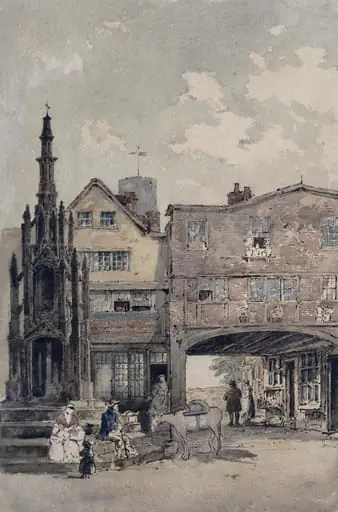 The Butter-Cross, Winchester
 Market Place, Hull