Artwork
Looking up the High Street at Conway
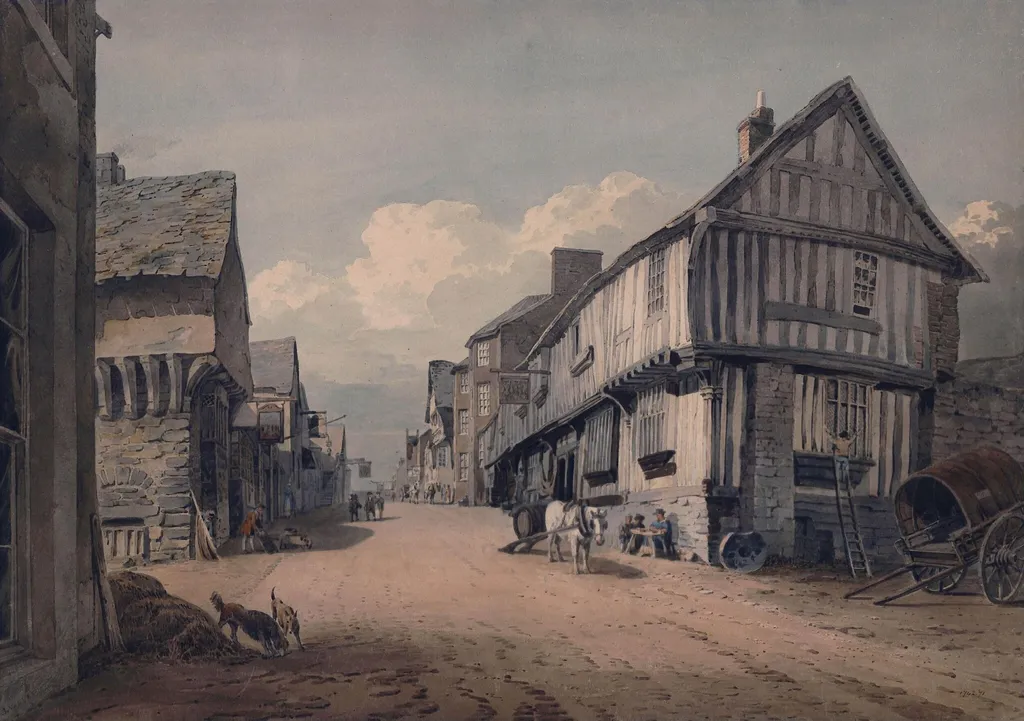
Looking up the High Street at Conway is a watercolor work on paper by the Romanticist artist John Varley. It dates from 1800 and is held in the collection of the Victoria and Albert Museum.
About this work
Overview
Painted in 1800 by John Varley, this watercolour captures a quiet stretch of Conway’s High Street. The work is signed by the artist and executed in transparent washes, typical of his topographical studies. The scene presents an unpopulated urban lane, rendered with careful attention to architectural detail and atmospheric tone, reflecting Varley’s interest in documenting everyday English towns.
Subject & Meaning
The painting portrays a modest Welsh market town street, devoid of grandeur but rich in vernacular character. A single horse and cart, along with a few distant figures, suggest quiet daily life. The absence of bustling activity invites contemplation rather than narrative, aligning with a Romantic sensibility that valued solitude and the dignity of ordinary places over theatrical spectacle.
Technique & Style
Varley employed delicate watercolour washes to convey the texture of weathered stone and timber buildings, with subtle gradations of grey for the overcast sky.
Varley employed delicate watercolour washes to convey the texture of weathered stone and timber buildings, with subtle gradations of grey for the overcast sky. The steeply pitched roofs and tall chimneys are outlined with precise, restrained linework. His use of light and shadow enhances the solidity of structures while maintaining the medium’s inherent transparency, a hallmark of his topographical approach.
History & Provenance
Created during Varley’s travels through Wales, the work belongs to a series of watercolours documenting British towns in the early 19th century. It remained in private collections until entering public ownership, likely through acquisition by a museum or institutional donor. Its survival reflects the growing 19th-century interest in preserving regional architectural records.
Context
In 1800, Conway was a walled medieval town with limited modernization. Varley’s depiction aligns with contemporaneous efforts by artists and antiquarians to record vernacular architecture before industrial change altered the landscape. His work contributed to a broader cultural movement that valued historical continuity and local identity over urban transformation.
Legacy
Varley’s Conway watercolour exemplifies the transition from topographical record to expressive landscape in British art. Though not widely exhibited, it influenced later watercolourists who sought emotional resonance in mundane scenes. Its preservation offers insight into how early Romantic artists found significance in the quiet rhythms of provincial life.
Artist & collection
Artist
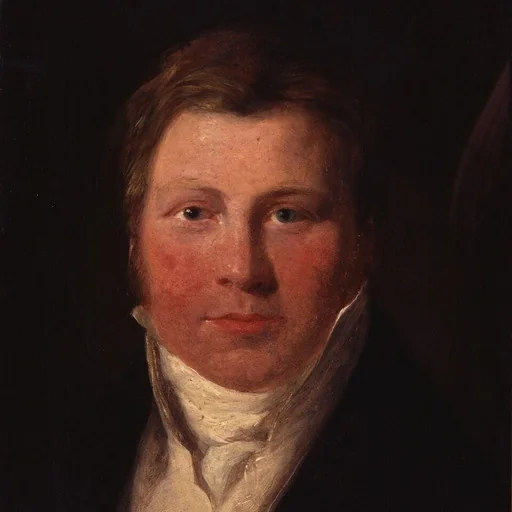
John Varley (17 August 1778 – 17 November 1842) was an English watercolour painter and astrologer, and a close friend of William Blake.

![Study of a Head in Profile [verso], by John Varley](https://artifactworldgallery.com/img/john-varley--study-of-a-head-in-profile-verso--3e16e84b6ceccae1-w320.webp)
![Two Studies of a Figure Holding a Basket [verso], by John Varley](https://artifactworldgallery.com/img/john-varley--two-studies-of-a-figure-holding-a-basket-verso--7e8aaeb3f643e9b3-w320.webp)
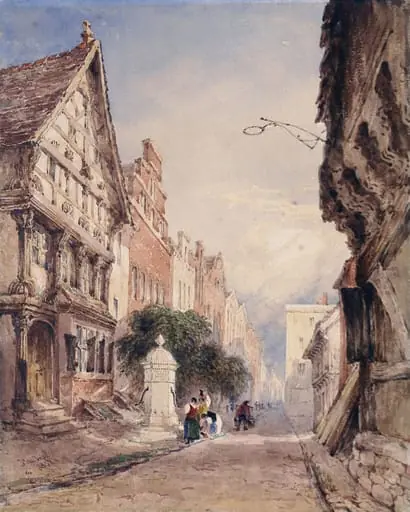 Street Scene
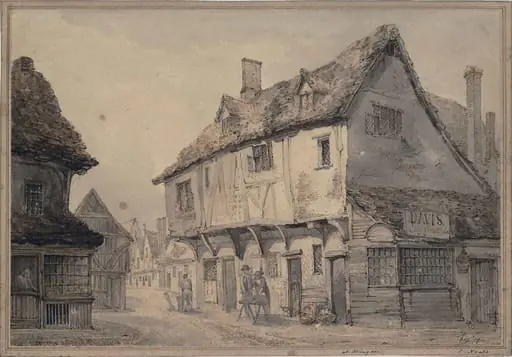 Old Houses at Abingdon, Berkshire
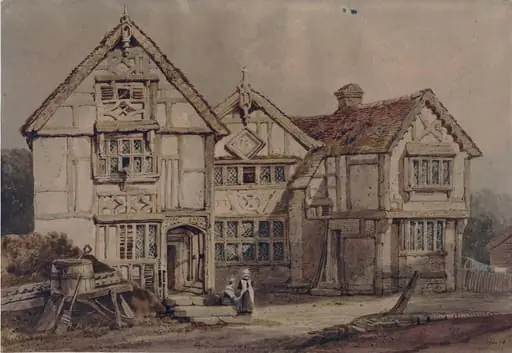 Old House at Pound's Bridge, near Tonbridge
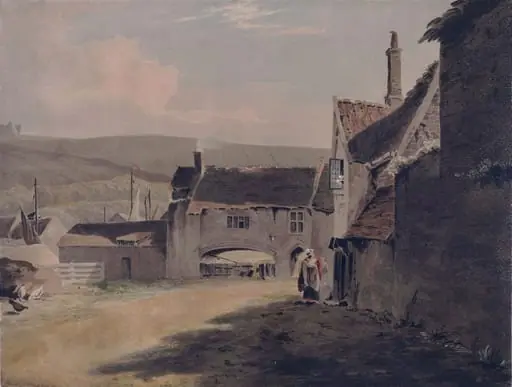 Water Gate, Lower Close, Norwich
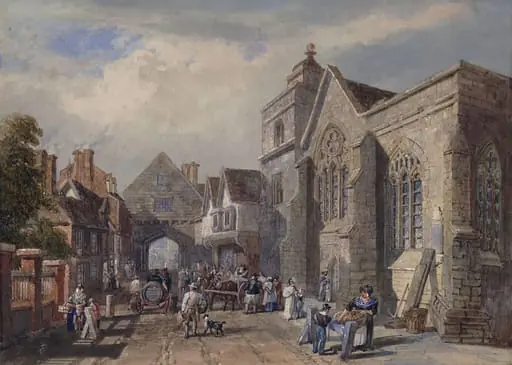 St. Nicholas Church and the College Gateway, Rochester
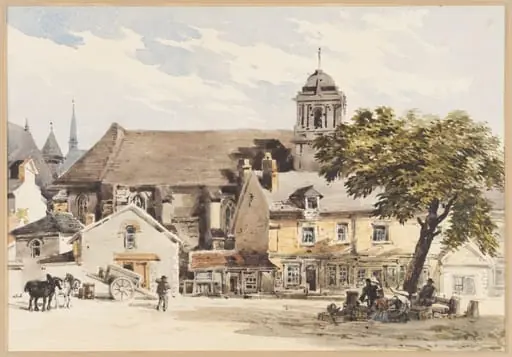 The Post House, Amboise
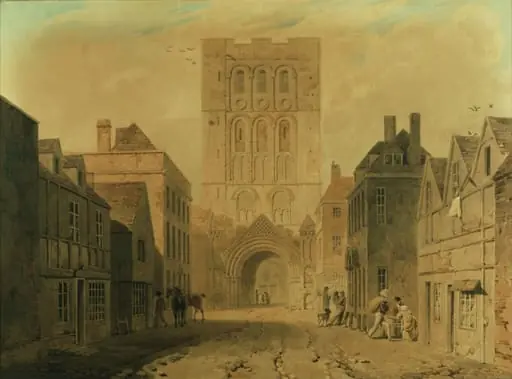 Norman tower at Bury St. Edmunds
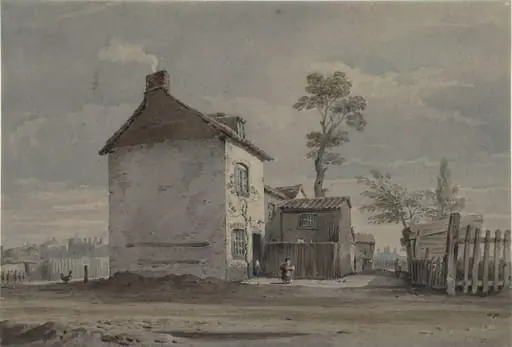 Cottages in a landscape
 Owen Glendower's Parliament House, Dolgellau
 Village Street, Old Charlton, Kent