Artwork
Persian Village
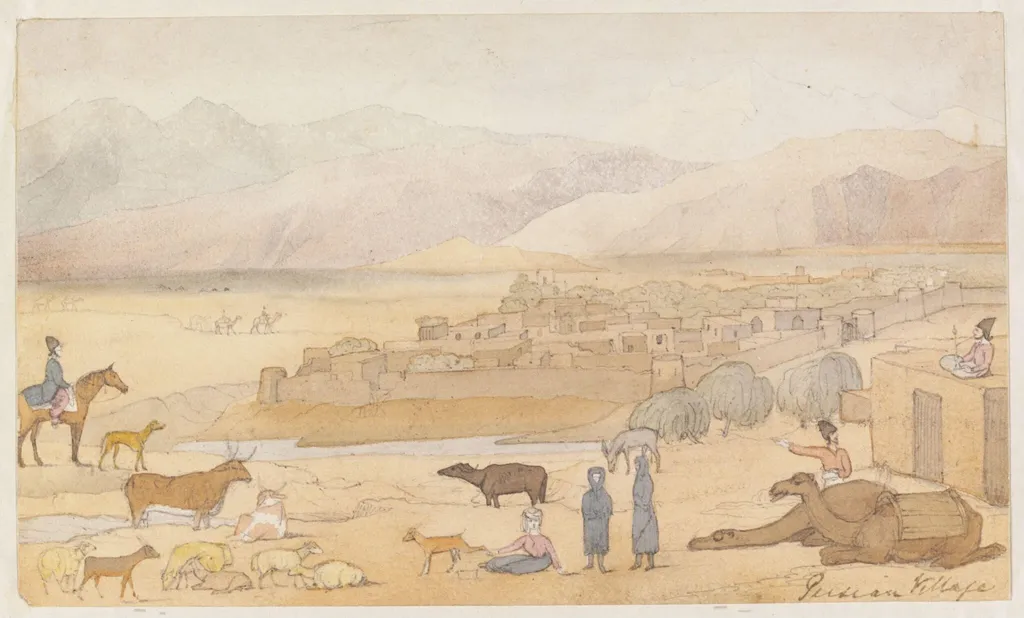
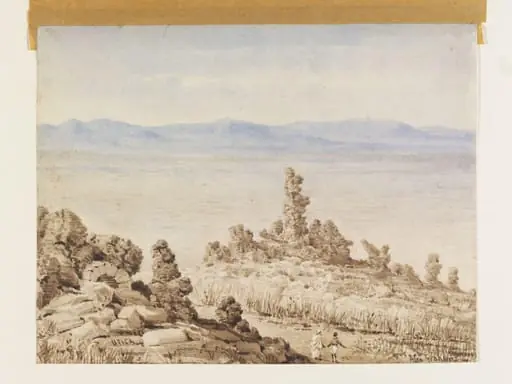
Persian Village is a watercolor work on paper by the Orientalist artist Godfrey Thomas Vigne. It dates from 1833 and is held in the collection of the Victoria and Albert Museum.
About this work
Overview
Persian Village is a watercolour painting by Godfrey Thomas Vigne, characterized by its depiction of a serene, sun-baked village scene, with the added curiosity of a portrait sketch on its reverse.
Subject & Meaning
The painting portrays daily life in a Persian village, with inhabitants and animals engaged in various quiet activities amidst simple, aged architecture, set against a subtle, mountainous backdrop. The scene conveys a sense of tranquility and traditional rural life.
Technique & Style
Vigne employed soft, muted colours and delicate lines to evoke the heat and peaceful atmosphere of the village, suggesting a focus on capturing the serene and everyday aspects of the scene.
History & Provenance
Created during Vigne's travels, documented in his writings for *The Journal of the Royal Geographical Society of London* (1839) and *Travels in Kashmir* (1842), the painting was acquired by the collection in 1971 from Henry D'Olier Vigne, the artist's great-nephew.
Context
Reflecting Vigne's exploratory journeys, *Persian Village* offers a 19th-century British artist's perspective on Middle Eastern rural life, blending observation with aesthetic interpretation.
Legacy
Now part of a public collection, the work provides insight into both Vigne's artistic approach and the cultural exchanges of his time, accessible for study and comparison with similar works at institutions like the Victoria and Albert Museum.
Artist & collection


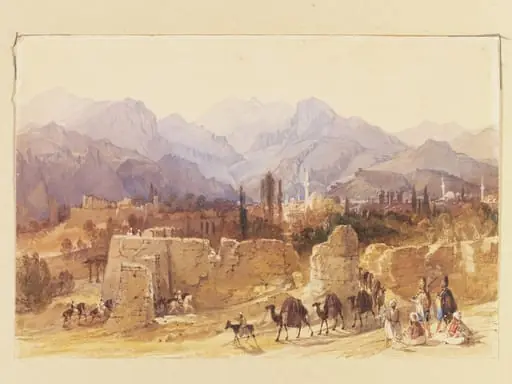 Philadelphia
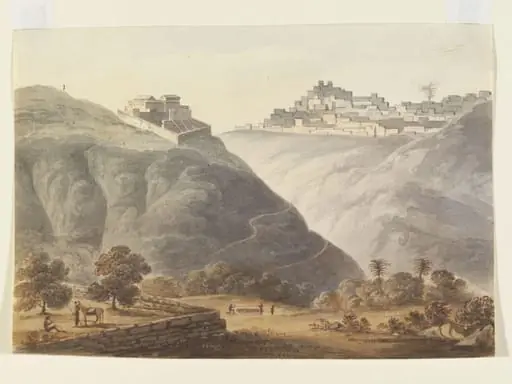 Bethlehem
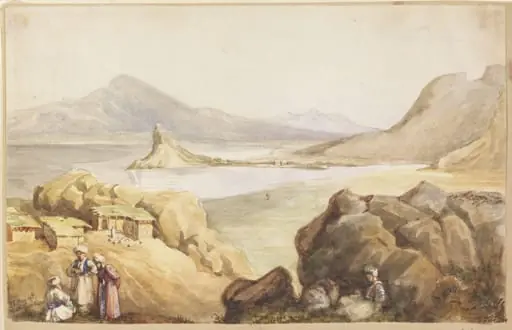 Gule-Hissa Ovassy in the Northern part of Lycia
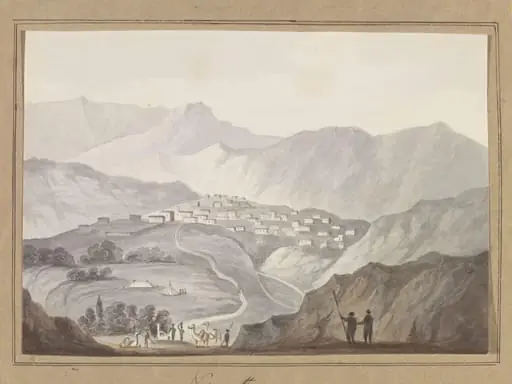 Nazareth
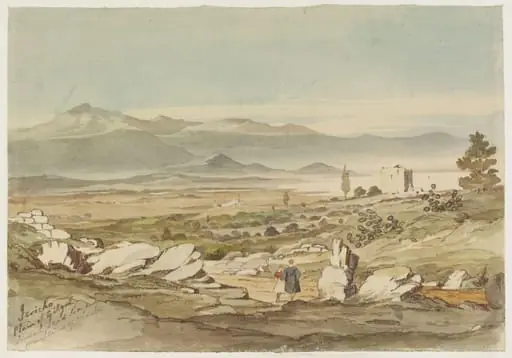 Jericho Plain of Gilgal, Jordan, Dead Sea, and Mountains of Moab
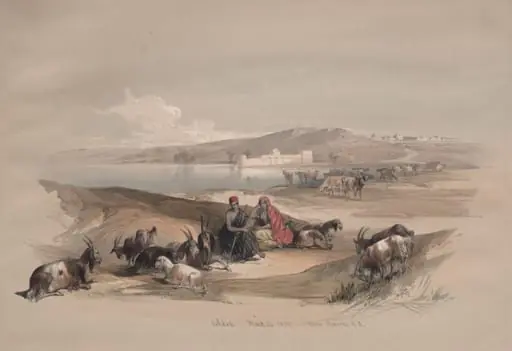 Ashdod
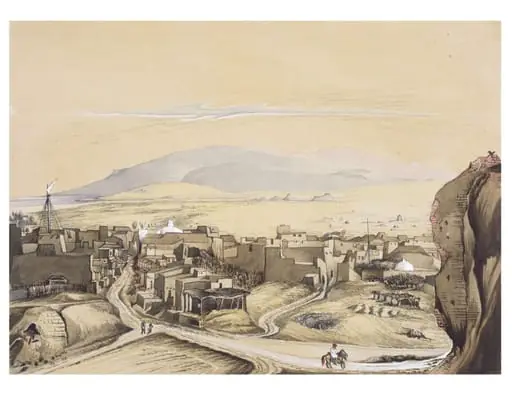 Untitled
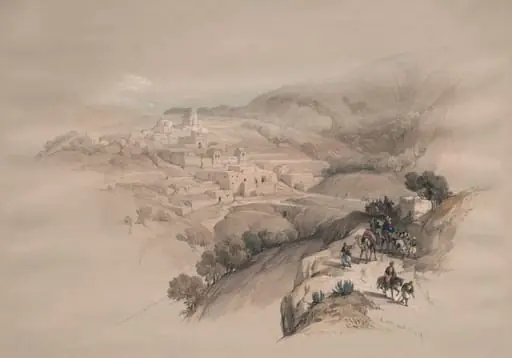 Bethany
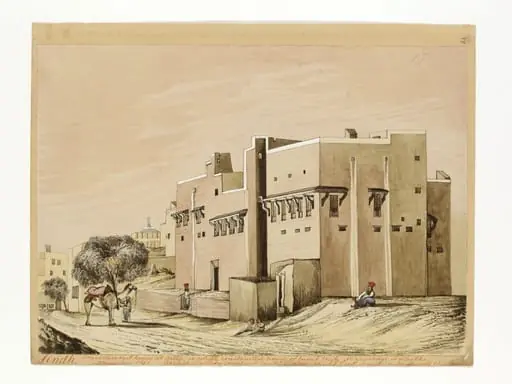 Exterior of the traveller's rest house, formerly the East India Company's Factory, Tatta
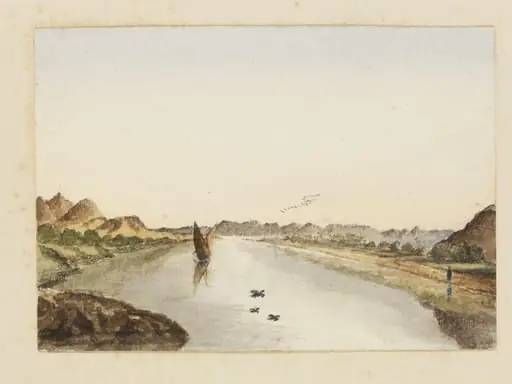 View of the Nile
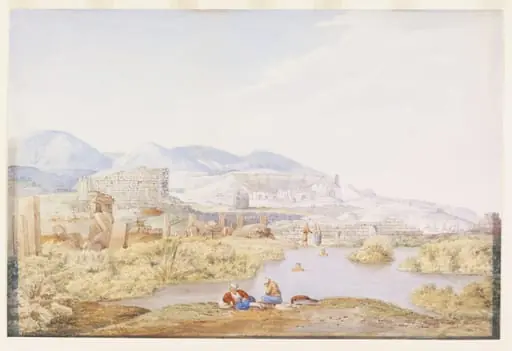 Hierapolis - Natural Hot Spring. Phrygia
 Utica
Utica