Artwork
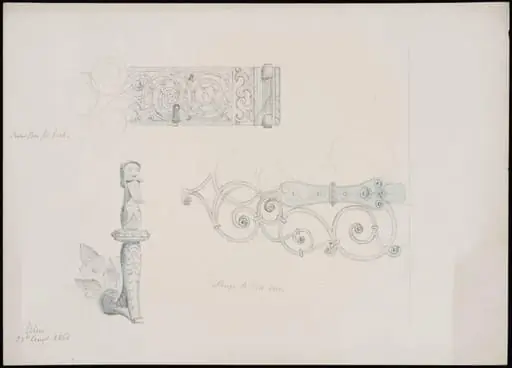
Details of ironwork in church of St. Maria in Capitol, Cologne
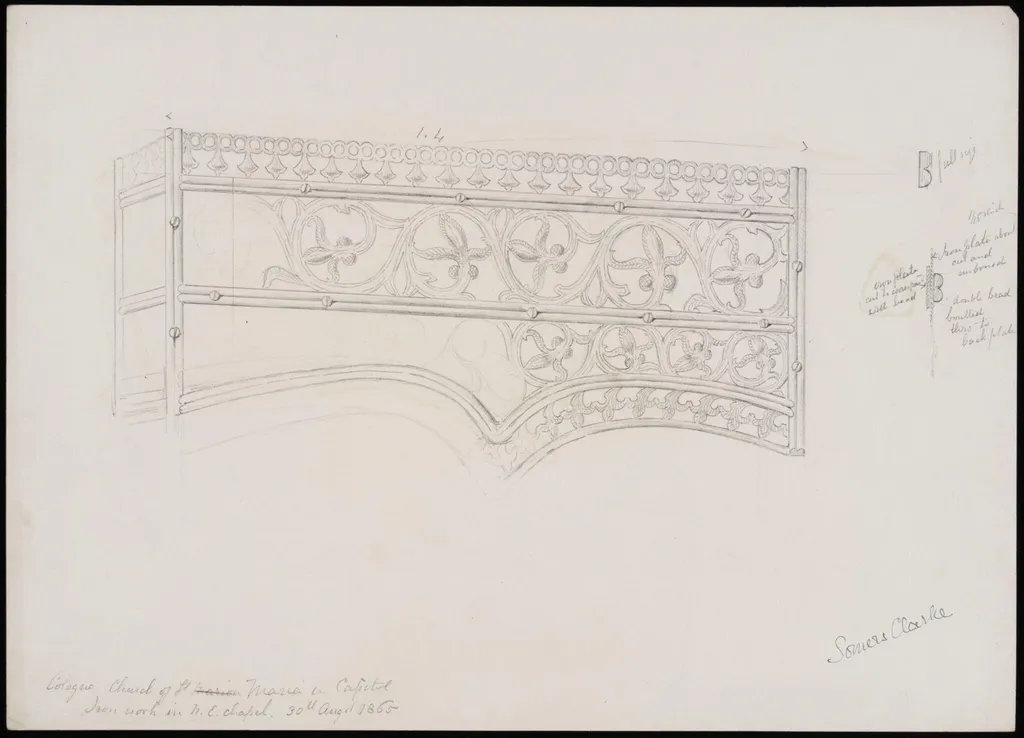
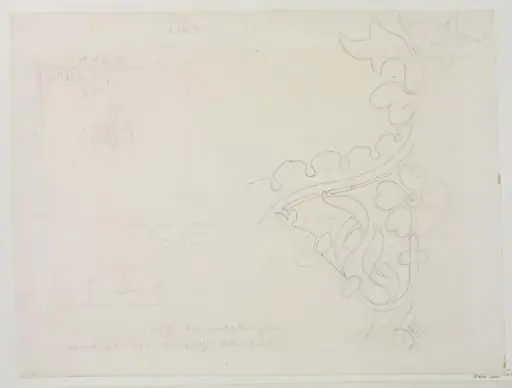
Details of ironwork in church of St. Maria in Capitol, Cologne is a drawing by the Impressionist artist Somers Clarke. It dates from 19 and is held in the collection of the Victoria and Albert Museum. This 1865 pencil drawing records the ornamental ironwork of St.
About this work
The top row has a repeating pattern of scrolls and circles, while the bottom row curves slightly, with smaller, leaf-like shapes.
This is a black-and-white drawing of two rows of ornate ironwork. The top row has a repeating pattern of scrolls and circles, while the bottom row curves slightly, with smaller, leaf-like shapes. The lines are precise but light, almost like a sketch.
The drawing was made in 1865 by an artist studying real architectural details. The notes on the page describe how the iron was constructed, with terms like "double bead" and "back plate."
If you like this kind of careful drawing, check out the Victoria and Albert Museum.
Overview
This 1865 pencil drawing records the ornamental ironwork of St. Maria in Capitol, a church in Cologne. Executed in monochrome, the image presents two horizontal bands of metal detailing, each rendered with fine, light strokes that capture the intricate patterns without heavy shading.
Subject & Meaning
The work focuses on the decorative iron elements that frame the church’s interior architecture. The upper band displays a repetitive motif of scrolls intersected by circular forms, while the lower band follows a gentle curve, punctuated by smaller leaf‑shaped ornaments, illustrating the blend of structural function and aesthetic embellishment typical of 19th‑century ecclesiastical design.
Technique & Style
Rendered with graphite, the artist employed precise, controlled lines to convey the delicate profiles of the metalwork. The drawing resembles a measured sketch, emphasizing linear accuracy over tonal depth, and includes marginal annotations that identify construction features such as "double bead" and "back plate," indicating a systematic study of the iron’s fabrication.
History & Provenance
Created in 1865 by an unnamed draughtsman engaged in architectural documentation, the drawing served as a visual record for scholarly or restoration purposes. Its provenance traces to collections of architectural studies, and it has been referenced in comparative research on historic metalwork, though its current institutional ownership is not specified.
Context
During the mid‑19th century, detailed architectural drawings were a primary method for preserving and analyzing historic structures, especially as industrial production altered traditional craftsmanship. This drawing reflects that scholarly trend, providing insight into the ornamental ironwork that adorned Cologne’s medieval churches before later interventions.
Artist & collection

Artist
George Somers Clarke was an architect and English Egyptologist who worked on the restoration and design of churches and at a number of sites throughout Egypt, notably in El Kab, where he built a mud brick house.

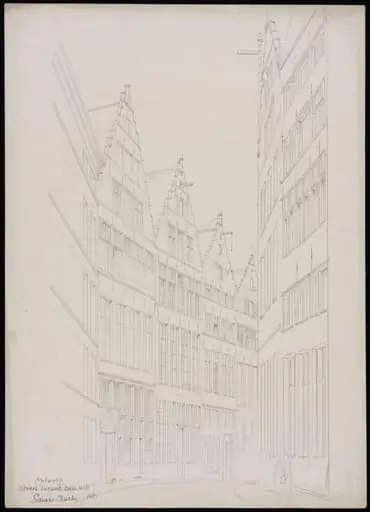
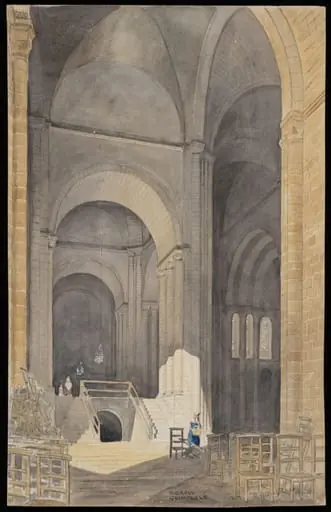
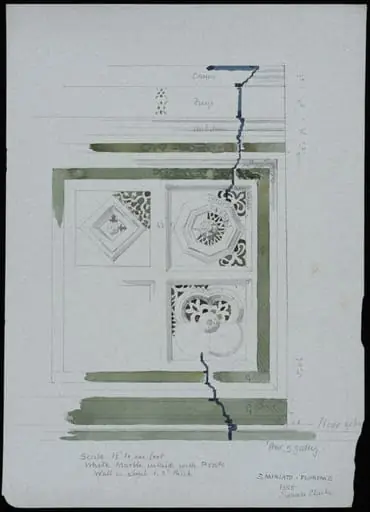
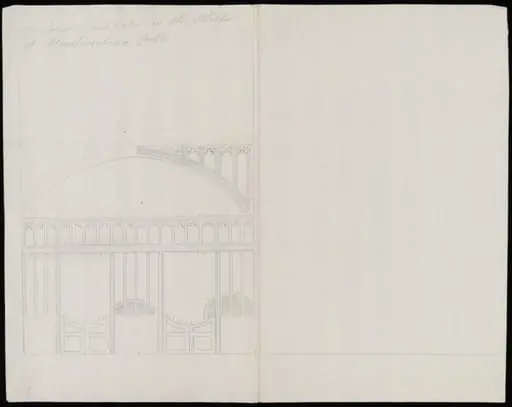 Elevation of screen in Hall.
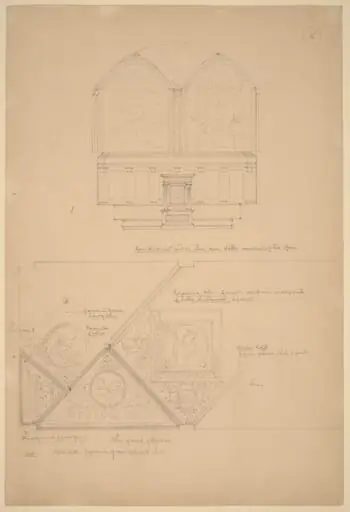 Study of an Altarpiece and Ceiling Panels
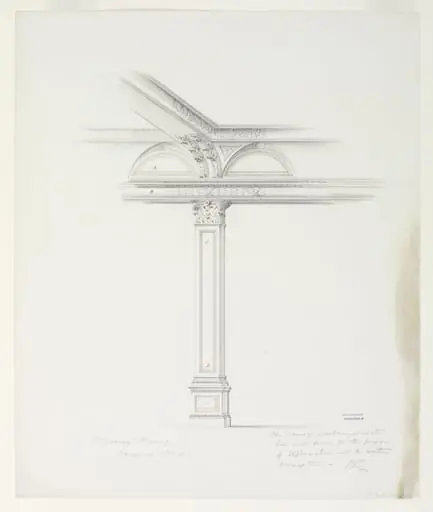 Drawing rooms at Drapers' Hall, London
 Untitled
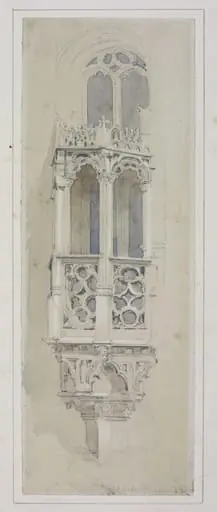 Sketch of a window and balcony, Hotel de Ville, Brussels
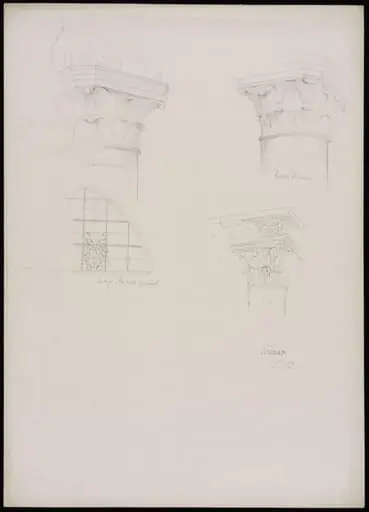 Untitled
 'Panells of Drawing room'
 Untitled
 Untitled
 One of 235 drawings of architectural subjects in France, Germany, and Italy
 Perugino's Udienza del Cambio in the Collegio del Cambio, Perugia
 'Passage next to Drawing Room'