Artwork
Perugino's Udienza del Cambio in the Collegio del Cambio, Perugia
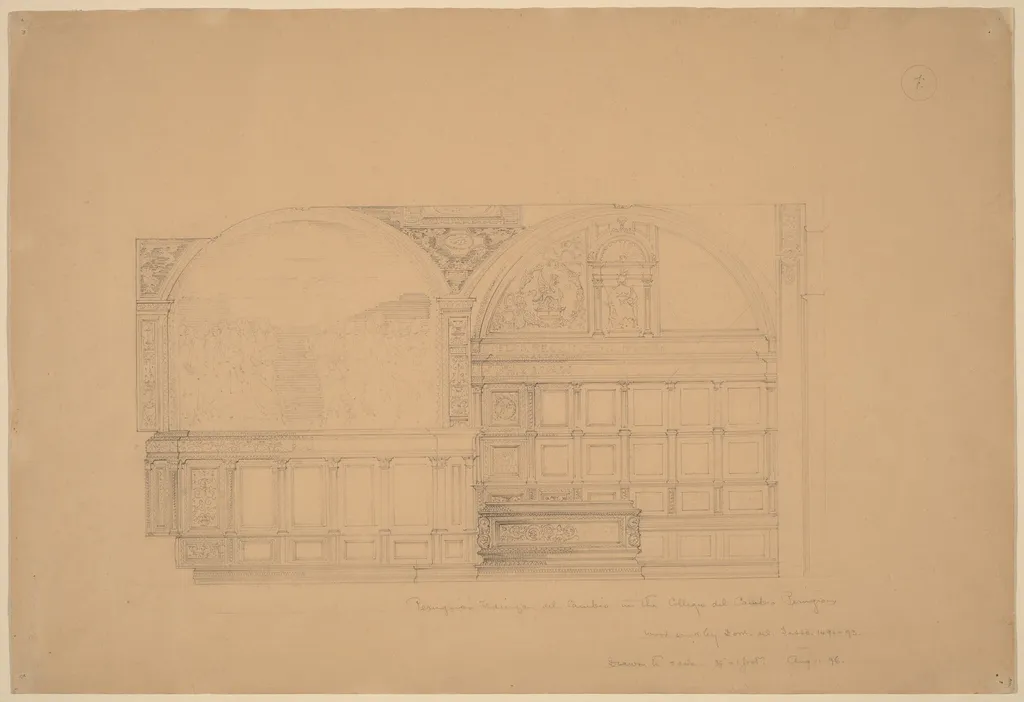
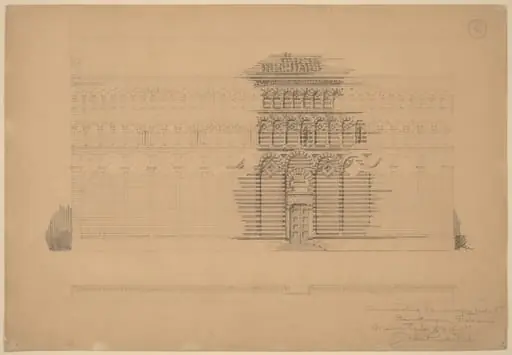
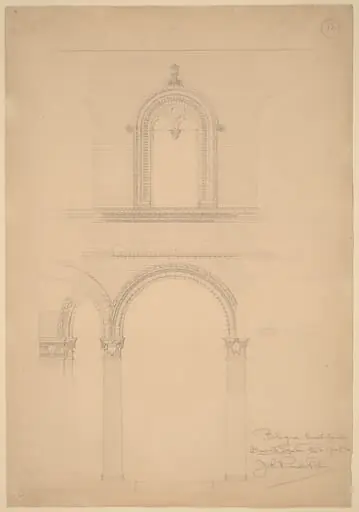
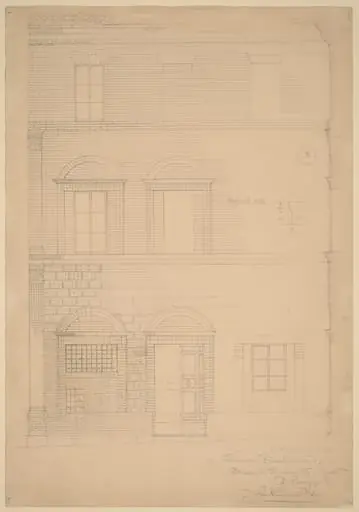
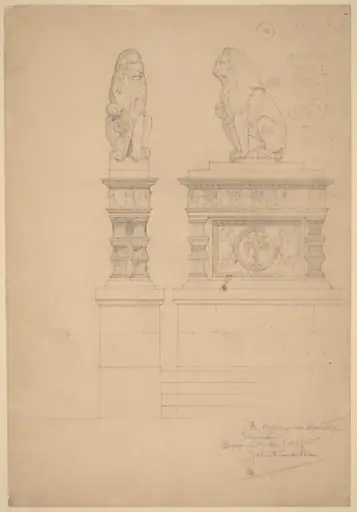
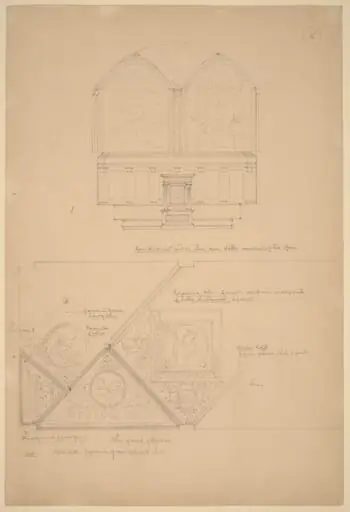
Perugino's Udienza del Cambio in the Collegio del Cambio, Perugia is a graphite drawing by the Impressionist artist John Russell Pope. It dates from 1896 and is held in the collection of the National Gallery of Art. This graphite drawing, dated 1896, depicts the Sala dell’Udienza del Cambio in Perugia, a room adorned with frescoes by Pietro Perugino.
About this work
Overview
This graphite drawing, dated 1896, depicts the Sala dell’Udienza del Cambio in Perugia, a room adorned with frescoes by Pietro Perugino.
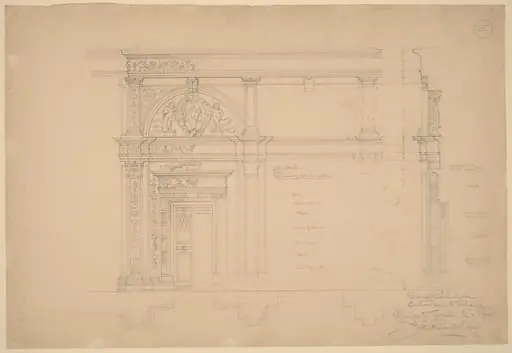
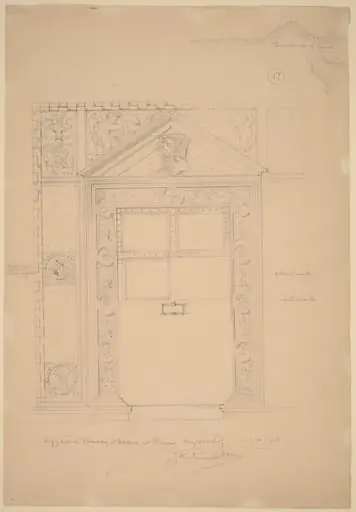
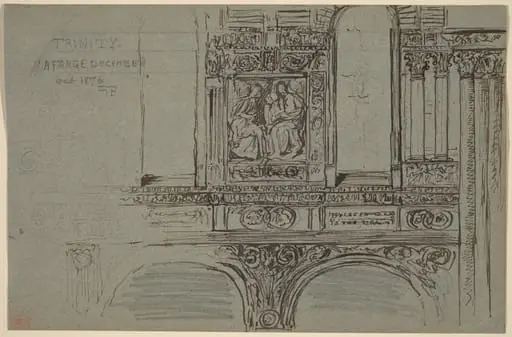
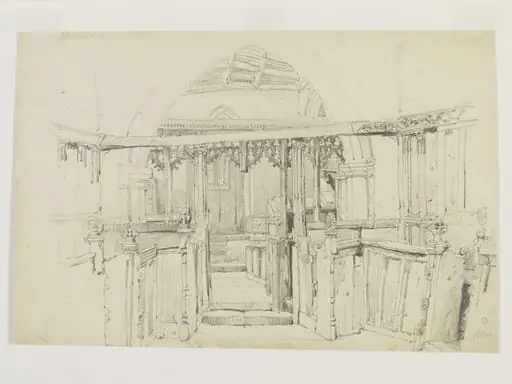
This graphite drawing, dated 1896, depicts the Sala dell’Udienza del Cambio in Perugia, a room adorned with frescoes by Pietro Perugino. Created by American architect John Russell Pope, the work is a precise architectural study, not an original fresco. It captures the spatial arrangement and decorative elements of the chamber as they appeared in the late 19th century, serving as a record of its condition at the time.
Subject & Meaning
The drawing focuses on the interior of a historic civic hall once used by Perugia’s money changers and financial officials. Pope’s attention to architectural detail and frescoed walls underscores the room’s function as a center of civic authority and economic regulation. The work reflects 19th-century interest in documenting Renaissance public spaces, emphasizing their enduring structural and symbolic presence.
Technique & Style
Executed in graphite, the drawing employs fine, controlled lines to render architectural proportions and surface textures. Pope’s method is analytical rather than expressive, prioritizing accuracy over atmosphere. Shadows and hatching define depth and volume, while the absence of color maintains a scholarly tone, aligning with the conventions of architectural documentation in the late 19th century.
History & Provenance
Created during John Russell Pope’s travels in Italy, the drawing was likely made as part of his research into Renaissance architecture. It entered institutional collections in the United States, where it was used to inform architectural education and preservation efforts. Its provenance traces to Pope’s personal sketchbooks, later preserved as part of his professional archive.
Context
In the late 1800s, American architects increasingly studied European historic buildings to inform neoclassical design. Pope’s drawing reflects this trend, positioning Perugino’s frescoed hall as a model of civic harmony and spatial order. The work belongs to a broader movement of architectural documentation that sought to preserve and interpret Italy’s Renaissance heritage for transatlantic audiences.
Legacy
The drawing remains a valuable record of the Sala dell’Udienza del Cambio’s condition before 20th-century restorations. Though not a work of Renaissance art itself, it contributes to the historical understanding of how later generations engaged with and interpreted Perugino’s environment. It is now referenced in studies of architectural drawing and the transmission of Renaissance aesthetics in America.
Artist & collection


![The Erectheum, West Elevation [left half], by John Russell Pope](https://artifactworldgallery.com/img/john-russell-pope--the-erectheum-west-elevation-left-half--10b9b48e87f30a0f-w320.webp)