Artwork
Heute Roth, Morgen Tod (Today Red, Tomorrow Dead)
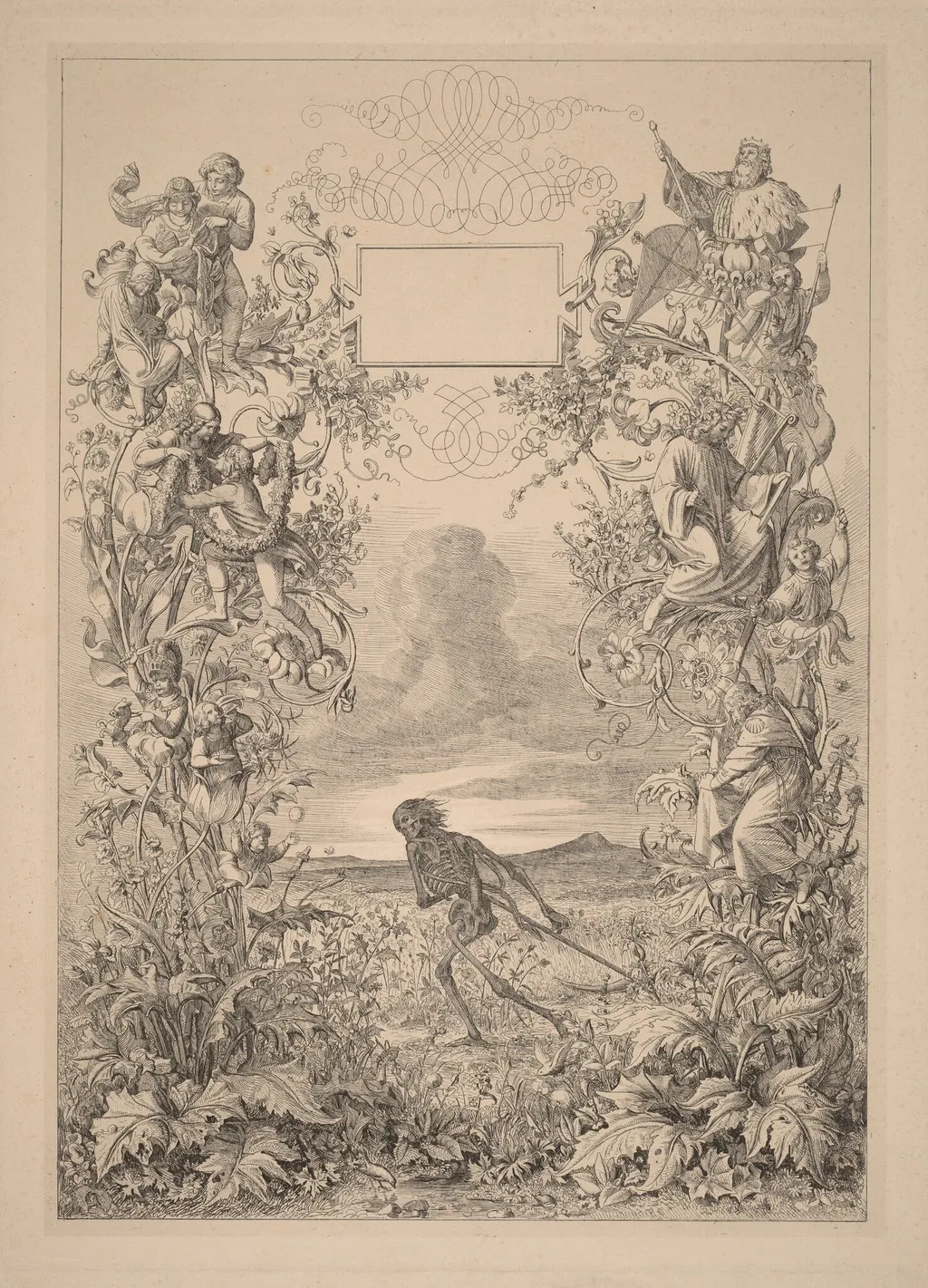
Heute Roth, Morgen Tod (Today Red, Tomorrow Dead) is an ink print by the Romanticist artist Eugen Napoleon Neureuther. It dates from 1839 and is held in the collection of the National Gallery of Art.
About this work
Overview
Two massive trees dominate the composition, their trunks and branches teeming with diminutive figures engaged in music, flower‑holding, or passive observation.
Eugen Napoleon Neureuther’s 1839 etching, Heute Roth, Morgen Tod, presents a densely packed arboreal scene rendered on laid paper. Two massive trees dominate the composition, their trunks and branches teeming with diminutive figures engaged in music, flower‑holding, or passive observation. Beneath the foliage, a solitary rider on horseback traverses a gently rolling, grassy terrain beneath a muted sky.
Subject & Meaning
The work juxtaposes the exuberance of nature with a stark warning implied by its title, which translates to “Today Red, Tomorrow Dead.” The vivid activity within the trees contrasts with the solitary figure below, suggesting a meditation on the transience of life’s pleasures and the inevitable approach of mortality.
Technique & Style
Executed as an etching, Neureuther incised fine lines into a metal plate, producing delicate textures that convey the swirling vines, foliage, and atmospheric background. The use of laid paper enhances the tonal range, allowing subtle gradations between the dense, intricate upper section and the more open, tonal lower landscape.
History & Provenance
Created in 1839, the print reflects Neureuther’s engagement with Romantic themes prevalent in early‑19th‑century German art. While specific ownership records are limited, the work has been catalogued among his prints and appears in several museum collections dedicated to 19th‑century graphic art.
Context
The piece aligns with Romanticism’s fascination with nature’s power and the fleeting nature of human experience. Its allegorical title and the crowded arboreal motif echo contemporary literary and philosophical concerns about mortality and the fleeting pleasures of life.
Artist & collection


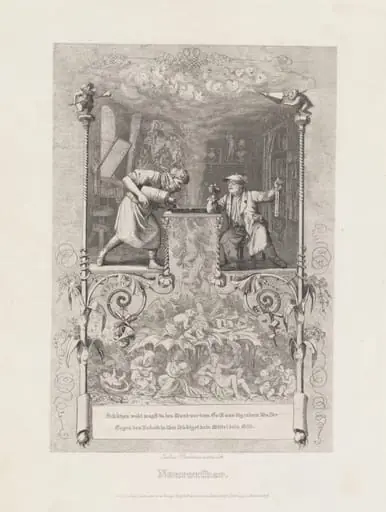 Neureuther (Self-Portrait in the Etching Studio)
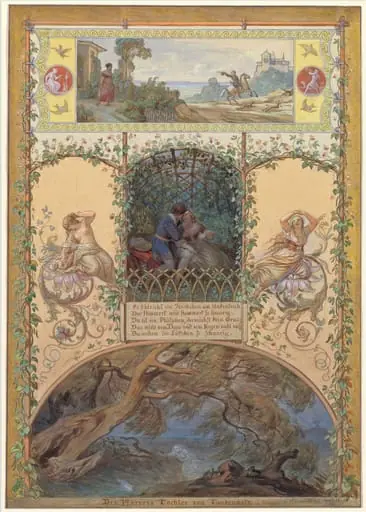 Des Pfarrers Tochter von Taubenhein (The Parson's Daughter from Taubenhain)
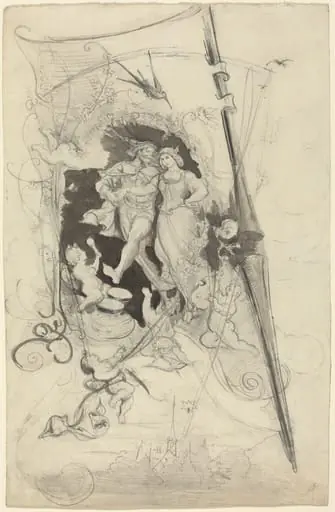 The Happy Squire and His Bride
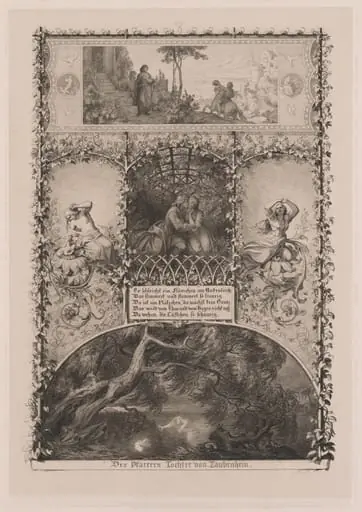 Des Pfarrers Tochter von Taubenhein (The Parson's Daughter from Taubenhain)
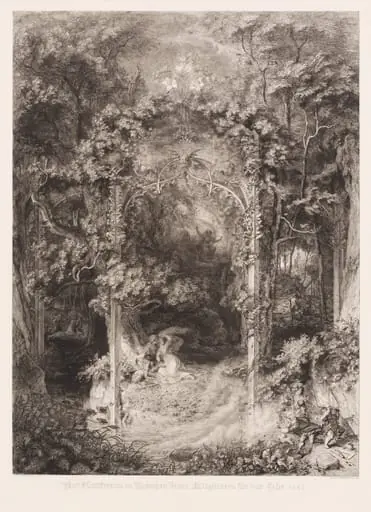 Das Waldfräulein (The Lady of the Forest)
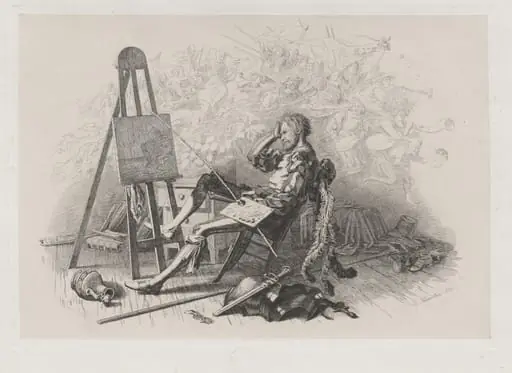 Morning after the Masked Ball: Emil Theodor Richter at His Easel
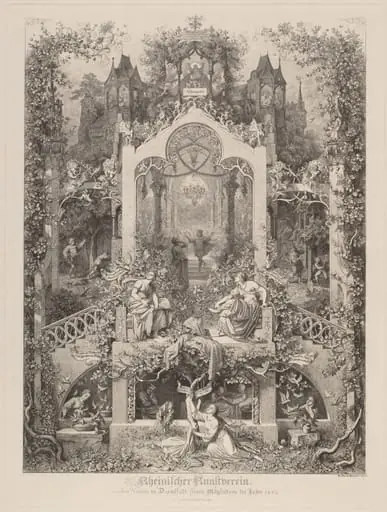 Aschenputtel (Cinderella)
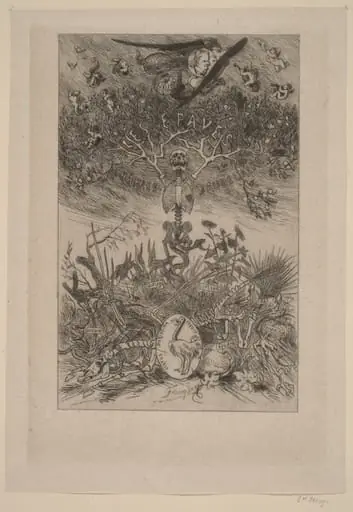 Frontispiece: The Waifs (Les Epaves)
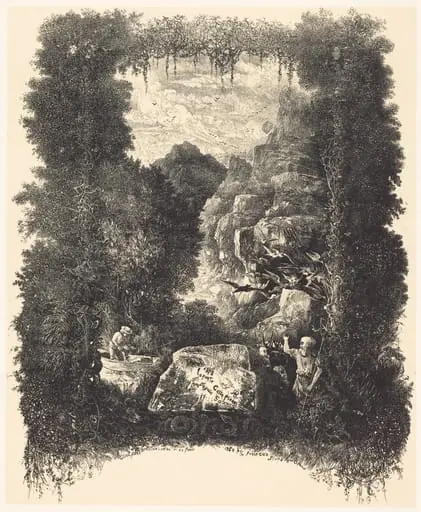 Frontispiece
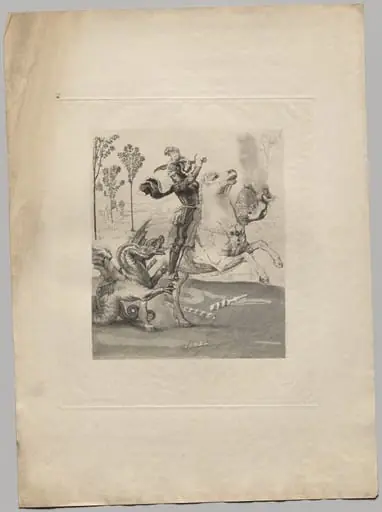 St. George and the Dragon (2)
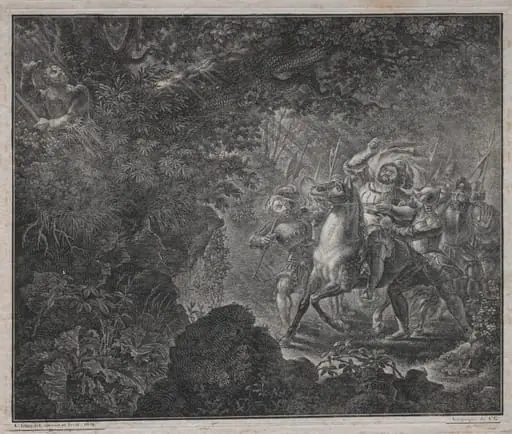 William Tell at Küssnacht
 The Fall and Redemption of Man
 The Proposal
 Landscape with Men in Armor, Tree Stump
 First frontispiece for Fables and Fairy-Tales by Thierry-Faletans
 The Judgment of Paris
 A Thicket; a Gnarled Willow Tree at Left, a Thicket of Vegetation at Right
 The Skeletons