Artwork
Deer Hunt
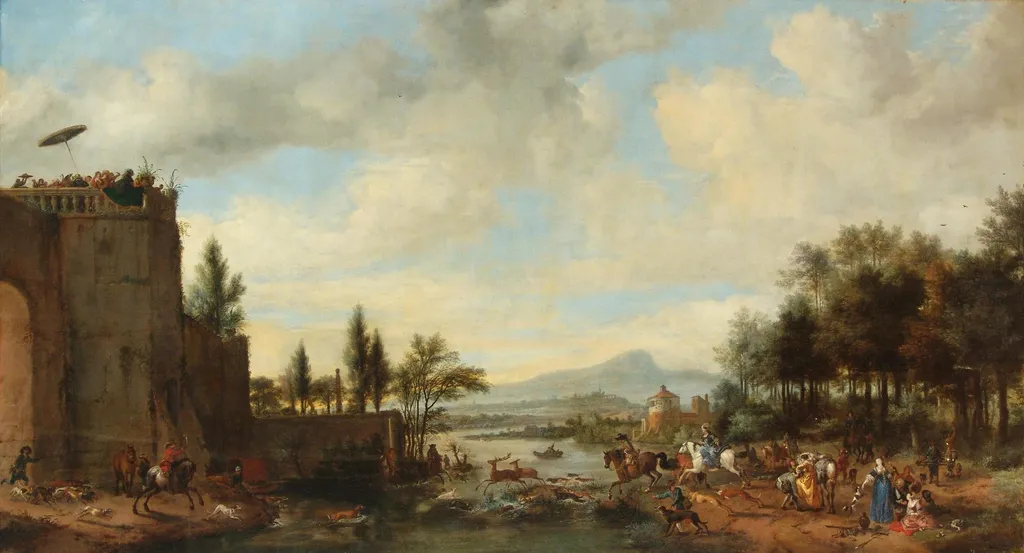
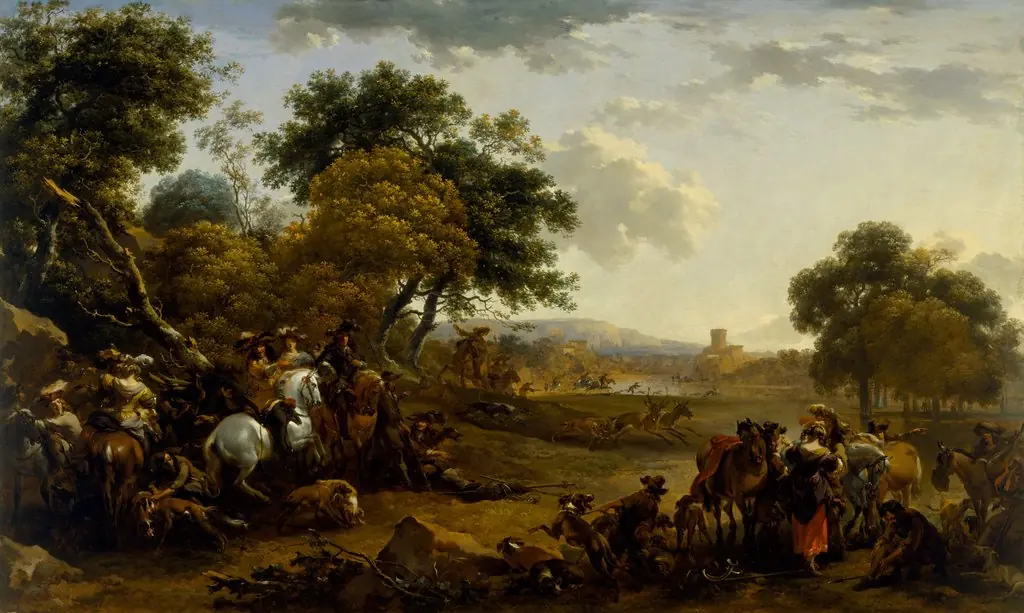
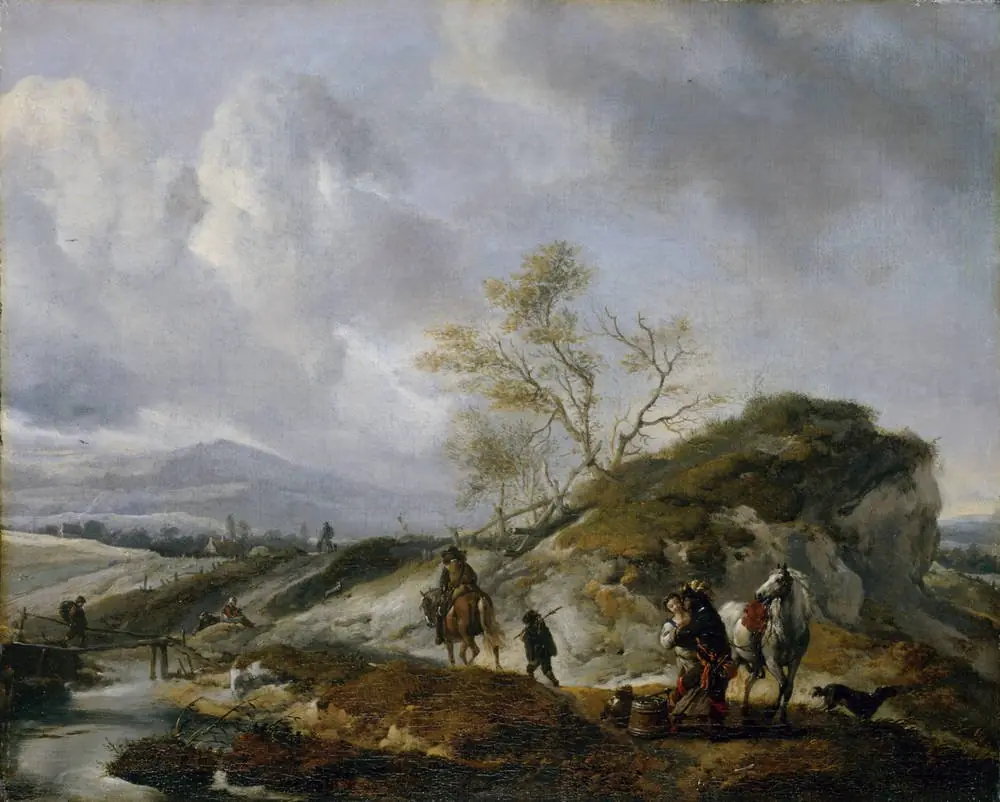
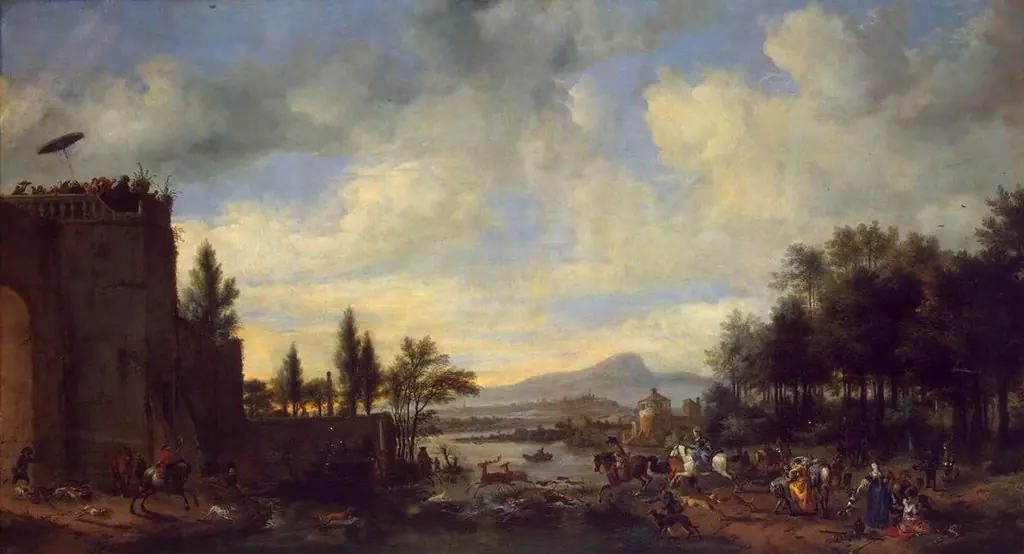
Deer Hunt is an oil painting by the Dutch Golden Age artist Philips Wouwerman. It dates from 1666 and is held in the collection of the Hermitage Museum.
About this work
Overview
Painted in 1666 by Philips Wouwerman, *Deer Hunt* is an oil-on-canvas work that exemplifies the Dutch Golden Age’s interest in dynamic rural life.
Painted in 1666 by Philips Wouwerman, *Deer Hunt* is an oil-on-canvas work that exemplifies the Dutch Golden Age’s interest in dynamic rural life. Wouwerman, a member of the Haarlem Guild of St. Luke, specialized in equestrian and hunting scenes, and this piece reflects his mastery of movement within expansive landscapes. The composition captures a moment of organized pursuit, blending human activity with natural terrain in a balanced, detailed manner.
Subject & Meaning
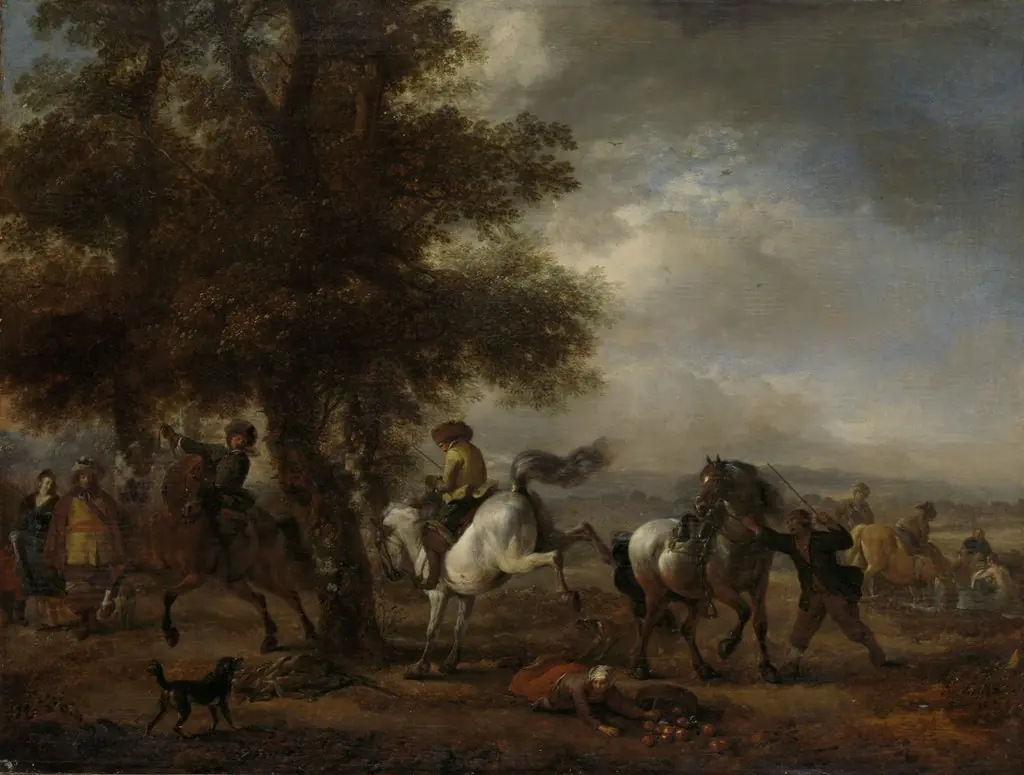
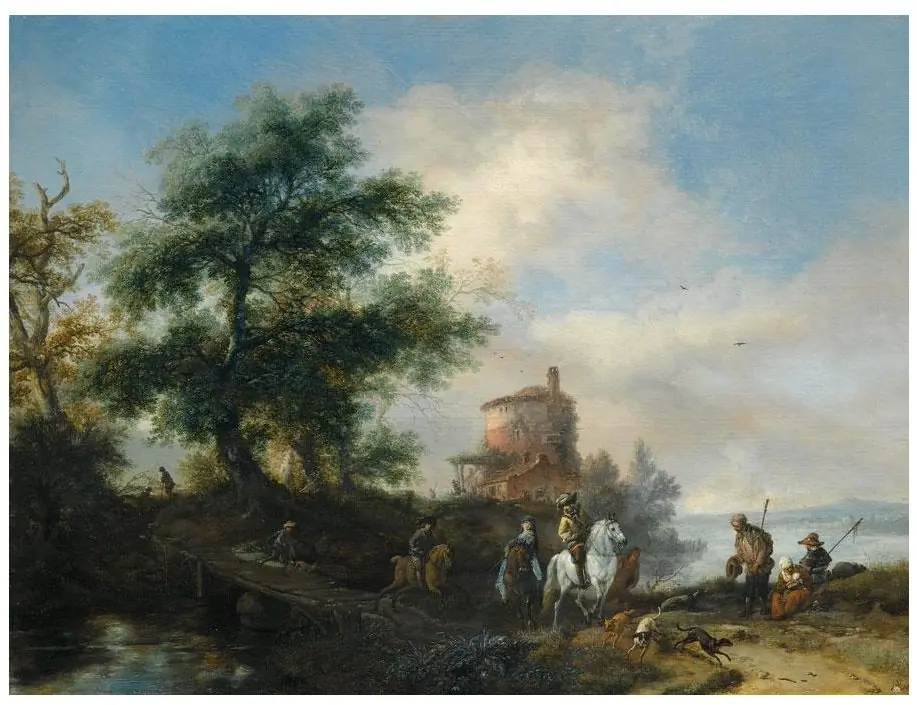
The painting portrays a deer hunt unfolding near a riverbank, with riders on horseback pursuing the animals while others observe from the shore. A stone wall in the background holds a group of spectators, suggesting the hunt was a social event as much as a practical one. The scene conveys order and ritual rather than violence, reflecting aristocratic pastimes and the controlled relationship between humans and nature in 17th-century Dutch society.
Technique & Style
Wouwerman employed fine brushwork to render figures, animals, and foliage with clarity, while using varied brushstrokes to suggest motion and texture. Light falls unevenly across the scene, creating depth and directing attention to the central chase. Subtle impasto adds dimension to horse manes and foliage, enhancing realism without overwhelming the composition. The atmospheric perspective in the distant landscape reinforces spatial recession under a soft, overcast sky.
History & Provenance
Created during Wouwerman’s mature period, *Deer Hunt* was produced in Haarlem, where he lived and worked for most of his career. The painting remained within Dutch collections through the 18th and 19th centuries before entering a public museum’s holdings. Its documented history aligns with the broader circulation of Dutch genre paintings among collectors who valued detailed, narrative-driven landscapes.
Context
In mid-17th-century Holland, hunting scenes were popular among urban elites who sought to connect with rural ideals despite living in growing cities. Wouwerman’s works catered to this taste, offering idealized yet plausible depictions of outdoor life. His paintings often included elements of social hierarchy and leisure, mirroring the values of a prosperous, mercantile society that prized both order and natural beauty.
Legacy
Wouwerman’s influence extended beyond his lifetime, inspiring later artists in the Dutch and Flemish traditions to refine their depictions of equestrian and pastoral scenes. *Deer Hunt* stands as a representative example of his ability to merge narrative energy with compositional harmony. Though not widely known today outside specialist circles, his work remains a key reference for understanding the breadth of Dutch Golden Age painting beyond still life and portraiture.
Artist & collection
Artist
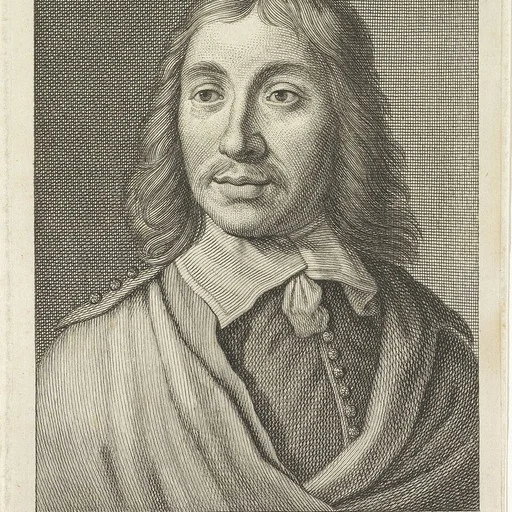
Philips Wouwerman (also Wouwermans) (24 May 1619 (baptized) – 19 May 1668) was a Dutch painter of hunting, landscape and battle scenes. He became prolific during the Dutch Golden Age and joined the Haarlem Guild of St. Luke.