Artwork
The Return of the Holy Family from Egypt
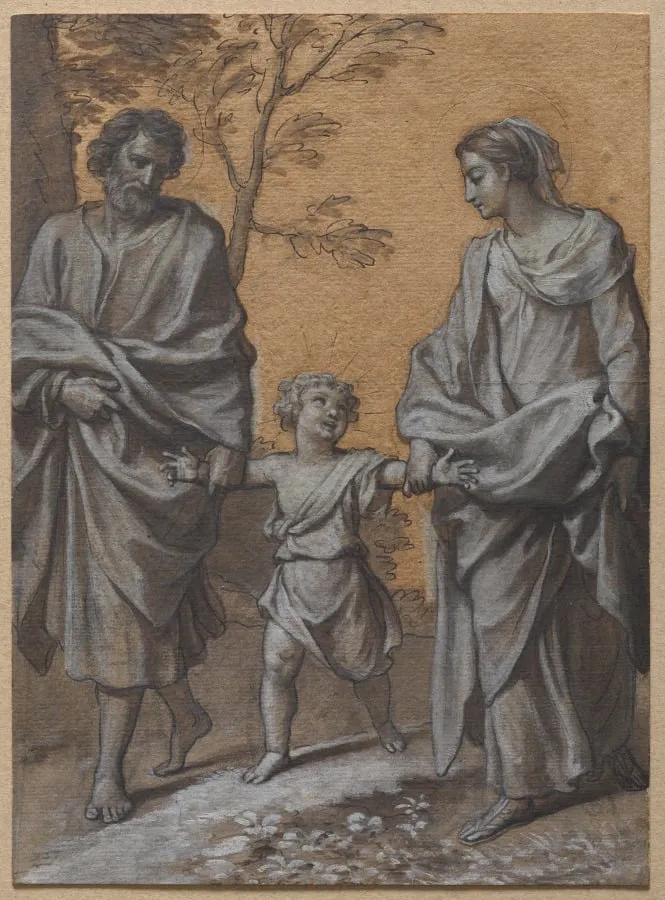
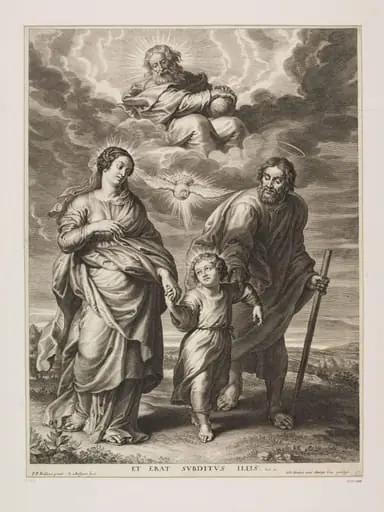
The Return of the Holy Family from Egypt is a drawing by the Baroque artist Claude Simpol. It dates from 1698 and is held in the collection of the Cleveland Museum of Art.
About this work
Overview
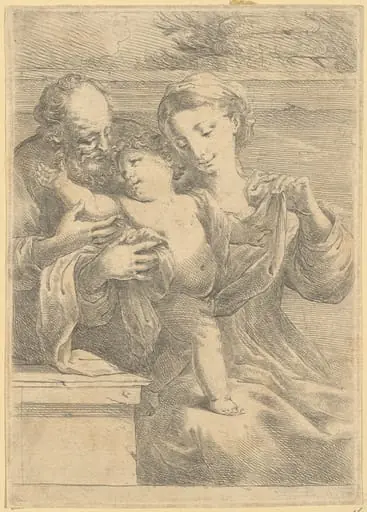
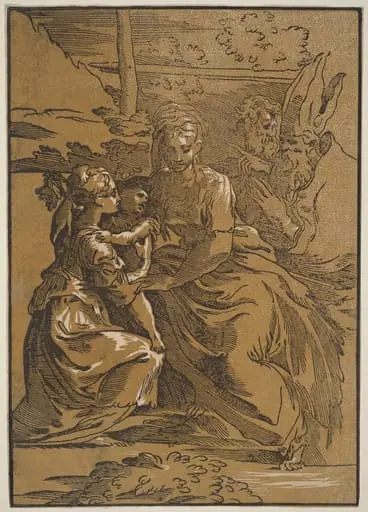
Claude Simpol’s late‑17th‑century drawing presents a three‑figure group identified as the Holy Family. The composition shows Mary, Joseph and a young boy moving along a dusty road, their faces illuminated by gentle light yet marked by solemn expressions. The work is executed in fine line, typical of drawing media, and captures a moment of quiet travel rather than a dramatic event.
Subject & Meaning
The exact narrative is ambiguous; the child’s indeterminate age allows the scene to be read either as the family’s return from the Flight into Egypt or as their departure from the temple after the episode with the doctors. The boy’s slightly outstretched arms evoke the shape of a cross, hinting at the future sacrifice and underscoring the humanity of Christ within the familial setting.
Technique & Style
Simpol employs delicate hatching and subtle tonal gradations to model the figures and the surrounding landscape. The soft illumination on the faces contrasts with the darker, dust‑laden road, creating a restrained emotional atmosphere. The drawing’s linear precision and restrained palette reflect the late Baroque taste for controlled expression.
History & Provenance
Created in the final decades of the 1600s, the drawing has remained within private collections before entering a museum context in the 20th century. Documentation traces its attribution to Simpol through stylistic comparison with his known works and archival references to a series of Holy Family studies.
Context
During the late Baroque period, depictions of the Holy Family often emphasized domestic intimacy and the human aspects of the biblical figures. Simpol’s work aligns with this trend, focusing on the tender yet melancholic bond among the trio rather than on overtly miraculous or narrative details.
Legacy
The drawing illustrates the period’s shift toward psychological nuance in religious art, influencing later artists who explored the inner lives of sacred subjects. Its ambiguous narrative and emotive restraint continue to be cited in studies of devotional imagery and the evolution of Holy Family iconography.
Artist & collection