Artwork
October, Drawing the Honey from the Beehives
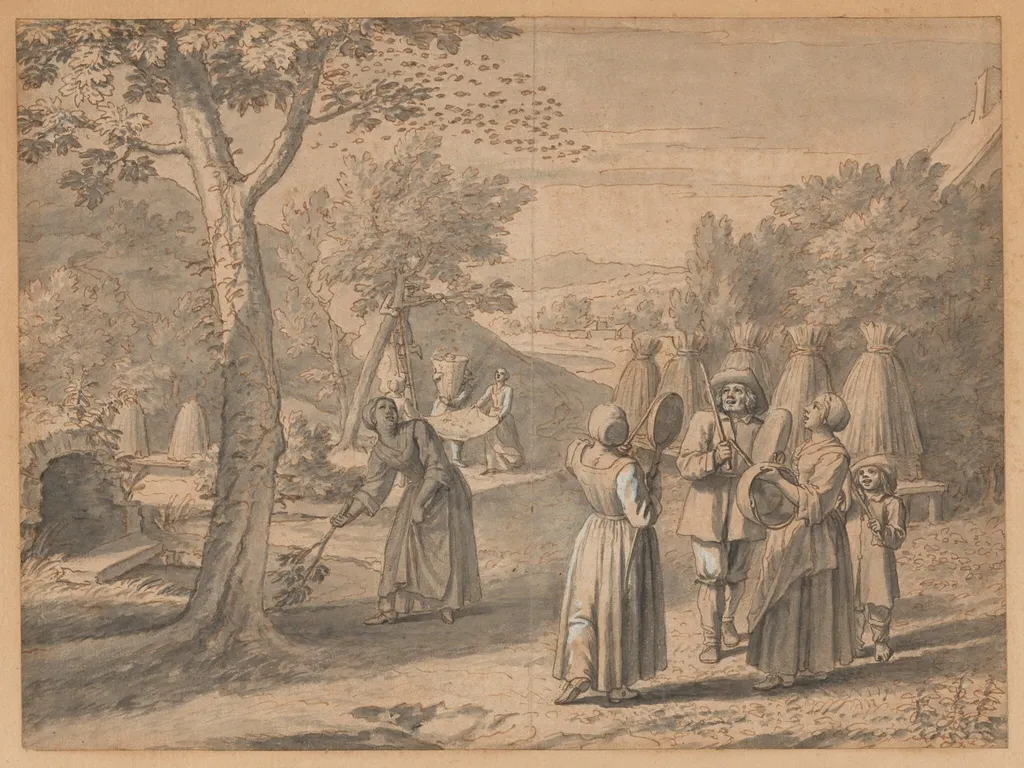
October, Drawing the Honey from the Beehives is a gouache drawing by the Baroque artist Claude Simpol. It dates from 1645 and is held in the collection of the National Gallery of Art.
About this work
Overview
Claude Simpol’s drawing, titled October, Drawing the Honey from the Beehives, dates to around 1645 and is part of the National Gallery of Art’s collection in Washington. Executed on laid paper, the work combines pen, brown ink, a gray wash, and touches of white gouache applied over an initial graphite sketch.
Subject & Meaning
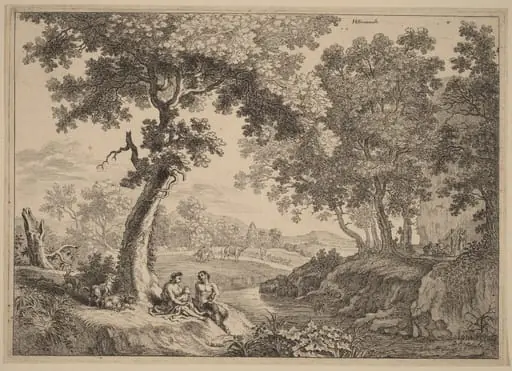
The composition depicts a modest group engaged in autumnal labor within a forested setting. A woman balances a basket, another tends a pot over a fire, while a man supplies music on a flute. Haystacks and trees frame the scene, suggesting a quiet, communal harvest activity.
Technique & Style
Simpol employs a restrained palette of muted browns and grays, achieved through ink lines and delicate washes. White gouache is applied sparingly to highlight areas, creating subtle contrast against the textured laid paper, which resembles aged parchment and reinforces the rustic atmosphere.
History & Provenance
Created in the mid‑17th century, the drawing entered the National Gallery of Art’s holdings through acquisition, though earlier ownership details remain undocumented. Its survival on paper attests to careful preservation practices over the centuries.
Context
The work reflects the period’s interest in genre scenes that celebrate everyday rural life. By focusing on seasonal tasks such as honey‑collecting, Simpol aligns with contemporary French artistic trends that valued modest, narrative depictions of labor and community.
Artist & collection