Artwork
The Return into Egypt
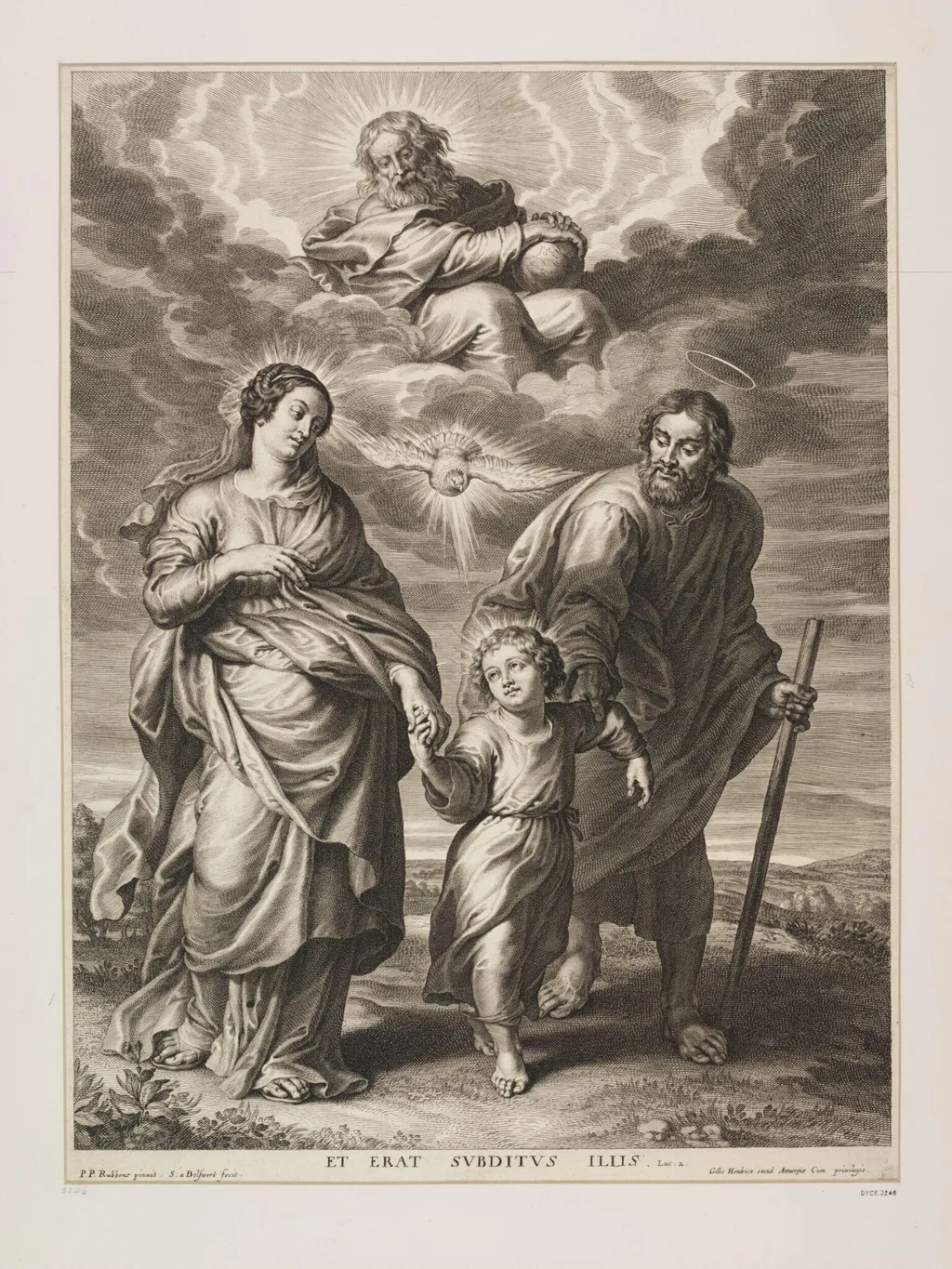
The Return into Egypt is a print by Schelte Bolswert. It dates from 1650 and is held in the collection of the Victoria and Albert Museum.
About this work
Overview
The Latin inscription 'Et erat subditus illis'—'And he was subject to them'—anchors the scene in scriptural narrative, emphasizing humility and obedience.
This 1650 engraving by Schelte Bolswert illustrates the Holy Family’s journey into Egypt, based on a composition by Peter Paul Rubens. Rendered in ink on paper, the print captures a quiet moment of travel, with Mary, Joseph, and the Christ Child moving through a pastoral landscape. The Latin inscription 'Et erat subditus illis'—'And he was subject to them'—anchors the scene in scriptural narrative, emphasizing humility and obedience.
Subject & Meaning
The image portrays the Holy Family in exile, fleeing Herod’s threat, as recounted in the Gospel of Matthew. Mary and Joseph walk in solemn unity, the child between them, his halo marking divine status. The inscription underscores Christ’s submission to earthly authority, even as his identity transcends it. The scene avoids drama, instead conveying quiet devotion and familial tenderness amid uncertainty.
Technique & Style
Bolswert employed fine, controlled lines to render textures of fabric, hair, and terrain, reflecting the precision of Northern European engraving traditions. Chiaroscuro is achieved through graded hatching, lending volume to the figures and depth to the hilly backdrop. The faces are softly modeled, expressions calm and introspective. The composition follows Rubens’s classical balance, with figures arranged in a stable, triangular formation.
History & Provenance
Created in 1650, the print was part of a broader circulation of Rubens’s designs through reproductive engravings, a common practice in 17th-century Europe. Bolswert, a Dutch engraver closely associated with Rubens’s workshop, specialized in translating oil compositions into detailed prints. This work likely served devotional or educational purposes, distributed among collectors and religious institutions across the Low Countries and beyond.
Context
In mid-17th-century Europe, religious imagery remained central to both private devotion and public culture, even amid rising secularism. Engravings like this allowed widespread access to high-art compositions, bridging elite and popular audiences. The choice of the Flight into Egypt reflected contemporary spiritual emphasis on humility, endurance, and divine protection during times of upheaval, including the lingering effects of the Thirty Years’ War.
Legacy
Bolswert’s engraving preserved Rubens’s compositional vision for later generations, influencing how the Holy Family’s journey was visually understood in Protestant and Catholic regions alike. While not widely exhibited today, such prints formed part of the visual vocabulary of Christian iconography, contributing to the enduring representation of sacred narratives in print culture well into the 18th century.
Artist & collection

Artist
Schelte a Bolswert or Schelte Adamsz. Bolswert was a Frisian engraver who worked most of his career in Antwerp where he was one of the lead engravers in Rubens' workshop. He is known for his reproductive works after…

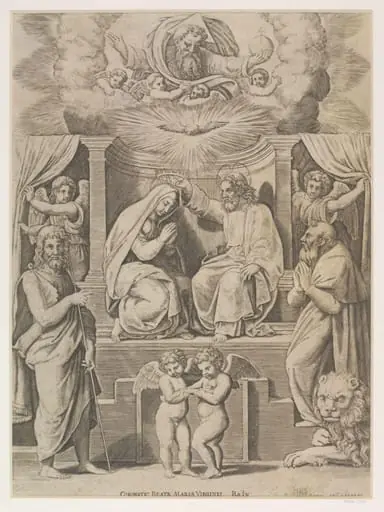 The Virgin Crowned by Jesus Christ
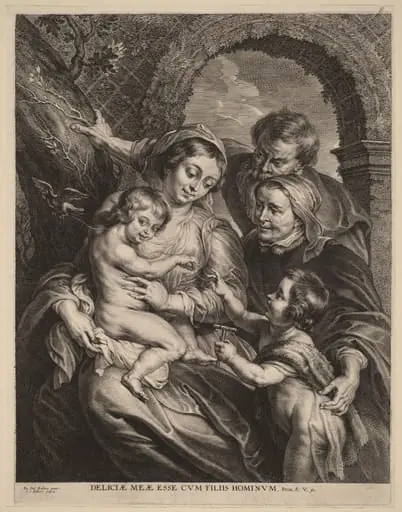 The Holy Family with the Goldfinch
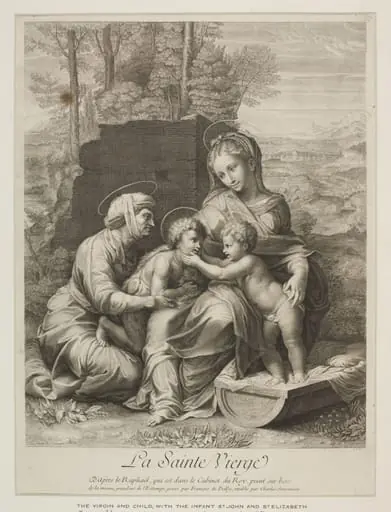 LA SAINTE VIERGE
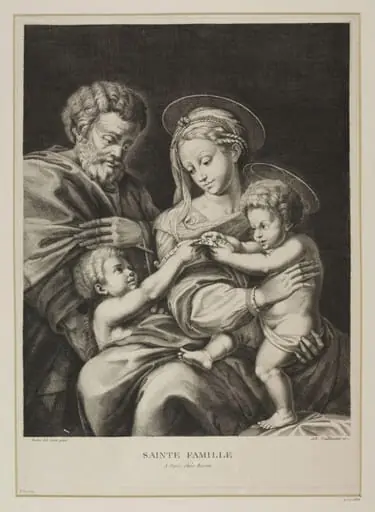 Holy Family
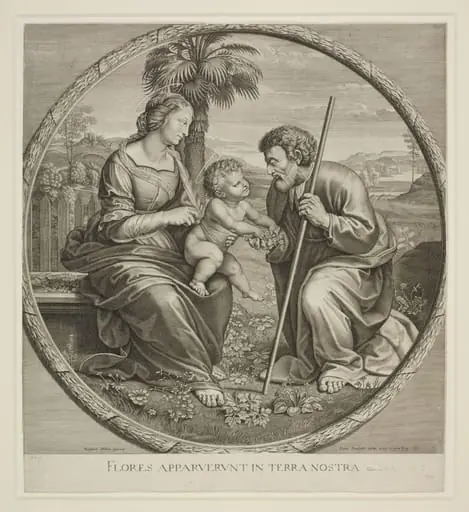 Holy Family
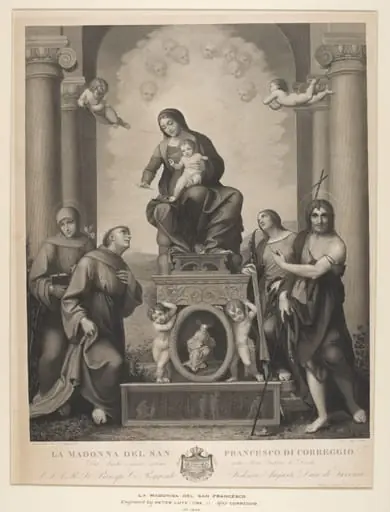 La Madonna Del San Francesco
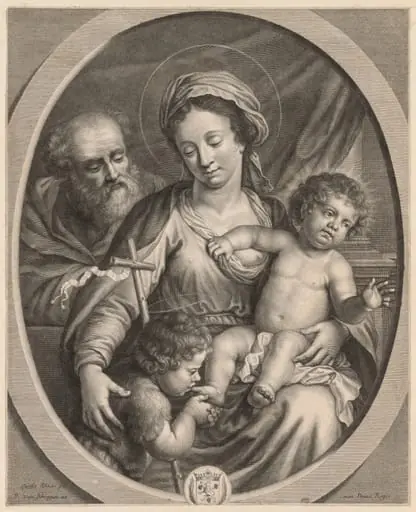 Holy Family and S. John
 Holy Family
 The Transfiguration
 Virgin and Child with Saints Jerome and Catherine and an Angel
 The Return of the Holy Family from Egypt
 Transfiguration