Artwork
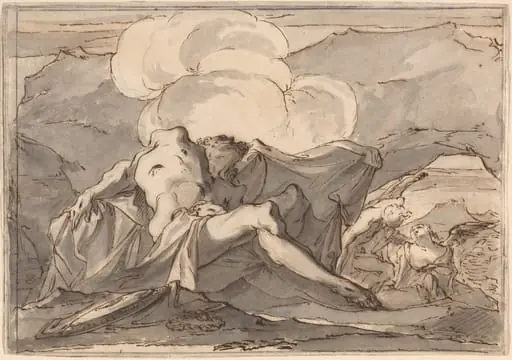
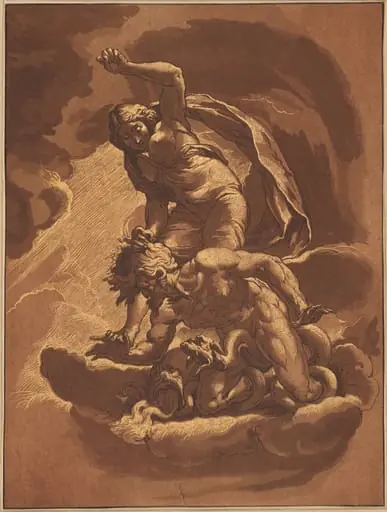
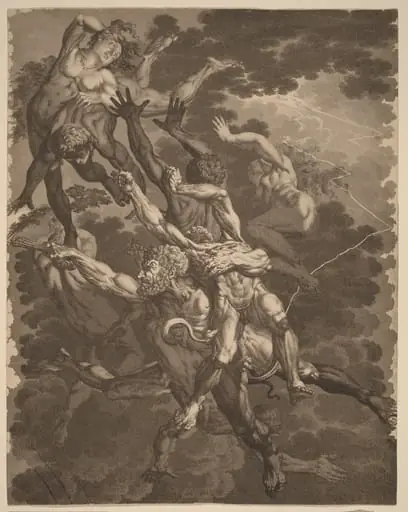
The Fall of Phaeton
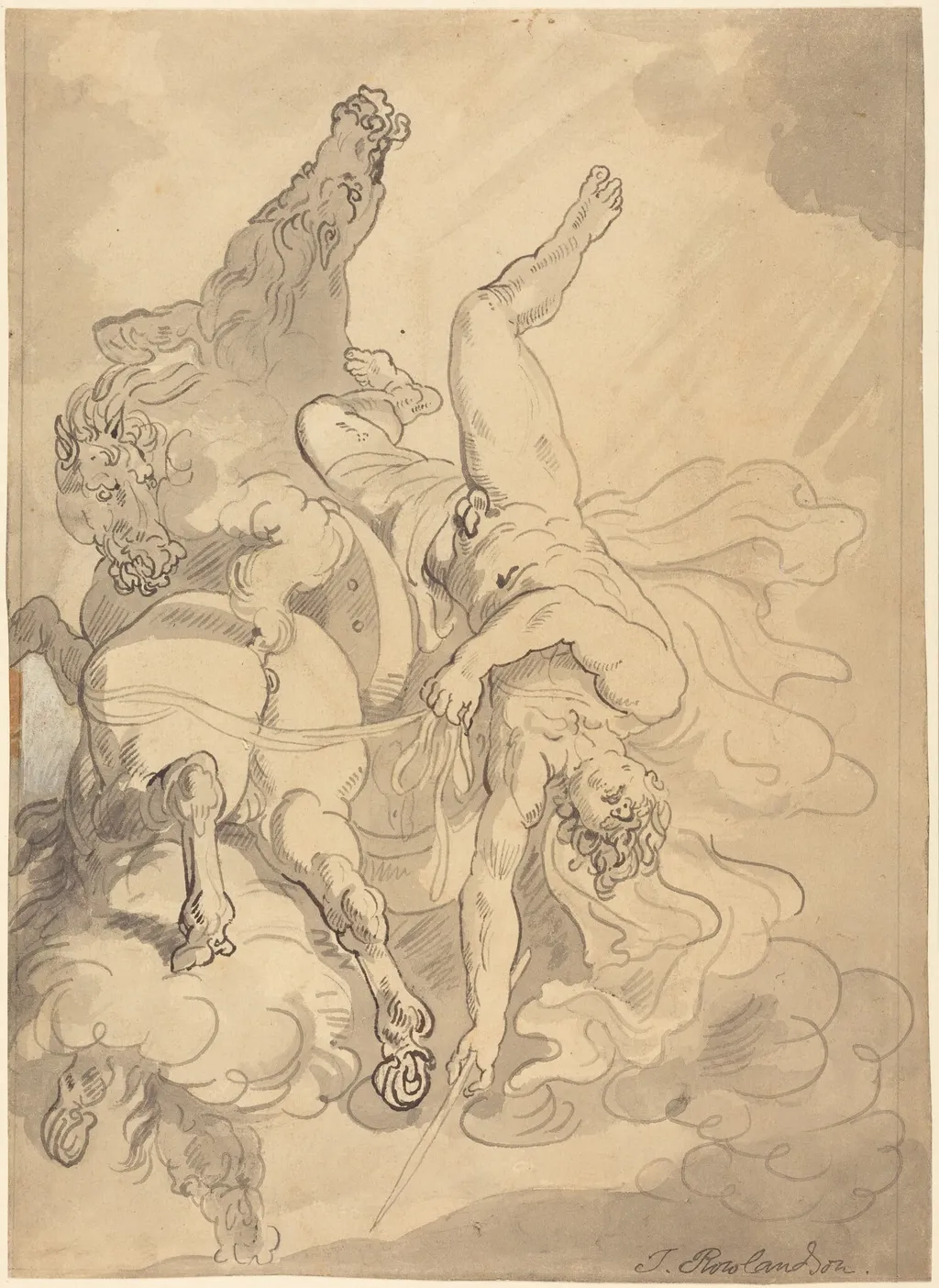
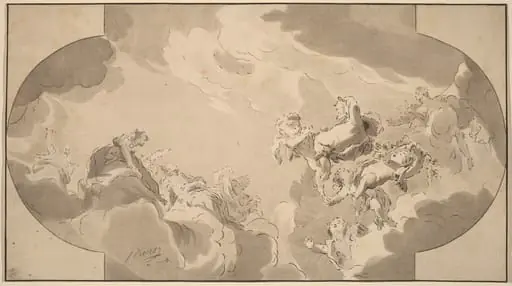
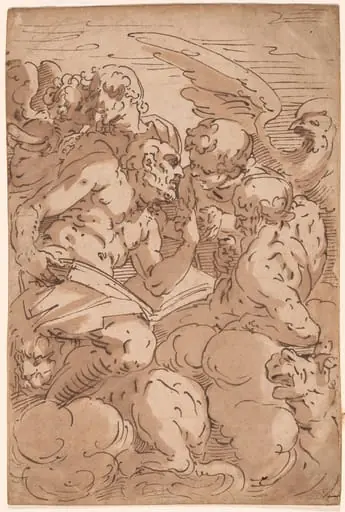
The Fall of Phaeton is an ink drawing by the Romanticist artist Thomas Rowlandson. It dates from 1792 and is held in the collection of the National Gallery of Art.
About this work
Overview
The Fall of Phaeton is a drawing created by Thomas Rowlandson in 1792 using pen, ink, wash, and gouache on wove paper. It exemplifies the artist's skill in capturing dynamic scenes with expressive lines and textures.
Subject & Meaning
The drawing depicts a chaotic scene of a man plummeting through the air, surrounded by swirling clouds and entangled figures. The subject is likely drawn from mythology, referencing the story of Phaeton, and is characteristic of Rowlandson's use of classical themes for satirical or humorous effect.
Technique & Style
Rowlandson employed a range of techniques to convey a sense of turmoil and movement. Quick, sketchy lines and smudged ink create a rough, unfinished texture, while corrections in white gouache add visual complexity. The overall effect is one of frenetic energy and instability.
Context
The Fall of Phaeton reflects Rowlandson's broader practice as a caricaturist and illustrator. Active during the Georgian Era, he frequently depicted contemporary society and politics in a humorous or satirical style, often through caricature and illustration of novels and humorous books.
Artist & collection
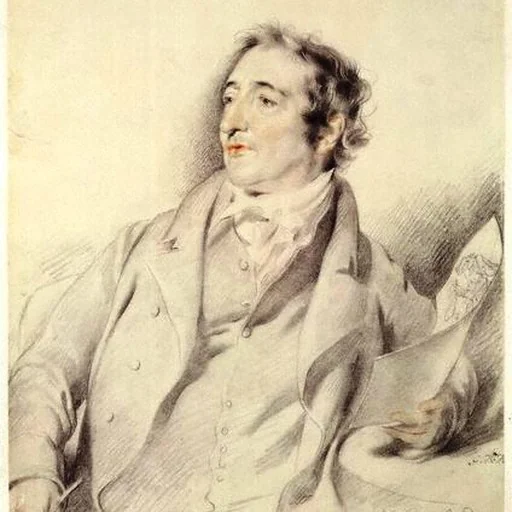
Artist
Thomas Rowlandson (; 13 July 1757 – 21 April 1827) was an English artist and caricaturist of the Georgian Era, noted for his political satire and social observation.