Artwork
Nicolas Poussin
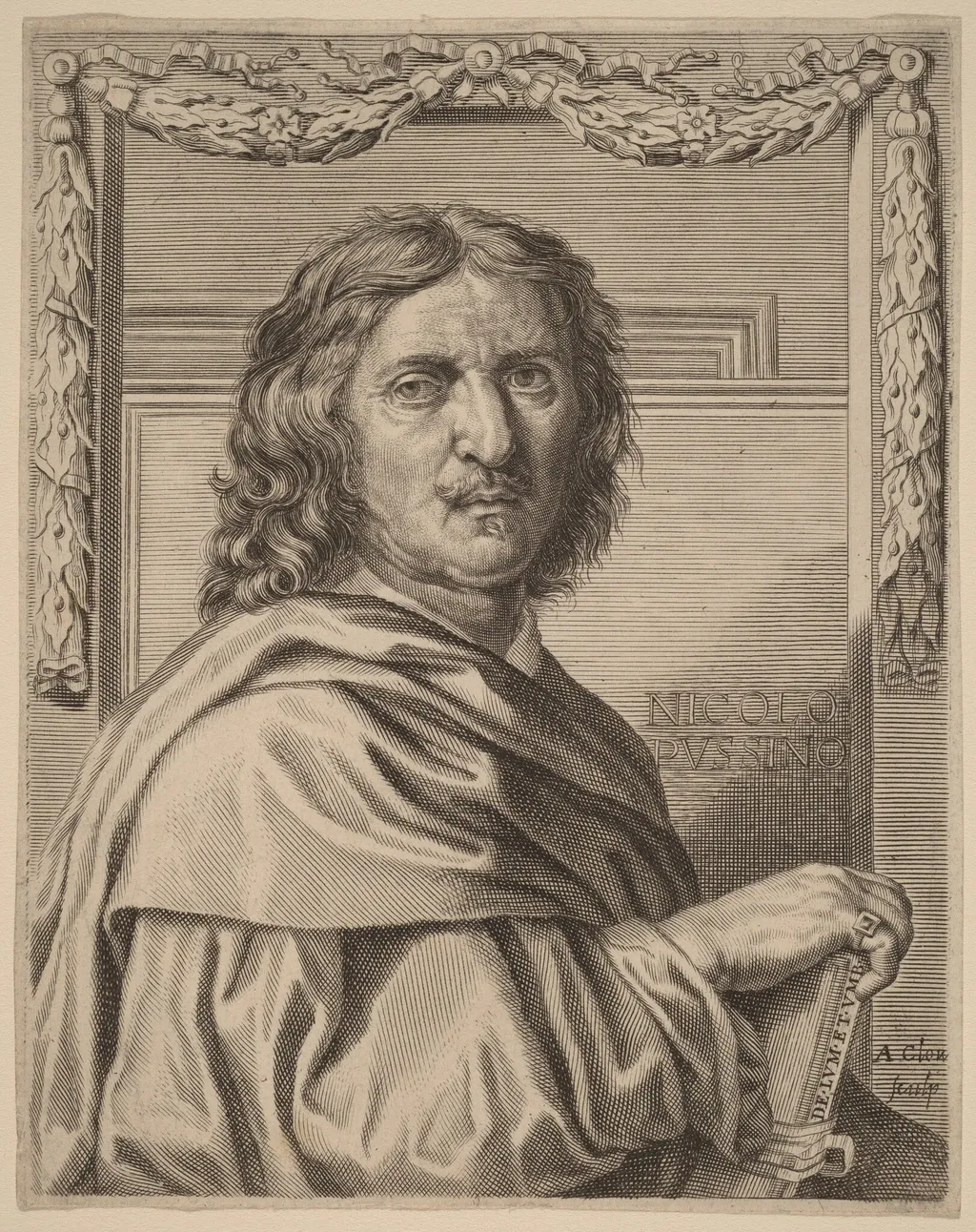
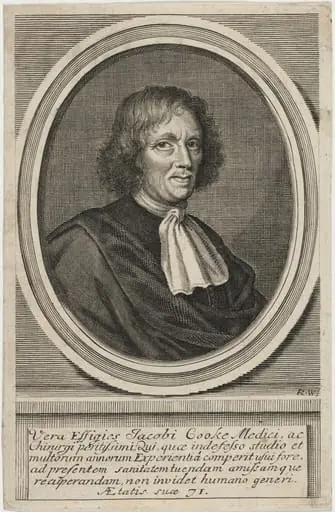
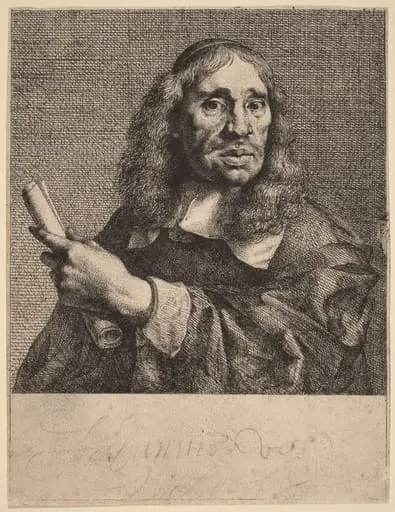
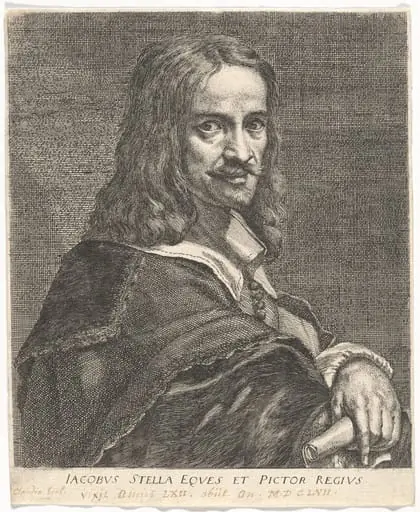
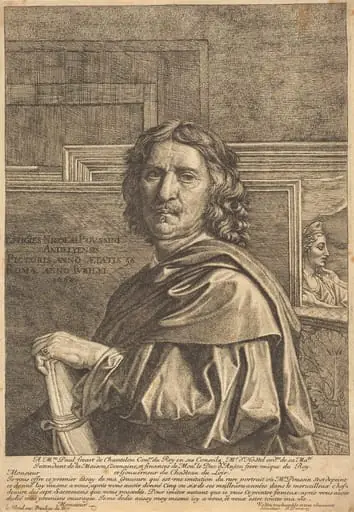
Nicolas Poussin is an ink print by the Baroque artist Albert Clouet. It dates from 1658 and is held in the collection of the National Gallery of Art.
About this work
Overview
A decorative border of floral and scroll motifs frames the portrait, typical of 17th-century print conventions.
This black-and-white print, made in 1658, depicts the French painter Nicolas Poussin. Created by Albert Clouet, it is an engraving on laid paper, not a painting. The image captures Poussin in profile, rendered with precise linear detail and subtle tonal gradations. A decorative border of floral and scroll motifs frames the portrait, typical of 17th-century print conventions. The work serves as a formal portrait intended for reproduction and dissemination among art circles.
Subject & Meaning
The portrait presents Poussin as a learned, composed figure, reflecting his stature in the art world. His wavy hair and high-collared garment suggest scholarly dignity, while the restrained expression conveys intellectual seriousness. The absence of symbolic objects or setting emphasizes his identity as a thinker and artist rather than a nobleman. The inscription beneath his shoulder confirms his name, anchoring the image as a record of personal and professional identity.
Technique & Style
Clouet employed fine, controlled lines to model Poussin’s features and fabric folds, using cross-hatching to suggest volume and shadow. The engraving technique, involving incised lines on a metal plate, allowed for intricate detail and consistent reproduction. The background remains minimal, directing focus to the face and attire. The ornamental border, etched with botanical motifs, adds decorative structure without distracting from the subject’s presence.
History & Provenance
Created in 1658, the engraving was made during Poussin’s lifetime, likely to accompany published writings or serve as a portrait for collectors. Albert Clouet, known for his portrait engravings, produced this image as part of a broader trend of disseminating likenesses of prominent cultural figures. The print’s survival in multiple institutional collections suggests it was widely circulated and valued as a reliable representation of the artist.
Context
In mid-17th-century France, engraved portraits were essential tools for establishing artistic reputation beyond physical presence. Poussin, working in Rome, was a key figure in classical painting, and such prints helped solidify his influence in Parisian circles. Clouet’s work aligns with the era’s interest in documenting intellectual and artistic elites, using print to bridge geographic and social divides among connoisseurs.
Legacy
This engraving remains one of the most recognized visual records of Nicolas Poussin. Its clarity and formal tone have made it a standard reference in art historical literature. Though later portraits and paintings exist, Clouet’s version endures for its proximity to the sitter’s lifetime and its technical precision. It continues to inform how Poussin is visually understood in academic and museum contexts.
Artist & collection