Artwork
Fabriques à Tivoli (Buildings at Tivoli)
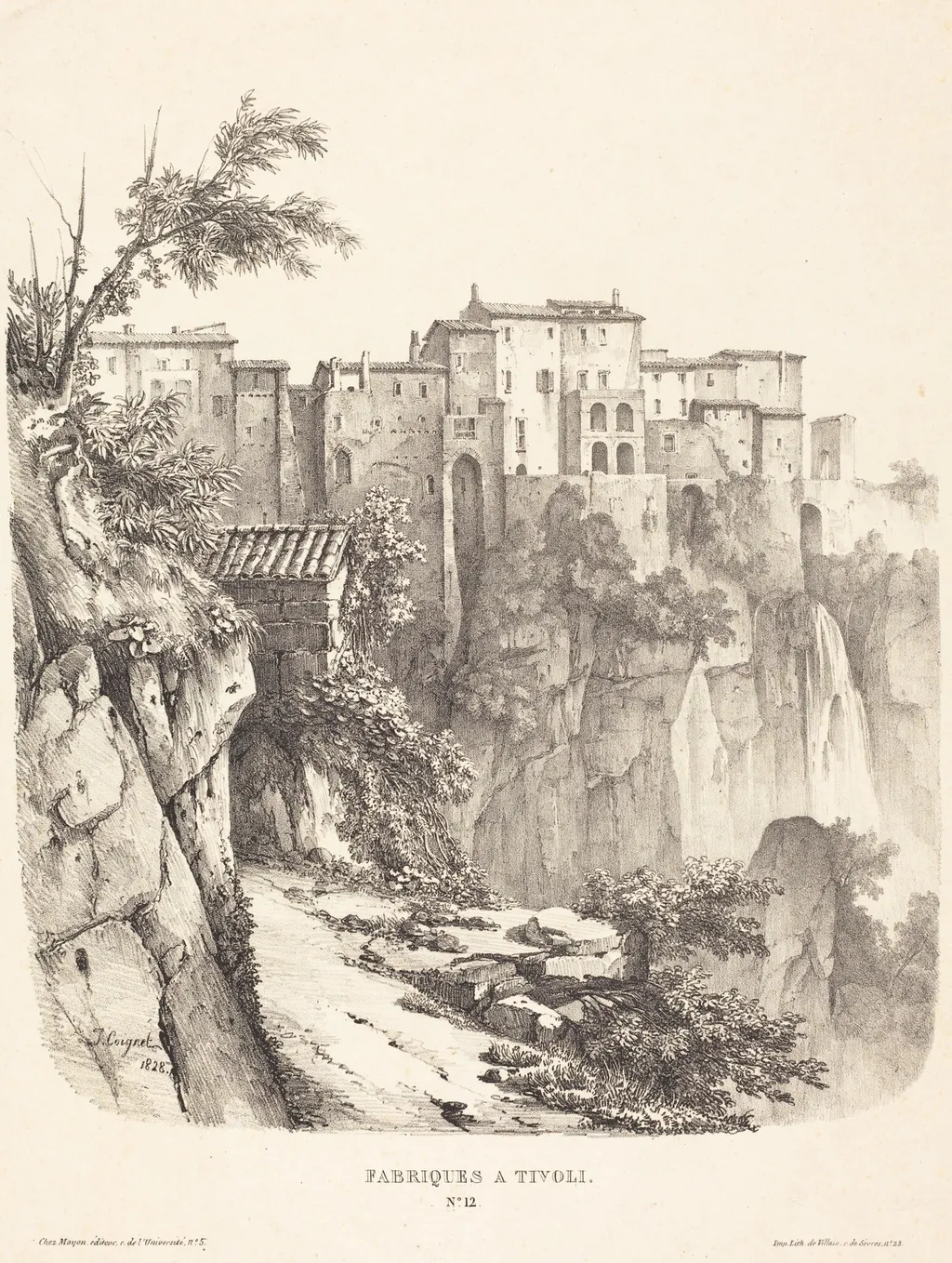
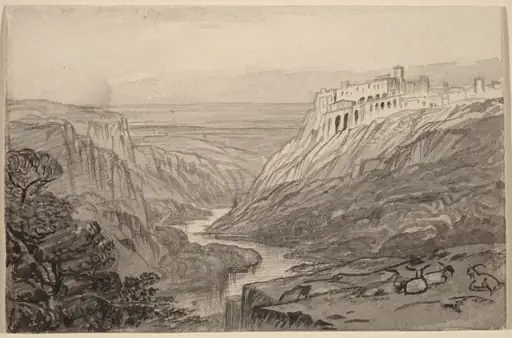
Fabriques à Tivoli (Buildings at Tivoli) is a crayon print by the Romanticist artist Jules Coignet. It dates from 1828 and is held in the collection of the National Gallery of Art.
About this work
Overview
Created on wove paper, the work exemplifies his method of capturing architectural and topographical details through direct observation.
Jules Louis Philippe Coignet, a French landscape artist trained under Jean-Victor Bertin, produced this 1828 crayon lithograph as part of a series documenting European sites during his travels. Created on wove paper, the work exemplifies his method of capturing architectural and topographical details through direct observation. Coignet exhibited frequently at the Paris Salon and was recognized with a gold medal in 1824, later receiving the Legion of Honour in 1836 for his contributions to landscape art.
Subject & Meaning
The scene depicts a cluster of stone structures clinging to a cliffside near Tivoli, Italy, with winding paths, scattered vegetation, and arched windows suggesting habitation. The composition avoids dramatic narrative, instead emphasizing quiet coexistence between built forms and natural terrain. The absence of human figures and the muted tonality invite contemplation, aligning with a Romantic-era interest in solitude and the enduring presence of place.
Technique & Style
Coignet employed crayon lithography to achieve soft, granular textures that mimic pencil sketches on paper. The lithographic process allowed him to render subtle gradations of tone, enhancing the atmospheric depth of the cliff and the delicate outlines of buildings. Lines are restrained and fluid, avoiding sharp contrasts; the gentle curves of architecture and foliage reinforce a sense of harmony between man-made and natural elements.
History & Provenance
Created during Coignet’s period of active travel across Europe, this print likely originated from a sketch made on-site in Tivoli. As a lithograph, it was part of a small edition intended for dissemination among collectors and art enthusiasts. No specific provenance is documented beyond its exhibition history, but its production aligns with 19th-century practices of translating travel drawings into reproducible prints for broader audiences.
Context
In the 1820s, French artists increasingly turned to topographical subjects as part of a broader cultural fascination with antiquity and the picturesque. Coignet’s work reflects this trend, situating itself within a tradition of landscape documentation that valued accuracy and mood over idealization. His focus on Italian sites like Tivoli resonated with contemporary interest in classical ruins and the sublime qualities of the Mediterranean landscape.
Legacy
Coignet’s prints, including this one, contributed to the visual record of European sites during a period of growing interest in cultural heritage. While not widely known today, his methodical approach to landscape recording influenced later generations of topographical artists. His works remain in institutional collections as examples of early 19th-century lithographic practice and the quiet, observational spirit of Romantic-era drawing.
Artist & collection

Artist
Jules Louis Philippe Coignet was born in Paris in 1798 and died there in 1860. He was a noted landscape painter who had studied under Jean-Victor Bertin. He travelled a good deal in his own country as well as elsewhere…

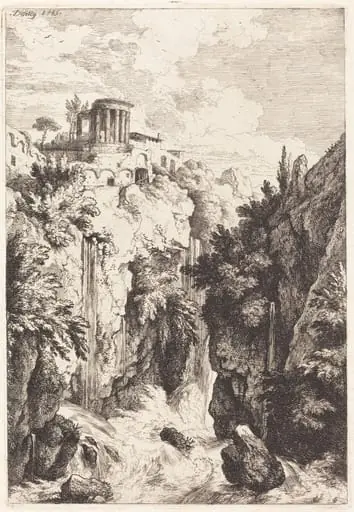 Temple of the Sibyl, Tivoli
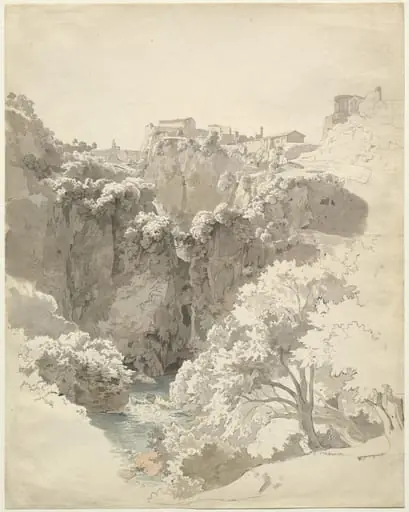 Tivoli and the Temple of the Sibyl Above the Aniene Gorge
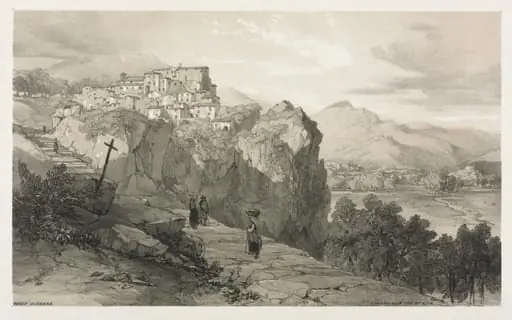 Rocca Giovane
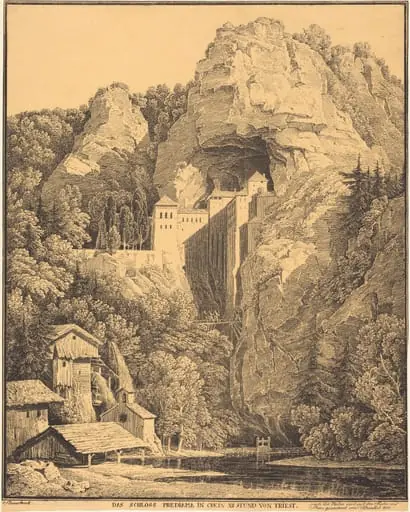 Das Schloss Prediama in Crein XII Stund: von Triest (Predjama Castle in Carniola, Twelve Hours from Trieste)
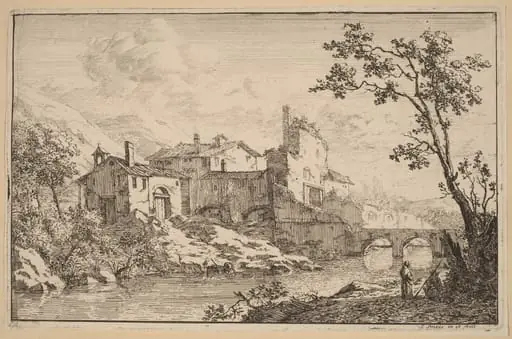 Houses at the Side of a River
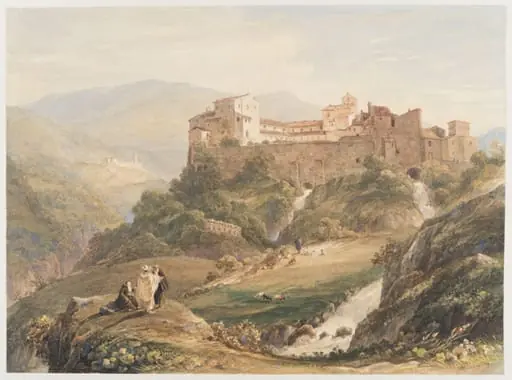 Italian landscape
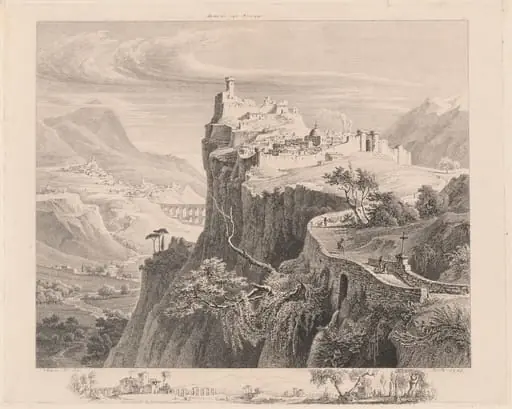 Ovindoli negli Abruzzi
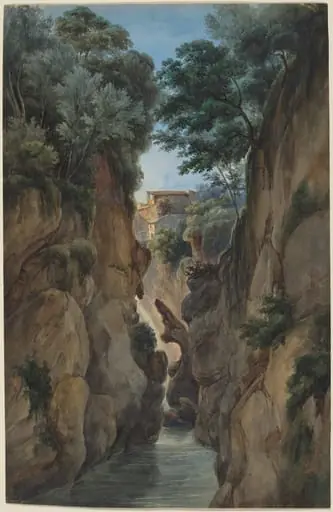 View of a Waterfall through a Ravine
 Goats Resting above a River Gorge (Narni, Italy)