Artwork
Landscape with Sandpit in the Fontainebleau Forest
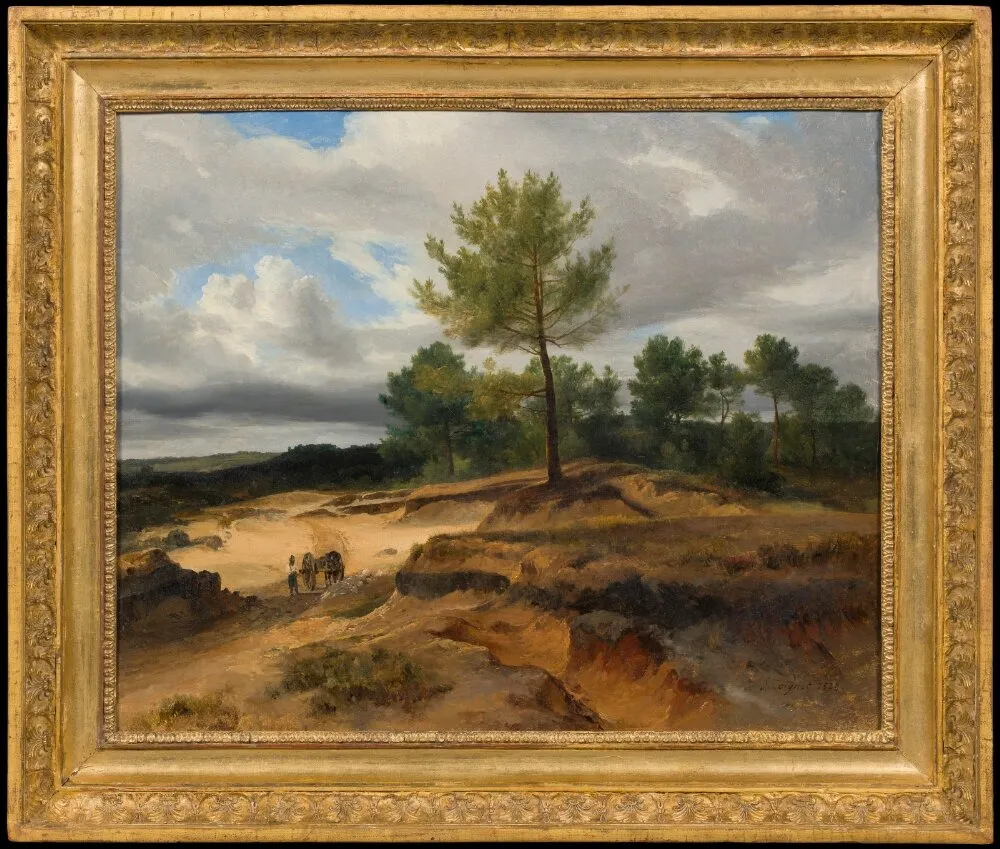
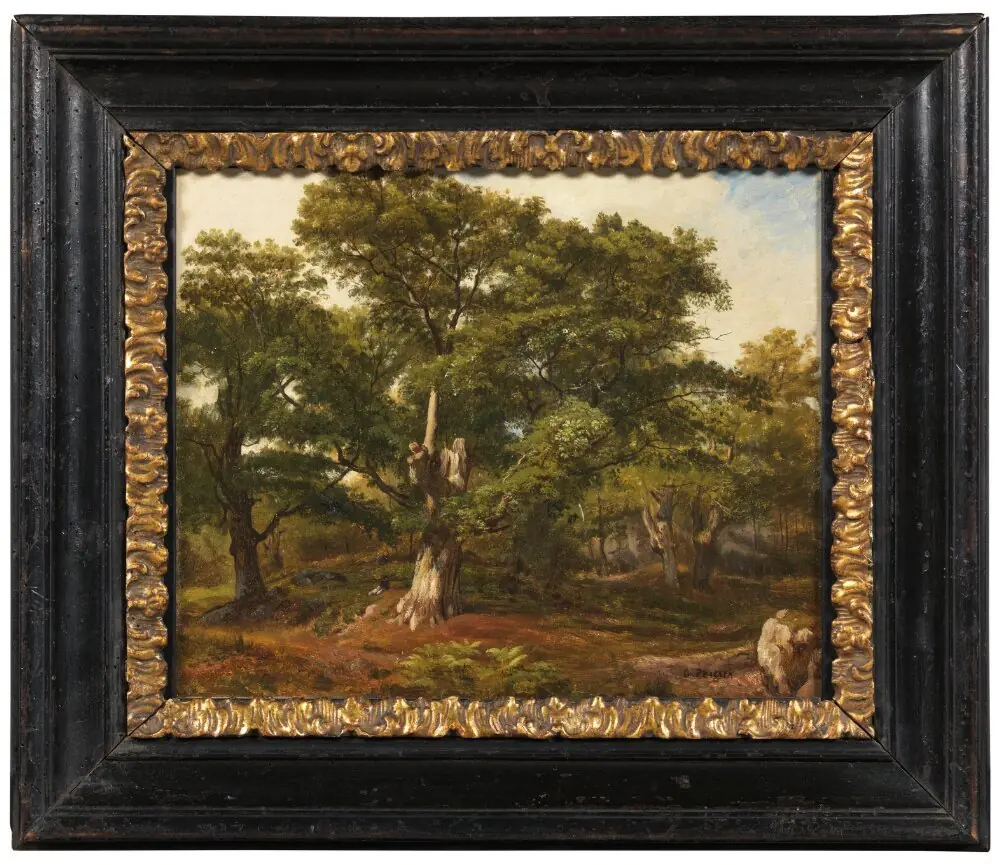
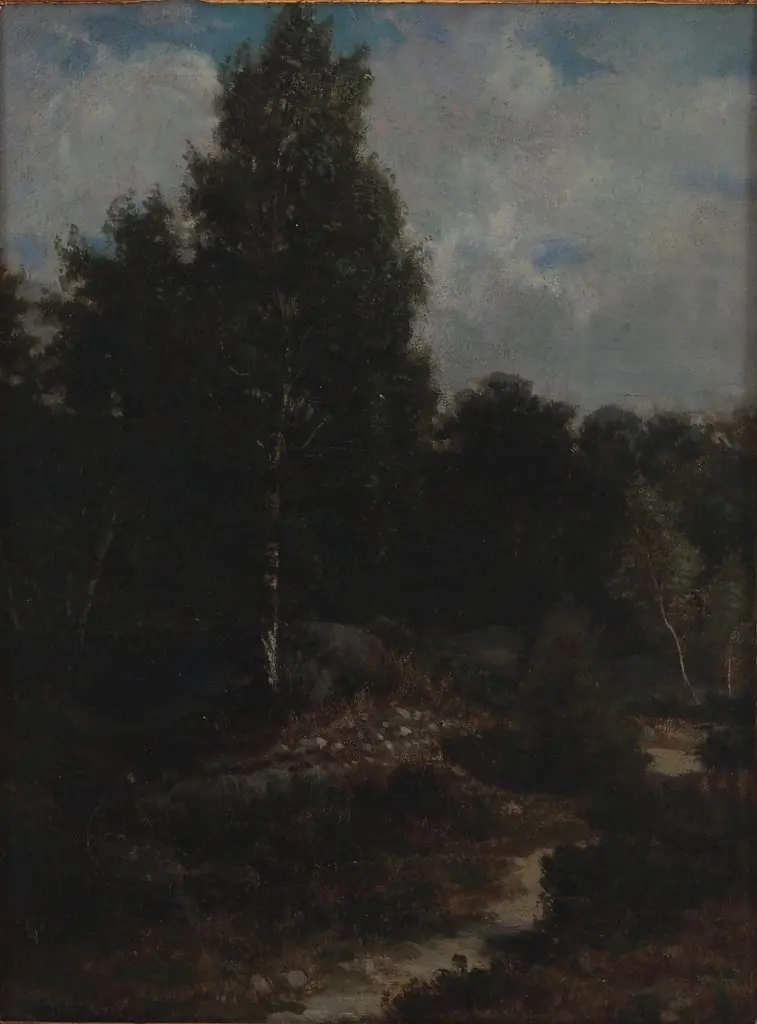
Landscape with Sandpit in the Fontainebleau Forest is an oil painting by the Barbizon school artist Jules Coignet. It dates from 1828 and is held in the collection of the Nationalmuseum.
About this work
Overview
Coignet, trained in the academic tradition under Jean-Victor Bertin, was known for his detailed observations of natural landscapes.
Painted in 1828 by Jules Coignet, this oil-on-canvas work captures a quiet corner of the Fontainebleau Forest near a sandpit. Coignet, trained in the academic tradition under Jean-Victor Bertin, was known for his detailed observations of natural landscapes. The painting reflects his commitment to plein air study and aligns with early tendencies of the Barbizon School, though he remained somewhat distinct in his broader travels and subject matter.
Subject & Meaning
The scene portrays a modest, unidealized stretch of woodland, where human activity is minimal: two figures and a horse are present but do not dominate the composition. The sandpit suggests local industry, yet the focus remains on the quiet interplay of earth, foliage, and light. There is no narrative drama—only an attentive rendering of a working landscape, conveying a sense of calm endurance rather than romantic grandeur.
Technique & Style
Coignet employed visible, deliberate brushwork to convey texture in the soil, bark, and foliage, avoiding smooth academic finishes. The palette is restrained, dominated by earthy browns and muted greens, with soft transitions in the sky suggesting overcast conditions. The composition is grounded in close observation, with careful attention to the way light filters through trees and settles on uneven ground, reinforcing a sense of tangible reality.
History & Provenance
Created during Coignet’s most active period, the painting was produced shortly after he received a gold medal at the Paris Salon in 1824 and before his 1836 appointment as a Chevalier of the Legion of Honour. It entered the collection of the Nationalmuseum in Stockholm, where it remains today. Its presence there reflects 19th-century Scandinavian interest in French landscape painting and the growing appreciation for naturalistic scenes beyond idealized classical themes.
Context
While Coignet was not a core member of the Barbizon School, his work in Fontainebleau coincided with its emergence. Artists like Théodore Rousseau and Jean-François Millet were also drawn to the forest’s unspoiled character, seeking authenticity over studio conventions. Coignet’s approach—detailed, observational, and unembellished—resonated with this shift, even as his broader travels set him apart from the group’s more localized focus.
Legacy
Coignet’s work, including this painting, contributed to the broader acceptance of landscape as a serious subject in French art. Though less celebrated than his contemporaries, his consistent output and technical discipline helped pave the way for later realist and impressionist approaches. His presence in major collections underscores his role as a bridge between academic tradition and the emerging naturalist movement.
Artist & collection

Artist
Jules Louis Philippe Coignet was born in Paris in 1798 and died there in 1860. He was a noted landscape painter who had studied under Jean-Victor Bertin. He travelled a good deal in his own country as well as elsewhere…