Artwork
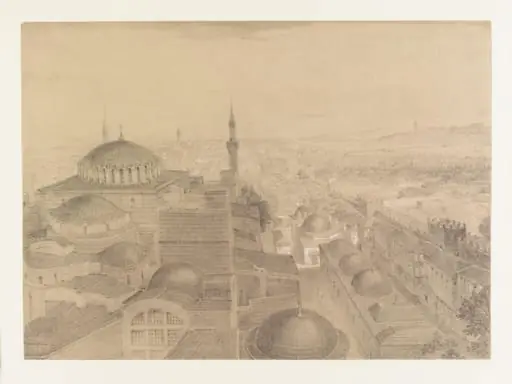
Constantinople with Hagia Sophia
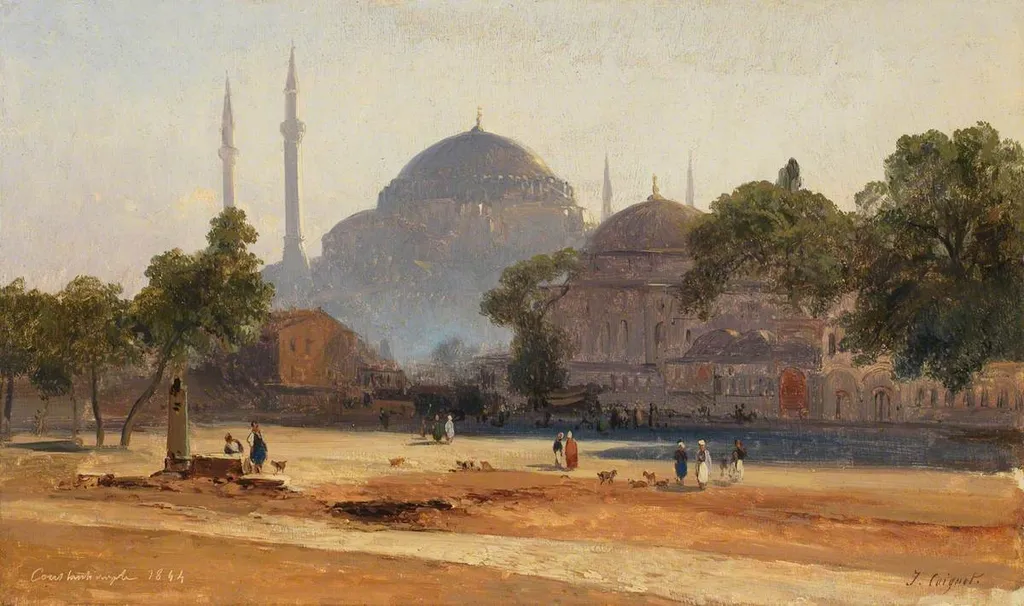
Constantinople with Hagia Sophia is an oil painting by Jules Coignet. It dates from 1844 and is held in the collection of the Fitzwilliam Museum.
About this work
Overview
The work is now held in the Fitzwilliam Museum’s collection, representing his broader interest in topographical landscapes of historic urban centers.
Painted in 1844 by French artist Jules Louis Philippe Coignet, this oil on canvas depicts Constantinople with Hagia Sophia as its focal point. Coignet, trained under Jean-Victor Bertin and a regular exhibitor at the Paris Salon, captured the city during one of his travels through the Eastern Mediterranean. The work is now held in the Fitzwilliam Museum’s collection, representing his broader interest in topographical landscapes of historic urban centers.
Subject & Meaning
The painting presents a bustling urban scene centered on Hagia Sophia, its massive dome dominating the skyline. Surrounding structures, trees, and figures engaged in everyday activities suggest a lived-in, functioning city rather than a monument isolated in time. The composition emphasizes harmony between architecture and daily life, reflecting 19th-century European fascination with the East as both exotic and familiar.
Technique & Style
Coignet employed oil glazing to build luminous atmospheric effects, layering thin translucent pigments to achieve depth in the sky and subtle shifts in light across surfaces. The warm tones of the buildings contrast with the cool blues of the sky and foliage, enhancing spatial clarity. His brushwork is precise yet unobtrusive, prioritizing observational accuracy over dramatic expression, characteristic of his academic training.
History & Provenance
Created during Coignet’s travels in the Ottoman Empire, the painting entered the Fitzwilliam Museum’s collection in the 19th century, likely through acquisition or bequest. Its preservation reflects early Western institutional interest in documenting foreign landscapes. No significant alterations or reworkings are documented, and the work has remained in stable condition since its arrival at the museum.
Context
In the 1840s, European artists increasingly traveled to the Eastern Mediterranean, drawn by historical sites and perceived cultural contrasts. Coignet’s work aligns with a broader trend of topographical painting that sought to record architecture and urban life with documentary intent. Unlike romanticized Orientalist scenes, his approach leans toward restrained observation, grounded in direct study rather than fantasy.
Legacy
Coignet’s painting contributes to a body of 19th-century European landscape work that documented non-Western cities with relative fidelity. While not widely known today, his oeuvre represents a quiet but persistent strand of academic travel art—valued more for its historical record than for stylistic innovation. The work remains a reference for studies of how Western artists perceived and rendered Constantinople before its modern transformation.
Artist & collection

Artist
Jules Louis Philippe Coignet was born in Paris in 1798 and died there in 1860. He was a noted landscape painter who had studied under Jean-Victor Bertin. He travelled a good deal in his own country as well as elsewhere…

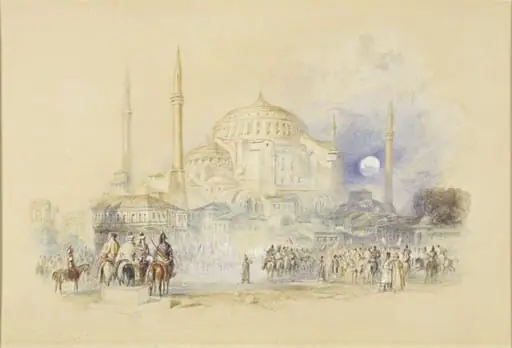 Hagia Sophia, Constantinople
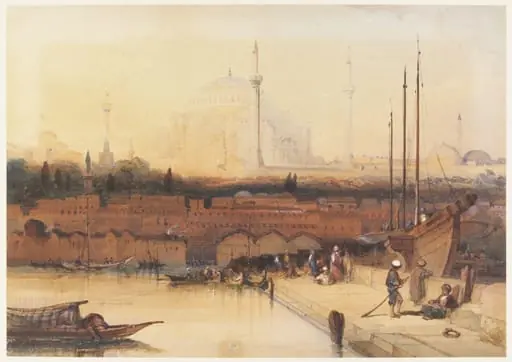 St. Sophia, Constantinople
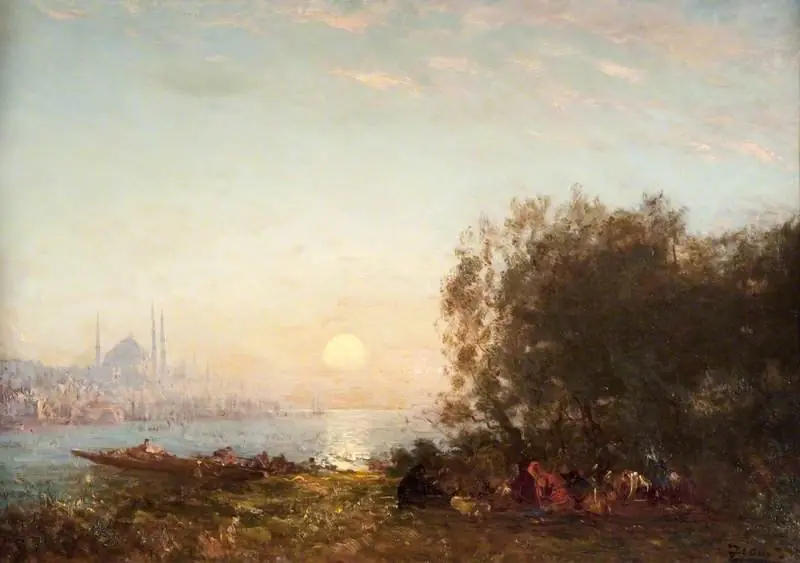 Constantinople, Sunset
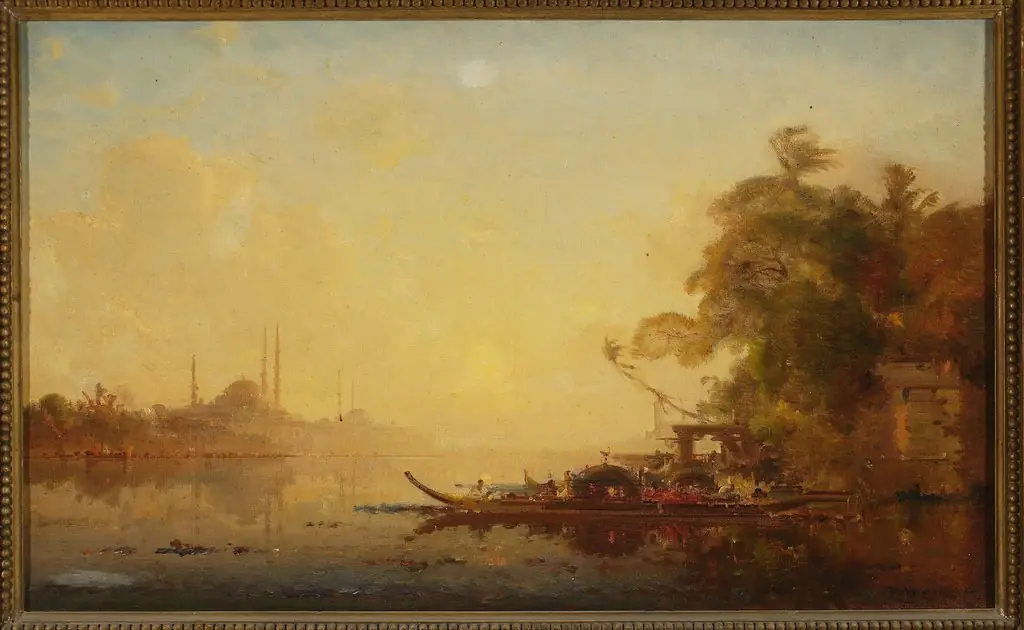 View of Constantinople
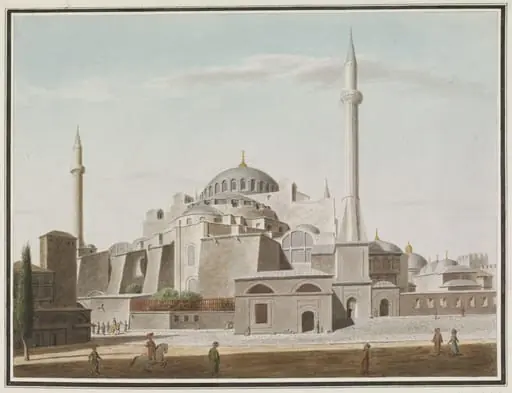 Haghia Sophia
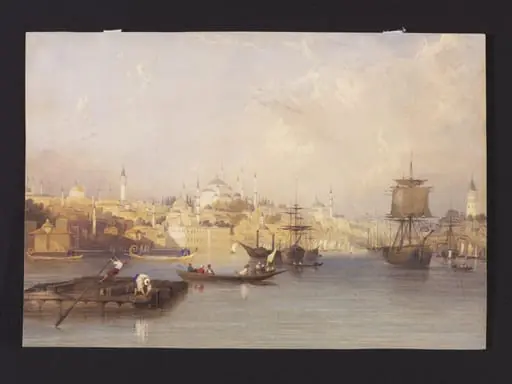 Constantinople. From the Entrance to the Golden Horn
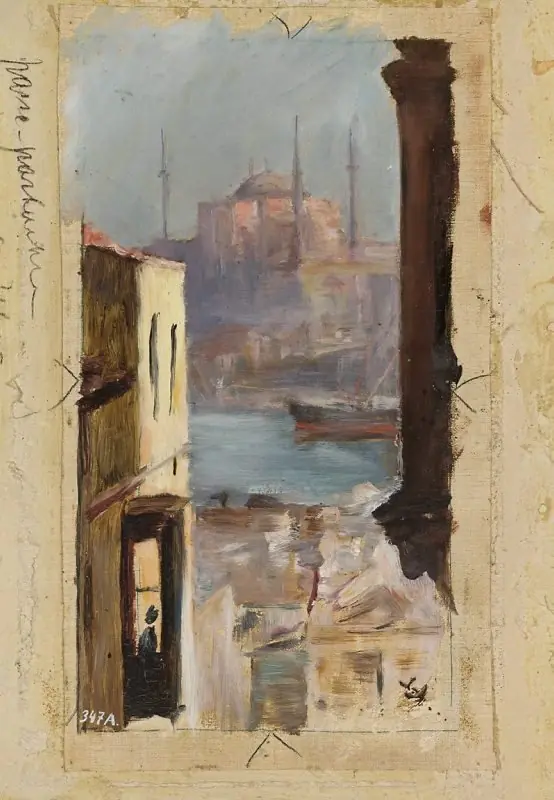 Hagia Sophia. From the journey to Constantinople
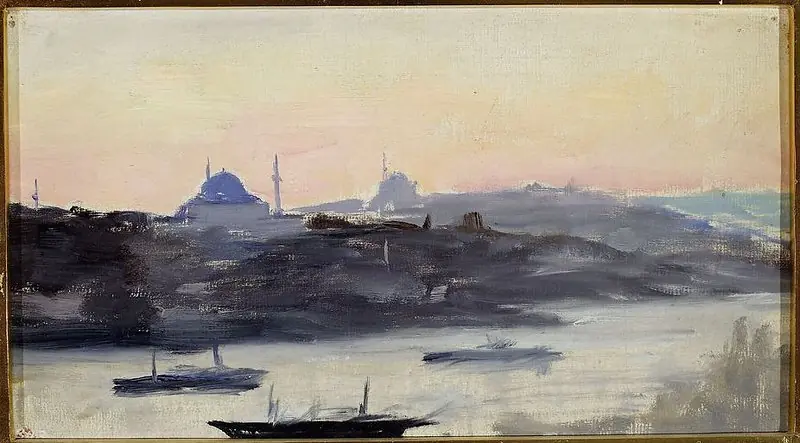 View of the city in the evening. From the journey to Constantinople
 Panorama de Constantinople