Artwork
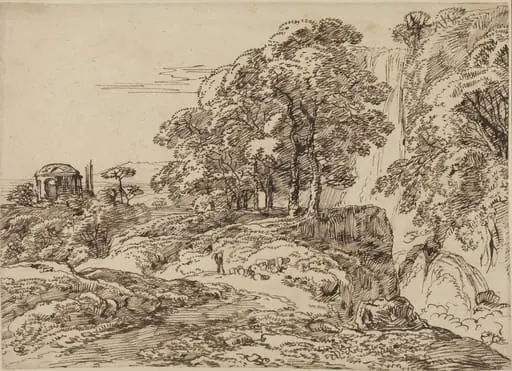
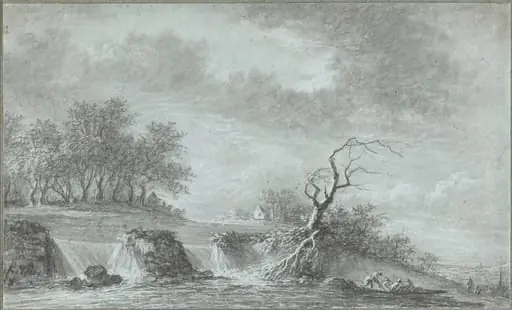
Landscape with a Waterfall
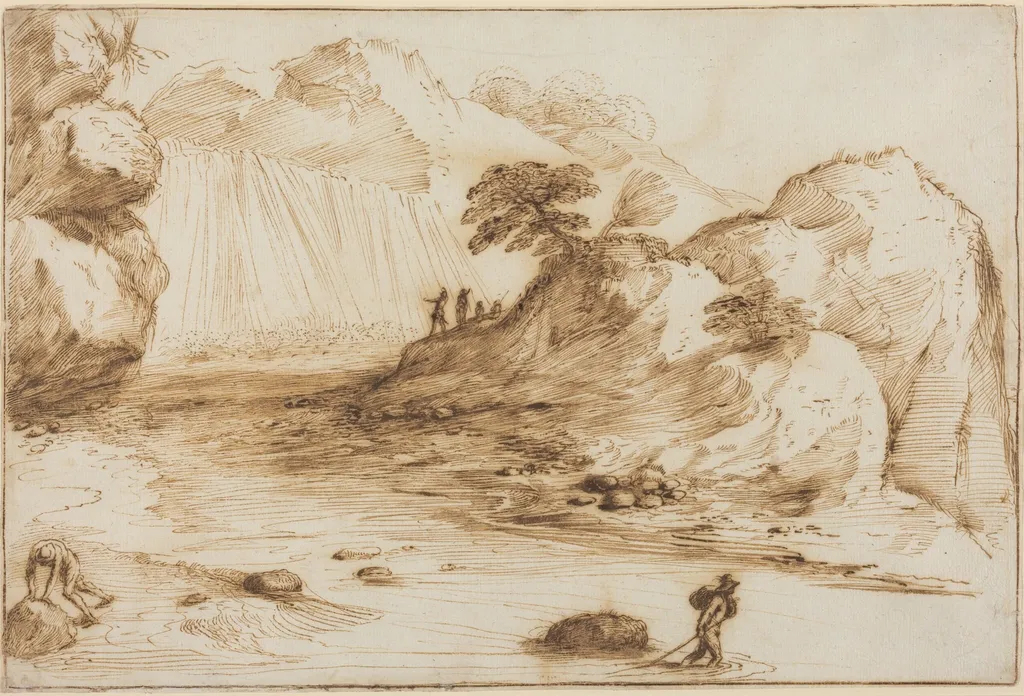
Landscape with a Waterfall is an ink drawing by the Renaissance artist Guercino. It dates from 1628 and is held in the collection of the National Gallery of Art.
About this work
Overview
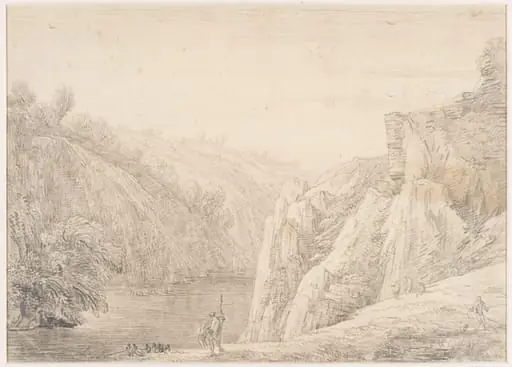
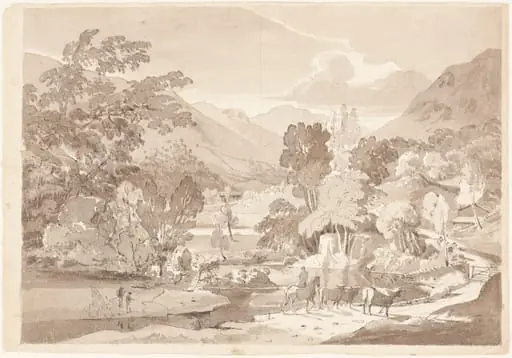
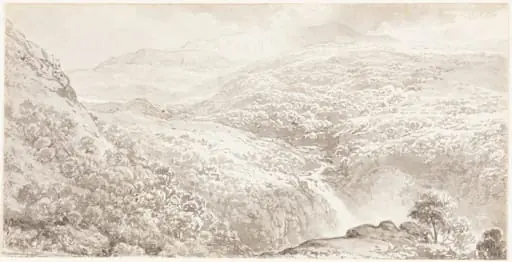
Created in 1628, *Landscape with a Waterfall* is a pen drawing executed in brown ink on laid paper. The work belongs to the landscape genre and showcases the early Baroque period’s interest in direct observation of nature. Its composition centers on a steep cascade set against a craggy terrain, rendered with confident, fluid lines that emphasize movement and light.
Subject & Meaning
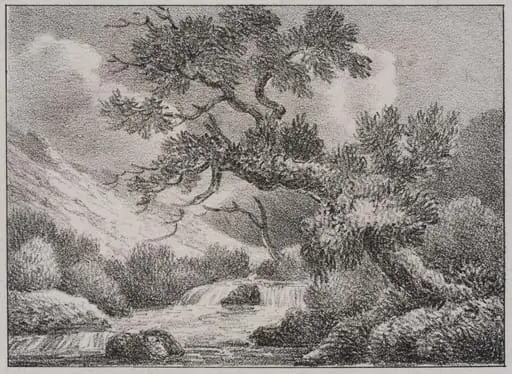
The drawing presents a natural scene in which water tumbles over rocks, forming a vivid waterfall that dominates the picture plane. The surrounding rugged landforms frame the cascade, suggesting a remote, untamed environment. By focusing on the physicality of the water and stone, the piece reflects the artist’s commitment to a vigorous naturalism that captures the immediacy of the landscape.
Technique & Style
The artist employs varied hatching and cross‑hatching to suggest depth, surface tension, and the play of light on water.
Executed with pen and brown ink on laid paper, the work relies on expressive linework to delineate form and texture. The artist employs varied hatching and cross‑hatching to suggest depth, surface tension, and the play of light on water. The drawing’s luminous quality arises from the contrast between the dark ink and the paper’s natural tone, a hallmark of the artist’s early Baroque draftsmanship.
History & Provenance
The drawing was produced by Giovanni Francesco Barbieri, known as Guercino, during his formative years before his relocation to Rome and Bologna. While his later oeuvre shifted toward a more balanced, classical approach, this piece retains the energetic, spontaneous handling characteristic of his early output. Its survival on paper provides insight into Guercino’s developmental practice as a draftsman.
Context
In the early seventeenth century, Italian artists increasingly explored landscape as an independent subject, moving beyond purely decorative backgrounds. Guercino’s treatment aligns with this trend, integrating natural observation with Baroque dynamism. The work reflects the period’s fascination with dramatic natural phenomena and the artist’s own training in the Cento region, where rugged terrain offered ample study material.
Artist & collection
Artist
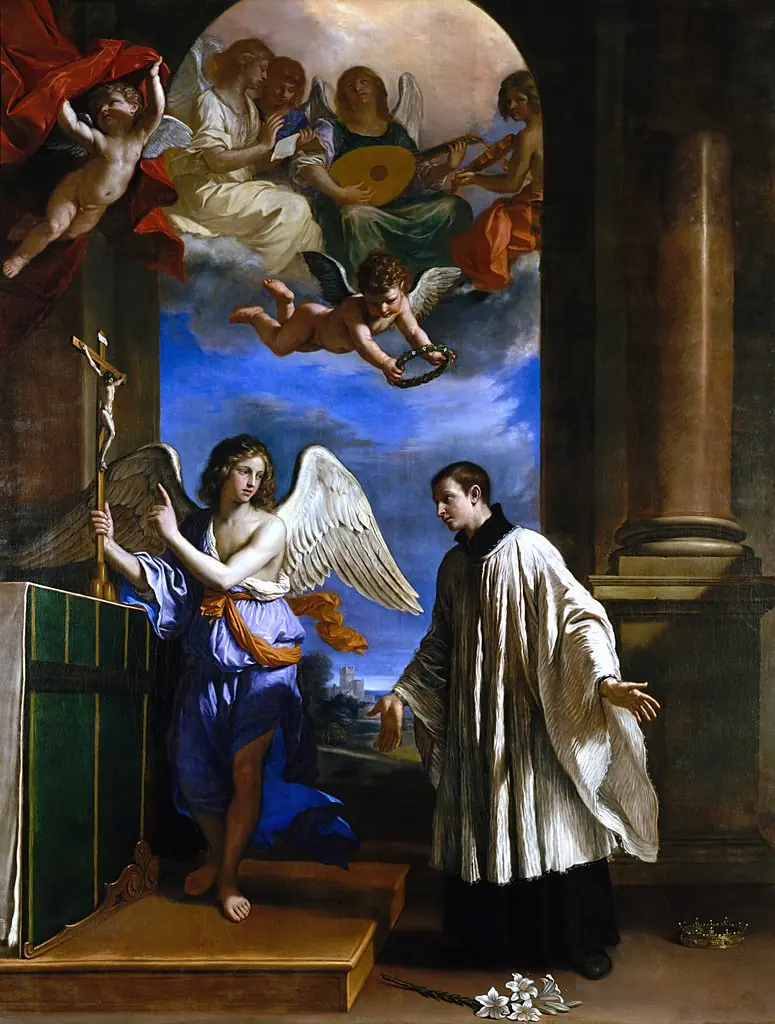
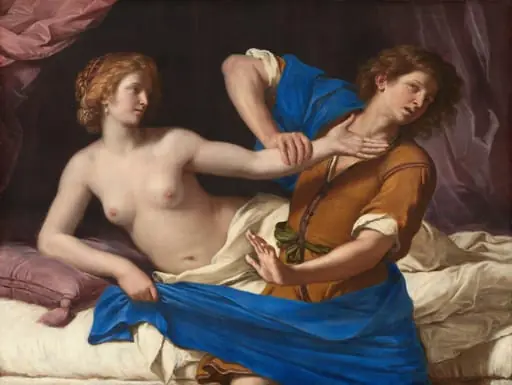
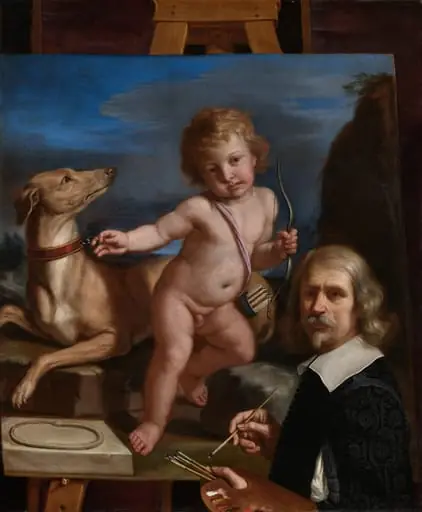
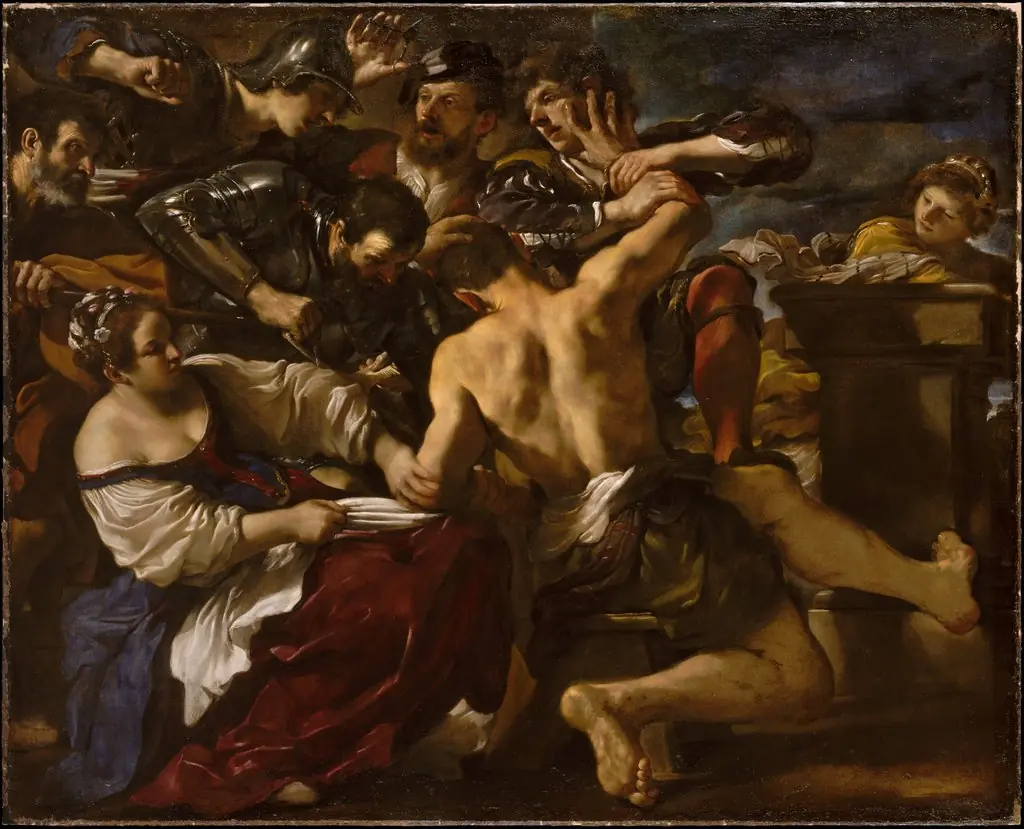
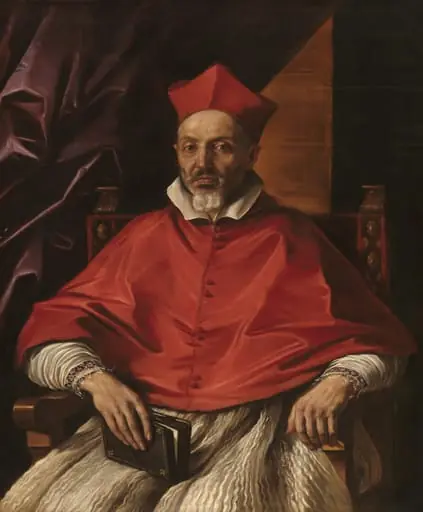
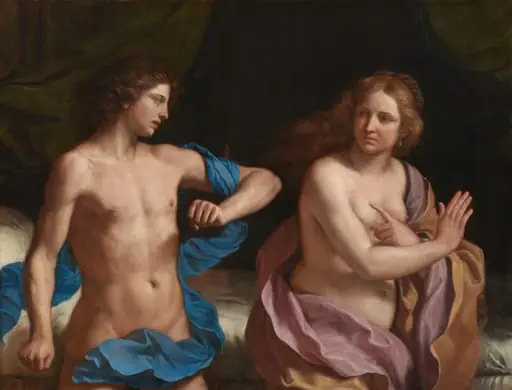
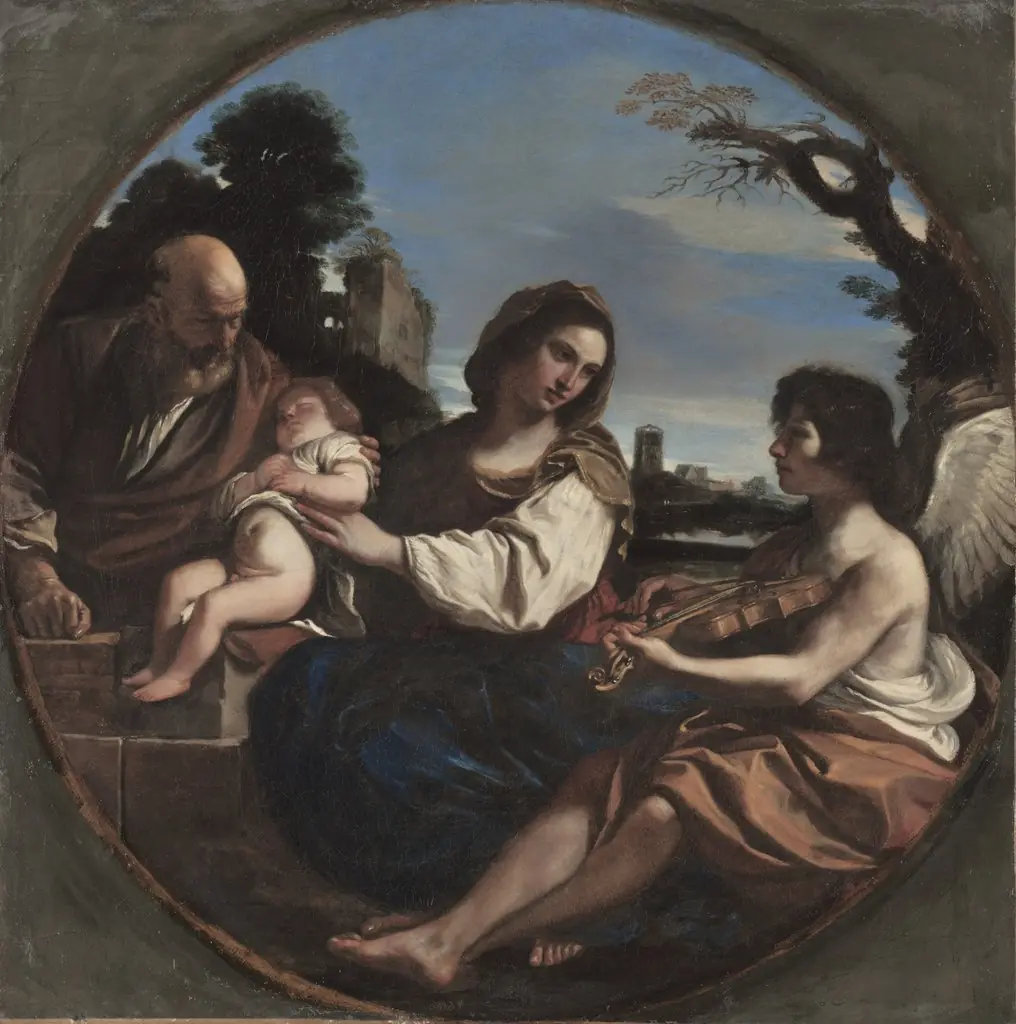
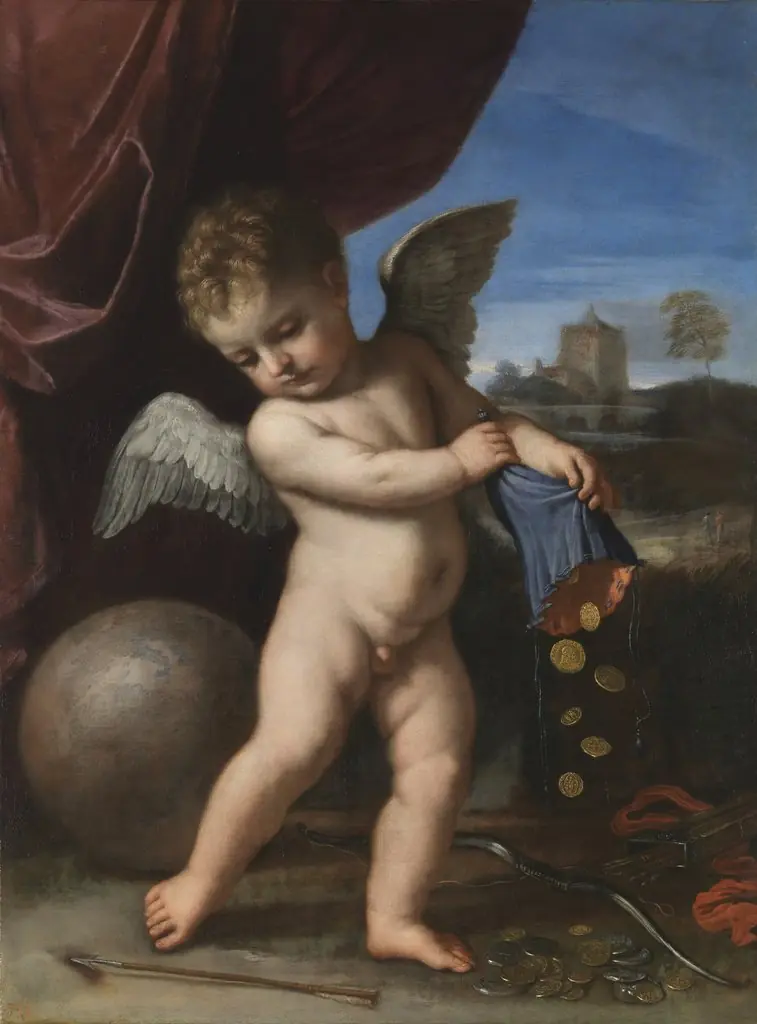
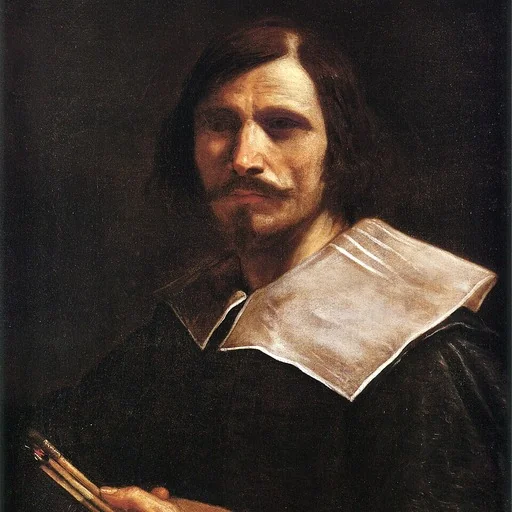
Giovanni Francesco Barbieri (8 February 1591 – 22 December 1666), better known as (il) Guercino (Italian pronunciation: ), was an Italian Baroque painter and draftsman from Cento in the Emilia region, who was active in Rome and Bologna.