Artwork
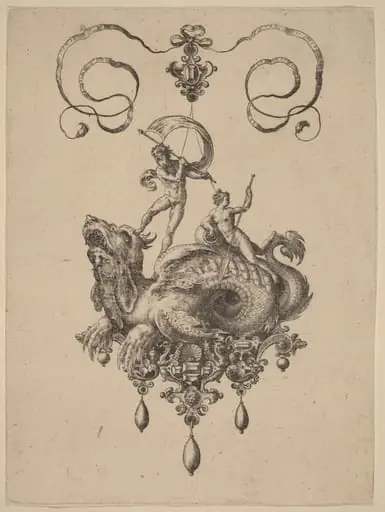
Design for a Pendant with a Sea-Monster in a Shell Carrying a Triton and a Woman with a Sail
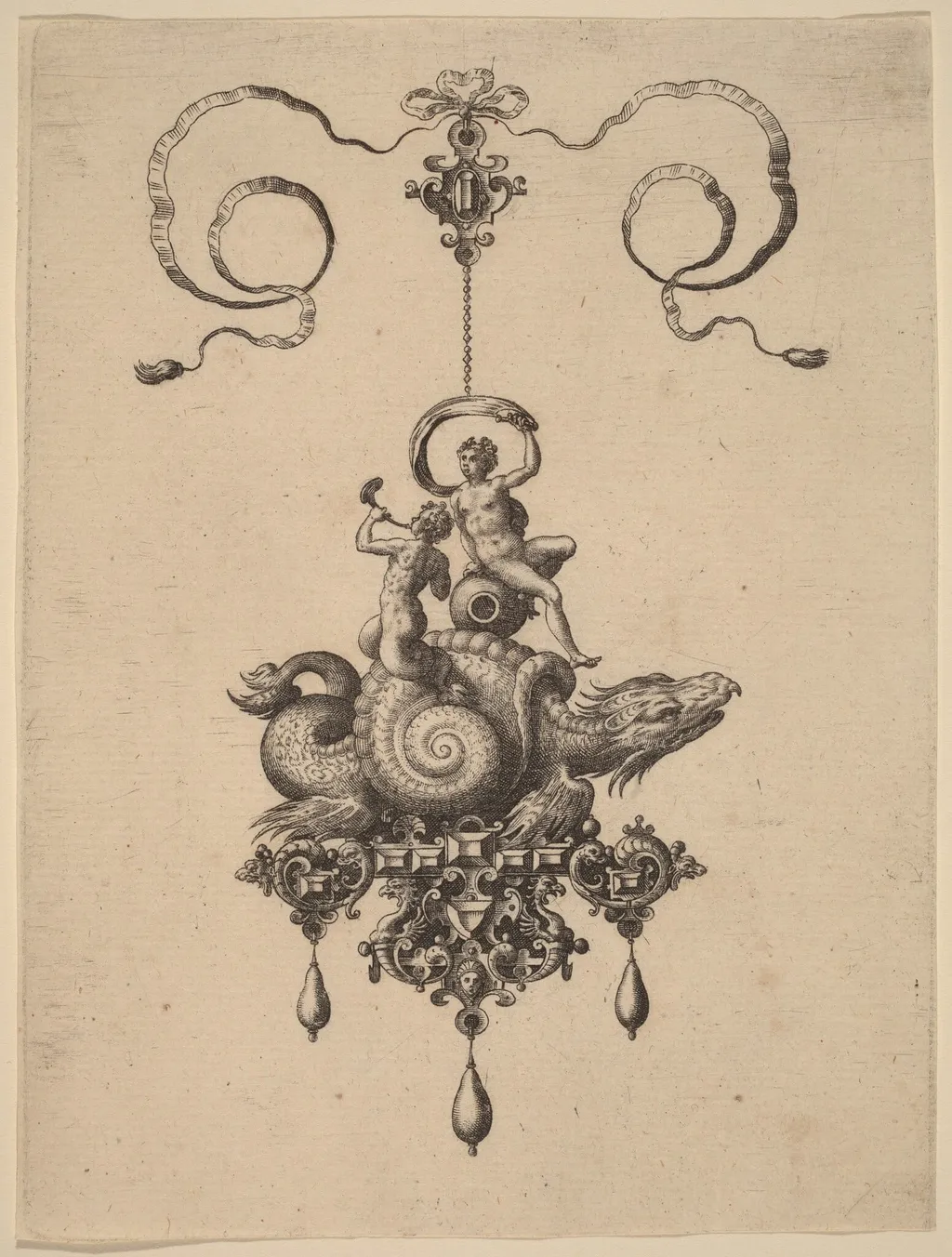
Design for a Pendant with a Sea-Monster in a Shell Carrying a Triton and a Woman with a Sail is an ink print by the Renaissance artist Adriaen Collaert. It dates from 1582 and is held in the collection of the National Gallery of Art.
About this work
Overview
Adriaen Collaert’s 1582 engraving presents a fanciful design intended for a pendant. Central to the composition is a coiled sea creature nestled within a shell, upon which a diminutive figure balances while clutching a sail. Above them, a floating woman reaches upward, all encircled by ornate rope‑like motifs that suggest a decorative, possibly functional, object.
Subject & Meaning
The imagery combines mythological and maritime elements: a sea‑monster, a triton‑like youth, and a woman bearing a sail evoke themes of navigation, protection, and the interplay between human agency and the sea’s mysteries. The upward‑stretching gesture of the woman may symbolize aspiration or guidance, while the creature’s containment within a shell hints at control over chaotic forces.
Technique & Style
Collaert employed the engraving medium to render fine, linear detail, using crisp incisions to suggest texture—scaled surfaces on the monster, folded fabric of the sail, and delicate rope ornamentation. The composition relies on strong contrasts between dark lines and the white of the paper, creating a sense of depth and three‑dimensionality appropriate for a design meant to be cast in metal.
History & Provenance
Created in the late sixteenth century, the print reflects the period’s fascination with ornamental jewelry and small luxury objects. While the original pendant has not survived, the engraving serves as a surviving record of Collaert’s design, likely circulated among patrons and craftsmen interested in producing elaborate metalwork for courtly or private use.
Context
The work belongs to a broader trend in Northern Renaissance printmaking where artists produced detailed designs for decorative arts, bridging fine art and applied craft. Collaert, active in Antwerp, frequently supplied such models to goldsmiths and silversmiths, catering to a market that prized intricate, narrative‑driven adornments.
Legacy
Although the pendant itself is lost, the engraving remains a valuable reference for scholars studying the intersection of print culture and metal ornamentation in the late 1500s. It illustrates how printmakers contributed to the visual vocabulary of luxury objects, influencing subsequent designs in jewelry and small-scale sculpture.
Artist & collection


 Design for a Pendant with a Sea-Monster Carrying Thetis and a Man with a Sail
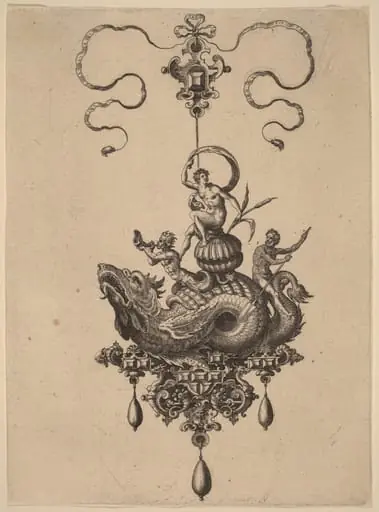 Design for a Pendant with Sea-Monster Carrying a Woman on a Shell Flanked by a Triton and a Man with an Oar
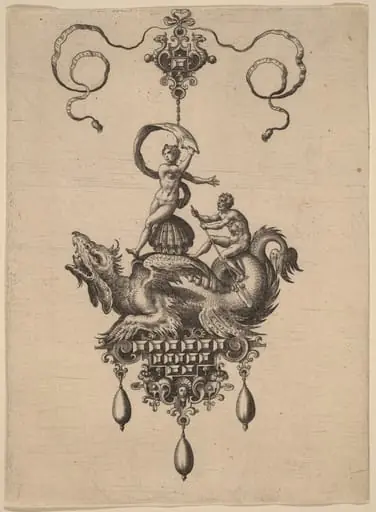 Design for a Pendant with a Winged Sea-Monster Carrying Venus Anadyomene on a Shell and a Man with an Oar
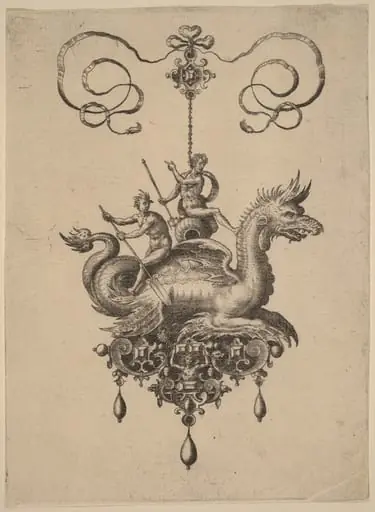 Design for a Pendant with a Sea-Monster Carrying Neptune on an Urn Flanked by a River-God with an Oar
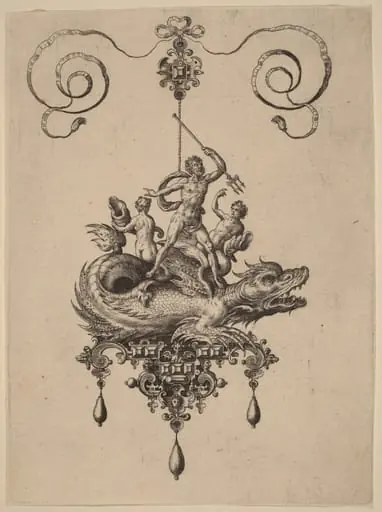 Design for a Pendant with a Sea-Monster Carrying Neptune Flanked by Two Figures
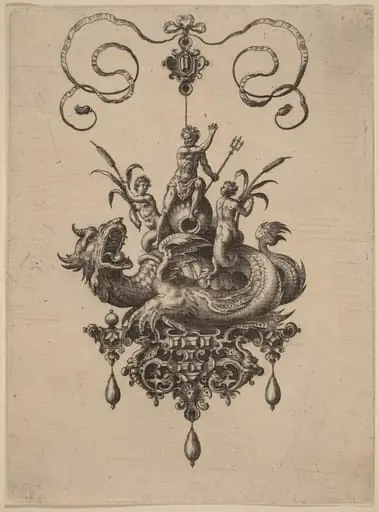 Design for a Pendant with a Sea-Monster Carrying Neptune Flanked by Two Nereids
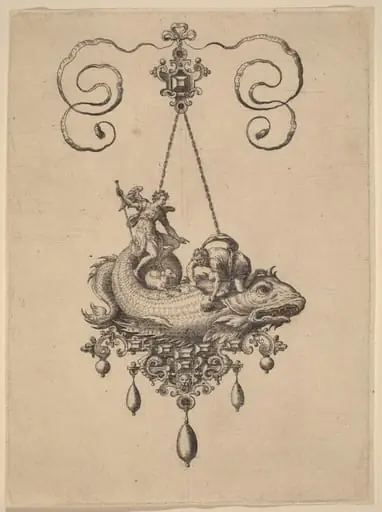 Design for a Pendant with a Fish Carrying Tobias and the Angel
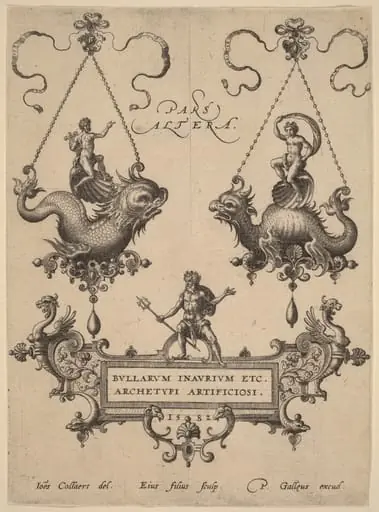 Title Plate with Designs for Pendants
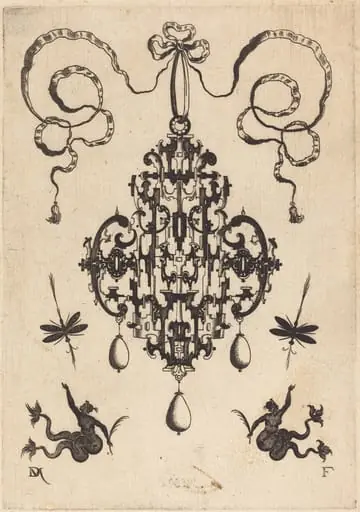 Large Pendant, Lower Left and Right Two Creatures of the Sea
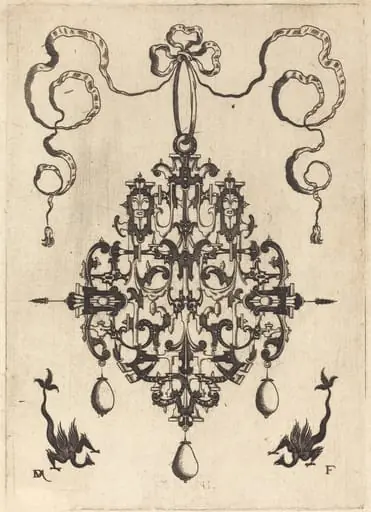 Large Pendant, Two Fantasy Creatures with Long Tails at Bottom
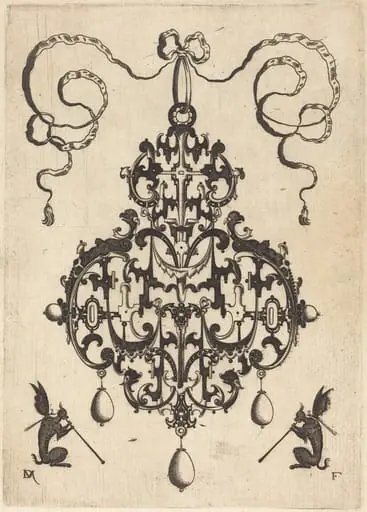 Large Pendant, Two Winged Fantasy Creatures with Trumpets at Bottom