Artwork
Design for a Pendant with Sea-Monster Carrying a Woman on a Shell Flanked by a Triton and a Man with an Oar
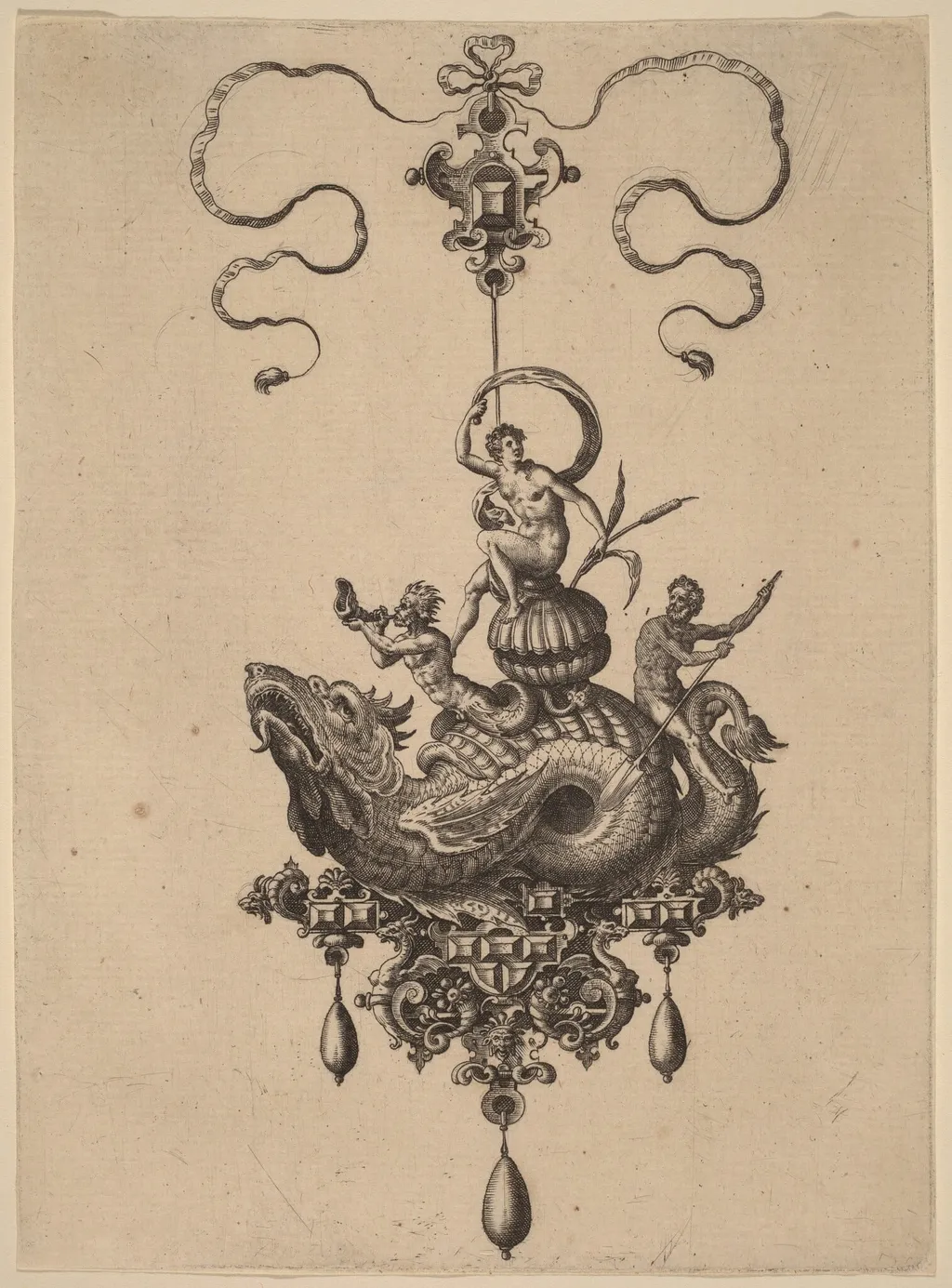
Design for a Pendant with Sea-Monster Carrying a Woman on a Shell Flanked by a Triton and a Man with an Oar is an ink print by the Renaissance artist Adriaen Collaert. It dates from 1582 and is held in the collection of the National Gallery of Art.
About this work
Overview
Adriaen Collaert’s 1582 engraving, titled *Design for a Pendant with Sea‑Monster Carrying a Woman on a Shell Flanked by a Triton and a Man with an Oar*, presents a compact, densely populated scene. Executed as a print, the image measures only a few centimeters yet contains a narrative tableau of mythic figures rendered in delicate, incised lines.
Subject & Meaning
At the center of the composition a massive, tooth‑lined sea creature bears a serene woman perched on a shell, suggesting a rescue or abduction motif common in Renaissance allegory. To either side stand a triton and a figure wielding an oar, while a flute‑playing man adds a musical element. Above, intertwined serpents frame a crown‑shaped ornament, hinting at regal or divine associations.
Technique & Style
The work’s texture relies on cross‑hatching and stippling, creating contrasts between the turbulent waves, the smooth shell, and the intricate crown motif.
Collaert employed the engraving process, incising fine, parallel lines into a copper plate to achieve a high level of detail. The work’s texture relies on cross‑hatching and stippling, creating contrasts between the turbulent waves, the smooth shell, and the intricate crown motif. The overall effect balances precise draftsmanship with a slightly uncanny atmosphere, characteristic of late‑sixteenth‑century Northern European prints.
History & Provenance
Created in 1582, the print reflects Collaert’s collaboration with Antwerp’s thriving publishing houses, which supplied designs for jewelry and decorative objects. Though originally intended as a pendant model, the engraving survived as a standalone print, entering collections of print enthusiasts and later appearing in catalogues of Flemish graphic art. Its provenance traces through several European private collections before reaching a museum holding of early modern prints.
Artist & collection


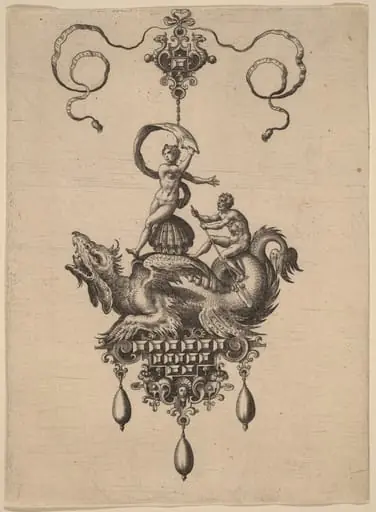 Design for a Pendant with a Winged Sea-Monster Carrying Venus Anadyomene on a Shell and a Man with an Oar
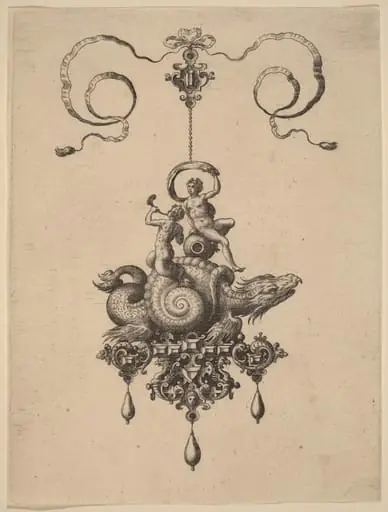 Design for a Pendant with a Sea-Monster in a Shell Carrying a Triton and a Woman with a Sail
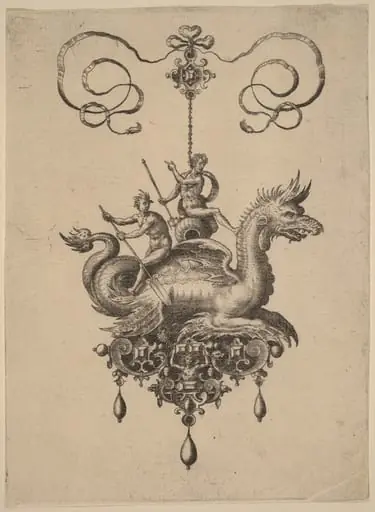 Design for a Pendant with a Sea-Monster Carrying Neptune on an Urn Flanked by a River-God with an Oar
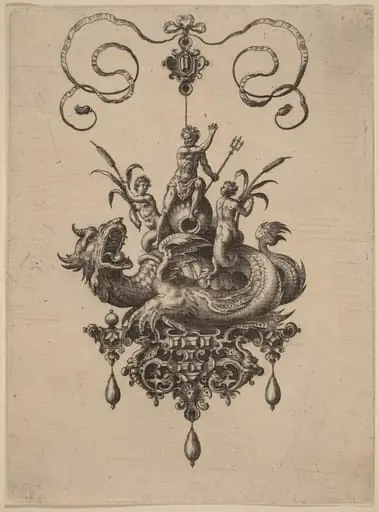 Design for a Pendant with a Sea-Monster Carrying Neptune Flanked by Two Nereids
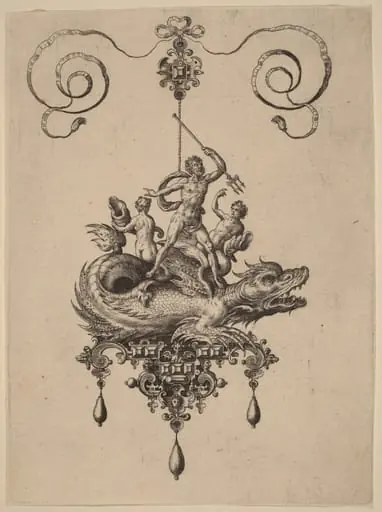 Design for a Pendant with a Sea-Monster Carrying Neptune Flanked by Two Figures
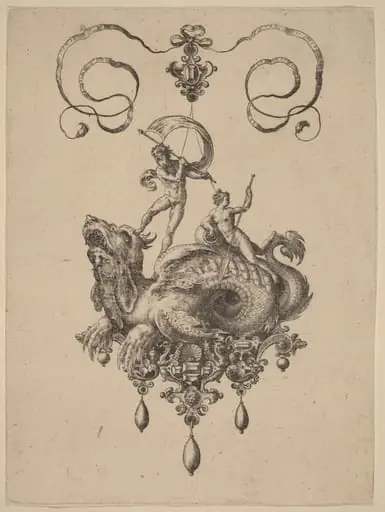 Design for a Pendant with a Sea-Monster Carrying Thetis and a Man with a Sail
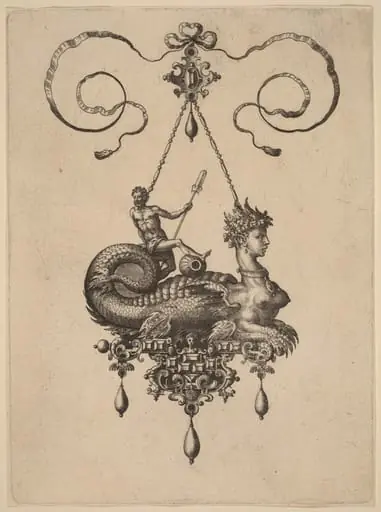 Design for a Pendant with a Sphinx with the Body of a Fish Carrying a Man with an Oar
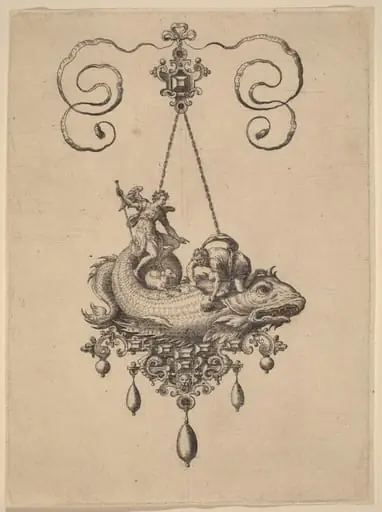 Design for a Pendant with a Fish Carrying Tobias and the Angel
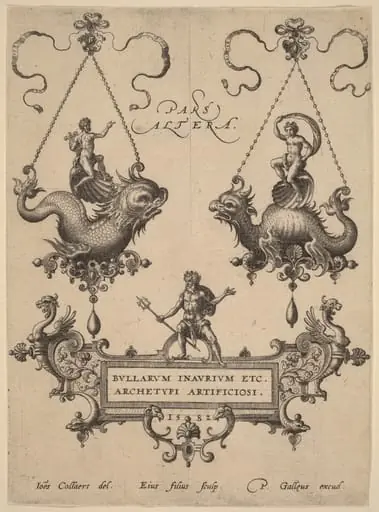 Title Plate with Designs for Pendants
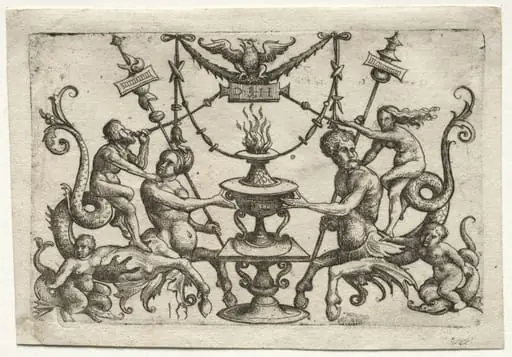 Ornament with Siren and Triton
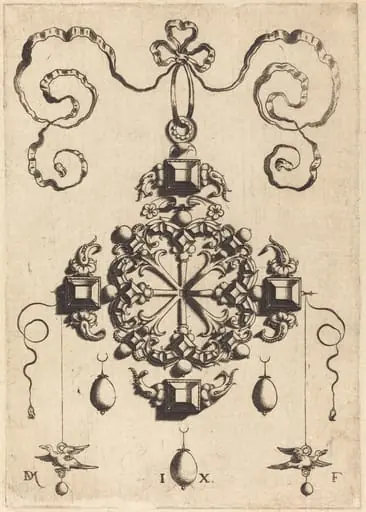 Large Pendant in the Form of a Wheel