Artwork
Large Pendant, Two Winged Fantasy Creatures with Trumpets at Bottom
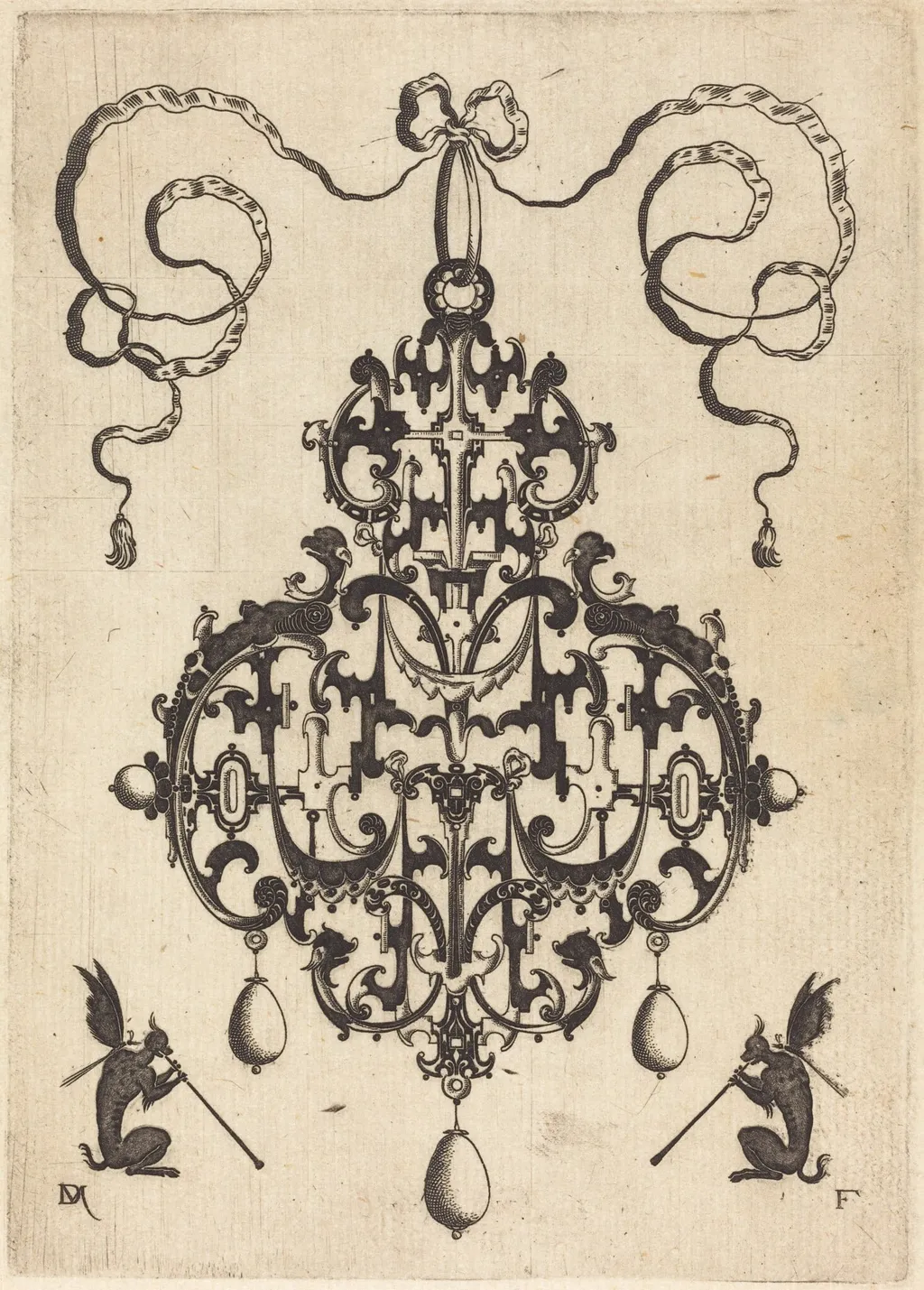
Large Pendant, Two Winged Fantasy Creatures with Trumpets at Bottom is an ink print by the Renaissance artist Daniel Mignot. It dates from 1596 and is held in the collection of the National Gallery of Art.
About this work
Overview
The creatures at the base, holding trumpets, serve both structural and symbolic roles, anchoring the design with a sense of motion and mythic presence.
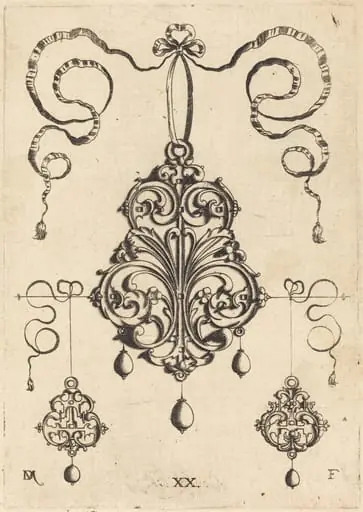
This 1596 engraving by Daniel Mignot depicts a decorative pendant suspended by two winged, fantastical figures. The composition centers on an elaborate chandelier-like form, adorned with intricate metalwork and hanging elements. The creatures at the base, holding trumpets, serve both structural and symbolic roles, anchoring the design with a sense of motion and mythic presence. The work is rendered in fine, controlled lines typical of late Renaissance printmaking.
Subject & Meaning
The two winged beings, part-human and part-mythical, appear to support the pendant as if bearing its weight in a ceremonial act. Their trumpets suggest a connection to divine or heraldic communication, possibly evoking themes of celestial proclamation or artistic inspiration. The ornamental forms surrounding them—leaves, knots, and swirling metal—may symbolize abundance or the harmony of nature and craftsmanship, common motifs in Mignot’s era.
Technique & Style
Mignot employed engraving, a method involving incised lines on a metal plate, to achieve sharp, precise detail. Cross-hatching creates subtle gradations of tone, lending volume to the pendant’s curves and the creatures’ wings. The dense network of fine lines captures textures like foliage and filigree, reflecting the meticulous aesthetic of 16th-century Northern European printmakers who valued clarity and intricate finish over broad brushwork.
History & Provenance
Created in 1596, the engraving likely circulated as a design template for metalworkers or jewelers, rather than as a standalone artwork. Its survival suggests it was valued for its compositional ingenuity. While specific early ownership records are sparse, similar engravings from this period were collected by artisans and patrons interested in ornamental design, indicating its role in the broader visual culture of the time.
Context
In late 16th-century Europe, engraved designs were widely used to disseminate decorative motifs across regions. Mignot’s work aligns with a tradition of Mannerist ornamentation, where fantastical forms and elaborate detail conveyed sophistication. Such prints often bridged fine art and applied arts, informing metalwork, furniture, and architecture, and reflecting a period fascinated by the interplay of nature, myth, and craftsmanship.
Legacy
Though not widely known today, Mignot’s engraving exemplifies the technical precision and imaginative design favored in Renaissance print culture. Its influence can be traced in later decorative arts that adopted similar hybrid creatures and intricate linear patterns. The work remains a testament to the role of printmakers as intermediaries between artistic vision and material craft in early modern Europe.
Artist & collection


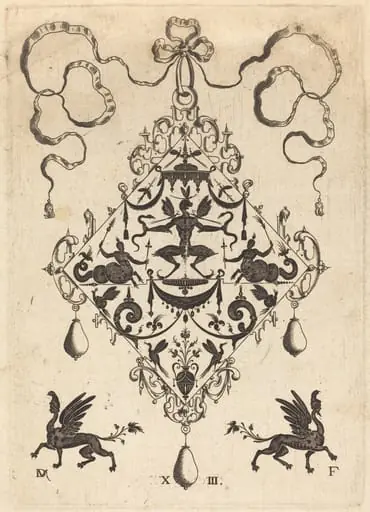 Large Pendant, Winged Fantasy Creature Holding Two Snakes
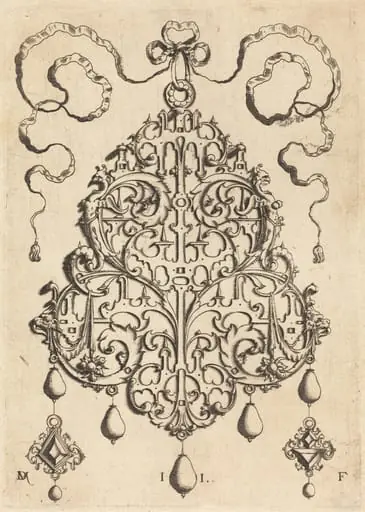 Large Strapwork Pendant with Two Hangers as Earrings at Left and Right
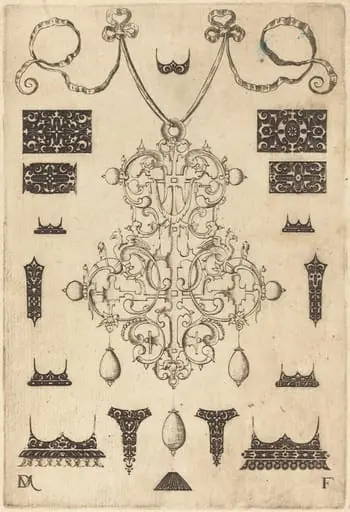 Large Pendant with Three Drops Below, Surrounded by Fifteen Different Studs
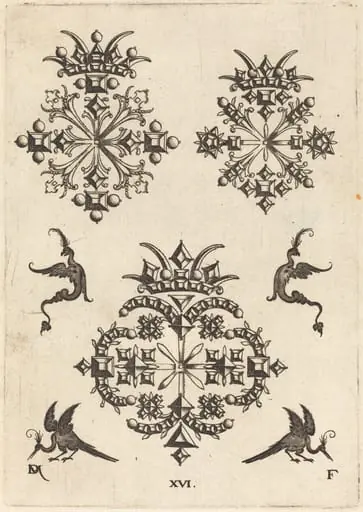 Three Brooches with Fantasy Birds at Left, Right, and Bottom
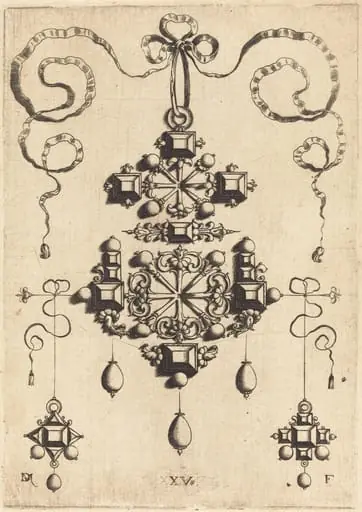 Pendant with Two Double Crosses, Surrounded by Four Diamond-Shaped Stones, Five Table-Stones, and Thirteen Pearls
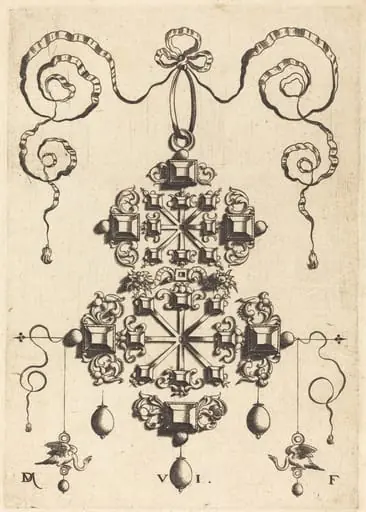 Large Pendant with Two Double Crosses, Surrounded by Six Large and Sixteen Small Table-Stones
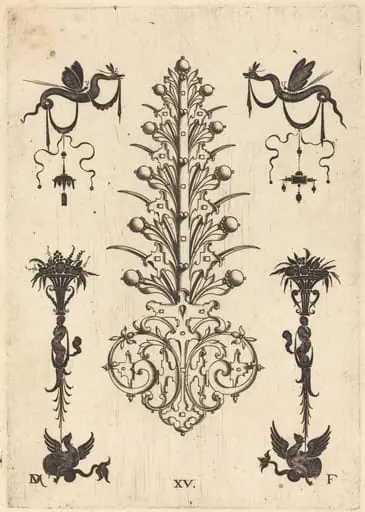 Hyacinth-Shaped Brooch with Winged Snakes at Top and Winged Animals at Bottom
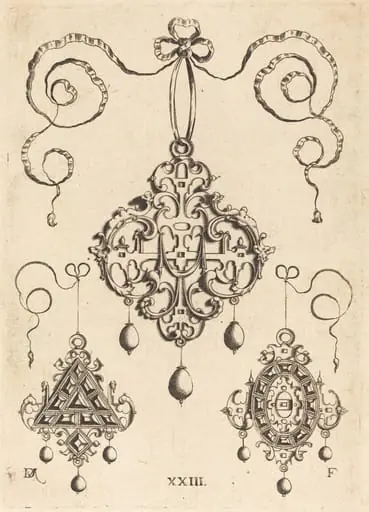 Three Strapwork Pendants, The Lower Ones Triangular and Oval
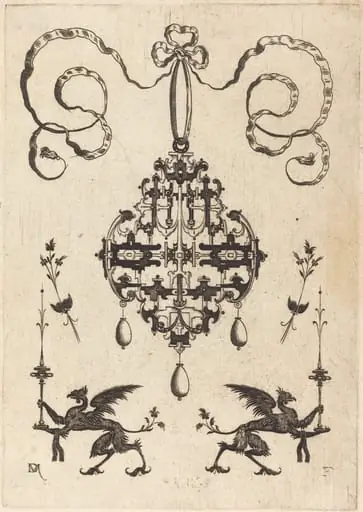 Large Pendant, Lower Left and Right Two Griffins Carrying Fantasy Candlesticks
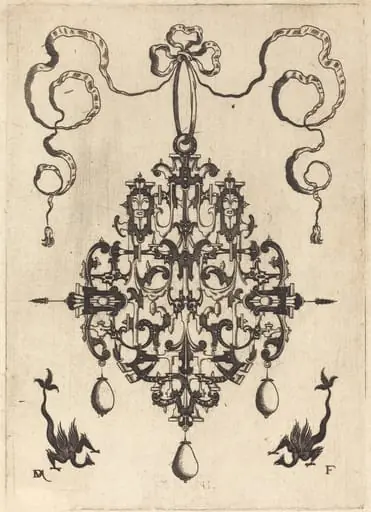 Large Pendant, Two Fantasy Creatures with Long Tails at Bottom
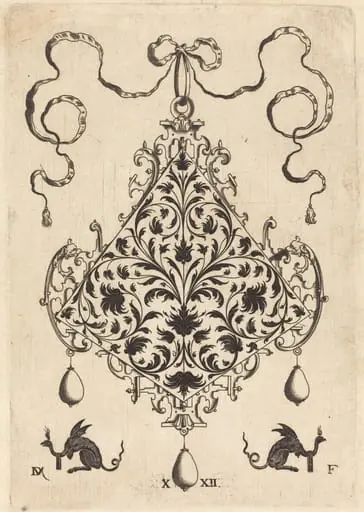 Large Pendant, Ornamental Foliage Design
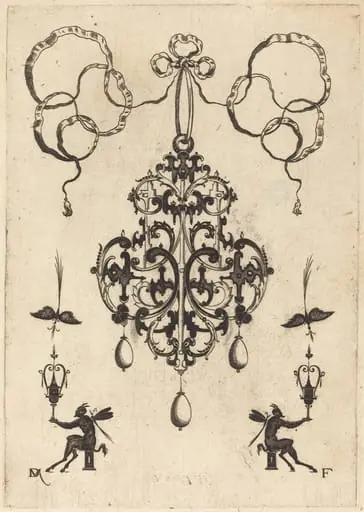 Large Pendant, Lower Left and Right Two Winged "Devils" Sitting on Pedestals
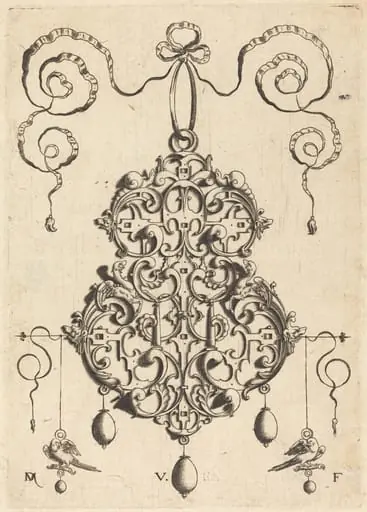 Strapwork Pendant with Two Birds as Earrings at Left and Right
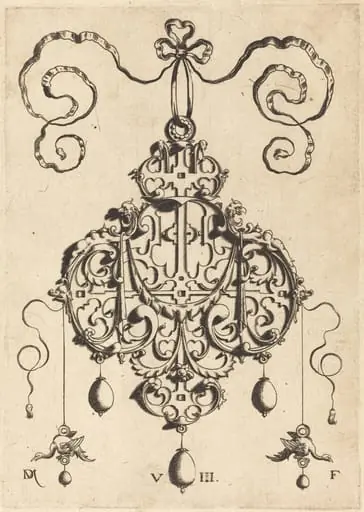 Strapwork Pendant with Two Eagles as Earringsat Left and Right
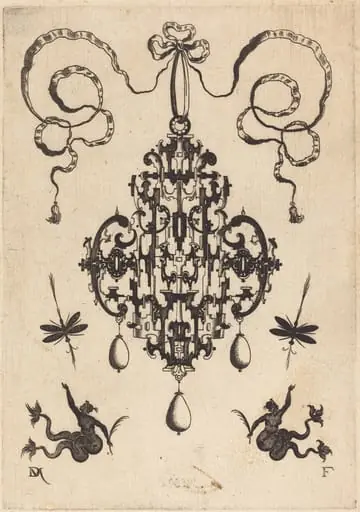 Large Pendant, Lower Left and Right Two Creatures of the Sea
 One Large and Two Smaller Strapwork Pendants